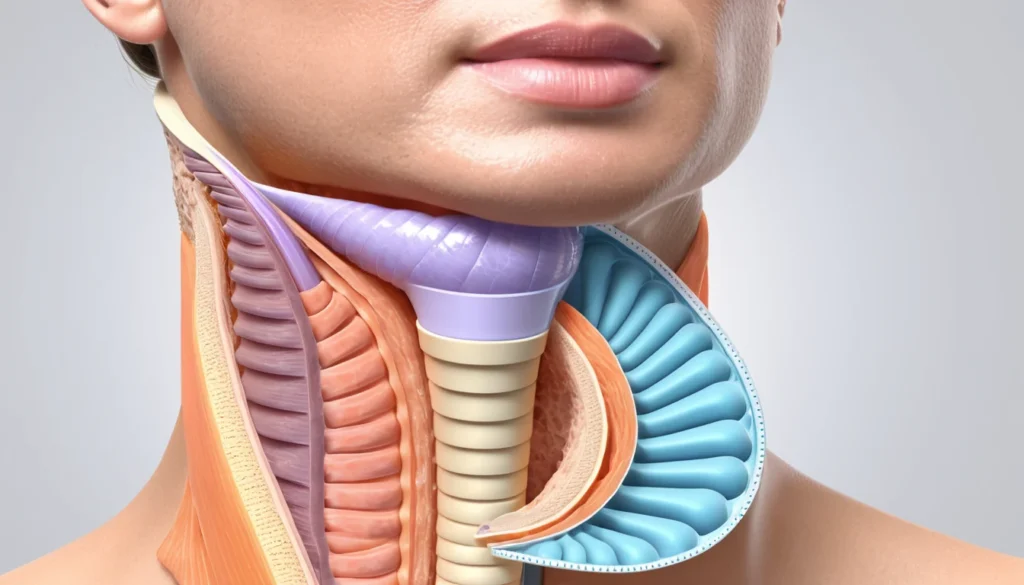
Zenker’s diverticulum is a rare condition of the esophagus where a small, pouch-like sac forms at the junction between the throat and the food pipe. It most often affects older adults and can cause difficulty swallowing, regurgitation, and other uncomfortable symptoms. In this article, we explain what Zenker’s diverticulum is, what causes it, how it is diagnosed, and what treatment options are available to Canadians.
What Is Zenker’s Diverticulum?
A diverticulum is a medical term for an abnormal, sac-shaped pouch that forms in the wall of a hollow organ. These pouches can develop in almost any part of the digestive tract.
When a diverticulum forms at the junction of the pharynx (throat) and the esophagus (food pipe), it is called Zenker’s diverticulum. The esophagus is the first segment of the digestive tract. It connects your mouth to your stomach.
The pharynx sits at the back of the throat, between your nasal passage and your mouth. Zenker’s diverticulum forms specifically in the lower part of the pharynx, in an area known as Killian’s triangle.
How Common Is Zenker’s Diverticulum?
Zenker’s diverticulum is considered a rare condition. It affects between 0.01% and 0.10% of the general population worldwide. For most people, this condition will never be a concern.
However, it does tend to occur more often in middle-aged and older adults. It is most common in people between the ages of 70 and 80. It is rarely seen in anyone under the age of 40.
In addition, men are more likely to develop Zenker’s diverticulum than women. If you are an older Canadian and notice any of the symptoms described below, it is worth speaking with your family doctor.
Symptoms of Zenker’s Diverticulum
The most common and noticeable symptom of Zenker’s diverticulum is dysphagia, which simply means difficulty swallowing. Up to 90% of people diagnosed with this condition experience dysphagia. It is often the first sign that something is wrong.
Other symptoms can include:
Regurgitation of undigested food or oral medications
Bad breath (also called halitosis)
A hoarse or raspy voice
A persistent cough
The sensation of something stuck in the throat
Aspiration — when food or liquid accidentally enters the airways
Without treatment, these symptoms tend to get worse over time. As a result, the risk of serious complications also increases. If you notice any of these signs, do not ignore them.
Why Aspiration Is a Serious Concern
Aspiration happens when food or liquid goes down the airway instead of the esophagus. This can lead to a lung infection called aspiration pneumonia. Therefore, getting a proper diagnosis early is very important, especially for older adults.
What Causes Zenker’s Diverticulum?
Swallowing is a complex action. It requires your mouth, throat, and esophagus to work together in a carefully timed sequence. When you swallow, a circular muscle called the upper esophageal sphincter opens to let food pass from your throat into your esophagus. It then closes quickly to prevent food from coming back up.
Zenker’s diverticulum is closely linked to a dysfunction of this sphincter. When the sphincter does not open wide enough, pressure builds up at the junction between the pharynx and the esophagus. Over time, this excess pressure pushes the tissue of the esophageal wall outward. Eventually, a pouch forms — and that pouch is the diverticulum.
Furthermore, age-related changes in muscle tone and structure can contribute to this process. Gastroesophageal reflux disease (GERD), a condition where stomach acid flows back into the esophagus, may also play a role in the development of Zenker’s diverticulum.
How Is Zenker’s Diverticulum Diagnosed?
If you are experiencing symptoms that suggest an esophageal problem, your family doctor will likely refer you to a gastroenterologist. This is a specialist who focuses on digestive health. Most provincial health plans in Canada cover this type of specialist referral.
The gastroenterologist will review your symptoms and medical history. They will also perform a physical examination. After that, they will recommend one or more of the following tests.
Barium Swallow Study
The most common test used to diagnose Zenker’s diverticulum is called a barium swallow study. You drink a liquid containing barium, a contrast material that shows up clearly on X-rays. This allows the doctor to see the shape and size of the diverticulum, both at rest and while you are swallowing.
According to Healthline’s overview of Zenker’s diverticulum, this imaging test is the gold standard for identifying and characterising this type of pouch.
Upper Endoscopy
An upper endoscopy (also called an upper gastrointestinal endoscopy) may also be used. During this procedure, a doctor passes a thin, flexible tube with a tiny camera on the end down your throat. This allows them to directly view the diverticulum and assess the surrounding tissue.
In addition, an endoscopy can help identify any related conditions, such as inflammation or other structural abnormalities in the digestive tract.
Treatment Options for Zenker’s Diverticulum
Not every case of Zenker’s diverticulum requires immediate treatment. In mild cases, your doctor may recommend lifestyle and dietary changes first. However, in moderate to severe cases, a procedure will likely be necessary.
Dietary and Lifestyle Changes
Simple changes can help ease symptoms. Eating smaller meals, chewing food thoroughly, and drinking water during meals can all reduce discomfort. These adjustments will not eliminate the diverticulum, but they can improve your quality of life while you await further assessment.
Endoscopic Treatment
Endoscopic treatment uses the same flexible tube as a diagnostic endoscopy, but with added surgical instruments. The doctor makes a small incision in the wall that separates the esophagus from the diverticulum. This reduces the depth of the pouch and relieves pressure.
However, endoscopic treatment is not suitable for everyone. It may not be recommended if:
The diverticulum is very small
The patient has a high body mass index (BMI)
The patient has difficulty extending their neck
Flexible endoscopy carries fewer risks than rigid endoscopy. In some cases, multiple procedures may be needed over time.
Surgical Treatment (Diverticulotomy)
More severe cases may require surgery. The surgical procedure to remove a Zenker’s diverticulum is called a diverticulotomy. It involves the complete removal of the pouch and is performed under general anaesthesia.
The surgeon makes an incision in the neck to access and remove the diverticulum. This can be done as open surgery or as a minimally invasive (laparoscopic) procedure, depending on each patient’s situation.
Open surgery has a high success rate and a very low chance of the diverticulum returning. However, it does require a hospital stay of several days. Most patients will need a nasogastric feeding tube for the first seven days after surgery, before they can resume eating by mouth.
As Health Canada emphasises, any surgical procedure should be discussed thoroughly with your specialist so you fully understand the risks and benefits before proceeding.
Risks and Complications
Without treatment, Zenker’s diverticulum will gradually grow larger. As it grows, symptoms become more severe and harder to manage. The risk of aspiration pneumonia increases significantly over time.
Other potential complications include:
Significant weight loss due to difficulty eating
Malnutrition
Perforation (a tear in the pouch wall)
In very rare cases, an increased risk of esophageal cancer in the affected area
Therefore, early diagnosis and appropriate treatment are essential for preventing these outcomes.
When to See a Doctor
You should see your family doctor as soon as possible if you experience persistent difficulty swallowing, unexplained regurgitation of food, or a sensation of something stuck in your throat. These symptoms should never be ignored, especially if you are over the age of 50.
If you do not have a family doctor, a walk-in clinic is a good first step. The doctor there can assess your symptoms and arrange a referral to a gastroenterologist through your provincial health plan. Most provinces cover specialist referrals for conditions like this.
Do not attempt to self-diagnose or self-treat. Zenker’s diverticulum shares symptoms with other digestive conditions, so a proper medical evaluation is always necessary. Always consult a qualified healthcare provider before making any decisions about your health.
Frequently Asked Questions About Zenker’s Diverticulum
What are the first signs of Zenker’s diverticulum?
The earliest and most common sign of Zenker’s diverticulum is difficulty swallowing, known as dysphagia. Some people also notice regurgitation of undigested food, a persistent cough, or the feeling of something stuck in the throat. If you experience these symptoms, speak with your family doctor or visit a walk-in clinic.
Is Zenker’s diverticulum dangerous?
Zenker’s diverticulum is not immediately life-threatening in most cases, but it can lead to serious complications if left untreated. These include aspiration pneumonia, malnutrition, and, very rarely, esophageal cancer. Therefore, early diagnosis and treatment are strongly recommended.
Can Zenker’s diverticulum be treated without surgery?
Yes, in some cases Zenker’s diverticulum can be treated with an endoscopic procedure rather than open surgery. Mild cases may also be managed initially with dietary changes such as eating smaller meals and chewing thoroughly. Your gastroenterologist will recommend the most appropriate treatment based on the size of the diverticulum and the severity of your symptoms.
Who is most at risk of developing Zenker’s diverticulum?
Zenker’s diverticulum most commonly affects adults between the ages of 70 and 80, and it is more frequent in men than in women. It is rarely seen in people under 40. Age-related changes in muscle function and conditions like GERD may increase the risk.
How is Zenker’s diverticulum diagnosed in Canada?
In Canada, your family doctor will typically refer you to a gastroenterologist if Zenker’s diverticulum is suspected. The most common diagnostic test is a barium swallow study, which uses contrast X-rays to visualise the pouch. An upper endoscopy may also be performed to get a direct view of the esophagus.
What is the recovery like after surgery for Zenker’s diverticulum?
Recovery from diverticulotomy (surgical removal of Zenker’s diverticulum) typically involves a hospital stay of several days. Most patients need a nasogastric feeding tube for about seven days before resuming a normal diet. The success rate for open surgery is high, and the chance of the diverticulum returning is very low.
Key Takeaways
Zenker’s diverticulum is a rare pouch that forms at the junction of the throat and esophagus.
It most commonly affects adults over 70 and is more frequent in men.
The main symptom is difficulty swallowing (dysphagia), but other signs include regurgitation, bad breath, and a persistent cough.
It is caused by a dysfunction of the upper esophageal sphincter, which leads to increased pressure and eventual pouch formation.
Diagnosis typically involves a barium swallow study or upper endoscopy, arranged through a specialist referral covered by most provincial health plans.
Treatment ranges from dietary changes and endoscopic procedures to surgical removal (diverticulotomy), depending on severity.
Without treatment, the condition can worsen and lead to serious complications including aspiration pneumonia and malnutrition.
Always speak with your family doctor or visit a walk-in clinic if you experience persistent swallowing difficulties. Early care makes a real difference.