A visual acuity test is one of the most common and important parts of any eye exam. It measures how clearly you can see details at different distances. Whether you are an adult, a child, or someone who cannot read, there is a version of this test designed for you. Understanding what happens during a visual acuity test can help you feel confident and prepared at your next eye appointment.
What Is a Visual Acuity Test?
A visual acuity test checks how sharp and clear your vision is. “Acuity” simply means sharpness. The test tells your eye doctor or optometrist how well each of your eyes can see at different distances.
This test is a standard part of eye exams across Canada. It is often done at your family doctor’s office, an optometrist’s clinic, or even at a walk-in clinic during a general health check. It is quick, painless, and takes only a few minutes.
However, a visual acuity test is just one piece of the puzzle. It does not check for every eye condition. Therefore, regular comprehensive eye exams are still important, especially as you age.
Why Is the Visual Acuity Test Important?
Good vision affects almost every part of daily life. It affects how you drive, read, work, and interact with others. A visual acuity test can catch vision problems early, before they cause bigger issues.
In Canada, vision problems are very common. According to Health Canada, maintaining eye health is an important part of overall wellness. Catching changes in your vision early gives you more treatment options and better outcomes.
Furthermore, poor vision that goes uncorrected can affect children’s learning and development. For adults, it can impact workplace safety and quality of life. As a result, vision screening is recommended at regular intervals throughout your life.
How the Visual Acuity Test Works for Adults
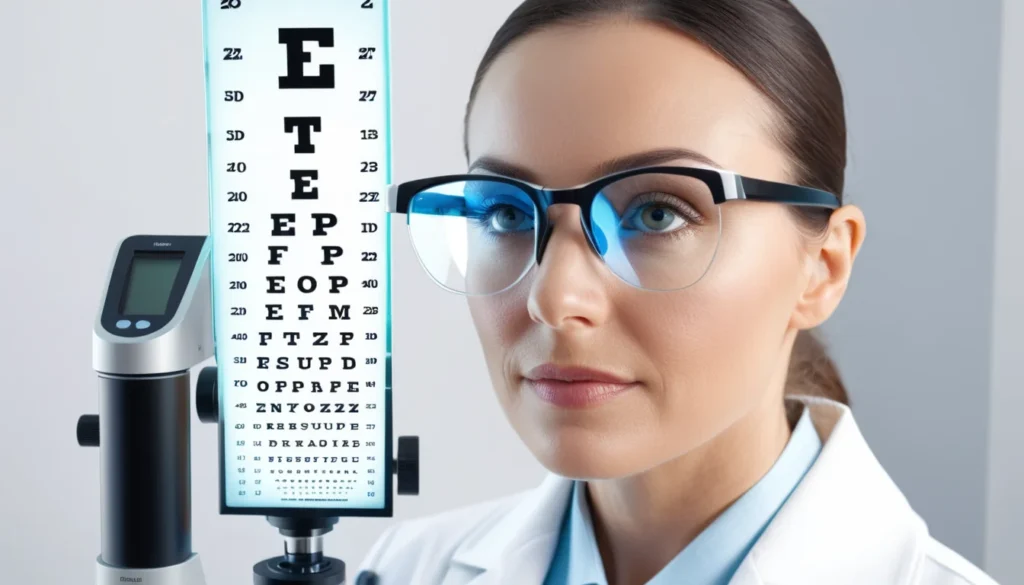
For adults, the most common tool used during a visual acuity test is an eye chart. The most widely known version is the Snellen chart. It displays rows of letters that get progressively smaller as you move down the chart.
You will typically stand or sit about five metres (roughly 20 feet) away from the chart. Your eye doctor will ask you to cover one eye and read the letters aloud, starting from the top. Then you repeat the process with the other eye.
The test is done first without corrective lenses, and then with glasses or contact lenses if you wear them. This helps the examiner understand how well your eyes function on their own and with correction.
Understanding Your Distance Vision Score
The results of a visual acuity test for distance are recorded as a fraction. In Canada, results are often given as a fraction out of 20 feet or 6 metres. For example, 20/20 vision (or 6/6 in metric) is considered normal.
If your result is 20/40, it means you can see clearly at 20 feet what a person with normal vision can see at 40 feet. The larger the bottom number, the weaker the vision. On older European-style charts, the scale runs from 1/10 (the largest letters) to 10/10 (the smallest letters).
However, scoring above 20/20 is also possible. Some people have 20/15 vision, which means they can see slightly more detail than average. This is considered above-normal vision.
Testing Near Vision in Adults
A visual acuity test for near vision works differently. Instead of a wall chart, your eye doctor uses a small printed card. You hold it at a reading distance of about 33 centimetres (roughly 13 inches) from your eyes.
The card contains short passages of text printed in progressively smaller font sizes. You read the smallest line you can see clearly. This test is especially important for detecting presbyopia, the gradual loss of near-focus ability that often begins in your 40s.
In addition, near vision testing is important for people who spend long hours reading, working on computers, or doing detailed close-up work. If you notice eye strain or headaches after reading, this part of the test can reveal the cause.
Visual Acuity Testing for Children and Non-Readers
Children and individuals who cannot read letters still need accurate vision testing. Fortunately, there are special versions of the visual acuity test designed just for them. These versions are just as accurate as the standard letter chart.
Instead of letters, these charts use numbers, simple pictures, or a special symbol called the “tumbling E.” The tumbling E is the letter E shown pointing in different directions — up, down, left, or right. The person being tested simply points in the direction the letter is facing.
This approach makes the visual acuity test accessible to young children who have not yet learned to read. It is also used for adults who speak a different language or have reading difficulties. Therefore, no one needs to miss out on accurate vision screening.
When Should Children Have Their Eyes Tested?
Vision problems in children can affect reading, learning, and behaviour in school. Many children do not realise their vision is poor because they have never known any different. As a result, routine screening is very important.
Most Canadian provinces recommend a first comprehensive eye exam between ages 6 and 12 months, then again between 2 and 5 years, and annually once school starts. Check with your provincial health plan for coverage details, as many provinces cover children’s eye exams under their public health insurance programmes.
For example, Ontario’s provincial health plan covers annual eye exams for children under 20. Other provinces offer similar programmes. Talk to your family doctor if you are unsure what is covered in your province.
What the Results of a Visual Acuity Test Mean
Once your visual acuity test is complete, your eye care provider will explain what the results mean. Normal vision is described as 20/20 or 6/6, depending on the measurement system used. Most people do not have perfectly equal vision in both eyes, and that is normal.
If your results show reduced visual acuity, it may indicate a refractive error. Common refractive errors include nearsightedness (myopia), farsightedness (hyperopia), and astigmatism. All of these are easily corrected with glasses, contact lenses, or in some cases, laser eye surgery.
However, reduced visual acuity can also be a sign of other eye conditions. These include cataracts, glaucoma, macular degeneration, or diabetic eye disease. Therefore, your eye doctor may recommend further testing if your results are not fully explained by a simple refractive error.
Limitations of the Visual Acuity Test
It is important to understand that a visual acuity test measures only one aspect of your vision. It checks clarity and sharpness, but it does not test peripheral vision, colour vision, depth perception, or eye pressure.
A comprehensive eye exam includes several additional tests. According to the Mayo Clinic’s guide to eye exams, a full check-up evaluates the overall health of your eyes, not just how clearly you see. As a result, a visual acuity test alone is not a substitute for a full eye exam.
How Often Should You Have a Visual Acuity Test?
The frequency of vision testing depends on your age, health, and risk factors. For most healthy adults, a comprehensive eye exam every one to two years is recommended. However, if you have diabetes, high blood pressure, or a family history of eye disease, you may need more frequent checks.
Adults over 65 should have annual eye exams. Older adults are at higher risk for conditions like cataracts, glaucoma, and age-related macular degeneration. Early detection makes a significant difference in treatment success.
The World Health Organization’s fact sheet on visual impairment notes that at least 1 billion people worldwide have a vision impairment that could have been prevented or treated. Regular visual acuity testing is one of the simplest steps you can take to protect your sight.
When to See a Doctor About Your Vision
Do not wait for your next scheduled exam if you notice sudden changes in your vision. Some vision problems need prompt attention. Knowing the warning signs can help you act quickly and protect your eyesight.
See your family doctor, optometrist, or go to a walk-in clinic if you experience any of the following:
Sudden blurry or distorted vision in one or both eyes
Seeing flashes of light or a sudden increase in floaters
A shadow or curtain appearing across part of your vision
Eye pain, redness, or unusual sensitivity to light
Difficulty seeing at night or in low-light conditions
Frequent headaches or eye strain after reading or screen time
These symptoms can sometimes point to a serious condition that needs urgent care. If you experience sudden vision loss in one eye, go to your nearest emergency room right away. Do not wait for a scheduled appointment.
For routine vision concerns, your family doctor can refer you to an optometrist or ophthalmologist. Walk-in clinics can also help assess whether your symptoms need further follow-up. Always speak to a qualified healthcare provider before drawing conclusions about your eye health.
Frequently Asked Questions About Visual Acuity Testing
What is a visual acuity test used for?
A visual acuity test is used to measure how clearly and sharply you can see at different distances. It helps eye care professionals identify refractive errors like nearsightedness or farsightedness. It is also used to monitor changes in your vision over time.
Is 20/20 vision considered perfect?
20/20 vision is considered normal or average, not necessarily perfect. It means you can see clearly at 20 feet what most people can see at that distance. Some people have sharper-than-average vision, such as 20/15, which is above normal.
Can a visual acuity test detect eye disease?
A visual acuity test can reveal reduced vision that may be caused by eye disease, but it cannot diagnose specific conditions on its own. If your results are unexpectedly poor, your eye doctor will likely recommend further testing. A full comprehensive eye exam is needed to properly assess the health of your eyes.
How do you test visual acuity in young children?
For young children who cannot read letters, a visual acuity test uses pictures, numbers, or the “tumbling E” symbol instead of a standard letter chart. The child points in the direction the E is facing, which gives an accurate measure of their vision. Most Canadian provinces recommend children have their first eye exam before they start school.
Is a visual acuity test covered by provincial health insurance in Canada?
Coverage for eye exams varies by province. Many provincial health plans cover eye exams for children and seniors, while working-age adults may need to pay out of pocket or use private benefits. Check with your provincial health authority or family doctor to find out what is covered in your area.
How long does a visual acuity test take?
The visual acuity test itself usually takes only a few minutes. However, it is typically done as part of a broader eye exam, which can take 30 to 60 minutes depending on the number of tests performed. Your eye care provider will let you know what to expect at your specific appointment.
Key Takeaways
A visual acuity test measures how clearly and sharply you can see at near and far distances.
The standard test uses an eye chart with progressively smaller letters, viewed from five metres away.
Special versions using pictures or the tumbling E are available for children and non-readers.
Normal vision is recorded as 20/20 or 6/6, but many people see clearly with corrective lenses.
The test does not replace a full eye exam — it checks sharpness only, not overall eye health.
Many provincial health programmes in Canada cover eye exams for children and seniors.
See your family doctor, optometrist, or a walk-in clinic if you notice sudden or significant changes in your vision.
Always consult a qualified healthcare provider for personalised advice about your eye health.