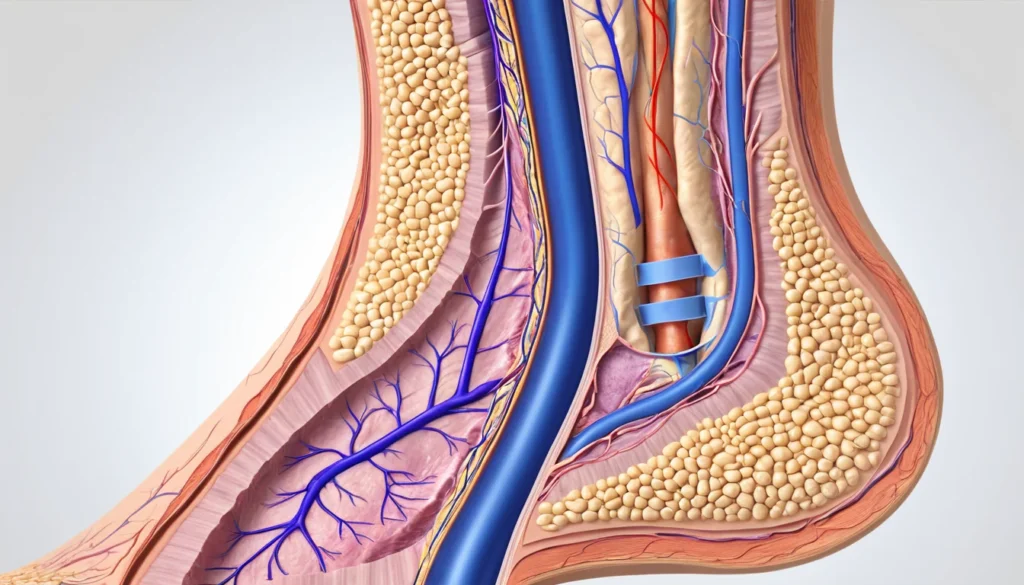
Venous leg ulcers are open wounds that form on the lower leg when blood cannot flow properly through the veins. They are the most common type of leg ulcer in Canada, and they can take weeks or even months to heal. Understanding the causes, symptoms, and treatment options can help you protect your health and avoid serious complications.
What Are Venous Leg Ulcers?
Venous leg ulcers are also called stasis ulcers or varicose ulcers. They develop as a result of a condition called venous insufficiency, where the veins in the legs struggle to send blood back up to the heart.
These ulcers most often appear on the inner or outer side of the lower leg, just above the ankle. Because blood circulation is poor in this area, wounds heal very slowly and can worsen quickly without proper care.
According to the Mayo Clinic’s overview of venous conditions, venous disease is extremely common and affects millions of people worldwide, including a significant number of Canadians.
What Causes Venous Leg Ulcers?
Your veins contain tiny valves that keep blood moving in one direction — toward the heart. When these valves are damaged or weakened, blood flows backward and pools in the lower legs. This is venous insufficiency.
As blood pools, pressure builds inside the veins. Eventually, fluid leaks out of the veins and into the surrounding tissue. Over time, this damages the skin and underlying tissue, leading to the formation of a venous leg ulcer.
Common Risk Factors
Certain factors increase your chances of developing venous leg ulcers. These include:
A history of deep vein thrombosis (blood clots in the leg)
Varicose veins
Obesity
Standing or sitting for long periods each day
Older age
A previous venous leg ulcer
Limited movement or mobility challenges
In rare cases, a blocked vein rather than a damaged valve may be the root cause. However, damaged valves are responsible for the vast majority of cases.
Recognising the Symptoms
Venous leg ulcers often start with warning signs before a wound fully opens. Catching these early signs can make a real difference in how quickly you recover.
Early Warning Signs
Before an ulcer forms, you may notice swelling in your lower legs and ankles, especially at the end of the day. You might also feel a dull ache, heaviness, or tingling in your legs. These symptoms tend to ease when you lift your legs above heart level.
The skin around the affected area may begin to change colour, turning a reddish-brown shade. It may also feel itchy, tight, or unusually sensitive to creams and lotions — a reaction known as contact dermatitis.
Signs of an Open Ulcer
Once a venous leg ulcer has formed, it typically looks like an open sore with irregular edges. The wound often drains a clear or slightly yellow fluid and may develop a yellowish crust. The surrounding skin is usually thin, discoloured, and tender to the touch.
Because venous leg ulcers develop from poor circulation, they are notoriously slow to heal. A smaller ulcer treated early will always heal faster than a larger, neglected one. Therefore, acting quickly at the first sign of a wound is essential.
Signs of Infection
Sometimes a venous leg ulcer can become infected. Watch for these warning signs:
An unpleasant or foul smell from the wound
Pus or cloudy discharge
Skin around the ulcer that is bright red, hot, and very painful
Fever or chills
An infected ulcer needs medical attention right away. Do not wait to see if it improves on its own.
How Are Venous Leg Ulcers Diagnosed?
Before starting any treatment, your doctor needs to confirm that your wound is actually a venous leg ulcer. This step matters because other types of ulcers — such as arterial ulcers caused by poor artery circulation — require completely different treatment. In fact, compression stockings, which are used to treat venous ulcers, can make arterial ulcers significantly worse.
Your doctor will typically start with a physical exam and a review of your health history. In addition, a Doppler ultrasound is usually ordered. This painless scan uses sound waves to measure blood flow in the leg veins and confirm venous insufficiency as the cause.
Additional Tests
If the cause of your ulcer is unclear, your doctor may order further tests. These can include:
A complete blood count (CBC) to check for blood disorders such as thalassemia or anaemia
A glucose tolerance test to rule out diabetes, which is a common cause of hard-to-heal leg wounds due to diabetic neuropathy (nerve damage caused by high blood sugar)
An erythrocyte sedimentation rate (ESR) test to look for autoimmune conditions like rheumatoid arthritis, which can cause inflammation in the veins and lead to skin ulcers
For ulcers that do not respond to standard treatment after several weeks, your doctor may also recommend:
A wound culture to identify bacterial or fungal infection
A skin biopsy to rule out skin cancer. Although rare, a type of skin cancer called squamous cell carcinoma can sometimes look very similar to a chronic venous leg ulcer.
For more information on how venous conditions are investigated, visit Healthline’s guide to venous insufficiency.
Treatment Options for Venous Leg Ulcers
The most important part of treating venous leg ulcers is improving blood flow in the affected leg. Most treatment plans combine compression therapy with wound care and lifestyle changes.
Compression Therapy
Compression stockings or bandages are the cornerstone of venous leg ulcer treatment. They apply gentle, steady pressure to the leg, which helps push blood upward toward the heart. This reduces swelling and prevents fluid from leaking into the surrounding tissue.
Patients who use compression therapy consistently over a long period have much better healing outcomes than those who use it only occasionally. Furthermore, continuing to wear compression stockings after the ulcer heals can help prevent it from coming back.
Wound Care and Debridement
Proper wound care is essential. Your healthcare provider will clean the ulcer regularly and remove any dead or damaged tissue. This process is called debridement, and it helps the wound heal faster by exposing healthy tissue underneath.
Keeping your legs elevated — ideally above the level of your heart — as often as possible also helps reduce swelling and improve circulation.
Lifestyle and Diet
A balanced diet rich in fibre, vitamins, and protein supports skin repair and overall healing. Regular, gentle exercise — such as walking — helps pump blood through the leg veins. Even simple ankle exercises while sitting can make a difference.
Maintaining a healthy weight also reduces pressure on the leg veins and lowers your risk of future ulcers.
Medications and Advanced Treatments
If a venous leg ulcer has not healed after six months of standard compression treatment, additional options are available:
Pentoxifylline: An oral medication that improves blood flow and speeds up healing when used alongside compression therapy.
Antibiotics: These are only used if the ulcer is infected. Antibiotics do not speed up the healing of non-infected venous leg ulcers.
Intermittent pneumatic compression (IPC): A device worn over the lower leg that gently inflates and deflates, mimicking the pumping action of walking. This can be used at home for ulcers that do not respond to standard care.
Skin grafting: In some cases, a surgeon may apply a thin layer of healthy skin over the ulcer to help it close. This is typically considered when other treatments have not worked.
Preventing Venous Leg Ulcers
If you have risk factors for venous leg ulcers — or if you have had one in the past — prevention is key. The good news is that simple daily habits can greatly reduce your risk.
Wear compression stockings during the day, especially if you stand or sit for long periods
Elevate your legs whenever you rest or relax
Stay as active as possible with regular walking or movement
Maintain a healthy weight
Inspect your lower legs and ankles regularly for any skin changes or early wound signs
For additional guidance on vascular health and prevention, Health Canada offers resources on chronic disease prevention that may be helpful.
When to See a Doctor
If you notice any skin changes, swelling, or an open wound on your lower leg, do not ignore it. Venous leg ulcers rarely heal on their own without proper treatment, and delaying care allows them to grow larger and become harder to treat.
You can start by visiting your family doctor, who can assess the wound and refer you to a vascular specialist if needed. If you do not have a family doctor, a walk-in clinic is a good first step. Most provincial health plans in Canada cover assessment and referral for venous conditions, so check with your local health authority about what services are available to you.
Seek urgent care at an emergency department or call 811 (Health Link in many provinces) if your ulcer shows signs of serious infection, such as rapidly spreading redness, fever, or significant pain.
Always consult a qualified healthcare provider before starting any treatment. The information in this article is for general educational purposes only and is not a substitute for professional medical advice.
Frequently Asked Questions About Venous Leg Ulcers
How long does it take for venous leg ulcers to heal?
Venous leg ulcers can take anywhere from a few weeks to several months to heal, depending on their size and how early treatment begins. Smaller ulcers treated promptly with compression therapy tend to heal much faster. Consistent use of compression stockings is the single most important factor in recovery time.
Are venous leg ulcers dangerous?
Venous leg ulcers are not immediately life-threatening, but they can become serious if left untreated. An infected venous leg ulcer can lead to cellulitis or, in severe cases, a bone infection. Seeking early treatment greatly reduces the risk of complications.
Can venous leg ulcers come back after they heal?
Yes, venous leg ulcers have a high rate of recurrence, especially if the underlying venous insufficiency is not managed. Continuing to wear compression stockings after healing is one of the most effective ways to prevent them from returning. Staying active and keeping your legs elevated regularly also helps.
What is the difference between a venous ulcer and an arterial ulcer?
Venous leg ulcers are caused by poor drainage through the veins, while arterial ulcers result from reduced blood supply through the arteries. They look and feel different, and they require opposite treatments — compression helps venous ulcers but can be harmful for arterial ones. A Doppler ultrasound test helps doctors tell them apart.
Do compression stockings really help venous leg ulcers heal?
Yes, compression stockings are the most effective and well-proven treatment for venous leg ulcers. They improve blood flow by gently squeezing the leg, reducing swelling and preventing fluid from leaking into surrounding tissue. Wearing them consistently every day produces the best results.
Is diabetes linked to venous leg ulcers?
Diabetes does not directly cause venous leg ulcers, but it can make any leg wound much harder to heal. People with diabetes are also prone to a different type of ulcer called a diabetic foot ulcer, caused by nerve damage and poor circulation in the feet. If you have diabetes and notice any wound on your leg or foot, see your doctor promptly.
Key Takeaways
Venous leg ulcers form when damaged vein valves cause blood to pool in the lower legs, damaging the skin over time.
They most often appear just above the ankle and drain a clear or yellowish fluid.
Early symptoms include swelling, leg heaviness, and skin colour changes — catching these early leads to faster healing.
A Doppler ultrasound confirms the diagnosis and rules out other causes of leg wounds.
Compression therapy is the most important treatment. Using compression stockings consistently improves outcomes significantly.
Elevating your legs, staying active, and eating a balanced diet all support healing.
Infected ulcers need prompt medical attention. Signs include pus, a foul smell, intense redness, and fever.
Prevention is possible — wearing compression stockings daily and staying active can stop ulcers from returning.
Visit your family doctor or a walk-in clinic early if you notice any wound or skin change on your lower leg.