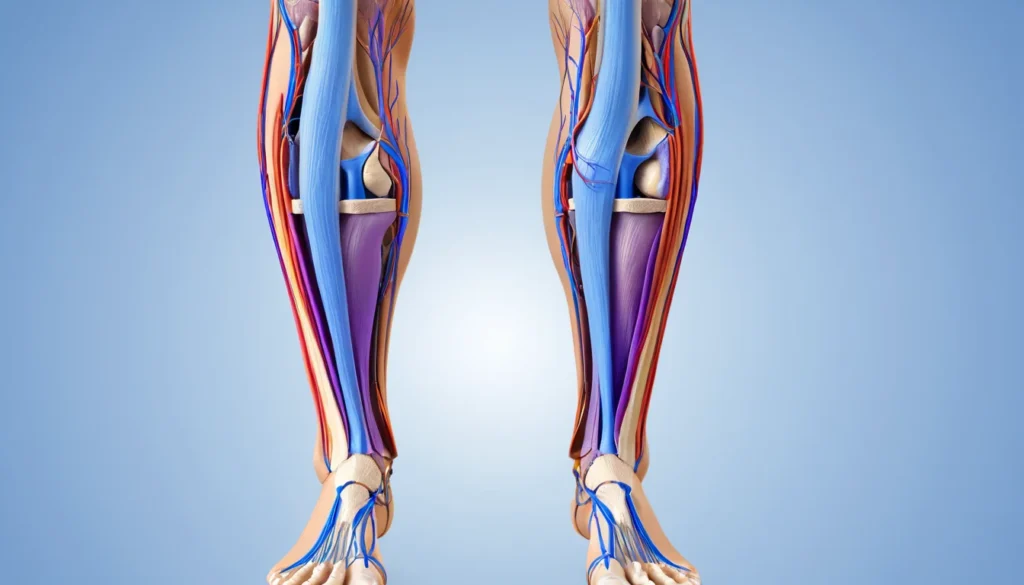
Venous insufficiency is a common condition where the veins in your legs have trouble sending blood back to your heart. It can cause leg pain, swelling, and skin changes that affect your daily life. This article explains what causes venous insufficiency, what symptoms to watch for, and what treatment options are available to Canadians.
What Is Venous Insufficiency?
Your veins carry blood from your arms, legs, and organs back to your heart. Healthy leg veins have small one-way valves that keep blood moving upward. These valves open to let blood flow toward the heart, then close to stop it from flowing backward.
Venous insufficiency happens when those valves stop working properly. Blood pools in the leg veins instead of moving forward. Over time, this increased pressure can cause pain, swelling, and other serious problems.
According to Mayo Clinic, venous insufficiency is most often linked to varicose veins and deep vein thrombosis (DVT). Both conditions can damage the vein valves and slow blood flow.
What Causes Venous Insufficiency?
There are two main reasons venous insufficiency develops. First, a blood clot can block blood flow inside a vein. Second, damaged or leaky valves can allow blood to flow backward — a process called reflux. In many cases, both problems are present at the same time.
Varicose veins and deep vein thrombosis (DVT) are the most common causes. DVT means a blood clot has formed inside a deep vein, usually in the leg. If the clot damages the valve, the vein can no longer push blood upward effectively.
In some cases, weak leg muscles are also a factor. Your calf muscles act like a pump, squeezing veins to help push blood upward. When those muscles are weak, blood moves slowly and puts extra pressure on the vein walls. Over time, this pressure can stretch the veins and damage the valves.
For more background on how blood clots affect vein health, visit Healthline’s guide to chronic venous insufficiency.
Risk Factors for Venous Insufficiency
Some people are more likely to develop venous insufficiency than others. Understanding your risk factors can help you take action early. Talk to your family doctor if any of the following apply to you.
Common Risk Factors
Older age — vein valves naturally weaken over time
Varicose veins — a sign that vein valves are already under stress
Previous deep vein thrombosis (DVT) — blood clots can permanently damage valves
Family history — if a parent or sibling has the condition, your risk is higher
Obesity — extra body weight puts more pressure on leg veins
Sedentary lifestyle — sitting or standing for long periods slows blood flow
Weak leg muscles — reduces the natural pumping action that helps veins work
Pregnancy — increased blood volume and pressure on pelvic veins
Leg injuries — trauma can damage veins and their valves
Certain cancers — can press on veins or increase clotting risk
However, having one or more of these risk factors does not mean you will definitely develop venous insufficiency. It simply means it is worth paying closer attention to how your legs feel — especially after long periods of inactivity.
Symptoms of Venous Insufficiency
The symptoms of venous insufficiency range from mildly annoying to seriously uncomfortable. They tend to get worse after standing or sitting for a long time. Raising your legs often brings some relief.
Signs to Watch For
Aching, cramping, or a heavy feeling in the legs
Itching or tingling in the lower legs
Pain that gets worse when standing
Pain that improves when you raise your legs
Swollen ankles and feet
Redness on the legs or ankles
Skin colour changes around the ankles
Visible varicose veins near the surface of the skin
Thickening or hardening of the skin on the lower legs
Open sores (ulcers) near the ankle that are slow to heal
It is important to note that certain medications and a lack of physical activity can make these symptoms worse. Furthermore, if you are planning to travel long distances or have surgery coming up, tell your doctor about any leg symptoms you have noticed. Both situations can increase the risk of blood clots.
Treatment Options for Venous Insufficiency
The good news is that venous insufficiency is very treatable. Your doctor will recommend a treatment plan based on the underlying cause and how severe your symptoms are. Most people see real improvement with a combination of lifestyle changes and medical support.
Compression Stockings
Compression stockings are the most common first-line treatment for venous insufficiency. They apply gentle pressure to the ankle and lower leg, which helps push blood upward and reduces swelling. These stockings are available at most Canadian pharmacies without a prescription, but they come in different strengths and lengths.
Your family doctor or specialist can recommend the right type based on your needs. Wearing the wrong level of compression can sometimes do more harm than good, so it is worth getting professional guidance.
Elevating Your Legs
Raising your legs above the level of your heart while lying down helps drain pooled blood out of the lower legs. This is a simple and effective way to reduce swelling and discomfort. Try to do this for 15 to 30 minutes several times a day, especially after being on your feet.
Exercise and Physical Activity
Regular physical activity is one of the best things you can do for vein health. Walking, in particular, activates the calf muscles and helps pump blood back toward the heart. Your doctor may refer you to a physiotherapist or suggest a structured exercise programme tailored to your fitness level.
Even short walks throughout the day can make a significant difference. If you work a desk job, try to get up and move for a few minutes every hour.
Weight Management
If you are carrying extra weight, losing even a small amount can reduce the pressure on your leg veins. This is especially important for people whose venous insufficiency is linked to obesity. Your family doctor or a registered dietitian can help you create a realistic plan.
Medications
For people whose venous insufficiency is caused by blood clots, doctors may prescribe blood thinners, also called anticoagulants. These medications help prevent new clots from forming and can stop existing clots from getting larger. If your legs are inflamed, your doctor may also prescribe topical or oral anti-inflammatory treatments.
Always take medications exactly as prescribed. Do not stop taking blood thinners without speaking to your doctor first, as this can be dangerous.
Other Medical Procedures
In more advanced cases, your doctor may refer you to a vascular specialist. Procedures such as sclerotherapy (injecting a solution into the vein), laser therapy, or minor surgery may be recommended. These options are typically covered under provincial health plans when medically necessary, though coverage varies by province.
Preventing Venous Insufficiency
Prevention is especially important if venous insufficiency runs in your family. The same habits that help treat the condition also help prevent it from developing in the first place. Small daily changes can protect your vein health over the long term.
Prevention Tips
Stay active — walk regularly and avoid sitting or standing in one position for too long
Maintain a healthy weight — even modest weight loss reduces vein pressure
Quit smoking — smoking damages blood vessels and reduces circulation; speak to your family doctor about free quit-smoking programmes available across Canada
Protect your legs — avoid injuries that could damage veins
Move during long trips — on flights or long car rides, stretch your legs and walk around regularly
Wear compression stockings — especially during travel or if you are on your feet all day
According to Health Canada, staying physically active is one of the most effective ways to support cardiovascular and circulatory health. Even moderate activity, like a daily 30-minute walk, provides measurable benefits for your veins.
When to See a Doctor
If you notice persistent leg swelling, skin changes, or sores on your ankles that are not healing, do not wait. These can be signs of venous insufficiency that needs medical attention. The sooner it is caught, the easier it is to treat.
Start by visiting your family doctor. If you do not have one, a walk-in clinic can assess your symptoms and refer you to the right specialist if needed. Most provincial health plans cover assessments for vascular conditions, so there is no reason to put it off.
You should seek urgent care if you notice sudden, severe leg pain, redness, and warmth — especially after a period of inactivity. These can be signs of deep vein thrombosis (DVT), which requires immediate treatment.
Frequently Asked Questions About Venous Insufficiency
What is the difference between venous insufficiency and varicose veins?
Varicose veins are a visible symptom — swollen, twisted veins you can see under the skin. Venous insufficiency is the underlying condition that causes them. You can have venous insufficiency without prominent varicose veins, but the two conditions are closely linked.
Can venous insufficiency go away on its own?
Venous insufficiency does not typically go away without treatment. However, lifestyle changes like regular exercise, leg elevation, and wearing compression stockings can significantly reduce symptoms. Without treatment, the condition tends to get worse over time.
Is venous insufficiency dangerous?
In mild cases, venous insufficiency causes discomfort but is not immediately life-threatening. However, if left untreated, it can lead to serious complications such as skin ulcers or deep vein thrombosis. Always speak to your doctor if you notice worsening symptoms.
What kind of doctor treats venous insufficiency in Canada?
Your family doctor is the best starting point for a venous insufficiency assessment. They may refer you to a vascular surgeon, phlebologist (vein specialist), or internist depending on your symptoms. Referrals through the provincial health system are typically covered.
Do compression stockings really help venous insufficiency?
Yes — compression stockings are one of the most effective and well-researched treatments for venous insufficiency. They help push blood upward, reduce swelling, and relieve pain. Ask your doctor or pharmacist to help you choose the right compression level for your situation.
Can exercise make venous insufficiency worse?
In most cases, exercise actually improves venous insufficiency by strengthening the calf muscles that help pump blood upward. Low-impact activities like walking, swimming, and cycling are especially helpful. However, it is always best to check with your doctor before starting a new exercise programme.
Key Takeaways
Venous insufficiency happens when vein valves in the legs fail to push blood back to the heart properly.
The most common causes are varicose veins and deep vein thrombosis (DVT).
Symptoms include leg aching, swelling, skin changes, and slow-healing ankle sores.
Risk factors include older age, obesity, pregnancy, a sedentary lifestyle, and family history.
Treatment often starts with compression stockings, leg elevation, and regular exercise.
More serious cases may require medication or procedures covered by your provincial health plan.
Prevention includes staying active, maintaining a healthy weight, and avoiding long periods of inactivity.
See your family doctor or walk-in clinic if you have persistent leg symptoms — early treatment makes a real difference.
This article is for informational purposes only and is not a substitute for professional medical advice. Always consult your family doctor or a qualified healthcare provider before making any changes to your health routine or treatment plan.