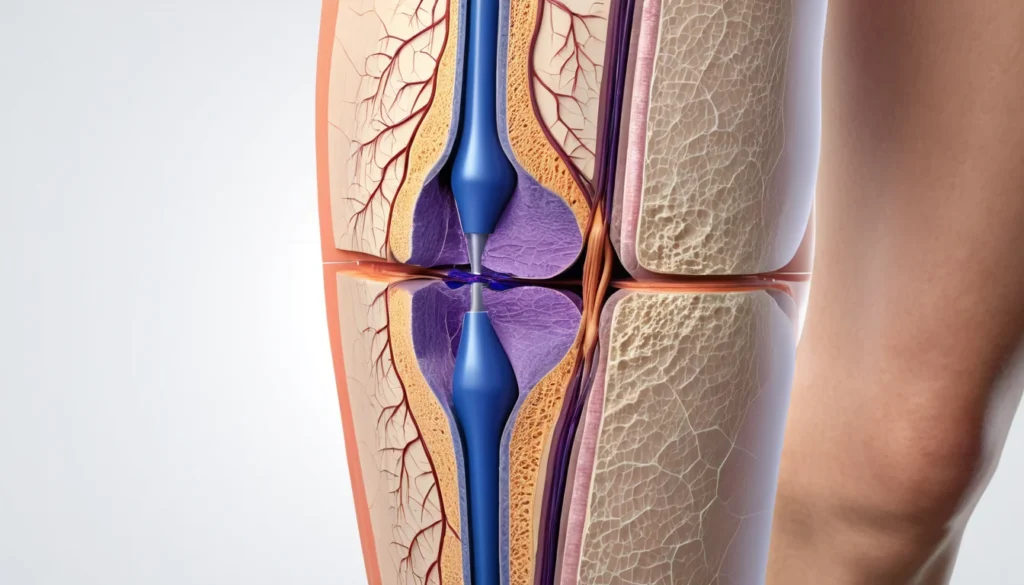
Sclerotherapy for varicose veins has been a trusted treatment for decades. It is a simple, non-surgical procedure where a solution is injected directly into problem veins, causing them to close off and fade. If you have been noticing bulging, twisted veins or fine reddish spider veins on your legs, this article will help you understand your options. As always, speak with your family doctor or a specialist before starting any treatment.
What Are Varicose Veins and Spider Veins?
Varicose veins are large, swollen veins that bulge under the skin. They often appear twisted or rope-like, and they are most common on the legs and feet. They develop when the valves inside a vein stop working properly, allowing blood to pool.
Spider veins are smaller and closer to the skin’s surface. They appear as fine red, purple, or blue lines, often spreading out like a web. Both types of veins can cause discomfort, but spider veins are usually more of a cosmetic concern.
For most Canadians, varicose veins are more than just a cosmetic issue. They can cause aching, heaviness, swelling, and fatigue in the legs. According to the Mayo Clinic’s overview of varicose veins, these symptoms often get worse after standing or sitting for long periods.
How Sclerotherapy for Varicose Veins Works
Sclerotherapy involves injecting a special solution, often a saline (salt-water) solution, directly into the affected vein. This irritates the lining of the vein and causes the blood inside to clot. Over time, scar tissue forms and the vein closes permanently.
Once the vein seals shut, your body gradually absorbs it. The blood that used to flow through it simply reroutes to healthier veins nearby. As a result, the treated vein fades and eventually disappears from view.
Studies show that up to 80% of injected veins can be successfully eliminated with sclerotherapy. However, results depend on the size and number of veins being treated. Larger varicose veins may need additional procedures, while spider veins often respond very well to this treatment alone.
What Happens During the Procedure?
Your doctor uses a very fine needle to inject the sclerosing solution into the vein. The procedure is done right in the clinic — no hospital stay or general anaesthetic is needed. Most patients find the process quite manageable.
You may feel mild discomfort or muscle cramping for a minute or two after each injection. The number of veins treated in one session varies based on their size and location. In general, a single session takes up to 30 minutes from start to finish.
The number of sessions you need depends on how many veins require treatment. Your doctor will create a plan that works for your specific situation. Many patients see significant improvement after just one or two sessions.
What to Expect After Sclerotherapy
One of the biggest advantages of sclerotherapy for varicose veins is the quick recovery. You do not need to stay in hospital, and most people return to their normal activities the same day. Walking right after the procedure is actually encouraged.
Your doctor will likely recommend wearing compression stockings for a period after treatment. These stockings help compress the treated veins and support healthy circulation. They also reduce the chance of complications.
Common Side Effects
Most side effects are mild and short-lived. It is normal to experience some of the following after sclerotherapy:
Itching at the injection site, lasting one to two hours
Bruising around the treated vein, which may take a few days or weeks to fade
Redness or mild swelling at the injection site, usually clearing within a few days
Mild inflammation along the treated vein
Some people may have a mild allergic reaction to the sclerosing agent. If you have known allergies, always tell your doctor before the procedure. This allows them to choose the safest solution for you.
What to Avoid in the First 48 Hours
In the first two days after treatment, there are a few things to avoid. Hot baths, hot compresses, and direct sun exposure on the treated areas should all be skipped. Heat can increase inflammation and slow healing.
Cold showers and gentle walking, however, are perfectly fine. Try to avoid sitting or standing still for long periods. Keeping your legs moving helps circulation and supports recovery.
Possible Complications to Watch For
Sclerotherapy is considered a safe and effective procedure, but complications can occasionally occur. Knowing what to look for will help you act quickly if something does not feel right.
In rare cases, patients may experience sudden swelling in the leg, inflammation near the groin area, or small ulcers at the injection site. These are uncommon but require prompt attention. If you notice any of these signs, contact your doctor or visit a walk-in clinic right away.
According to Healthline’s guide to sclerotherapy, serious complications are rare when the procedure is performed by a trained medical professional. Choosing a qualified provider significantly reduces your risk.
Results: How Long Does It Take to See a Difference?
Results from sclerotherapy for varicose veins do not appear overnight. Spider veins typically respond within three to six weeks after treatment. Larger varicose veins take longer — usually three to four months before you see the full improvement.
Furthermore, veins that respond well to treatment generally do not return. However, new veins can develop in the same area over time. This is not a sign that the treatment failed — it simply means that the underlying tendency to develop vein problems may continue.
Some patients choose to have occasional follow-up treatments to address any new veins that appear. Your specialist can help you decide what maintenance plan makes sense for your lifestyle and health goals.
When Sclerotherapy May Not Be Enough
For very large varicose veins, sclerotherapy alone may not be the best option. In those cases, a doctor may recommend a procedure called vein stripping or a newer technique called endovenous laser therapy. These approaches target deeper or wider veins that injections cannot fully close.
Laser therapy is also a good option for very fine spider veins that are too small for a needle. Your vascular specialist will assess your veins and recommend the most appropriate treatment. A combination of approaches is sometimes used for the best results.
Is Sclerotherapy Covered in Canada?
Coverage for sclerotherapy varies across Canada. When varicose veins cause significant medical symptoms — such as pain, swelling, skin changes, or ulcers — some provincial health plans may cover part or all of the treatment cost. However, when the procedure is done purely for cosmetic reasons, it is generally not covered.
It is worth checking with your provincial or territorial health authority to understand your coverage. Your family doctor can also help you navigate a referral to a vascular specialist if your symptoms are medically significant. For general information, visit Health Canada’s official health information portal.
Private insurance plans sometimes cover sclerotherapy when it is deemed medically necessary. Keep records of your symptoms and any previous treatments, as these will support your coverage request.
When to See a Doctor About Varicose Veins
You do not need to wait until your veins become painful to seek advice. If varicose or spider veins are affecting your confidence or daily comfort, a conversation with your family doctor is a great first step. They can assess your situation and refer you to a specialist if needed.
However, some symptoms do require more urgent attention. See your family doctor or visit a walk-in clinic promptly if you experience:
Sudden or severe leg swelling
Redness, warmth, or tenderness along a vein
A vein that is bleeding or feels hard to the touch
Skin sores or ulcers near varicose veins
A heavy, aching feeling that interferes with daily activity
These symptoms can sometimes signal a more serious condition, such as a blood clot. Getting checked out quickly is always the right call. Your doctor can rule out anything serious and help you find the right treatment path.
Frequently Asked Questions About Sclerotherapy for Varicose Veins
Does sclerotherapy for varicose veins hurt?
Most patients feel only mild discomfort during sclerotherapy for varicose veins. You may experience a brief burning or cramping sensation for one to two minutes after each injection. The needle used is very fine, and most people tolerate the procedure well without any pain medication.
How many sclerotherapy sessions will I need?
The number of sessions depends on how many veins need treatment and their size. Some patients see excellent results after just one or two sessions, while others may need three or more. Your doctor will assess your veins and recommend a personalised treatment plan.
Can varicose veins come back after sclerotherapy?
Veins that are successfully treated with sclerotherapy do not typically return. However, new varicose or spider veins can develop over time in the same general area. Wearing compression stockings and staying active can help slow the development of new veins.
Is sclerotherapy safe?
Yes, sclerotherapy for varicose veins is widely regarded as a safe and effective procedure when performed by a qualified medical professional. Serious complications are rare. Mild side effects like bruising, itching, and temporary redness are common but usually resolve on their own within days.
How long do I need to wear compression stockings after sclerotherapy?
Your doctor will advise you on how long to wear compression stockings based on your individual treatment. In most cases, patients wear them continuously for the first few days and then during waking hours for one to two weeks. Compression helps the treated veins stay closed and supports faster healing.
Can I exercise after sclerotherapy?
Light walking is encouraged right after sclerotherapy, as it promotes healthy circulation. However, you should avoid intense exercise, such as running or weightlifting, for at least one to two weeks. Always follow the specific guidance your doctor gives you after the procedure.
Key Takeaways
Sclerotherapy for varicose veins is a safe, well-established procedure with a strong success rate.
A fine needle injects a solution into the vein, causing it to close and fade over time.
Spider veins respond within three to six weeks; larger veins may take three to four months.
Side effects are usually mild — bruising, itching, and temporary redness are most common.
After treatment, walk regularly, wear compression stockings, and avoid heat and sun for 48 hours.
Coverage in Canada depends on your province and whether the treatment is medically necessary.
Always talk to your family doctor first — they can refer you to the right specialist and help you understand your options.