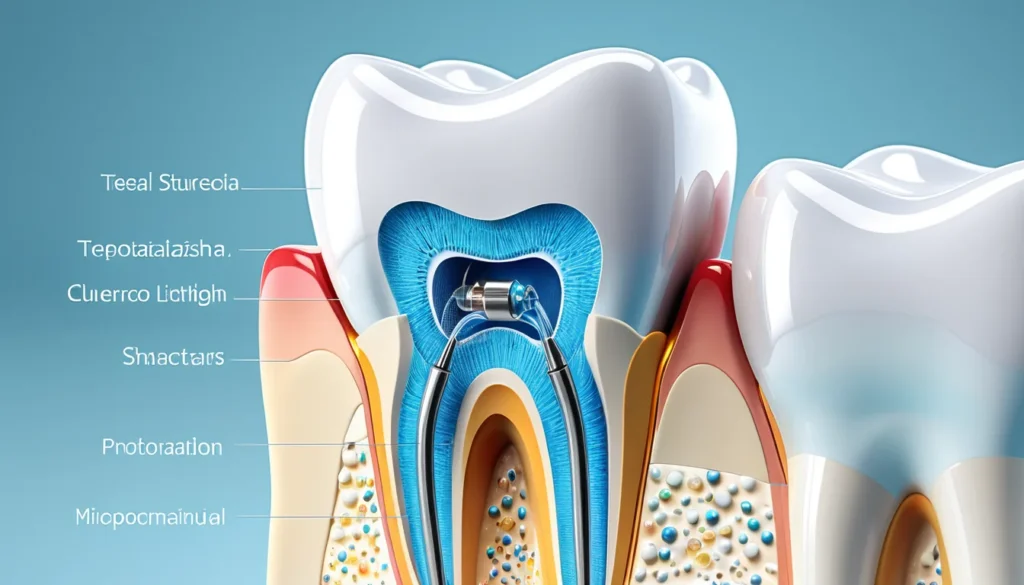
Tooth decay prevention is one of the most important things you can do for your family’s health. Cavities are caused by a bacterial infection that slowly breaks down your teeth — but the good news is that with the right habits, most cavities are entirely preventable. This guide explains how tooth decay starts, what puts you or your child at risk, and what you can do today to protect your smile.
What Is Tooth Decay and Why Does It Happen?
Tooth decay happens when bacteria in your mouth feed on sugars and produce acid. That acid slowly breaks down the hard outer layer of your teeth, called enamel. Over time, this creates a cavity — a small hole in the tooth.
Your mouth is always balancing two opposite processes: demineralisation (acid wearing enamel away) and remineralisation (saliva and fluoride rebuilding enamel). When the balance tips too far toward acid, decay begins. Understanding this balance is the foundation of all tooth decay prevention.
Three main factors drive this process:
Cavity-causing bacteria living in your mouth
Sugary or starchy foods that feed those bacteria
Teeth that are vulnerable to acid attack
Good prevention targets all three of these factors at once. According to the World Health Organization’s oral health guidelines, dental disease is one of the most common preventable conditions worldwide — and diet and hygiene habits are the biggest factors.
How Tooth Decay Is Classified
Not all cavities are the same. Dentists generally group tooth decay into three stages, each with a different approach to treatment.
Subclinical Lesions
At the earliest stage, acid damage is happening below the surface of the enamel. You cannot see or feel it yet. In many cases, no treatment is needed — just improved habits and monitoring. Your dentist may simply watch these areas closely at checkups.
Visible Enamel Lesions
At this stage, a white or brown spot appears on the tooth surface. The cavity has not fully formed yet. However, professional intervention — such as fluoride treatment or sealants — can often stop the decay from progressing. This is the most important window for tooth decay prevention to work.
Deep Cavities Into Dentine or the Pulp
When decay reaches the dentine (the layer beneath enamel) or deeper, a filling or other restorative treatment is needed. In addition, your dentist will focus on preventing new decay from forming around the edges of any restoration. Catching problems early saves you pain, time, and money.
Tooth Decay Prevention in Children: Why It Matters Early
Many parents assume baby teeth do not matter much because they fall out anyway. In fact, the opposite is true. Baby teeth hold space in the jaw and guide permanent teeth into the correct position. When baby teeth are lost too early due to decay, permanent teeth can come in crooked or misaligned.
Research shows that the pattern of baby teeth directly influences how adult teeth bite together. Therefore, preventing decay in young children protects their long-term dental health, not just their smile right now.
Preschool-Age Children Are at High Risk
Children under six are particularly vulnerable, and they are harder to reach through school-based dental programmes. Studies across Europe have consistently shown that decay rates in five-year-olds vary widely by country — and that early education makes a measurable difference.
In some European studies, up to 26–28% of five-year-olds had no cavities at all, thanks to strong prevention programmes. For comparison, studies in countries with weaker prevention efforts showed cavity rates as high as 62–70% in children aged three to seven. These numbers highlight just how much tooth decay prevention habits in early childhood matter.
Health Canada’s guide to children’s oral health recommends that parents begin cleaning their child’s teeth as soon as the first tooth appears — even before age one.
Key Ages for Dental Monitoring in Children
Dentists track dental development using key age milestones. Here is what to expect:
Under 6 years: Baby teeth (primary dentition) are in place
Age 6: The first permanent molar erupts — a critical tooth to protect
Age 12: Full set of permanent teeth (except wisdom teeth) is present
Age 18: Jaw growth is complete
Each of these stages calls for a dental checkup and a fresh look at your child’s prevention plan. Furthermore, early visits help children become comfortable with the dentist, which reduces dental anxiety later in life.
Practical Tooth Decay Prevention Strategies
Preventing cavities does not require complicated treatments. Most of the work happens at home, every single day. Here are the strategies that dental science consistently supports.
Brush and Floss Consistently
Brush your teeth twice a day with a fluoride toothpaste. Use a soft-bristled brush and brush for two full minutes each time. Floss at least once a day to remove plaque from between teeth where your brush cannot reach.
For children under three, use a rice-grain-sized amount of fluoride toothpaste. For children aged three to six, use a pea-sized amount. Always supervise brushing until your child is around eight years old.
Reduce Sugar and Starchy Snacks
Every time you eat sugar or starch, bacteria in your mouth produce acid for about 20 minutes. The more often you snack, the more acid attacks your teeth face each day. Therefore, limiting snacking frequency — not just the total amount of sugar — is key to tooth decay prevention.
Sticky foods like dried fruit, crackers, and gummy snacks are especially harmful because they cling to teeth. Water is always the best drink between meals. Limit juice, sports drinks, and pop, even for children.
Use Fluoride
Fluoride is one of the most effective tools for tooth decay prevention. It strengthens enamel and makes teeth more resistant to acid. Most Canadian municipal water supplies contain fluoride, which provides passive protection every day.
In addition to fluoride toothpaste, your dentist may apply a fluoride varnish at checkups. This is especially recommended for children and for adults who are at higher risk of cavities. Ask your dentist whether fluoride treatments are right for you.
Ask About Dental Sealants
Dental sealants are thin protective coatings applied to the chewing surfaces of back teeth. They fill in the small grooves where food and bacteria get trapped. Sealants are most effective when applied shortly after permanent molars come in — usually around age six and again around age twelve.
Many provincial dental programmes in Canada cover sealants for children. Check with your provincial health plan to see what is included in your family’s coverage.
Drink Water and Stimulate Saliva
Saliva is your mouth’s natural defence system. It washes away food, neutralises acid, and carries minerals that rebuild enamel. Staying well hydrated supports healthy saliva flow.
Chewing sugar-free gum after meals can also boost saliva production. Look for gum that contains xylitol, a natural sweetener that actually inhibits the growth of cavity-causing bacteria. The Mayo Clinic’s dental health resource confirms that xylitol gum is a helpful addition to a good oral hygiene routine.
Community and School-Based Dental Health Programmes
Individual habits matter — but so does the community around us. Schools and daycares have a powerful influence on the health behaviours children develop. Dental health education delivered in schools has been shown to improve brushing habits, reduce sugar consumption, and increase the likelihood that children will visit a dentist regularly.
Many Canadian provinces run school-based dental screening programmes. These visits catch early signs of decay and connect families with care before problems become serious. Contact your local public health unit to find out what programmes are available in your area.
Furthermore, socioeconomic factors play a real role in dental health. Families with lower incomes face more barriers to dental care, including cost and access. Programmes like the Canadian Dental Care Plan aim to reduce these gaps by providing coverage for Canadians who do not have private dental insurance. If your family qualifies, this plan can cover preventive services including cleanings, fluoride treatments, and sealants.
When to See a Doctor or Dentist
Routine dental checkups are the cornerstone of tooth decay prevention. Most adults and children benefit from a professional cleaning and exam every six months. Your dentist can spot early decay that you cannot see or feel, and take action before a small spot becomes a large cavity.
See your family doctor or dentist sooner if you notice any of the following:
Tooth sensitivity to hot, cold, or sweet foods
A toothache or persistent dull ache in the jaw
Visible white, brown, or black spots on a tooth
Pain when biting or chewing
A broken or cracked tooth
If you do not have a regular dentist, a walk-in dental clinic can provide an initial assessment and refer you for further care. Many communities in Canada also have low-cost or sliding-scale dental services through community health centres. Your family doctor can help connect you with local resources if cost or access is a concern.
As always, the information in this article is for general educational purposes. Please speak with your own dentist or family doctor before making changes to your oral health routine, especially for young children or anyone with existing dental conditions.
Frequently Asked Questions About Tooth Decay Prevention
How can I prevent tooth decay naturally?
The most effective natural approaches to tooth decay prevention include brushing twice daily with fluoride toothpaste, reducing the frequency of sugary snacks, drinking plenty of water, and chewing sugar-free xylitol gum after meals. These habits support your mouth’s natural ability to repair minor acid damage. However, natural strategies work best alongside regular professional dental cleanings.
At what age should children first see a dentist?
Health Canada recommends that children see a dentist within six months of their first tooth appearing, or by their first birthday — whichever comes first. Early dental visits help with tooth decay prevention by identifying risks early and teaching parents how to clean their child’s teeth properly. Getting children comfortable with the dentist also reduces anxiety about future visits.
Can tooth decay be reversed?
In its very earliest stage — before a cavity actually forms — tooth decay can be slowed or reversed through remineralisation. Fluoride treatments, improved brushing habits, and dietary changes can help enamel rebuild itself at this stage. However, once a cavity has formed through the enamel and into the dentine, a filling is needed and the damage cannot be reversed on its own.
Is fluoride safe for children?
Yes, fluoride is safe and recommended for children as part of a tooth decay prevention routine, when used in the correct amounts for the child’s age. Use a rice-grain-sized amount of fluoride toothpaste for children under three, and a pea-sized amount for children aged three to six. If you have questions about fluoride supplements or treatments for your child, your dentist or family doctor is the best person to ask.
Does the Canadian Dental Care Plan cover cavity prevention?
The Canadian Dental Care Plan is designed to help Canadians who do not have private dental insurance access essential dental services, including preventive care. Covered services may include cleanings, fluoride treatments, and sealants, depending on your eligibility. Check the Government of Canada website or speak with your family doctor to find out if your family qualifies and what services are included.
How often should adults get a dental checkup for cavity prevention?
Most dentists recommend a professional cleaning and checkup every six months as part of an ongoing tooth decay prevention routine. However, your dentist may suggest more frequent visits if you have a history of cavities, gum disease, dry mouth, or other risk factors. Regular checkups allow your dentist to catch early decay before it requires more extensive — and expensive — treatment.
Key Takeaways
Tooth decay prevention works by balancing acid damage with natural and fluoride-assisted enamel repair.
The earlier you start — especially in children — the better the long-term results for dental health.
Brushing twice daily, flossing, reducing snack frequency, and drinking water are the most powerful daily habits.
Fluoride toothpaste, dental sealants, and professional fluoride treatments offer extra protection, especially for children.
Schools, daycares, and community health programmes play an important role in building healthy dental habits.
The Canadian Dental Care Plan may help cover preventive dental services for eligible Canadians without private insurance.
See your dentist every six months, and visit sooner if you notice pain, sensitivity, or visible spots on your teeth.
Always speak with your family doctor or dentist for advice tailored to your specific situation.