Your thyroid gland is a small but powerful organ that controls much of how your body functions every day. It sits at the front of your neck and produces hormones that affect your energy, weight, mood, and more. In this article, you will learn what the thyroid gland does, how it can go wrong, and when to talk to your family doctor or visit a walk-in clinic.
What Is the Thyroid Gland?
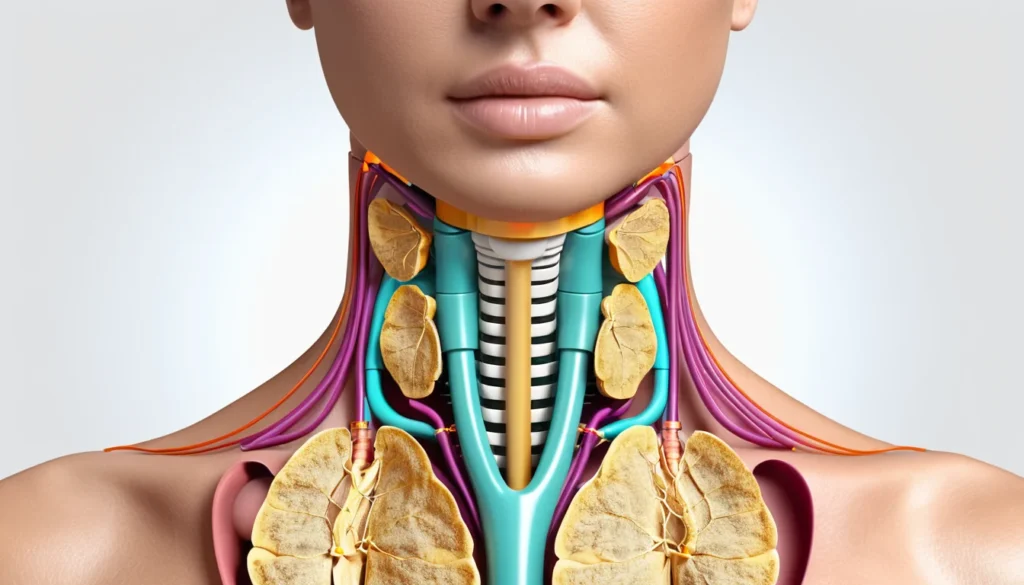
The thyroid gland is an endocrine gland. That means it releases hormones directly into your bloodstream. It sits at the base of the front of your neck, just below your voice box.
In most healthy adults, the thyroid weighs less than 30 grams. However, it plays an outsized role in keeping your body running smoothly. Think of it as a control centre for your metabolism.
The thyroid has a distinctive butterfly shape. It has two lobes — one on each side of your trachea (windpipe) — connected in the middle by a small bridge of tissue called the isthmus. Because it sits so close to the skin’s surface, a doctor can easily feel and inspect it during a routine physical exam.
How the Thyroid Gland Works
The thyroid gland is rich in blood vessels, which helps it produce and release hormones quickly when the body needs them. It contains two main types of cells, each with a different job.
C Cells and Calcitonin
One type is called C cells. These cells produce a hormone called calcitonin. Calcitonin helps lower calcium levels in the blood. Therefore, it plays a role in bone health and keeping calcium in balance throughout your body.
Follicular Cells and Thyroid Hormones
The second — and most numerous — type is follicular cells. These cells group together into tiny, round structures called follicles. The follicles capture iodine from your blood and use it to make thyroid hormones.
Iodine is an essential mineral found in foods like fish, dairy, and iodized salt. Without enough iodine, your thyroid cannot make the hormones your body needs. For most Canadians eating a varied diet, getting enough iodine is not usually a problem. However, deficiency can still occur in some cases.
The follicles store thyroid hormone as a pre-hormone until the body calls for it. When the signal arrives, the follicles release the stored hormone into the bloodstream in two forms:
Triiodothyronine (T3): the more active form, making up about 20% of what is released
Thyroxine (T4): the more abundant form, making up about 80% of what is released
T4 is converted into T3 in other tissues around the body. T3 is the form that most directly affects your cells and organs.
How the Brain Controls the Thyroid Gland
Your thyroid does not work alone. It takes its orders from the pituitary gland, a pea-sized gland at the base of your brain. The pituitary releases a chemical called thyroid-stimulating hormone, or TSH.
When TSH reaches the thyroid, the follicles respond by releasing their stored T3 and T4 into the blood. As hormone levels in the blood rise, the pituitary senses this and reduces TSH output. As a result, this creates a precise feedback loop — like a thermostat — keeping thyroid hormone levels stable.
This is why doctors often check your TSH level first when they suspect a thyroid problem. A high TSH usually means the thyroid is underactive. A low TSH often means it is overactive. You can learn more about how this system works from Mayo Clinic’s overview of thyroid conditions.
What Thyroid Hormones Do in Your Body
Thyroid hormones affect almost every cell in your body. They regulate how fast or slow your metabolism runs. In addition, they influence heart rate, body temperature, digestion, muscle function, and brain development.
Effects on Metabolism and Energy
When thyroid hormone levels are just right, you feel energetic and your weight stays stable. However, when levels are off, you may feel exhausted, gain or lose weight unexpectedly, or feel unusually cold or hot.
Effects on Mood and Mental Health
Thyroid hormones also affect your mood and mental clarity. Low thyroid levels can cause depression and brain fog. High levels can lead to anxiety and restlessness. Many Canadians are surprised to learn that a thyroid problem can look a lot like a mental health issue at first.
Effects During Pregnancy and Childhood
Thyroid hormones are especially important during pregnancy and early childhood. They are essential for healthy brain development in a growing baby. For this reason, thyroid screening is a standard part of prenatal care under most provincial health plans across Canada.
For a deeper look at thyroid hormones and their effects, Healthline’s guide to the thyroid gland offers a clear and reliable overview.
Common Thyroid Gland Problems
Thyroid disorders are among the most common health conditions in Canada. They affect millions of Canadians, and many do not know they have a problem. Furthermore, thyroid conditions are more common in women than in men.
Hypothyroidism (Underactive Thyroid)
Hypothyroidism happens when the thyroid gland does not produce enough hormone. As a result, your body’s processes slow down. Common symptoms include:
Fatigue and sluggishness
Unexplained weight gain
Feeling cold all the time
Dry skin and hair loss
Constipation
Depression or low mood
The most common cause in Canada is an autoimmune condition called Hashimoto’s thyroiditis. This is when your immune system mistakenly attacks your thyroid. Fortunately, hypothyroidism is highly treatable with a daily medication called levothyroxine, which replaces the missing hormone.
Hyperthyroidism (Overactive Thyroid)
Hyperthyroidism happens when the thyroid gland produces too much hormone. This speeds up your body’s systems. Common symptoms include:
Unexplained weight loss
Rapid or irregular heartbeat
Feeling hot or sweating more than usual
Anxiety, nervousness, or irritability
Trembling hands
Difficulty sleeping
The most common cause is Graves’ disease, another autoimmune condition. Treatment options include medication, radioactive iodine therapy, or surgery, depending on the severity and the patient’s overall health.
Goitre and Thyroid Nodules
Sometimes the thyroid gland grows larger than normal. This is called a goitre. A goitre may appear as a visible swelling at the front of the neck. It can develop with either an underactive or overactive thyroid, or even when thyroid function is normal.
Thyroid nodules are lumps that grow within the thyroid. They are very common and usually harmless. However, some nodules can affect thyroid hormone production. In rare cases, they may be cancerous. Therefore, any new lump in the neck should be checked by a doctor.
For authoritative information on thyroid disorders, Health Canada provides guidance on managing chronic conditions through your provincial health plan.
When to See a Doctor About Your Thyroid Gland
Many thyroid problems develop slowly and quietly. You may not notice symptoms right away. However, there are some clear signs that it is time to reach out for help.
Talk to your family doctor or visit a walk-in clinic if you notice any of the following:
A lump or swelling at the front of your neck
Unexplained weight gain or weight loss
Extreme fatigue that does not improve with rest
A rapid, pounding, or irregular heartbeat
Persistent feeling of cold or heat
Significant changes in mood, such as depression or anxiety
Difficulty swallowing or a feeling of tightness in the throat
Your family doctor can order a simple blood test to check your TSH, T3, and T4 levels. This test is covered under most provincial health plans. If needed, your doctor may refer you to an endocrinologist — a specialist in hormone-related conditions.
Early detection makes a big difference. Most thyroid conditions are manageable with the right treatment. Do not wait to get checked if something feels off. Always speak with a qualified healthcare provider before making changes to your health routine or starting any new treatment.
Frequently Asked Questions About the Thyroid Gland
What does the thyroid gland do?
The thyroid gland produces hormones called T3 and T4 that regulate your metabolism, energy levels, body temperature, and heart rate. It also helps control mood, weight, and brain function. Essentially, it acts as your body’s master control centre for how fast or slow your systems run.
What are the symptoms of a thyroid problem?
Symptoms depend on whether your thyroid gland is overactive or underactive. An underactive thyroid often causes fatigue, weight gain, feeling cold, and depression. An overactive thyroid can cause weight loss, a rapid heartbeat, anxiety, and trouble sleeping.
How is a thyroid condition diagnosed in Canada?
A doctor diagnoses thyroid conditions with a blood test that measures TSH, T3, and T4 levels. This test is typically covered under provincial health plans. Your family doctor or a walk-in clinic can order this test if you have symptoms.
Can you live a normal life with a thyroid disorder?
Yes, most people with a thyroid gland disorder live full and healthy lives with proper treatment. Hypothyroidism is typically managed with a daily pill, while hyperthyroidism has several effective treatment options. Regular monitoring by your doctor helps keep levels stable over time.
Is thyroid disease common in Canada?
Yes, thyroid disease is one of the most common hormonal conditions in Canada, affecting an estimated one in ten Canadians. Women are significantly more likely to develop a thyroid disorder than men. Furthermore, many cases go undiagnosed because symptoms can be subtle or mistaken for other conditions.
What foods are good or bad for the thyroid gland?
Your thyroid gland needs iodine to make hormones, so foods like fish, dairy, and iodized salt are important for thyroid health. Some foods — called goitrogens — such as raw cabbage, broccoli, and soy may interfere with thyroid function in very large amounts, but they are generally safe in normal dietary portions. Always speak with your doctor or a registered dietitian before making major changes to your diet.
Key Takeaways
The thyroid gland is a butterfly-shaped gland at the front of your neck that produces essential hormones.
It makes two main hormones — T3 and T4 — that control metabolism, energy, mood, and many other body functions.
The pituitary gland in your brain controls how much hormone the thyroid releases, using a hormone called TSH.
Common thyroid problems include hypothyroidism (underactive), hyperthyroidism (overactive), goitre, and thyroid nodules.
Thyroid conditions are very common in Canada and are usually diagnosed with a simple blood test covered by provincial health plans.
Most thyroid disorders are highly treatable — the key is catching them early.
If you notice any concerning symptoms, speak with your family doctor or visit a walk-in clinic as soon as possible.