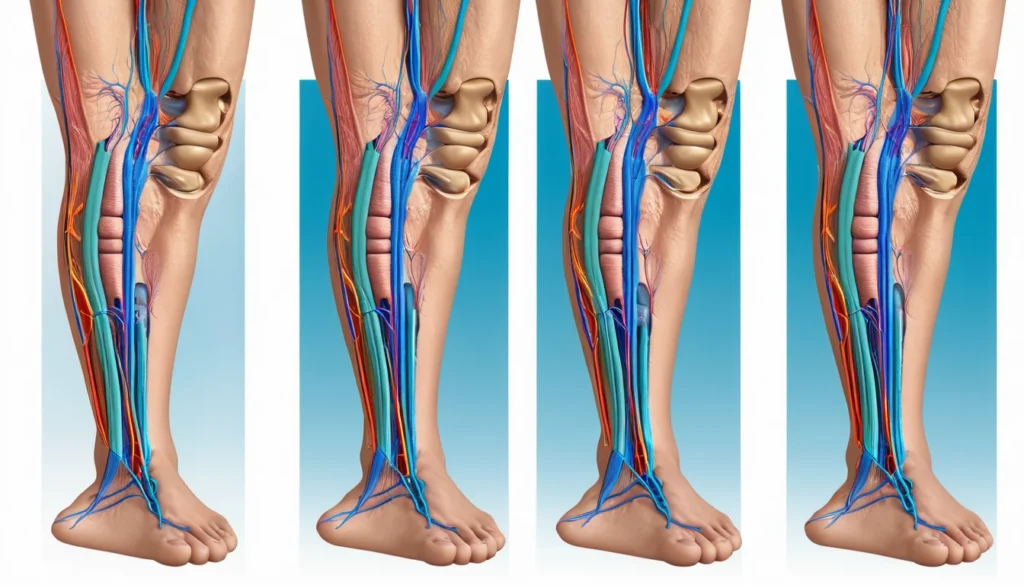
Superficial venous insufficiency is a condition where blood flows backward through the veins in your legs instead of moving toward your heart. It affects millions of Canadians and can range from a cosmetic concern to a serious medical issue. This article explains what causes it, what symptoms to watch for, and when to seek care from your family doctor or walk-in clinic.
What Is Superficial Venous Insufficiency?
Superficial venous insufficiency (SVI) happens when blood refluxes — or flows the wrong way — through the veins just beneath the skin. Healthy veins have small valves that act like one-way doors, keeping blood moving upward toward the heart. When those valves weaken or fail, blood pools in the lower legs.
The superficial venous system is far more commonly affected than the deep vein system. However, the problem can start at any point in the venous network and spread in both directions — upward and downward, and from shallow to deeper veins.
Inflammation plays a key role in this process. It damages both the vein walls and the valves, setting off a chain reaction that makes the condition worse over time. Learn more about how venous disease develops at Mayo Clinic.
Types of Superficial Venous Disease
Doctors generally divide superficial venous disease into two main categories. The first is venous insufficiency or reflux, which includes varicose veins and chronic venous disease. The second is veno-occlusive disease, which includes blood clots such as superficial thrombophlebitis and deep vein thrombosis (DVT).
In more than 50% of cases, superficial venous insufficiency first shows up as spider veins or small reticular (net-like) veins under the skin. These may look minor, but they should not be ignored.
In approximately 20 to 25% of cases, the condition progresses to more serious problems. These include skin changes and open sores called venous ulcers.
Common Symptoms of Superficial Venous Insufficiency
The symptoms of superficial venous insufficiency can vary from person to person. Some people experience mild discomfort, while others deal with significant pain and skin damage. Knowing what to look for helps you act early.
Early Warning Signs
Early symptoms are often easy to dismiss. However, they are your body’s first signal that something is wrong with your veins. Watch for the following:
Swelling in the legs or ankles (called oedema)
Leg pain that gets worse when standing and improves when you elevate your feet
Cramping in the lower legs
A feeling of heaviness, aching, or weakness in the legs
Itching or a burning sensation along the veins
A tight feeling in the calf area
Visible varicose veins — dark, twisted, rope-like veins under the skin
Advanced Symptoms
If superficial venous insufficiency is left untreated, pressure and swelling compress the tiny blood vessels near the skin. As a result, the skin — especially around the ankles — can turn a brownish colour. This is a warning sign of serious damage.
Thickening of the skin on the lower legs and ankles is also common at this stage. Open sores called venous ulcers can develop. These ulcers heal very slowly and are prone to infection, especially in people with diabetes or weakened immune systems.
What Causes Superficial Venous Insufficiency?
The most common causes of superficial venous insufficiency are varicose veins and blood clots. Understanding how each one affects your veins makes it easier to prevent complications.
Blood Clots
In healthy veins, blood flows from the legs toward the heart. When a blood clot blocks this flow, all the blood below the blockage has nowhere to go. It pools and causes the superficial veins to expand and bulge.
This pooling puts constant pressure on the vein walls. Over time, that pressure damages the veins further and worsens the insufficiency.
Varicose Veins
Varicose veins form when the valves inside the veins are missing or damaged. Without working valves, blood flows backward and collects in the lower legs. This causes the veins to stretch and become visibly enlarged.
If the superficial venous system becomes overwhelmed, the deeper vein system can also be affected. Furthermore, weak calf muscles — which normally help pump blood upward during movement — can make the problem worse.
Risk Factors for Superficial Venous Insufficiency
Superficial venous insufficiency is more common in women and in people over the age of 50. However, it can affect anyone. Healthline outlines the full range of venous insufficiency risk factors in detail.
The following factors increase your risk:
Obesity: Extra weight puts more pressure on leg veins
Pregnancy: Hormonal changes and increased blood volume affect vein valves
Smoking: Damages blood vessel walls and reduces circulation
Cancer: Some cancers and their treatments affect the vascular system
Weak leg muscles: Reduces the pumping action that moves blood upward
Previous leg injuries: Can damage veins and valves directly
Phlebitis: Inflammation of the superficial veins
Family history: Genetics play a strong role in venous disease
Prolonged sitting or standing: Common in many Canadian workplaces and commutes
Complications: Varicose Veins and Venous Ulcers
Two of the most significant complications of superficial venous insufficiency are varicose veins and venous ulcers. Both require proper medical attention and should not be treated as purely cosmetic problems.
Varicose Veins
Varicose veins are large, twisted veins that bulge beneath the skin. They most often appear on the legs because standing increases pressure in the lower body’s veins. They can be dark purple or blue in colour and may look like twisted cords running along your legs.
Varicose veins can cause pain, itching, skin discolouration, a burning sensation when walking, and a heavy feeling in the legs. They are not just a cosmetic concern — they are a medical condition that can worsen over time.
Treatment options include:
Wearing compression stockings to improve blood flow
Regular physical activity to strengthen calf muscles
Avoiding tight clothing and long periods of standing
Losing excess weight
Sclerotherapy (injection of a solution to close the vein)
Laser therapy
Surgical procedures such as vein ligation or phlebectomy
Venous Ulcers
Venous ulcers are open wounds that most commonly form around the ankle. They develop when chronic pressure from pooled blood damages the skin, creating a break that exposes underlying tissue to air and bacteria.
These ulcers are slow to heal. In people with underlying conditions like diabetes, healing can take months or even longer. Infection is a serious risk and must be treated promptly.
Treatment for venous ulcers typically involves elevating the affected leg to reduce venous pressure, applying compression bandages or stockings, and cleaning and dressing the wound regularly. Your doctor may also prescribe antibiotics if infection is present. Health Canada provides resources on managing chronic wound care and related conditions.
When to See a Doctor
You should speak with your family doctor if you notice persistent leg swelling, visible varicose veins, or skin changes around your ankles. Do not wait for symptoms to become severe — early treatment leads to much better outcomes.
If you do not have a family doctor, a walk-in clinic can be a good starting point. A healthcare provider can assess your symptoms, order an ultrasound if needed, and refer you to a vascular specialist. Most provincial health plans in Canada cover diagnostic testing and many treatments for venous disease.
Seek urgent care immediately if you experience sudden, severe leg pain, redness, or warmth along a vein. These may be signs of a blood clot (deep vein thrombosis), which requires immediate medical attention.
Always consult a qualified healthcare professional before starting any treatment for venous conditions. This article is for informational purposes only and is not a substitute for professional medical advice.
Frequently Asked Questions About Superficial Venous Insufficiency
What is the difference between superficial venous insufficiency and deep vein thrombosis?
Superficial venous insufficiency affects the veins just beneath the skin and involves backward blood flow due to damaged valves. Deep vein thrombosis (DVT) is a blood clot that forms in a deeper vein, usually in the leg, and is a more urgent medical emergency. Both conditions can occur together and share some symptoms, so it is important to get a proper diagnosis from your doctor.
Can superficial venous insufficiency go away on its own?
Superficial venous insufficiency does not typically go away without treatment. In fact, it tends to worsen over time if left unaddressed. Lifestyle changes like wearing compression stockings, exercising regularly, and elevating your legs can slow the progression, but medical treatment is often needed to fully manage the condition.
Is superficial venous insufficiency covered by provincial health plans in Canada?
Coverage varies by province, but diagnostic tests such as venous ultrasounds are generally covered under most provincial health plans. Some treatments, like compression stockings, may require partial out-of-pocket payment or coverage through extended health benefits. Speak with your family doctor to understand what is covered in your province.
What does superficial venous insufficiency feel like?
Most people with superficial venous insufficiency describe a feeling of heaviness, aching, or tiredness in the legs, especially after standing for long periods. Swelling around the ankles, cramping, and itching along the veins are also common. In more advanced cases, skin discolouration and open sores near the ankles may develop.
Who is most at risk for developing superficial venous insufficiency?
Superficial venous insufficiency is more common in women and in adults over 50, but it can affect anyone. Key risk factors include obesity, pregnancy, smoking, a family history of venous disease, and jobs that involve prolonged standing or sitting. Addressing these risk factors early can reduce your chances of developing the condition.
Are compression stockings effective for superficial venous insufficiency?
Yes, compression stockings are one of the most effective and widely recommended tools for managing superficial venous insufficiency. They apply gentle pressure to the legs, which helps push blood upward toward the heart and reduces swelling. Your doctor or pharmacist can help you choose the right compression level for your needs.
Key Takeaways
Superficial venous insufficiency happens when damaged vein valves allow blood to flow backward and pool in the legs.
Symptoms include leg swelling, cramping, heaviness, itching, skin discolouration, and varicose veins.
If left untreated, it can lead to serious complications such as venous ulcers and infection.
Risk factors include being female, being over 50, obesity, pregnancy, smoking, and prolonged standing or sitting.
Treatment ranges from compression stockings and lifestyle changes to medical procedures like sclerotherapy or laser therapy.
Speak with your family doctor or visit a walk-in clinic if you notice any symptoms — early action makes a real difference.
Most diagnostic tests for venous disease are covered under Canadian provincial health plans.