RNA (ribonucleic acid) is one of the most important molecules in your body. It exists in every living cell — plant or animal — and plays a central role in keeping you alive and healthy. In this article, we explain what RNA ribonucleic acid is, how it works, why scientists and doctors care about it, and what recent medical advances — like mRNA vaccines — mean for everyday Canadians.
What Is RNA (Ribonucleic Acid)?
RNA stands for ribonucleic acid. It is a molecule found in every cell of your body. Think of it as a chemical messenger that carries instructions from your DNA and uses them to build proteins.
Your DNA holds your genetic blueprint — the master plan for your entire body. However, DNA never leaves the cell’s nucleus. That is where RNA ribonucleic acid steps in. RNA copies the instructions from DNA and delivers them to the rest of the cell.
Without RNA, your cells could not make the proteins they need to survive. Proteins do nearly everything in your body — from building muscle to fighting infection. Therefore, RNA is absolutely essential to life.
For a deeper scientific overview, visit the World Health Organization’s health and science resources.
RNA vs. DNA: What Is the Difference?
Many people confuse RNA and DNA. They are related, but they are not the same. Understanding the difference helps you make sense of modern medicine, including mRNA vaccines.
Structure
DNA is a double-stranded molecule shaped like a twisted ladder. RNA ribonucleic acid, on the other hand, is single-stranded. It looks more like one side of that ladder. This simpler shape makes RNA flexible and easy to move around inside the cell.
Another difference is the sugar molecule each one contains. DNA contains deoxyribose sugar. RNA contains ribose sugar — which is where the name “ribonucleic acid” comes from.
Function
DNA stores your genetic information permanently. RNA reads that information and acts on it. In other words, DNA is the library, and RNA is the librarian who finds the right book and brings it to you.
RNA is also much more short-lived than DNA. It does its job and then breaks down quickly. This is actually a safety feature — it stops old or incorrect instructions from being used for too long.
The Three Main Types of RNA Ribonucleic Acid
Not all RNA does the same job. Scientists have identified several types of RNA, each with a specific role. Here are the three most important ones.
Messenger RNA (mRNA)
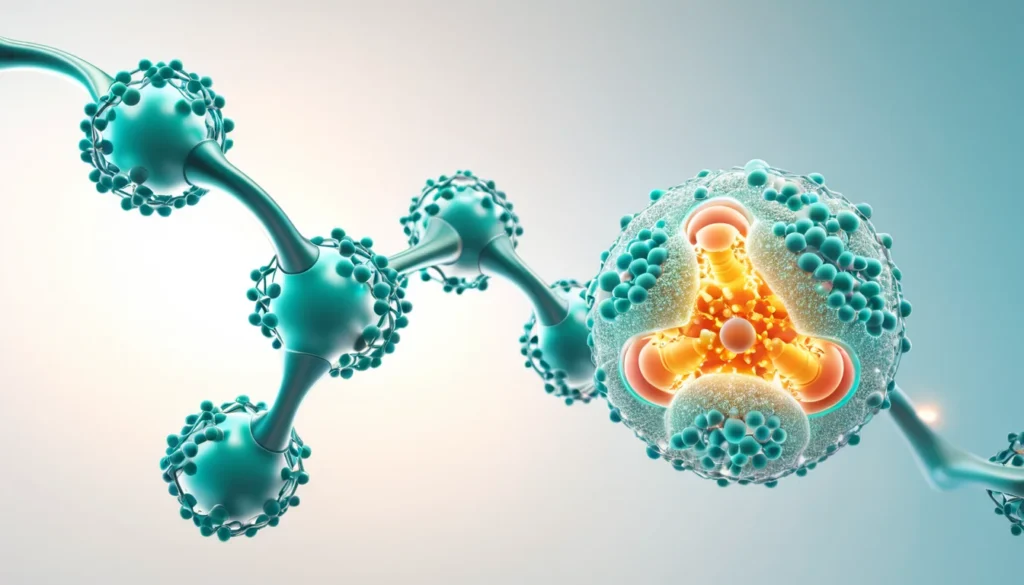
Messenger RNA — or mRNA — carries the genetic code from DNA to the ribosome. The ribosome is the part of the cell that builds proteins. Think of mRNA as the instruction sheet that tells the ribosome exactly what to build.
You may have heard of mRNA in the news. The COVID-19 vaccines developed by Pfizer-BioNTech and Moderna used mRNA technology. This was a major breakthrough in vaccine science, and it relied entirely on our understanding of RNA ribonucleic acid.
Transfer RNA (tRNA)
Transfer RNA — or tRNA — acts like a delivery worker. It picks up amino acids from the cell and brings them to the ribosome. The ribosome then joins these amino acids together to form a protein.
Without tRNA, the ribosome would have no raw materials to work with. Furthermore, tRNA makes sure the right amino acid goes in the right place. This precision is what allows your body to make thousands of different proteins.
Ribosomal RNA (rRNA)
Ribosomal RNA — or rRNA — is the main component of ribosomes themselves. It makes up the structure of the ribosome and helps it do its job. In fact, rRNA makes up about 60% of each ribosome.
As a result, rRNA is the most abundant type of RNA in the cell. It works constantly to help produce the proteins your body needs every second of every day.
How RNA Ribonucleic Acid Makes Proteins: A Simple Explanation
Protein synthesis — the process of making proteins — happens in two main steps. Both steps involve RNA ribonucleic acid.
Step 1: Transcription
First, your cell reads a section of your DNA. A special enzyme then creates a matching strand of mRNA. This process is called transcription. It happens inside the cell’s nucleus.
Once the mRNA strand is complete, it leaves the nucleus. It travels out into the main body of the cell, called the cytoplasm. There, it finds a ribosome and delivers its instructions.
Step 2: Translation
Next, the ribosome reads the mRNA instructions. It uses tRNA to gather the right amino acids. Then it joins them together in the correct order to form a protein. This process is called translation.
The whole process happens incredibly fast. A single ribosome can add up to 20 amino acids per second. In addition, your cells run thousands of ribosomes at once. As a result, your body makes millions of protein molecules every minute.
For more detail on how cells work, Healthline’s guide to RNA and cell biology is a reliable and easy-to-read resource.
Why RNA Matters for Your Health
RNA ribonucleic acid is not just a topic for science class. It has real and direct effects on your health. Researchers now know that problems with RNA can lead to serious diseases.
RNA and Genetic Diseases
Some genetic conditions happen when RNA does not work properly. For example, if the mRNA carries a wrong or incomplete message, the cell may build a faulty protein. Faulty proteins can cause diseases like certain cancers, muscular dystrophy, and some metabolic disorders.
Scientists are now developing RNA-based therapies to correct these errors. These treatments aim to fix the faulty message before the wrong protein gets made. This field is called RNA therapeutics, and it is one of the fastest-growing areas of medicine in Canada and worldwide.
RNA and Viruses
Many dangerous viruses — including influenza, HIV, and the coronavirus — are RNA viruses. This means their genetic material is made of RNA, not DNA. When these viruses enter your cells, they use your cell’s own protein-making machinery to copy themselves.
However, because RNA breaks down quickly and is structurally different from DNA, it also offers targets for antiviral drugs. Researchers at Canadian universities and hospitals are actively studying RNA viruses to develop better treatments.
mRNA Vaccines: A Canadian Success Story
Canada was among the first countries to roll out mRNA COVID-19 vaccines through provincial health programmes. These vaccines work by delivering mRNA instructions into your muscle cells. Your cells then build a harmless piece of the coronavirus spike protein, which trains your immune system to fight the real virus.
The mRNA breaks down within days. It does not enter the nucleus and cannot change your DNA. This point is important — and it is supported by Health Canada’s official vaccine safety information.
Emerging Research: The Future of RNA Science
RNA research is moving quickly. Scientists are discovering new types of RNA and new ways to use it in medicine. Here are a few exciting developments.
Non-Coding RNA
For decades, scientists thought RNA’s only job was to help make proteins. However, researchers have now found many types of RNA that do not code for proteins at all. These are called non-coding RNAs.
Non-coding RNAs help regulate which genes are turned on or off. They play a role in development, ageing, and disease. In fact, some studies link non-coding RNAs to cancer, heart disease, and neurological conditions. This is a very active area of research in Canada and around the world.
RNA Interference (RNAi)
RNA interference — or RNAi — is a natural process that silences specific genes. Scientists have learned to harness this process to create new drugs. These drugs can “switch off” genes that cause disease.
As a result, RNAi-based drugs are already approved for conditions like hereditary transthyretin amyloidosis, a rare and serious disease. More RNAi treatments are currently in clinical trials. This technology could one day treat conditions ranging from high cholesterol to certain cancers.
RNA in Cancer Treatment
Cancer researchers are studying RNA in several exciting ways. Some teams are developing mRNA cancer vaccines that teach the immune system to target tumour cells. Others are using RNA to detect cancer early through blood tests.
Furthermore, Canadian research institutions — including those affiliated with provincial cancer agencies — are contributing to this work. RNA-based cancer treatments may become part of standard care within the next decade.
When to See a Doctor
Most people do not need to think about RNA in their daily lives. However, there are times when it becomes medically relevant — and knowing when to seek help matters.
If you have a family history of genetic conditions, speak with your family doctor. They can refer you to a genetics specialist and explain whether genetic or RNA-based testing is right for you. Many provincial health plans in Canada cover genetic counselling referrals.
If you have questions about mRNA vaccines — including safety, side effects, or whether they are covered under your provincial health programme — your family doctor or a walk-in clinic is a great starting point. Pharmacists are also excellent resources for vaccine questions in Canada.
If you are managing a chronic illness and have heard about RNA-based therapies in the news, ask your specialist whether any clinical trials or new treatments may apply to your situation. Always rely on regulated Canadian healthcare providers for medical advice.
As always, this article is for general information only. Please speak with a qualified healthcare provider before making any decisions about your health.
Frequently Asked Questions About RNA (Ribonucleic Acid)
What does RNA ribonucleic acid do in the body?
RNA ribonucleic acid carries genetic instructions from DNA to the ribosomes, where proteins are built. It acts as a messenger and plays a direct role in nearly every biological process in your body. Without RNA, your cells could not make the proteins needed to survive.
Is RNA the same as DNA?
No, RNA and DNA are different molecules. DNA is double-stranded and stores your permanent genetic blueprint, while RNA ribonucleic acid is single-stranded and acts on those instructions. RNA also breaks down much faster than DNA.
Can mRNA vaccines change your DNA?
No. mRNA vaccines cannot change your DNA. The mRNA ribonucleic acid in these vaccines never enters the cell’s nucleus, which is where your DNA is stored. The mRNA breaks down naturally within a few days after doing its job.
What diseases are linked to problems with RNA?
Problems with RNA ribonucleic acid have been linked to certain cancers, muscular dystrophy, and some rare genetic disorders. Many viruses — including influenza and HIV — also use RNA as their genetic material. Researchers are developing RNA-based therapies to treat several of these conditions.
What are the three main types of RNA?
The three main types of RNA ribonucleic acid are messenger RNA (mRNA), transfer RNA (tRNA), and ribosomal RNA (rRNA). Each type plays a specific role in reading genetic instructions and building proteins inside your cells.
Is RNA research covered by Canadian health programmes?
Some RNA-based treatments and genetic counselling services are covered under provincial health plans, depending on your condition and province. Ask your family doctor or specialist whether RNA-related therapies or genetic testing are available to you. Walk-in clinics can also help direct you to the right resources.
Key Takeaways
RNA (ribonucleic acid) is found in every living cell and is essential to life.
RNA carries instructions from DNA and uses them to build proteins — the building blocks of your body.
The three main types of RNA are mRNA, tRNA, and rRNA, each with a specific job.
Protein synthesis happens in two steps — transcription and translation — and RNA ribonucleic acid drives both.
Problems with RNA can cause serious diseases, including certain cancers and genetic disorders.
mRNA vaccines, used widely in Canada, are safe and cannot alter your DNA.
RNA research is advancing quickly, with new treatments for cancer, genetic diseases, and viral infections on the horizon.
If you have questions about genetic conditions or RNA-based treatments, speak with your family doctor, a walk-in clinic, or a specialist through your provincial health plan.