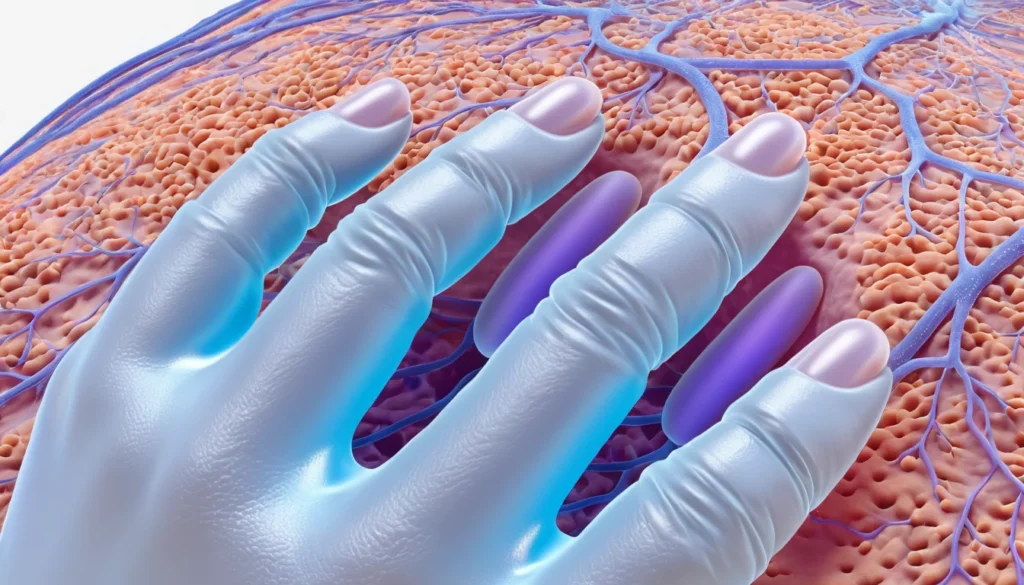
Raynaud’s phenomenon is a condition where blood flow to the fingers, toes, and other extremities suddenly drops in response to cold or stress. The affected areas typically turn white, then bluish-purple, then red — often with pain, numbness, or tingling. It is more common than most people realize, and many Canadians experience it without ever getting a diagnosis. This article explains what causes Raynaud’s phenomenon, how to recognize it, and when to speak with a healthcare provider.
What Is Raynaud’s Phenomenon?
Raynaud’s phenomenon is a vascular condition that causes small blood vessels in the skin to overreact to cold temperatures or emotional stress. This overreaction triggers a sudden narrowing of the blood vessels — a process called vasospasm — which sharply reduces blood flow to the affected area.
The fingers and toes are most commonly affected. However, some people also experience symptoms in the nose, ears, and lips. In rare cases, even the nipples can be affected — some breastfeeding women with Raynaud’s report significant pain while nursing.
There are two forms of this condition. Primary Raynaud’s (also called Raynaud’s disease) occurs on its own, with no underlying illness. Secondary Raynaud’s (also called Raynaud’s syndrome) develops as a result of another health condition. Secondary Raynaud’s tends to be more severe and usually appears after age 35.
Recognizing the Symptoms of Raynaud’s Phenomenon
The most recognizable sign of Raynaud’s phenomenon is a dramatic change in skin colour. During an episode, the affected area goes through a distinct sequence of colour changes that reflects what is happening inside the blood vessels.
The Three-Stage Colour Change
First, the skin turns pale or white as blood flow drops sharply. Next, it shifts to a bluish-purple colour (called cyanosis) as oxygen levels in the tissue fall. Finally, as blood flow returns, the skin becomes bright red and intensely painful.
Not everyone experiences all three stages. Some people skip the blue stage entirely. However, the white-to-red pattern is very common and is usually enough to identify the condition.
Other Common Symptoms
In addition to colour changes, people with Raynaud’s phenomenon often notice:
Numbness or tingling in the fingers or toes
A cold, heavy feeling in the hands or feet
Throbbing or burning pain as circulation returns
Reduced sensation during an episode
Symptoms that occur during sleep in some cases
A typical episode lasts a few minutes. However, if the triggering factor — such as cold weather — continues, an attack can last up to 60 minutes. Most Canadians who have Raynaud’s find the symptoms uncomfortable rather than disabling, which is why many never seek medical advice.
What Causes Raynaud’s Phenomenon?
The exact cause of Raynaud’s phenomenon depends on whether it is primary or secondary. Both forms share the same core problem — an exaggerated response in the small blood vessels — but their origins are different.
Primary Raynaud’s: No Underlying Cause
Primary Raynaud’s has no single identified cause. There is often a family history of the condition, which suggests a genetic component. Researchers believe that both abnormal nerve control of blood vessels and individual sensitivity to cold play a role.
Primary Raynaud’s is more common in women and tends to begin in young adulthood. It is generally mild and does not lead to tissue damage. In some cases, primary Raynaud’s can progress over time and become secondary Raynaud’s.
Secondary Raynaud’s: Linked to Other Conditions
Secondary Raynaud’s is associated with a wide range of underlying health conditions. The strongest link is with systemic sclerosis (scleroderma) — more than 90% of people with systemic sclerosis also develop Raynaud’s phenomenon.
Other conditions commonly linked to secondary Raynaud’s include:
Connective tissue diseases: lupus, rheumatoid arthritis, Sjögren’s syndrome, polymyositis, dermatomyositis, and mixed connective tissue disease
Vascular diseases: atherosclerosis (hardening of the arteries) and Buerger’s disease
Blood disorders: cryoglobulinemia and Waldenström’s macroglobulinemia, which thicken the blood and reduce normal flow
Medications and Workplace Factors
Certain medications can also trigger secondary Raynaud’s phenomenon. These include beta-blockers (used for heart conditions and high blood pressure), cyclosporine (an immune-suppressing drug), and some oral contraceptives. Some chemotherapy drugs — especially bleomycin — can cause scarring around blood vessels and reduce circulation.
Workplace exposure is another important risk factor. Jobs that involve repeated use of vibrating tools — such as jackhammers or power drills — can damage blood vessels over time. Furthermore, prolonged exposure to cold environments or certain industrial chemicals, including mercury and vinyl chloride, is also associated with secondary Raynaud’s.
It is worth noting that frostbite can leave lasting damage to blood vessel function. Even after the skin heals, the affected area may remain prone to vasospasm and Raynaud’s-like episodes.
For a broader overview of circulatory conditions, Mayo Clinic’s guide to Raynaud’s disease provides additional detail on how the condition develops.
How Cold Triggers an Episode
Understanding how cold causes a Raynaud’s attack helps explain why the symptoms look and feel the way they do. When the body gets cold, it naturally narrows blood vessels near the skin’s surface and redirects blood toward the internal organs. This is a normal, protective response.
In people with Raynaud’s phenomenon, however, this response is far more extreme than normal. The small arteries and capillaries in the fingers and toes constrict so tightly that blood flow nearly stops. The tissue is starved of oxygen, which causes the colour change, numbness, and pain.
Emotional stress triggers the same response through a different pathway. Stress hormones like adrenaline cause blood vessels to constrict, just as cold does. As a result, some people experience Raynaud’s episodes even in warm weather if they are under significant emotional strain.
Diagnosing Raynaud’s Phenomenon
Doctors diagnose Raynaud’s phenomenon primarily through a patient’s medical history and a physical examination. There is no single simple test that confirms the diagnosis on its own.
However, your doctor may order blood tests to check for underlying conditions, particularly if secondary Raynaud’s is suspected. Tests such as antinuclear antibody (ANA) testing and erythrocyte sedimentation rate (ESR) can help identify autoimmune conditions linked to Raynaud’s.
A useful clue for distinguishing primary from secondary Raynaud’s is whether symptoms affect one side of the body or only one finger. Unilateral symptoms — affecting only one hand or a single digit — are more likely to suggest secondary Raynaud’s, since primary Raynaud’s tends to affect both sides equally.
Pregnancy often improves Raynaud’s symptoms naturally, due to increased overall blood flow. This can be a helpful detail for your doctor when building a clinical picture.
According to Health Canada, understanding the full context of your symptoms — including any other diagnosed conditions and medications you take — is essential to getting an accurate diagnosis.
When to See a Doctor
Many Canadians dismiss Raynaud’s symptoms as simply “bad circulation” and never seek help. However, it is worth speaking to a healthcare provider if your symptoms are frequent, severe, or getting worse over time.
You should see a doctor promptly if you notice:
Symptoms that affect only one side of your body or one finger
Sores or ulcers on your fingers or toes after an episode
Signs of a possible underlying condition, such as joint pain, skin changes, or persistent fatigue
Episodes that occur frequently or last longer than usual
New symptoms after starting a medication
Your family doctor is the best first point of contact. They can review your history, examine you, and refer you to a specialist such as a rheumatologist or cardiologist if needed. If you do not have a family doctor, a walk-in clinic can assess your symptoms and help arrange follow-up care through your provincial health plan.
For general guidance on vascular health, Healthline’s overview of Raynaud’s phenomenon is a well-regarded patient resource.
Always speak with a qualified healthcare provider before making any decisions about your health. The information in this article is for general educational purposes only and does not replace professional medical advice.
Frequently Asked Questions About Raynaud’s Phenomenon
What triggers a Raynaud’s phenomenon episode?
The most common triggers of a Raynaud’s phenomenon episode are cold temperatures and emotional stress. Both cause the small blood vessels in the fingers and toes to suddenly constrict, reducing blood flow. Even reaching into a freezer or stepping into an air-conditioned room can set off an attack.
Is Raynaud’s phenomenon dangerous?
Primary Raynaud’s phenomenon is generally not dangerous and does not cause permanent tissue damage for most people. However, secondary Raynaud’s — which is linked to an underlying condition — can be more serious and may occasionally lead to skin sores or ulcers if blood flow is severely restricted. It is important to speak with your doctor to determine which type you have.
How is Raynaud’s phenomenon treated?
Treatment for Raynaud’s phenomenon usually starts with lifestyle changes, such as dressing warmly, wearing gloves outdoors, and avoiding sudden temperature changes. In more severe cases, doctors may prescribe calcium channel blockers or other medications to relax and widen blood vessels. If secondary Raynaud’s is present, treating the underlying condition is also essential.
Is Raynaud’s phenomenon more common in women?
Yes, Raynaud’s phenomenon is significantly more common in women than in men. Primary Raynaud’s in particular tends to appear in young women and is estimated to affect 3–4% of the general population. The exact reason for this gender difference is not fully understood, but hormonal factors are thought to play a role.
Can Raynaud’s phenomenon be caused by medication?
Yes, certain medications can trigger or worsen Raynaud’s phenomenon. Beta-blockers, some oral contraceptives, cyclosporine, and certain chemotherapy drugs are among the most commonly associated. If you develop Raynaud’s symptoms after starting a new medication, tell your doctor or pharmacist right away.
What is the difference between Raynaud’s disease and Raynaud’s syndrome?
Raynaud’s disease refers to the primary form of Raynaud’s phenomenon, which occurs on its own without any underlying condition. Raynaud’s syndrome refers to the secondary form, where the vasospastic episodes are caused by another illness, such as scleroderma or lupus. Secondary Raynaud’s is generally more severe and requires treatment of the root cause as well.
Key Takeaways
Raynaud’s phenomenon causes blood vessels in the fingers, toes, and other extremities to over-constrict in response to cold or stress.
The classic sign is a three-stage colour change: white, then blue-purple, then red — often with pain and numbness.
Primary Raynaud’s has no known underlying cause and is generally mild. Secondary Raynaud’s is linked to other conditions, especially scleroderma.
Common triggers include cold weather, air conditioning, emotional stress, and certain medications.
Symptoms affecting only one side of the body or a single finger are a red flag for secondary Raynaud’s.
Your family doctor or a local walk-in clinic can assess your symptoms and refer you to a specialist through your provincial health plan if needed.
Always consult a qualified healthcare provider for a proper diagnosis and personalized treatment plan.