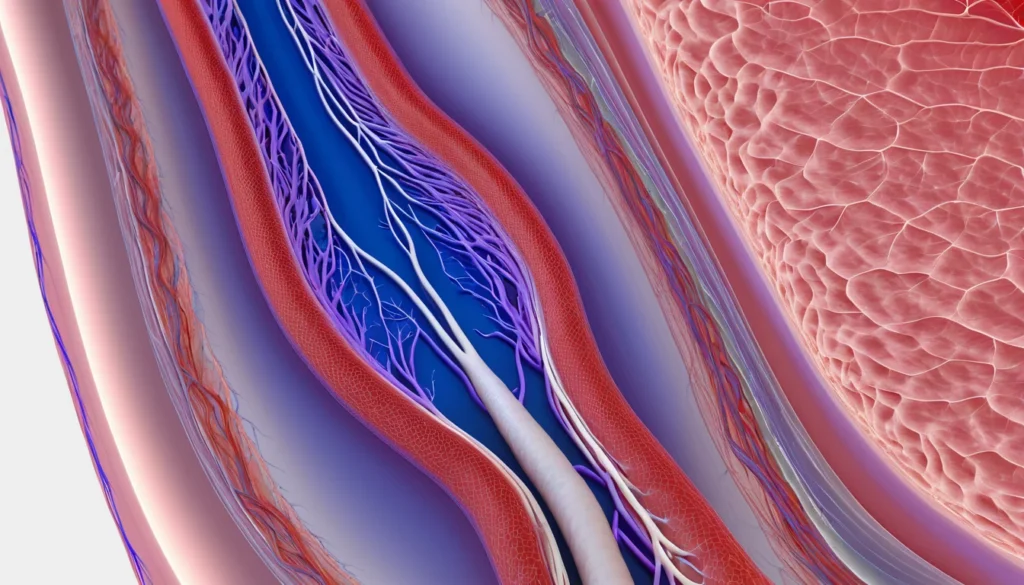
Raynaud’s disease is a condition where the small blood vessels in your fingers — and sometimes your toes — suddenly narrow in response to cold or stress. This causes your fingers to turn white, then bluish, then red as blood flow returns. It can be uncomfortable and even painful, but there are effective ways to manage it. This guide explains what Raynaud’s disease is, how it differs from Raynaud’s phenomenon, and what you can do about it in a Canadian healthcare setting.
What Is Raynaud’s Disease?
Raynaud’s disease is the primary form of a condition that causes sudden, temporary spasms in the small arteries of the fingers. These spasms reduce blood flow dramatically. The exact cause is unknown, but researchers believe the nervous system overreacts to cold temperatures or emotional stress.
The condition almost always affects young women. It typically begins between the ages of 15 and 30. There may also be a genetic link, meaning it can run in families.
In Raynaud’s disease, the arteries in your fingers respond far too strongly to cold or stress. This exaggerated response is called vasospasm — a sudden, powerful tightening of small blood vessels. As a result, blood cannot flow normally through your fingers.
Raynaud’s Disease vs. Raynaud’s Phenomenon
These two terms are often confused, but they are not the same thing. Understanding the difference helps you and your doctor find the right treatment.
Primary Raynaud’s (Raynaud’s Disease)
Raynaud’s disease is the primary or idiopathic form. “Idiopathic” means doctors cannot find an underlying cause. It tends to be milder and does not usually lead to serious tissue damage. Both hands are typically affected symmetrically.
Secondary Raynaud’s (Raynaud’s Phenomenon)
Raynaud’s phenomenon is more common than the primary form. It is caused by an underlying medical condition or external trigger. It can affect just one or two fingers and may be more severe. It is also more likely to cause complications over time.
According to Mayo Clinic’s overview of Raynaud’s disease, Raynaud’s phenomenon is often linked to autoimmune or connective tissue diseases. These include rheumatoid arthritis, lupus, and scleroderma. In some cases, Raynaud’s phenomenon is the first sign of one of these conditions.
Recognising the Symptoms of Raynaud’s Disease
The most recognisable sign of Raynaud’s disease is a visible colour change in the fingers. This happens in a specific sequence and usually affects both hands equally.
The Three-Colour Response
White (pallor): Blood flow is cut off. Fingers turn pale or white.
Blue (cyanosis): Oxygen runs low. Fingers turn bluish or purplish.
Red (erythema): Blood rushes back. Fingers turn red and may throb or tingle.
Episodes are triggered by cold temperatures or emotional stress. They usually stop on their own once you warm up. Putting your hands in warm water or moving into a heated room often ends an episode quickly.
Other Symptoms to Watch For
During and after an episode, you may also notice:
Numbness or tingling (a “pins and needles” feeling)
Reduced grip strength
Mild swelling in the fingers
A dull ache or sharp pain as circulation returns
In the early stages, only one or two fingers may be involved. However, as the condition progresses, all fingers can be affected. The thumb is rarely involved. Between episodes, your fingers will look and feel completely normal.
When Does It Become Serious?
In severe or long-standing cases, repeated episodes can damage the skin and soft tissue at the fingertips. This may lead to skin thinning, small sores, or in rare cases, gangrene. Fortunately, this level of severity is uncommon in primary Raynaud’s disease. Wounds in this area also heal slowly, so it is important to protect your hands from injury.
What Conditions Are Linked to Raynaud’s Phenomenon?
Secondary Raynaud’s phenomenon can be triggered by a wide range of underlying health conditions. Your doctor will look for these during diagnosis.
Autoimmune and Connective Tissue Diseases
Raynaud’s phenomenon is often associated with:
Rheumatoid arthritis — joint inflammation that can affect blood vessels
Scleroderma — a condition that hardens and tightens the skin and connective tissue
Systemic lupus erythematosus (SLE) — an autoimmune disease affecting many organs
Mixed connective tissue disease — overlapping features of several autoimmune conditions
In addition, a condition called thoracic outlet syndrome — where nerves or blood vessels are compressed near the collarbone — can cause Raynaud’s-like symptoms, usually on one side only.
Medication and Other Triggers
Certain medications and treatments can trigger Raynaud’s phenomenon. For example, chemotherapy drugs like bleomycin and vincristine — used to treat testicular cancer — can cause a particularly severe form. In these cases, the symptoms may persist even after treatment ends and may not respond well to standard Raynaud’s treatments.
Long-term or excessive use of ergotamine, a medication used for migraines, can also cause symptoms very similar to Raynaud’s. This is called ergot intoxication. Furthermore, conditions like multiple myeloma, cryoglobulinaemia (where certain proteins clump together in cold temperatures), and high levels of certain blood proteins can all produce Raynaud’s-like episodes.
For a broader look at how blood vessel conditions are classified, see Health Canada’s cardiovascular health resources.
How Is Raynaud’s Disease Diagnosed?
There is no single blood test that diagnoses Raynaud’s disease. Your doctor will base the diagnosis mainly on your symptoms and physical examination.
A diagnosis of primary Raynaud’s disease is typically confirmed when:
Episodes have been occurring for more than three years
No underlying cause can be found after investigation
Both hands are affected symmetrically
However, your doctor will still order some tests to rule out secondary causes. These may include blood tests for autoimmune markers, a nerve conduction study to check for carpal tunnel syndrome, and other imaging as needed.
Conditions Your Doctor Will Rule Out
Your doctor needs to distinguish Raynaud’s disease from several other conditions that look similar. These include:
Buerger’s disease (thromboangiitis obliterans): An inflammatory condition of the blood vessels, often linked to smoking. It tends to affect just one or two fingers and the peripheral pulse may be weak or absent.
Carpal tunnel syndrome: Nerve compression at the wrist that can cause numbness and colour changes. Nerve conduction testing helps distinguish this.
Acrocyanosis: A condition where the hands are persistently blue — not just during episodes — with no return to normal colour in between.
Frostbite complications: Past frostbite can sometimes lead to chronic Raynaud’s-like symptoms.
Treatment Options for Raynaud’s Disease
Most people with Raynaud’s disease can manage their symptoms well with lifestyle changes. Medical treatment is available for more severe cases.
Lifestyle Changes (First-Line Treatment)
Simple daily habits can make a big difference. These are always the first step in managing Raynaud’s disease:
Wear gloves outdoors during cold weather — even reaching into a freezer can trigger an episode.
Layer your clothing to keep your core body temperature stable. Warming your body also helps warm your hands.
Warm your hands quickly during an episode by placing them in warm (not hot) water or moving indoors.
Protect your hands from cuts and bumps. Wounds heal slowly due to reduced circulation, making infections harder to control.
Use moisturising lotions regularly to prevent dry, cracked skin on the fingertips.
Quit smoking. Smoking causes blood vessels to constrict and makes Raynaud’s significantly worse. Talk to your family doctor about smoking cessation programmes available through your provincial health plan.
Medications for Raynaud’s Disease
If lifestyle changes are not enough, your doctor may recommend medication. The goal is to help blood vessels relax and stay open.
Calcium channel blockers — particularly low-dose extended-release nifedipine — are the most commonly prescribed treatment. They help relax and widen small blood vessels, reducing both the frequency and severity of episodes.
Nitroglycerin patches or cream applied to the fingers can also help restore normal temperature more quickly during an episode. Other long-acting nitrate medications taken by mouth may also be used.
It is important to note that vasodilator medications (drugs that widen blood vessels) are especially helpful when there are no significant structural changes in the arteries. Your doctor will assess whether medication is appropriate for your situation. Learn more about how vasospasm affects circulation from Healthline’s guide to Raynaud’s phenomenon.
When to See a Doctor
You should speak with your family doctor if you notice colour changes in your fingers that follow the white-blue-red pattern, especially if they happen regularly with cold exposure or stress. Early assessment is important to rule out an underlying condition.
If you do not have a family doctor, a walk-in clinic is a good first step. A clinician there can assess your symptoms and refer you to a specialist if needed. Provincial health plans across Canada generally cover the cost of these visits.
Seek prompt medical attention if you develop:
Sores or ulcers on your fingertips that do not heal
Significant skin changes such as thickening or tightening
Symptoms on only one side of the body
Episodes that are becoming more frequent or more severe
As always, this article is for informational purposes only. Please consult your doctor or a qualified healthcare provider before making any changes to your treatment or health routine.
Frequently Asked Questions About Raynaud’s Disease
What triggers a Raynaud’s disease episode?
The most common triggers for Raynaud’s disease are cold temperatures and emotional stress. Even small temperature changes — like reaching into a freezer or entering an air-conditioned room — can cause blood vessels in the fingers to suddenly narrow. Managing your exposure to these triggers is the most effective first step in controlling the condition.
Is Raynaud’s disease dangerous?
Primary Raynaud’s disease is generally not dangerous, though it can be uncomfortable and affect daily life. However, secondary Raynaud’s phenomenon — caused by an underlying condition like lupus or scleroderma — can be more serious. In rare severe cases, repeated episodes can damage the skin or tissue at the fingertips, so it is important to get a proper diagnosis from your doctor.
Can Raynaud’s disease affect your toes as well as your fingers?
Yes, Raynaud’s disease primarily affects the fingers, but it can also affect the toes in some people. The same colour changes — white, blue, then red — can occur in the toes when exposed to cold. However, toe involvement is much less common than finger involvement.
What is the difference between Raynaud’s disease and Raynaud’s phenomenon?
Raynaud’s disease is the primary form with no known underlying cause, while Raynaud’s phenomenon is secondary to another medical condition such as an autoimmune disease or certain medications. Raynaud’s phenomenon is actually more common and tends to be more severe. Your doctor can run tests to determine which type you have.
Does smoking make Raynaud’s disease worse?
Yes, smoking significantly worsens Raynaud’s disease because nicotine causes blood vessels to constrict, which is the same mechanism that triggers episodes. Quitting smoking is one of the most important steps you can take to improve your symptoms. Ask your family doctor about smoking cessation programmes covered under your provincial health plan.
How is Raynaud’s disease treated in Canada?
Treatment for Raynaud’s disease in Canada typically starts with lifestyle changes such as wearing gloves, avoiding cold, and quitting smoking. If these measures are not enough, your family doctor may prescribe a calcium channel blocker like nifedipine or a nitroglycerin patch. Most of these treatments are available through a referral from a family doctor or walk-in clinic and may be covered under provincial drug benefit programmes.