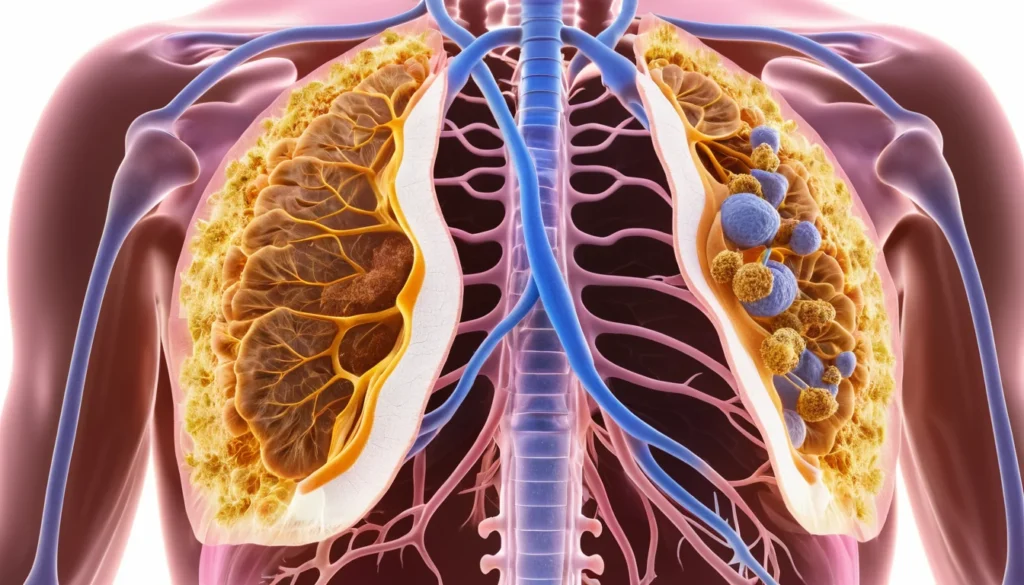
Pulmonary nocardiosis is a rare but serious bacterial lung infection caused by Nocardia asteroides, a microorganism found in soil and decaying organic matter. It mainly affects people with weakened immune systems. In Canada, it is most often seen in patients managing chronic illnesses or taking long-term medications that suppress immunity. This article explains what pulmonary nocardiosis is, who is at risk, what symptoms to watch for, and when to seek care from your family doctor or walk-in clinic.
What Is Pulmonary Nocardiosis?
Pulmonary nocardiosis is an infection of the lung tissue caused by bacteria from the Nocardia genus. There are more than 30 known species of Nocardia, and at least 13 of them can cause disease in humans. The infection can be acute, subacute, or chronic in nature.
The disease can stay limited to the lungs, or it can spread through the bloodstream to other organs. This spread is called disseminated nocardiosis. In its most serious form, it can reach the brain, skin, and kidneys. The more immunocompromised a person is, the higher their risk of dissemination.
Nocardia bacteria are aerobic actinomycetes. They live widely in soil, water, and decomposing animal or plant matter. Humans most often become infected by breathing in contaminated particles. The infection is not typically spread from person to person.
Who Is at Risk of Pulmonary Nocardiosis?
Pulmonary nocardiosis occurs up to three times more often in men than in women. However, this difference appears to be linked to occupational exposure to soil and organic material — not to biological sex. The infection can occur at any age, but it is most commonly reported in people in their 40s.
About 60% of patients who develop nocardiosis have some degree of immune suppression. This does not have to be a complete collapse of the immune system. Even a relative weakening of immunity can be enough for the bacteria to take hold.
Common Risk Factors
Certain health conditions significantly increase the risk of developing pulmonary nocardiosis. These include:
HIV/AIDS
Organ transplantation (and the immunosuppressive drugs that follow)
Long-term corticosteroid therapy
Chronic obstructive pulmonary disease (COPD) or emphysema
Tuberculosis or other prior lung disease
Liver cirrhosis
Chronic alcohol use disorder
Systemic lupus erythematosus (SLE)
Systemic vasculitis
Sarcoidosis
Kidney failure
Lymphoreticular cancers (such as lymphoma)
Long-term anti-TNF alpha therapy (used for conditions like rheumatoid arthritis)
The immune defence against Nocardia relies heavily on T-lymphocytes. Therefore, any condition that impairs T-cell immunity makes a person more vulnerable to this infection.
Causes of Pulmonary Nocardiosis
The primary cause of pulmonary nocardiosis is inhaling Nocardia bacteria. Once the bacteria reach the lung tissue, they can cause suppurative (pus-forming) necrosis and lung abscesses. From there, they may spread to other organs through the bloodstream.
Several factors influence how the disease progresses. These include the site where bacteria first settle, the bacteria’s ability to survive the initial immune attack, and the strength of the body’s immune response. Nocardia bacteria are particularly skilled at resisting destruction by neutrophils — a key type of white blood cell.
For more on how bacterial lung infections develop, visit Health Canada’s respiratory health resources.
Symptoms of Pulmonary Nocardiosis
The symptoms of pulmonary nocardiosis are often non-specific. This means they can look very similar to other common lung infections, which makes diagnosis challenging. Symptoms can be local (in the lungs) or general (affecting the whole body).
General Symptoms
Many patients first notice general symptoms, including:
Persistent or recurring fever
Night sweats
General malaise and fatigue
Unintentional weight loss
Nausea and vomiting
Respiratory Symptoms
Lung-related symptoms are usually the most prominent and are often what brings patients to seek care. These include:
Productive cough with thick, pus-like mucus
Chest pain
Shortness of breath (dyspnoea)
Rapid breathing (tachypnoea)
Coughing up blood (haemoptysis)
Progressive respiratory failure in severe cases
The infection can also cause pleural effusion (fluid around the lungs), empyema (infected fluid in the chest cavity), and lung cavities similar to those seen in tuberculosis.
Neurological Symptoms
At least 25% of all nocardiosis cases develop symptoms affecting the central nervous system. In disseminated disease, this figure rises to 40%. Neurological symptoms include confusion, dizziness, severe headache, seizures, and altered mental status.
In many cases, a brain abscess forms, sometimes with or without meningitis. This is one of the most dangerous complications of disseminated nocardiosis.
Skin and Musculoskeletal Symptoms
When nocardiosis involves the skin, it may appear as cellulitis or painless reddish nodules under the skin. Patients may also develop swollen lymph nodes. Furthermore, muscle and joint pain (myalgia and arthralgia) can occur. Joint infection from nocardiosis is rare but most often affects the knee.
Diagnosing Pulmonary Nocardiosis in Canada
Diagnosing pulmonary nocardiosis can be difficult because its symptoms overlap with many other infections. Your family doctor will likely order chest imaging, such as an X-ray or CT scan. Lab cultures of sputum (mucus from the lungs), blood, or tissue samples are needed to identify Nocardia bacteria.
Because the bacteria grow slowly in lab cultures, diagnosis can take time. It is important to tell your doctor about any medications you take that suppress your immune system, as this information helps guide testing. In Canada, your provincial health plan covers most diagnostic tests ordered by a physician.
According to the Mayo Clinic’s infectious disease resources, early and accurate diagnosis significantly improves treatment outcomes for rare bacterial infections like nocardiosis.
Treatment and Outlook
The main treatment for pulmonary nocardiosis is antibiotic therapy. Sulfonamide antibiotics — particularly trimethoprim-sulfamethoxazole (TMP-SMX) — are most commonly used. Treatment duration is long, often lasting several months, and sometimes up to a year or more, depending on the severity of the infection and the patient’s immune status.
The outlook for pulmonary nocardiosis is generally positive when treated early. Over 90% of patients with lung-limited nocardiosis recover fully with appropriate treatment. However, the prognosis worsens significantly with disseminated disease. The survival rate drops to around 60% when the infection spreads widely. If brain abscesses develop, only about half of patients survive.
Patients with weakened immune systems require careful, ongoing monitoring throughout and after treatment. Your specialist or family doctor will coordinate this follow-up care within the Canadian healthcare system.
The World Health Organization’s guidance on infectious diseases emphasises that immunocompromised patients benefit greatly from early intervention and specialist care.
When to See a Doctor
You should contact your family doctor or visit a walk-in clinic if you have a persistent cough, unexplained fever, night sweats, or shortness of breath — especially if you have a condition that affects your immune system. Do not wait to see if symptoms improve on their own.
Seek emergency care immediately if you develop sudden confusion, severe headache, seizures, or difficulty breathing. These may indicate that the infection has spread to the brain or that your respiratory function is severely compromised.
If you do not have a family doctor, a walk-in clinic is a good first step. Your provincial health plan covers this visit. The clinic can arrange referrals to specialists, such as a respirologist or infectious disease physician, if needed. Always speak with a qualified healthcare provider before starting or stopping any treatment.
What is pulmonary nocardiosis?
Pulmonary nocardiosis is a bacterial lung infection caused by Nocardia bacteria, most commonly Nocardia asteroides. It primarily affects people with weakened immune systems. The infection causes lung tissue damage and can spread to other organs if left untreated.
Is pulmonary nocardiosis contagious?
No, pulmonary nocardiosis is not contagious between people. You cannot catch it from an infected person. The infection comes from inhaling Nocardia bacteria found naturally in soil, water, and decaying organic material.
Who is most at risk of developing pulmonary nocardiosis?
People with weakened immune systems are most at risk of pulmonary nocardiosis. This includes individuals living with HIV/AIDS, organ transplant recipients, and those on long-term corticosteroid or anti-TNF therapy. People with chronic lung conditions such as COPD or a history of tuberculosis also face higher risk.
How is pulmonary nocardiosis treated?
Pulmonary nocardiosis is treated with a long course of antibiotics, most commonly trimethoprim-sulfamethoxazole (TMP-SMX). Treatment can last anywhere from several months to over a year, depending on how severe the infection is. Your doctor will monitor your progress closely throughout treatment.
Can pulmonary nocardiosis spread to the brain?
Yes, pulmonary nocardiosis can spread to the brain, a condition known as disseminated nocardiosis. This occurs through the bloodstream and can lead to a brain abscess or meningitis. Neurological symptoms such as severe headache, confusion, or seizures require immediate emergency medical care.
What is the survival rate for pulmonary nocardiosis?
When caught early and treated appropriately, over 90% of pulmonary nocardiosis cases resolve successfully. However, if the infection becomes disseminated (widespread), the survival rate drops to approximately 60%. Cases involving brain abscesses carry the most serious outlook, with roughly half of patients surviving.
Key Takeaways
Pulmonary nocardiosis is a rare bacterial lung infection caused by Nocardia bacteria found in soil and the environment.
It spreads through inhaling bacteria, not through contact with other people.
People with weakened immune systems — including those with HIV, organ transplants, or chronic illnesses — are most at risk.
Symptoms include persistent cough, fever, night sweats, chest pain, and shortness of breath.
The infection can spread to the brain, skin, and other organs if untreated.
Treatment involves long-term antibiotics, and outcomes are good when diagnosed early.
If you have symptoms and a condition that weakens your immune system, contact your family doctor or visit a walk-in clinic promptly.
Always consult a qualified healthcare professional for diagnosis and treatment guidance specific to your situation.