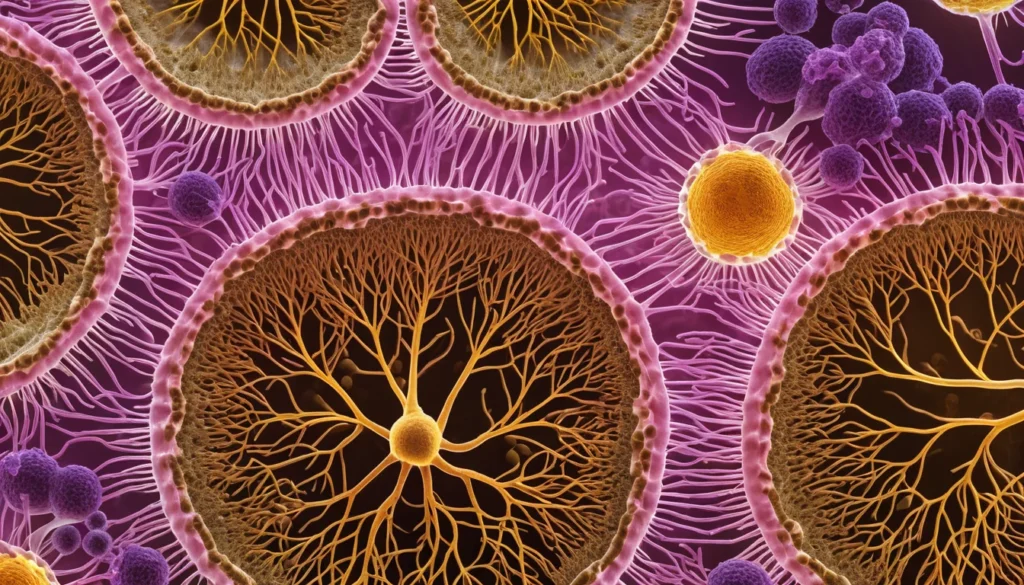
Pulmonary aspergillosis is a serious lung infection caused by a common mould called Aspergillus. It can affect Canadians of all ages, though it most often strikes people whose immune systems are weakened. In this article, you will learn what causes pulmonary aspergillosis, what symptoms to watch for, and when to contact your family doctor or visit a walk-in clinic.
What Is Pulmonary Aspergillosis?
Pulmonary aspergillosis is a fungal infection that starts in the lungs. It is caused mainly by a mould called Aspergillus fumigatus, which releases tiny spores into the air we breathe every day.
Most healthy people breathe in these spores without any problem. However, when the immune system is weakened or the lungs are already damaged, the fungus can take hold and cause serious illness.
The infection can range from mild to life-threatening. According to Health Canada, fungal infections are a growing concern, especially among people living with conditions that affect immune function.
Men appear to develop pulmonary aspergillosis more often than women. Research suggests a male-to-female ratio of roughly 3 to 1. The infection can appear in people aged 20 to 90 years old.
What Causes Pulmonary Aspergillosis?
Aspergillus fumigatus spores are everywhere in our environment. You can find them in soil, dust, compost, dead leaves, and decaying plant matter. The spores are extremely small — just 2 to 3 micrometres in diameter — so they travel deep into the lungs when inhaled.
In a healthy person, the immune system clears these spores before they cause harm. Therefore, simply breathing in Aspergillus spores does not automatically lead to infection.
Who Is Most at Risk?
Pulmonary aspergillosis is known as an opportunistic infection. This means it takes advantage of a weakened immune system. Certain health conditions raise your risk significantly.
People living with HIV/AIDS face a notably higher risk. In fact, approximately 12% of patients in the late stages of HIV infection develop pulmonary aspergillosis. In addition, the following conditions are linked to a higher risk:
Tuberculosis
Chronic obstructive pulmonary disease (COPD)
Bronchiectasis (widening and scarring of the airways)
Uncontrolled diabetes
Chronic alcohol use disorder
Cancer and cancer treatments
Organ transplantation
Liver cirrhosis
Severe malnutrition
Sepsis
Two other moulds — Zygomycetes and Fusarium — can cause a very similar type of lung infection. Your doctor will need laboratory tests to tell these apart.
How Does the Infection Develop?
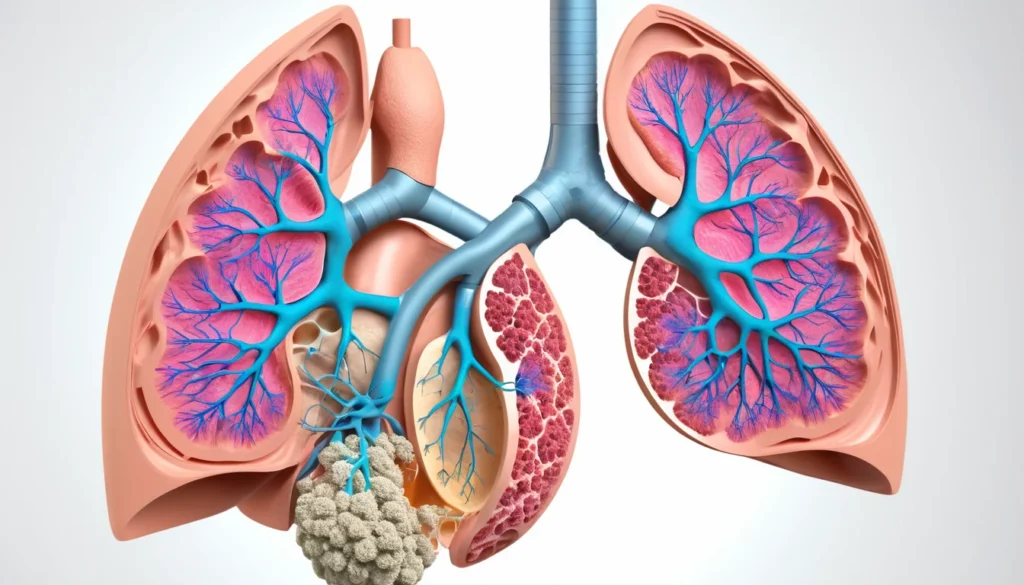
Once Aspergillus spores settle inside the lungs, they begin to multiply in areas where the immune system cannot reach them easily. Over time, the fungus forms a compact mass called an aspergilloma.
An aspergilloma is a ball-like structure made up of fungal threads, dead tissue, mucus, collagen fibres, fibrin, and white blood cells. It can form not only in the lungs but also in the brain, liver, or kidneys in severe cases.
As the fungus grows, it can break through surrounding tissue and even enter the bloodstream. This allows the infection to spread to organs far from the original site in the lungs.
The Four Types of Pulmonary Aspergillosis
Pulmonary aspergillosis does not look the same in every patient. Doctors recognise four main types, and each one behaves differently depending on the patient’s immune health.
1. Allergic Bronchopulmonary Aspergillosis (ABPA)
This type happens when the body has an allergic reaction to the Aspergillus fungus. It is most common in people who already have asthma or cystic fibrosis. The immune system overreacts, causing inflammation and airway damage.
2. Aspergilloma (Saprophytic Aspergillosis)
This is the most common and most frequently diagnosed form. The fungus colonises a pre-existing cavity in the lung — for example, a cavity left behind by tuberculosis. This form is non-invasive, meaning it does not spread into surrounding tissue on its own.
3. Chronic Necrotising Aspergillosis (Semi-Invasive)
This is a slow-moving, chronic form of the disease. It tends to affect people with a history of lung conditions. Over time, it creates new cavities in the lung tissue, causing ongoing damage.
4. Angio-Invasive Aspergillosis
This is the most dangerous type. It affects patients with severely compromised immune systems — for example, those undergoing chemotherapy or bone marrow transplant. The fungus invades blood vessels in the lungs. Without prompt treatment, this form can be fatal.
Symptoms of Pulmonary Aspergillosis
Symptoms of pulmonary aspergillosis vary widely from person to person. Some patients have no symptoms at all, especially if their immune system is managing the infection. However, when symptoms do appear, they can be serious.
The most common symptoms include:
Coughing up blood (haemoptysis) — this occurs in over 75% of patients
Chest pain
Persistent cough
Fever and chills
General fatigue and feeling unwell
Unintentional weight loss
Shortness of breath
Wheezing
Understanding Haemoptysis
Coughing up blood — called haemoptysis — is often the symptom that first brings patients to seek care. The bleeding can range from small streaks of blood in the mucus to large amounts of bright red blood.
Massive haemoptysis is defined as losing approximately 600 mL of blood within 48 hours. This is a medical emergency. When haemoptysis reaches this level, the mortality rate can be as high as 55%. If you or someone near you starts coughing up significant amounts of blood, call 911 immediately.
For more on recognising serious respiratory symptoms, visit the Mayo Clinic’s overview of aspergillosis.
Diagnosis and Treatment in Canada
Diagnosing pulmonary aspergillosis usually requires a combination of tests. Your family doctor or specialist may order a chest X-ray, CT scan, blood tests, or a sputum culture (a lab test of mucus coughed up from the lungs).
Treatment depends on the type and severity of the infection. In some cases — roughly 10% — the infection resolves on its own. However, most patients need antifungal medications. The most commonly used drugs include voriconazole and itraconazole.
For aspergillomas that cause severe bleeding, surgery to remove the fungal mass may be necessary. Your care team — which may include a respirologist or infectious disease specialist — will guide the best approach for your situation.
In Canada, most diagnostic testing and specialist referrals are covered under provincial health plans. Ask your family doctor about the referral process in your province or territory.
Furthermore, the World Health Organization provides guidance on fungal health risks that may be helpful for patients and caregivers seeking more background information.
When to See a Doctor
You should contact your family doctor if you have a persistent cough, unexplained weight loss, or ongoing fatigue — especially if you have a condition that affects your immune system. Early diagnosis gives you the best chance of successful treatment.
If you do not have a family doctor, a walk-in clinic can assess your symptoms and refer you to the right specialist. Many walk-in clinics across Canada can order initial blood work and chest imaging on the same visit.
Seek emergency care right away if you experience any of the following:
Coughing up blood or blood-streaked mucus
Sudden severe chest pain
Difficulty breathing at rest
High fever that does not respond to over-the-counter medication
Always speak with a qualified healthcare provider before making any decisions about your health. The information in this article is for general educational purposes only and does not replace professional medical advice.
Frequently Asked Questions About Pulmonary Aspergillosis
Is pulmonary aspergillosis contagious?
No, pulmonary aspergillosis is not contagious. You cannot catch it from another person. The infection comes from breathing in Aspergillus spores that are naturally present in the environment, such as in soil, dust, and decaying plant material.
Can a healthy person get pulmonary aspergillosis?
It is uncommon, but pulmonary aspergillosis can occasionally develop in people who appear otherwise healthy. However, it is far more likely to affect individuals with a weakened immune system or pre-existing lung conditions. If you have concerns, speak with your family doctor.
How is pulmonary aspergillosis diagnosed?
Doctors diagnose pulmonary aspergillosis using a combination of chest X-rays, CT scans, blood tests, and sputum cultures. In some cases, a bronchoscopy (a camera procedure to look inside the airways) or a lung biopsy may also be needed. In Canada, your family doctor can refer you to the appropriate specialists through your provincial health plan.
What is the difference between an aspergilloma and invasive aspergillosis?
An aspergilloma is a non-invasive fungal ball that grows inside a pre-existing cavity in the lung. It does not spread on its own. Invasive aspergillosis, on the other hand, actively spreads through lung tissue and into the bloodstream, making it much more dangerous and harder to treat.
Can pulmonary aspergillosis be cured?
Yes, many cases of pulmonary aspergillosis can be successfully treated, especially when caught early. Treatment usually involves antifungal medications, and in some cases, surgery. About 10% of cases resolve on their own, but medical supervision is always recommended to prevent serious complications.
How can I reduce my risk of pulmonary aspergillosis?
If you have a weakened immune system, you can lower your risk by avoiding areas with heavy dust or mould, such as construction sites and compost heaps. Wearing a well-fitted mask in high-risk environments can also help. Talk to your doctor about whether preventive antifungal medication is appropriate for your situation.
Key Takeaways
Pulmonary aspergillosis is a fungal lung infection caused by Aspergillus mould, most often Aspergillus fumigatus.
It is an opportunistic infection — it mainly affects people with weakened immune systems or damaged lungs.
There are four types: allergic, aspergilloma, chronic necrotising, and angio-invasive. Each varies in severity.
The most alarming symptom is coughing up blood (haemoptysis), which occurs in over 75% of cases.
Treatment includes antifungal medications and, in severe cases, surgery.
In Canada, your family doctor or a walk-in clinic can assess your symptoms and refer you to specialists through your provincial health plan.
Always consult a healthcare professional for diagnosis and treatment — do not self-diagnose or self-medicate.