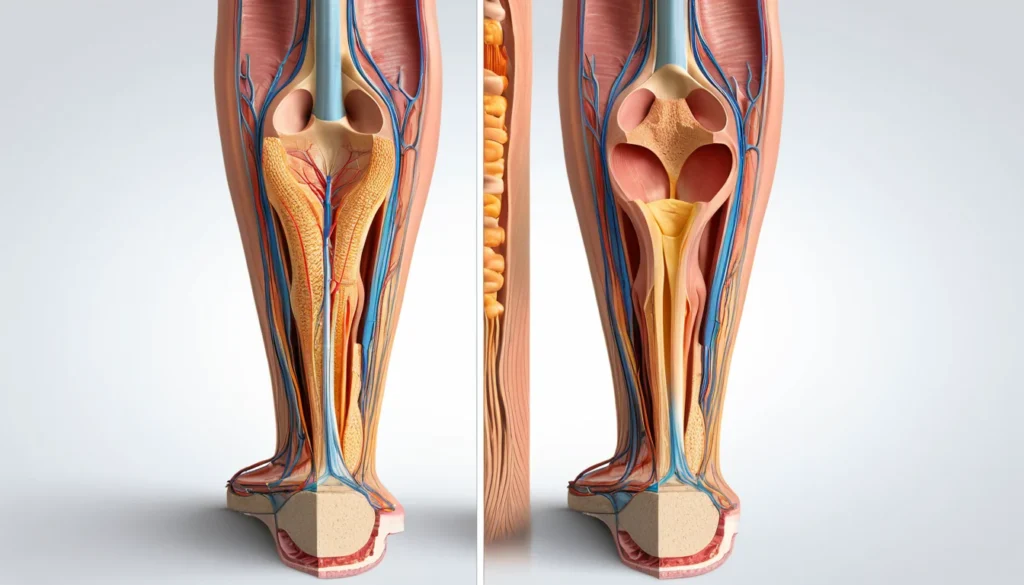
Phlebitis is the inflammation of a vein, and it can cause pain, swelling, and redness in the affected area. It most commonly affects the legs, but it can also occur in the arms. When a blood clot forms inside an inflamed vein, the condition is called thrombophlebitis. Understanding phlebitis — its causes, symptoms, and treatments — can help you protect your vascular health and know when to seek care.
What Is Phlebitis?
Phlebitis affects two types of veins in the body: superficial veins and deep veins. Superficial veins sit just below the skin and are often visible as thin blue lines. Deep veins lie deeper within the muscles and cannot be seen from the outside.
Superficial phlebitis affects the veins near the skin’s surface. This form is rarely serious. It can usually be managed with warm compresses, anti-inflammatory medications, and compression stockings.
Deep vein phlebitis — also called deep vein thrombosis (DVT) — is more serious. Blood clots in the deep veins can break loose and travel to the lungs. This is called a pulmonary embolism, and it is a life-threatening emergency. According to Health Canada, pulmonary embolism is one of the most preventable causes of hospital-related deaths.
Common Causes of Phlebitis
Phlebitis often develops after an injury to a vein. The injury triggers inflammation, which can slow blood flow and lead to clot formation. However, several other factors can also cause or contribute to phlebitis.
Superficial Vein Causes
Superficial veins do not have surrounding muscle to help push blood along. As a result, blood moves more slowly through them. This makes them more vulnerable to inflammation. Phlebitis is especially common in people who already have varicose veins.
An intravenous (IV) line or catheter inserted into a vein can also irritate the vein wall and trigger phlebitis. In addition, certain medications delivered through an IV can damage the vein from the inside.
Deep Vein Causes
Deep vein thrombophlebitis has several known risk factors. These include:
Prolonged inactivity, such as bed rest after surgery or long flights
Blood clotting disorders
Smoking, especially when combined with hormonal birth control or hormone replacement therapy
Pregnancy, when the enlarged uterus can press on the large pelvic veins
Certain cancers, including pancreatic, breast, and ovarian cancer
Autoimmune conditions such as lupus
Injury to the arms or legs
Furthermore, a sedentary lifestyle raises your overall risk. Regular movement helps your muscles squeeze blood back up toward the heart. Without that movement, blood can pool and clot.
Recognising the Symptoms of Phlebitis
The symptoms of phlebitis depend on whether the superficial or deep veins are affected. It is important to know the difference, because deep vein involvement requires urgent medical attention.
Superficial Phlebitis Symptoms
Superficial phlebitis often starts gradually. You may notice a red, warm, and firm area along the path of a vein. The skin around it may feel itchy or tender to the touch. Symptoms are sometimes worse in the morning.
In some cases, a mild fever may develop. If an IV line caused the phlebitis, the area around the insertion site may become swollen and red. If infection is also present, you might notice skin peeling or more significant redness and warmth.
Deep Vein Phlebitis Symptoms
Deep vein phlebitis causes more pronounced symptoms. The affected limb may appear red, feel warm, and look swollen. Pain in the leg or arm is common, and it can range from a dull ache to severe discomfort.
Occasionally, the skin may take on a bluish or deep red colour. These colour changes signal that circulation in the area is significantly affected. For more information on recognising blood clot symptoms, visit the Mayo Clinic’s guide to deep vein thrombosis.
When to See a Doctor
If you notice swelling or pain in a limb — especially without a clear reason — you should see your family doctor or visit a walk-in clinic as soon as possible. This is especially important if you have any known risk factors for deep vein thrombophlebitis.
Most provincial health plans in Canada cover consultations for vascular concerns. Do not wait to seek care if your symptoms are worsening. Early diagnosis can prevent serious complications.
Call 911 or go to your nearest emergency department immediately if you experience any of the following:
High fever alongside a swollen or painful limb
A hard lump or knot forming along a vein in the arm or leg
Severe swelling and pain in an entire arm or leg
Chest pain or difficulty breathing
Chest pain and shortness of breath alongside leg symptoms could signal a pulmonary embolism. This is a medical emergency. Do not drive yourself to the hospital — call 911.
How Phlebitis Is Diagnosed
Your doctor will start by examining the affected limb and asking about your medical history. For superficial phlebitis, a physical examination is usually enough to make a diagnosis. No additional tests are typically needed.
However, if your doctor suspects deep vein involvement, they will order further tests. These may include:
D-Dimer Blood Test
A D-dimer test checks for a specific chemical released when blood clots break down. A positive result suggests that clotting is occurring somewhere in the body. However, this test does not identify the exact location of the clot, so additional imaging is often needed.
Ultrasound
An ultrasound is the most common imaging test for phlebitis and DVT. A small probe is moved over the skin above the vein. The ultrasound creates images that show whether a clot is blocking blood flow. This test is painless and widely available at most Canadian hospitals and diagnostic imaging centres.
Venography
In some cases, a venogram may be ordered. This involves injecting a contrast dye directly into the vein and then taking an X-ray. The dye makes the vein clearly visible on the image, allowing the doctor to assess its condition in detail. Venography is less common today because ultrasound is usually sufficient.
Phlebitis Treatment and Home Care
Treatment for phlebitis depends on whether the superficial or deep veins are affected. Superficial phlebitis can often be managed at home with simple measures. Deep vein thrombophlebitis almost always requires medical treatment and sometimes hospitalisation.
Home Care for Superficial Phlebitis
If your doctor confirms superficial phlebitis, the following steps can help ease your symptoms:
Apply a warm compress to the affected area several times a day to reduce pain and swelling
Take ibuprofen (such as Advil) to reduce inflammation and discomfort — always follow the dosage instructions on the label
Wear compression stockings, which your doctor or pharmacist can prescribe, to improve blood flow and reduce swelling
Elevate the affected limb when resting to encourage blood flow back toward the heart
Stay as active as possible — gentle walking helps keep blood moving through the veins
In addition, avoid sitting or standing for long periods without moving. Even small movements — like flexing your ankles while seated — can make a significant difference in circulation.
Medical Treatment for Deep Vein Thrombophlebitis
Deep vein thrombophlebitis requires treatment supervised by a healthcare provider. Your doctor may prescribe anticoagulant medications (blood thinners) to prevent the clot from growing or breaking off. Common options in Canada include heparin, warfarin, or newer oral anticoagulants such as rivaroxaban.
In severe cases, a procedure called thrombolysis may be used to dissolve the clot directly. Your care team will determine the most appropriate treatment based on your health history and the severity of the clot. Always follow your doctor’s instructions and attend all follow-up appointments. You can also find reliable information through Healthline’s overview of thrombophlebitis.
Frequently Asked Questions About Phlebitis
What is the difference between phlebitis and deep vein thrombosis (DVT)?
Phlebitis refers to inflammation of a vein, which may or may not involve a blood clot. Deep vein thrombosis (DVT) specifically means a blood clot has formed in a deep vein, usually in the leg. DVT is a more serious condition because the clot can travel to the lungs and cause a pulmonary embolism.
Can phlebitis go away on its own?
Mild superficial phlebitis can often resolve on its own within a few weeks with proper home care, such as warm compresses and anti-inflammatory medication. However, you should still see your family doctor or visit a walk-in clinic to rule out deep vein involvement. Never assume phlebitis is harmless without a professional assessment.
What does phlebitis look like?
Phlebitis typically appears as a red, warm, and slightly swollen streak along the path of a vein under the skin. The area may feel firm or cord-like to the touch. In deeper veins, the skin may look normal on the surface even though significant swelling and pain are present in the limb.
Is phlebitis dangerous?
Superficial phlebitis is rarely dangerous, but deep vein thrombophlebitis can be life-threatening if a blood clot breaks loose and travels to the lungs. This is called a pulmonary embolism and requires emergency care. If you have severe leg pain, swelling, chest pain, or difficulty breathing, call 911 immediately.
What are the main risk factors for developing phlebitis?
Key risk factors for phlebitis include prolonged inactivity, varicose veins, smoking, hormonal birth control, pregnancy, blood clotting disorders, and recent surgery. Injury to a vein — including from an IV line — can also trigger phlebitis. Reducing sedentary behaviour and staying active are among the best ways to lower your risk.
How is phlebitis treated in Canada?
Superficial phlebitis is typically treated with warm compresses, ibuprofen, and prescription compression stockings — all accessible through your family doctor or a walk-in clinic under most provincial health plans. Deep vein thrombophlebitis requires blood-thinning medications and close medical supervision. Your doctor will create a treatment plan based on the location and severity of your phlebitis.
Key Takeaways
Phlebitis is inflammation of a vein that can cause redness, swelling, warmth, and pain
There are two main types: superficial phlebitis (less serious) and deep vein thrombophlebitis (potentially life-threatening)
Risk factors include inactivity, varicose veins, smoking, pregnancy, blood clotting disorders, and recent surgery
Superficial phlebitis can often be managed at home with warm compresses, ibuprofen, and compression stockings
Deep vein thrombophlebitis requires medical treatment, usually with blood-thinning medications
Call 911 if you experience chest pain, difficulty breathing, or sudden severe swelling in a limb — these may be signs of a pulmonary embolism
Always speak with your family doctor or a walk-in clinic if you suspect phlebitis — most provincial health plans in Canada cover this type of assessment
This article is for informational purposes only and does not replace professional medical advice. If you have concerns about phlebitis or any vein-related symptoms, please consult your family doctor or a qualified healthcare provider.