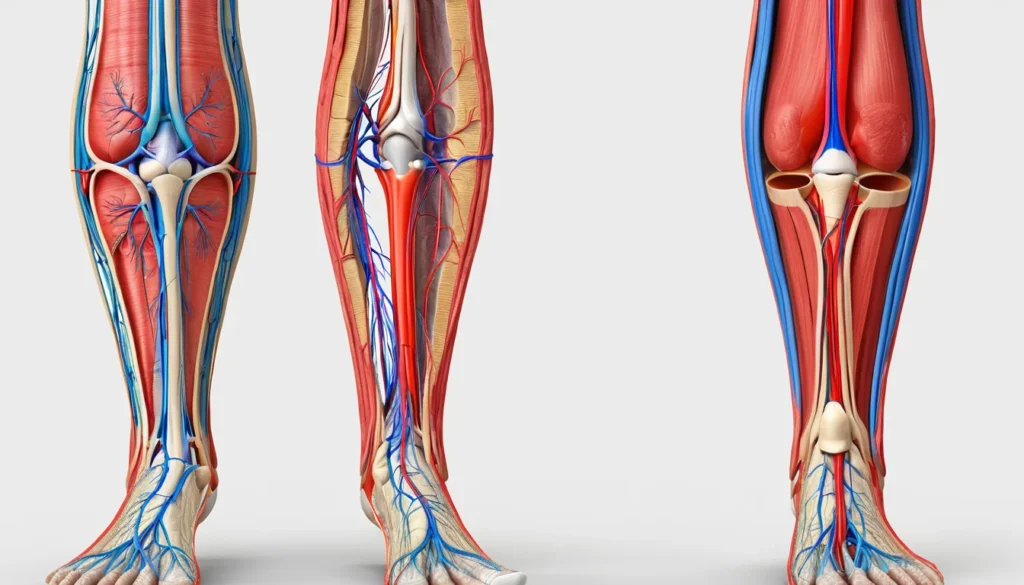
Peripheral artery disease (PAD) is a common condition where narrowed arteries reduce blood flow to your legs and feet. It is caused by atherosclerosis — a buildup of cholesterol and fatty deposits inside artery walls. Many Canadians live with PAD without knowing it. This article explains what PAD is, what causes it, how it feels, and how your doctor diagnoses it.
What Is Peripheral Artery Disease?
Peripheral artery disease happens when the arteries that carry blood to your limbs become narrow or blocked. This narrowing is almost always caused by atherosclerosis — the same process that clogs heart arteries. When blood flow drops low enough, your muscles do not get enough oxygen.
As a result, you may feel pain, cramping, or heaviness in your legs when you walk. This type of pain is called claudication. It usually goes away with rest, then returns when you start walking again. According to Health Canada, cardiovascular conditions like PAD are among the leading health concerns for Canadians.
What Causes Peripheral Artery Disease?
Atherosclerosis is the main cause of peripheral artery disease. It develops slowly over many years. Cholesterol, especially LDL (“bad”) cholesterol, builds up in artery walls. Your body responds with inflammation, which makes the buildup worse over time.
Key Risk Factors
Several risk factors speed up the development of PAD. The most common ones include:
Smoking — one of the strongest risk factors for PAD
Diabetes — damages blood vessels and nerves over time
High blood pressure — puts extra strain on artery walls
High LDL cholesterol — fuels plaque buildup inside arteries
Age — risk increases significantly after age 50
In addition, certain less common conditions can also damage artery walls. These include lupus, fibromuscular dysplasia, and Takayasu arteritis. However, these causes are far less frequent than atherosclerosis.
How Atherosclerosis Damages Arteries
When cholesterol deposits form inside an artery wall, the body triggers an inflammatory response. Over time, this hardens and thickens the wall. The artery becomes stiff and narrow. Blood struggles to flow through, especially during physical activity when muscles need more oxygen.
Symptoms of Peripheral Artery Disease
The most recognised symptom of peripheral artery disease is intermittent claudication. This is a cramping or aching pain in the calf, thigh, or buttock that appears during walking and fades with rest. The pain happens because working muscles run out of oxygen and switch to a less efficient energy process called anaerobic metabolism. This produces waste products that irritate muscle tissue.
When Symptoms Are Harder to Spot
People with diabetes may not feel typical PAD pain. Diabetes can damage the nerves that carry pain signals, a condition called diabetic neuropathy. As a result, PAD may be more advanced before it is noticed. This makes regular check-ups especially important for Canadians managing diabetes.
Other Symptoms to Watch For
Beyond leg pain, peripheral artery disease can cause a range of other symptoms. These include:
Numbness or tingling in the affected leg
Skin that feels cold to the touch
Pale or bluish skin colour on the legs or feet
Slow-growing or thickened toenails
Loss of leg hair
Slow-healing sores or ulcers on the feet or lower legs
Furthermore, because atherosclerosis affects the whole body, many people with PAD also have narrowed heart arteries. This can cause chest pain (angina) — a tight or squeezing feeling in the chest that may spread to the jaw, neck, or left arm. If you experience chest pain, seek medical help right away.
Stages of Peripheral Artery Disease
Doctors use a staging system to measure how serious peripheral artery disease has become. The most widely used system is the Fontaine Classification. It ranks PAD into four stages based on symptoms.
Fontaine Stages Explained
Stage I — No symptoms. PAD is present but causes no pain. It is usually found by chance during a medical test.
Stage IIa — Mild claudication. Leg pain appears after walking more than 200 metres (about two city blocks).
Stage IIb — Moderate claudication. Leg pain appears after walking less than 200 metres.
Stage III — Rest pain. The legs hurt even without walking or any physical effort. This signals severely reduced blood flow.
Stage IV — Tissue damage. Painful ulcers or gangrene appear on the affected limb. This stage requires urgent medical care.
The higher the stage, the more serious the outlook. Early detection gives you the best chance at slowing or stopping PAD from getting worse. The Mayo Clinic’s overview of peripheral artery disease offers further detail on disease progression.
How Doctors Diagnose Peripheral Artery Disease
Your family doctor or a specialist can use several tests to confirm a diagnosis of peripheral artery disease. Most of these tests are straightforward and non-invasive. Early diagnosis allows treatment to begin before the condition worsens.
Blood Tests
A complete blood count (CBC) checks your red cells, white cells, and platelets. Doctors also measure inflammation markers like ESR (erythrocyte sedimentation rate) and fibrinogen. High levels suggest active inflammation in the body.
In addition, a blood chemistry panel checks:
Blood sugar (glucose) — to screen for diabetes
Creatinine and uric acid — to assess kidney function
Total cholesterol, LDL, and HDL — higher HDL (“good cholesterol”) helps protect arteries
Ankle-Brachial Index (ABI)
The ankle-brachial index is one of the most useful tests for peripheral artery disease. Your doctor measures blood pressure at your ankle and your arm, then divides the ankle reading by the arm reading.
Here is how to read the results:
0.90 to 1.30 — Normal range
0.50 to 0.89 — Abnormal; symptoms are likely present
Below 0.50 — Severe; significant tissue ischemia (oxygen starvation) is possible
Normally, blood pressure at the ankle is slightly higher than at the arm. A lower ankle reading suggests blocked or narrowed arteries in the leg.
Ultrasound Imaging
An ultrasound scan lets doctors see atherosclerotic plaques inside blood vessels. It also measures how fast blood is flowing through the arteries. This test is painless and widely available at hospitals and diagnostic imaging centres across Canada.
Treadmill Stress Test
During a treadmill (exercise) stress test, you walk on a moving belt while a technician monitors you. The technician records how far you walk and how long it takes before symptoms appear. This helps your doctor measure how much PAD affects your daily activity.
When to See a Doctor
You should speak with your family doctor if you notice pain or cramping in your legs during walks that goes away with rest. Do not ignore leg pain, cold feet, or slow-healing sores. These can be early warning signs of peripheral artery disease.
If you do not have a family doctor, a walk-in clinic can do an initial assessment and refer you for further tests. Most provincial health plans in Canada cover PAD-related diagnostic tests when ordered by a physician. Check with your province’s health programme for coverage details.
If you experience sudden severe leg pain, sudden chest pain, or a sore on your foot that is not healing, seek care immediately. These may signal a medical emergency. You can also find reliable information through Healthline’s guide to peripheral artery disease.
Always speak with a qualified healthcare provider before making any decisions about your health. This article is for informational purposes only and does not replace professional medical advice.
Frequently Asked Questions About Peripheral Artery Disease
What is the main symptom of peripheral artery disease?
The main symptom of peripheral artery disease is intermittent claudication — a cramping or aching pain in the leg that comes on during walking and disappears with rest. Some people also notice cold or pale skin on their legs and feet. In advanced cases, pain can occur even at rest.
Can peripheral artery disease be cured?
Peripheral artery disease cannot always be fully cured, but it can be managed effectively. Lifestyle changes — such as quitting smoking, eating a heart-healthy diet, and staying physically active — can slow its progression significantly. Your doctor may also recommend medications or, in serious cases, a procedure to restore blood flow.
Is peripheral artery disease the same as heart disease?
They are not the same condition, but they share the same root cause — atherosclerosis. Peripheral artery disease affects arteries in the legs, while heart disease affects the coronary arteries that supply the heart. Many people with PAD also have a higher risk of heart attack and stroke.
How is peripheral artery disease diagnosed in Canada?
In Canada, a family doctor or specialist typically diagnoses peripheral artery disease using blood tests, an ankle-brachial index (ABI) measurement, and an ultrasound scan. A treadmill stress test may also be used. Most of these tests are covered under provincial health plans when referred by a physician.
What happens if peripheral artery disease is left untreated?
If left untreated, peripheral artery disease can progress to severe stages where pain occurs at rest and ulcers or gangrene develop on the feet or legs. Untreated PAD also significantly raises the risk of heart attack and stroke. Early treatment is essential to protect both your limbs and your heart.
Who is most at risk for peripheral artery disease in Canada?
Canadians over age 50 who smoke, have diabetes, high blood pressure, or high LDL cholesterol are most at risk for peripheral artery disease. People with a family history of cardiovascular disease should also be aware of their risk. Regular check-ups with your family doctor can help catch PAD early.
Key Takeaways
Peripheral artery disease is caused by atherosclerosis narrowing the leg arteries and reducing blood flow.
The main symptom is claudication — leg pain during walking that improves with rest.
Major risk factors include smoking, diabetes, high blood pressure, and high LDL cholesterol.
People with diabetes may not feel typical PAD pain, making regular check-ups even more important.
The Fontaine Classification stages PAD from no symptoms (Stage I) to tissue damage and ulcers (Stage IV).
Diagnosis uses blood tests, the ankle-brachial index, ultrasound, and a treadmill stress test.
Most diagnostic tests are covered under Canadian provincial health plans with a doctor’s referral.
Speak with your family doctor or visit a walk-in clinic if you notice any warning signs of PAD.