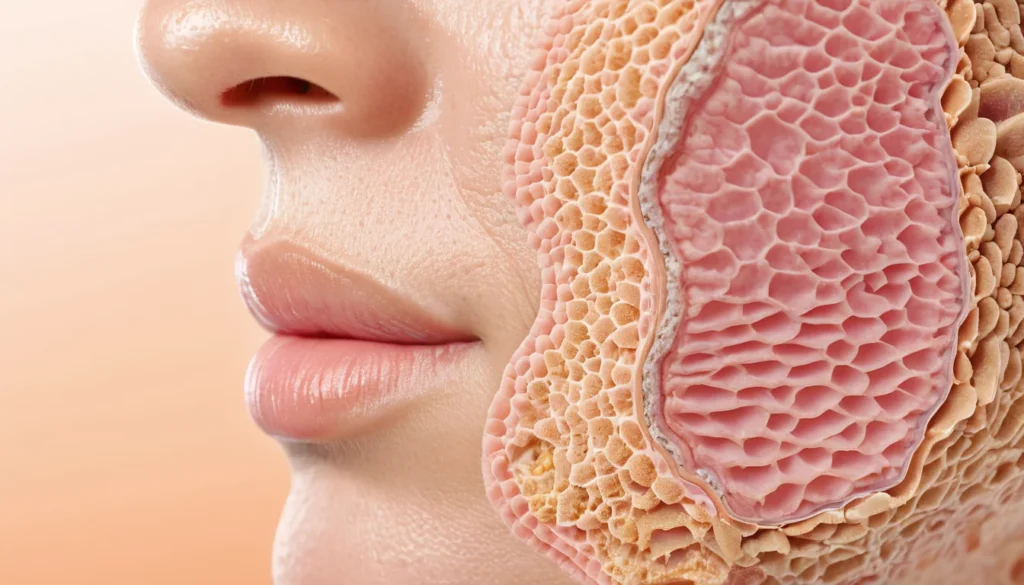
Perioral dermatitis is a chronic skin condition that causes small, red, pimple-like bumps to appear around the mouth, nose, and eyes. It affects mostly women between the ages of 20 and 45, though children can develop it too. In this article, we explain what causes perioral dermatitis, what it looks like, and how it is treated — including options available through your family doctor or a walk-in clinic in Canada.
What Is Perioral Dermatitis?
Perioral dermatitis is a facial skin condition that looks a lot like acne or rosacea. The word “perioral” simply means “around the mouth,” which is where most of the bumps appear.
The bumps can be red, scaly, or pus-filled. They often cluster in groups and may spread to the folds around the nose or the lower eyelids. The skin underneath may look red and inflamed.
Unlike a simple pimple, this condition tends to come back and can last for months or even years without proper treatment. However, with the right care, most people see clear improvement. According to Mayo Clinic’s overview of perioral dermatitis, the condition is not contagious and does not cause permanent scarring in most cases.
Who Gets Perioral Dermatitis?
This condition is more common than many people think. Estimates suggest it affects between 0.5% and 1% of people in industrialised countries, including Canada.
Women make up about 90% of all cases. Researchers believe this is partly due to higher cosmetic product use among women. However, the number of men developing the condition appears to be rising as skincare routines become more common across all genders.
Children can also develop a version of this condition, sometimes called granulomatous perioral dermatitis. In children, it often appears as yellow-brown bumps around the mouth, nose, and eyes. The good news is that the childhood form tends to go away on its own without long-term effects.
Common Causes and Triggers of Perioral Dermatitis
The exact cause of perioral dermatitis is not fully understood. However, researchers and doctors have identified several common triggers. Understanding these can help you avoid making the condition worse.
Topical Steroid Creams
The most well-known trigger is the overuse of topical steroid creams on the face. Many people use these creams for minor skin irritations, sometimes without a prescription. Over time, the skin can become dependent on the steroid, and stopping it may actually cause or worsen perioral dermatitis.
There is no clear link between a specific type of steroid cream and the risk of developing this condition. Even low-strength creams used regularly can be a problem. If you are using a steroid cream on your face, speak with your family doctor about whether it is appropriate for long-term use.
Skincare Products and Cosmetics
Certain cosmetics and skincare products are also suspected triggers. These include:
Fluoride toothpaste
Heavy moisturisers, especially those containing petrolatum or paraffin
Night creams and rich emollients
Products with isopropyl myristate as an ingredient
One Australian study found that adding a night cream or rich emollient to a skincare routine significantly increased the risk of developing perioral dermatitis. Interestingly, using an emollient alone was not associated with the same risk — it was the combination of an emollient and another active product that raised concern.
Environmental and Hormonal Factors
Sun exposure, heat, and wind can all make perioral dermatitis worse. Many people notice flare-ups during warm Canadian summers or after spending time outdoors without sun protection.
Hormonal factors are also suspected. Some women notice their skin worsens before their menstrual period. Oral contraceptives may also play a role, though more research is needed. In addition, some digestive issues — such as poor nutrient absorption — have been linked to the condition.
Microorganisms on the Skin
Certain bacteria and fungi have been found in the skin lesions of people with perioral dermatitis. However, it is not yet clear whether these microorganisms cause the condition or simply take advantage of already-irritated skin. Yeast infections involving Candida species have also been considered a possible contributing factor.
Recognising the Symptoms of Perioral Dermatitis
Perioral dermatitis usually begins gradually. The first sign is often small red bumps or a mild rash around the mouth. Over time, these bumps can multiply and spread.
Common symptoms include:
Small red or pink bumps (papules) around the mouth, nose, or eyes
Pus-filled bumps that resemble pimples
A burning or tight feeling in the skin
Redness and mild scaling of the affected area
Itching (less common)
One key feature of perioral dermatitis is that a narrow strip of skin directly next to the lips is usually not affected. This helps doctors tell it apart from other conditions like contact dermatitis or rosacea.
The condition can have a real emotional impact. Because the rash appears on the face, many people feel self-conscious. Chronic cases may affect daily behaviour, social activities, and overall quality of life.
How Is Perioral Dermatitis Diagnosed?
Doctors diagnose perioral dermatitis based on what the skin looks like. There are no specific blood tests or lab work required.
However, your doctor will want to rule out similar-looking conditions. These include:
Acne vulgaris
Rosacea
Allergic contact dermatitis
Irritant contact dermatitis
A facial mite infection called Demodex folliculitis
In rare cases, a skin biopsy may be done to confirm the diagnosis or rule out other conditions. Under a microscope, the skin changes in perioral dermatitis look similar to rosacea, though there are some differences a specialist can identify. For more on how skin conditions are classified and diagnosed, see Healthline’s guide to perioral dermatitis diagnosis.
Treatment Options for Perioral Dermatitis
The good news is that perioral dermatitis responds well to treatment. Your doctor will choose a plan based on how mild or severe your case is.
Stop Using Topical Steroids
The first and most important step is to stop using any topical steroid creams on your face. This is sometimes called “zero therapy.” It may feel counterintuitive because stopping can cause a temporary flare-up. However, this is a necessary step before other treatments can work properly.
Talk to your family doctor before stopping any prescribed cream. Do not stop suddenly without medical guidance if you have been using a steroid cream long-term.
Topical Treatments
Your doctor may prescribe one of the following creams or gels to apply directly to the affected skin:
Metronidazole gel or cream — an antibiotic that reduces inflammation
Azelaic acid — helps calm redness and reduce bumps
Erythromycin gel — another topical antibiotic option
Pimecrolimus cream or tacrolimus cream — immune-modulating creams that reduce inflammation without steroids
These are all available by prescription in Canada through your family doctor or a dermatologist. Results typically take 4 to 8 weeks, so patience is important.
Oral Antibiotics
For moderate to severe cases, oral antibiotics are often the most effective treatment. Tetracycline-class antibiotics — such as doxycycline or minocycline — are most commonly used. These work by reducing inflammation rather than killing bacteria, which is why they help even when no infection is present.
Your doctor will determine the correct dose and duration. Most courses last between 6 and 12 weeks. It is important to complete the full course even if your skin clears up sooner.
Skincare Adjustments
Alongside medical treatment, simple changes to your daily routine can make a big difference. Consider the following:
Switch to a non-fluoride toothpaste temporarily
Reduce or eliminate heavy moisturisers and night creams
Use a gentle, fragrance-free cleanser
Protect your face from sun, wind, and extreme heat
Avoid wearing heavy makeup on affected areas while healing
These adjustments support your treatment and help prevent future flare-ups.
When to See a Doctor
You should see your family doctor if you notice a persistent rash around your mouth, nose, or eyes that does not improve on its own within a few weeks. Do not try to treat it with steroid creams from the pharmacy — this can make perioral dermatitis significantly worse.
If you do not have a family doctor, a walk-in clinic is a good option. A general practitioner can diagnose the condition and start treatment. For persistent or severe cases, ask for a referral to a dermatologist. Most provincial health plans in Canada cover visits to both family doctors and specialists when referred.
You should also seek care promptly if the rash is spreading, causing significant discomfort, or affecting your emotional wellbeing. The Health Canada skin conditions resource page can help you find information about provincial health coverage and dermatology services near you.
Always consult a qualified healthcare provider before starting or stopping any treatment. The information in this article is for general educational purposes only and does not replace professional medical advice.
Frequently Asked Questions About Perioral Dermatitis
What triggers perioral dermatitis to flare up?
Perioral dermatitis most commonly flares up after using topical steroid creams on the face, even low-strength ones. Other triggers include heavy moisturisers, fluoride toothpaste, oral contraceptives, sun exposure, and hormonal changes such as those before a menstrual period.
Can perioral dermatitis go away on its own?
In some mild cases, perioral dermatitis may improve once triggering products like steroid creams or heavy moisturisers are stopped. However, most cases require medical treatment with topical or oral antibiotics to fully clear. Leaving it untreated can allow the condition to become chronic and harder to manage.
Is perioral dermatitis the same as acne?
No, perioral dermatitis is not the same as acne, though the two conditions can look similar. Perioral dermatitis typically clusters around the mouth, nose, and eyes, and is closely linked to steroid cream use and certain cosmetics. Unlike acne, it does not involve clogged pores, and acne treatments like benzoyl peroxide may actually irritate it further.
How long does it take to treat perioral dermatitis?
Treatment for perioral dermatitis usually takes between 6 and 12 weeks, depending on the severity of the condition. Topical treatments may take 4 to 8 weeks to show results, while oral antibiotics are often prescribed for a similar duration. Consistency and following your doctor’s instructions are key to a full recovery.
Can children get perioral dermatitis?
Yes, children can develop perioral dermatitis, though it is less common than in adults. The childhood form, called granulomatous perioral dermatitis, typically appears as yellow-brown bumps around the mouth, nose, and eyes in prepubescent children. This version is usually self-limiting and tends to resolve without leaving lasting effects, but a doctor should still assess it.
Should I stop using moisturiser if I have perioral dermatitis?
If you have perioral dermatitis, it is a good idea to simplify your skincare routine and avoid heavy creams, night creams, or products containing petrolatum or paraffin. Switching to a light, fragrance-free moisturiser — or temporarily skipping moisturiser on affected areas — may help reduce flare-ups. Always discuss changes to your skincare routine with your doctor or dermatologist.
Key Takeaways
Perioral dermatitis is a chronic facial rash that mainly affects women between 20 and 45, but can occur in men and children too.
The most common trigger is overuse of topical steroid creams on the face — even over-the-counter products.
Heavy moisturisers, fluoride toothpaste, sun exposure, and hormonal changes can also worsen the condition.
Diagnosis is made by a doctor based on how the skin looks — no special lab tests are needed.
Treatment includes stopping steroid creams, using prescription topical or oral antibiotics, and simplifying your skincare routine.
Most cases improve well with treatment. Visit your family doctor or a walk-in clinic if you suspect you have this condition.
Always get professional medical advice before starting or changing any treatment for a skin condition.