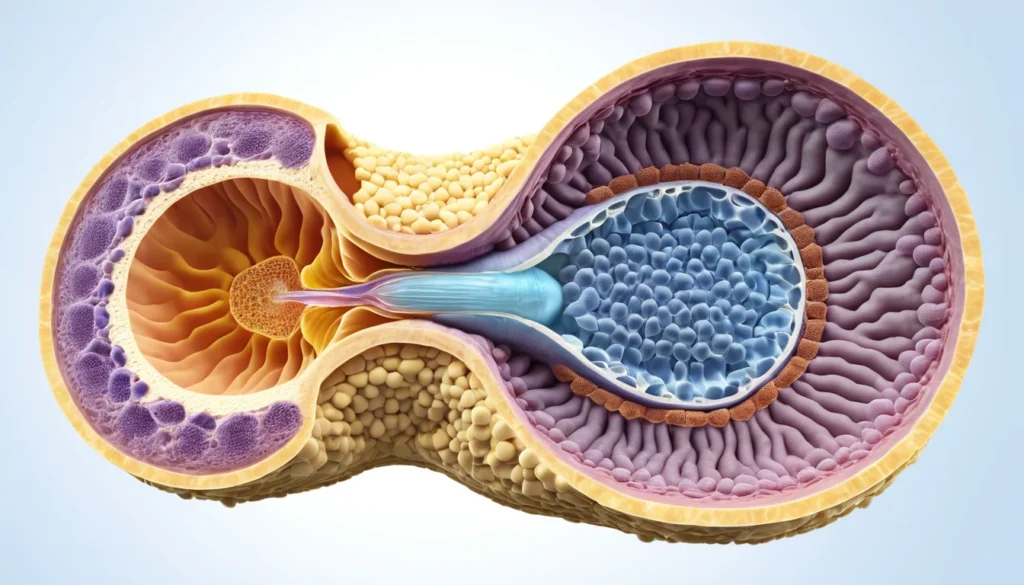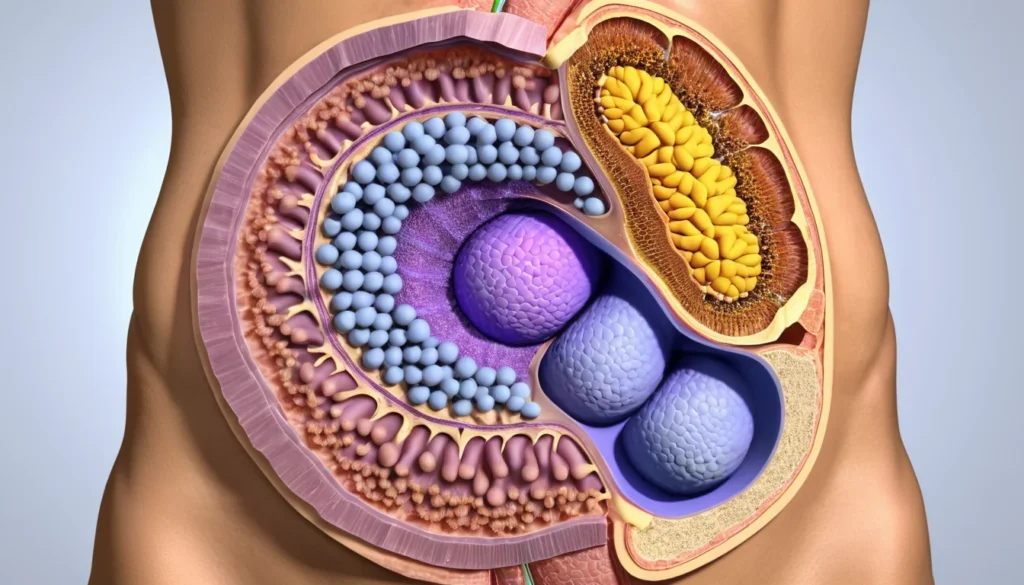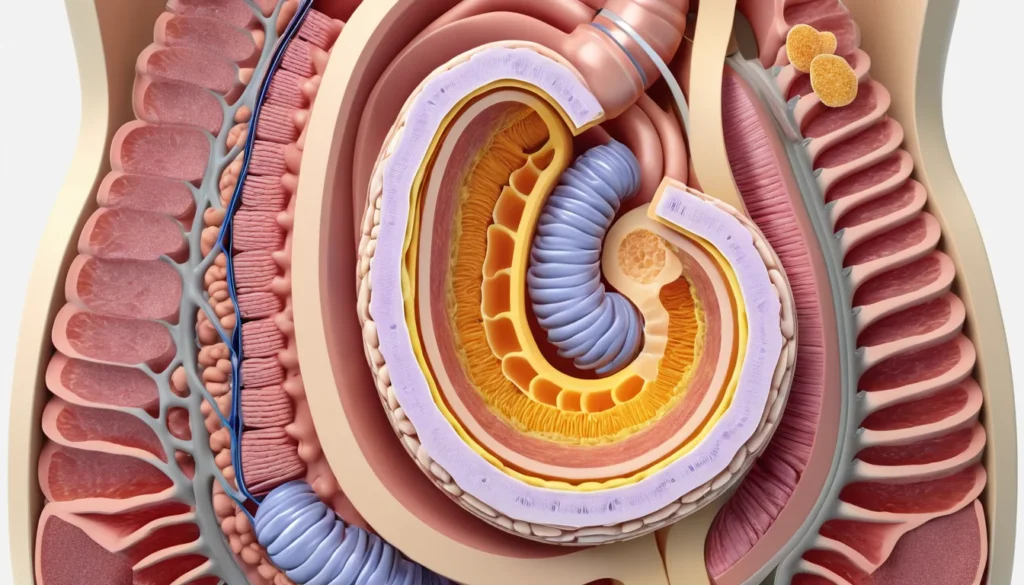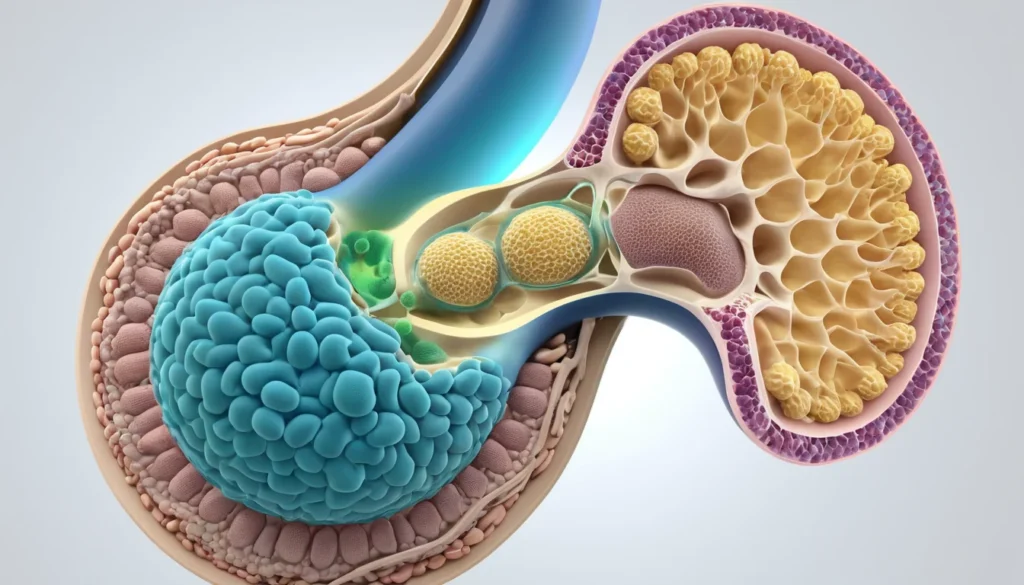
Pancreatic cysts are small, fluid-filled sacs that form on or inside the pancreas. They range from harmless to potentially serious, and some may require medical treatment. In Canada, many people discover these cysts by accident during imaging tests for other health concerns. This article explains what pancreatic cysts are, what causes them, and when you should speak with your family doctor or visit a walk-in clinic.
What Are Pancreatic Cysts?
A pancreatic cyst is a closed, sac-like pocket lined with tissue and filled with fluid. These cysts form on or inside the pancreas, a large gland tucked behind your stomach. They can vary greatly in size and type.
Some pancreatic cysts are benign (non-cancerous). However, others can be malignant, meaning they are cancerous or have the potential to become cancerous. A small number of pancreatic cysts are linked to rare genetic conditions, such as von Hippel-Lindau disease.
What Is a Pancreatic Pseudocyst?
A pseudocyst is the most common type of pancreatic cyst. Unlike a true cyst, it does not have a proper tissue lining. Instead, it forms inside a cavity within the pancreas and is surrounded by fibrous tissue.
Pseudocysts contain inflammatory fluid — mainly a digestive enzyme called amylase — or semi-solid material. They account for roughly 75% to 80% of all cystic lesions of the pancreas. Pseudocysts are always benign and affect about 1 in every 1,000 adults each year.
Understanding the Pancreas
To understand pancreatic cysts, it helps to know what the pancreas does. The pancreas is a worm-shaped gland located below the liver, sitting between your stomach and spine. It has three parts: a “head” tucked into the upper small intestine, a flat “body,” and a narrow “tail” connected to the spleen.
The pancreas has two main jobs. First, it produces powerful digestive enzymes that break down food. Second, it releases hormones — including insulin — that control your blood sugar levels.
Normally, these enzymes stay inactive until they leave the pancreas. The pancreas also makes bicarbonate, which neutralises stomach acid. Small ducts (tubes) carry all these fluids through the pancreas and into the small intestine.
What Causes Pancreatic Cysts?
The most common cause of pancreatic pseudocysts is pancreatitis — an inflammation of the pancreas. When the pancreas becomes inflamed, its digestive enzymes activate too early, while still inside the gland. This causes the pancreas to begin digesting its own tissue, which is dangerous.
Pancreatitis can be acute (sudden and severe) or chronic (long-lasting or recurring). The two most common triggers are gallstones and heavy, long-term alcohol use. Pancreatitis can also result from certain illnesses or injuries to the abdomen.
In addition, pseudocysts can form when a blockage develops in the pancreatic duct system. This blockage causes fluid to build up and form a cyst. According to Mayo Clinic’s overview of pancreatic cysts, most pancreatic cysts are discovered during imaging tests for unrelated conditions.
Symptoms of Pancreatic Cysts
Many pancreatic cysts cause no symptoms at all. In fact, doctors often find them by chance during an ultrasound or CT scan done for another reason. However, when symptoms do appear, they can range from mild to severe.
Symptoms may show up days to months after a bout of pancreatitis. The most common ones include:
Persistent, severe pain in the abdomen, sometimes spreading to the back
Nausea and vomiting
Bloating or a feeling of fullness in the abdomen
Furthermore, a large cyst may press on nearby organs, causing additional discomfort. If you experience any of these symptoms regularly, it is important to speak with a healthcare provider.
Possible Complications
Complications from pancreatic cysts are uncommon, but they can be serious. Therefore, it is important not to ignore ongoing symptoms. Possible complications include:
Infection: A cyst can become infected, sometimes leading to a pancreatic abscess.
Rupture or bleeding: A pseudocyst can burst or bleed without warning. This is a medical emergency and can be life-threatening.
Obstructive jaundice: A large cyst may block the common bile duct. This causes yellowing of the skin and eyes (jaundice).
Portal hypertension: Pressure can build up in the splenic vein, which may require surgery to correct.
How Are Pancreatic Cysts Diagnosed?
Diagnosing pancreatic cysts can be tricky. Their symptoms often look similar to those of other digestive conditions. Because the pancreas sits deep inside the abdomen, doctors rely on imaging tests to find and assess these cysts.
Common diagnostic tests include:
Abdominal ultrasound (US): Uses sound waves to detect cysts or gallstones that may be causing problems.
CT scan (computed tomography): Provides detailed images of the pancreas and surrounding structures. This is often the most useful first test.
MRI and MRCP (magnetic resonance imaging): Gives clearer pictures of fluid and debris inside cysts than a CT scan can.
Endoscopic ultrasound (EUS): A thin, flexible tube with a camera is passed through the mouth to get a close-up image of the pancreas. This also allows the doctor to take a small fluid sample from the cyst using a fine needle.
ERCP (endoscopic retrograde cholangiopancreatography): Lets the doctor view the bile ducts and pancreatic duct in detail.
Fluid taken from a cyst can be analysed in a lab to help determine whether it is benign or potentially cancerous. Healthline’s guide to pancreatic cysts provides a helpful breakdown of how different cyst types are identified through testing.
Treatment Options for Pancreatic Cysts
The good news is that most pseudocysts resolve on their own over time, without any treatment. However, treatment becomes necessary when symptoms are severe, when the cyst is growing, or when complications develop.
Treatment options include:
Watchful waiting: For small, asymptomatic cysts, your doctor may recommend monitoring through regular imaging scans.
Drainage: A cyst can be drained using a needle guided by an endoscopic ultrasound or CT scan. This is a minimally invasive procedure.
Surgery: In some cases — especially if the cyst is large, infected, or potentially cancerous — surgery may be needed to remove the cyst or part of the pancreas.
Treating the underlying cause: If gallstones or alcohol use triggered pancreatitis, addressing those root causes is a key part of treatment.
As noted by Health Canada, managing digestive health conditions often involves a team of healthcare providers, including your family doctor, a gastroenterologist, and in some cases, a surgeon.
When to See a Doctor
You should contact your family doctor or visit a walk-in clinic if you develop persistent abdominal pain, nausea, or bloating — especially if you have a history of pancreatitis or gallstones. These could be signs of a pancreatic cyst or another digestive problem that needs attention.
Seek emergency care immediately if you experience sudden, severe abdominal pain, a fever, or signs of jaundice (yellowing of the skin or eyes). These may be signs of a ruptured cyst or a serious infection. Do not wait for a scheduled appointment in these situations.
Most provincial health plans in Canada cover the diagnostic imaging and specialist visits needed to assess pancreatic conditions. Ask your family doctor for a referral if you are concerned about your symptoms.
Always consult your doctor or a qualified healthcare professional before making any decisions about your health. This article is for informational purposes only and does not replace professional medical advice.
Frequently Asked Questions About Pancreatic Cysts
Are pancreatic cysts dangerous?
Most pancreatic cysts are benign and resolve on their own without treatment. However, some cysts can become infected, rupture, or — in rare cases — be cancerous. Your doctor will monitor the cyst and recommend treatment if necessary.
What causes pancreatic cysts to form?
Pancreatic cysts most commonly form as a result of pancreatitis, which is inflammation of the pancreas. The most frequent triggers of pancreatitis are gallstones and long-term heavy alcohol use. In rare cases, cysts may be linked to genetic conditions.
What are the symptoms of a pancreatic cyst?
Many people with pancreatic cysts have no symptoms at all. When symptoms do occur, they often include persistent abdominal pain, nausea, vomiting, and bloating. Symptoms can appear days to months after a pancreatitis episode.
Can a pancreatic cyst go away on its own?
Yes, many pancreatic pseudocysts resolve on their own over time without any treatment. Your doctor may recommend a period of watchful waiting with regular imaging scans to monitor the cyst. However, larger or symptomatic cysts may require drainage or surgery.
How is a pancreatic cyst diagnosed in Canada?
In Canada, pancreatic cysts are usually diagnosed through imaging tests such as an abdominal ultrasound, CT scan, or MRI. These tests are covered under most provincial health plans with a referral from your family doctor. An endoscopic ultrasound may also be used to take a fluid sample from the cyst for lab analysis.
What is the difference between a pancreatic cyst and a pseudocyst?
A true pancreatic cyst has a defined tissue lining, while a pseudocyst does not. Pseudocysts form inside a cavity within the pancreas and are surrounded by fibrous tissue rather than a proper cell lining. Pseudocysts are the most common type of pancreatic cyst and are always non-cancerous.
Key Takeaways
Pancreatic cysts are fluid-filled sacs that form on or inside the pancreas. Most are benign.
Pseudocysts are the most common type. They are caused by pancreatitis and are always non-cancerous.
Common symptoms include abdominal pain, nausea, vomiting, and bloating. Many cysts cause no symptoms at all.
Diagnosis involves imaging tests such as ultrasound, CT scan, MRI, or endoscopic ultrasound.
Many pseudocysts go away on their own. Others may require drainage or surgery.
If you have ongoing abdominal symptoms, speak with your family doctor or visit a walk-in clinic. Seek emergency care for sudden, severe pain or jaundice.
Most diagnostic and treatment services for pancreatic conditions are covered under Canadian provincial health plans.