Osteosarcoma is the most common type of malignant bone tumour. It develops from immature bone cells that would normally form new bone tissue. Instead of building healthy bone, these cells grow out of control and damage the surrounding bone. This article explains what osteosarcoma is, who it affects, and what treatment options are available.
What Is Osteosarcoma?
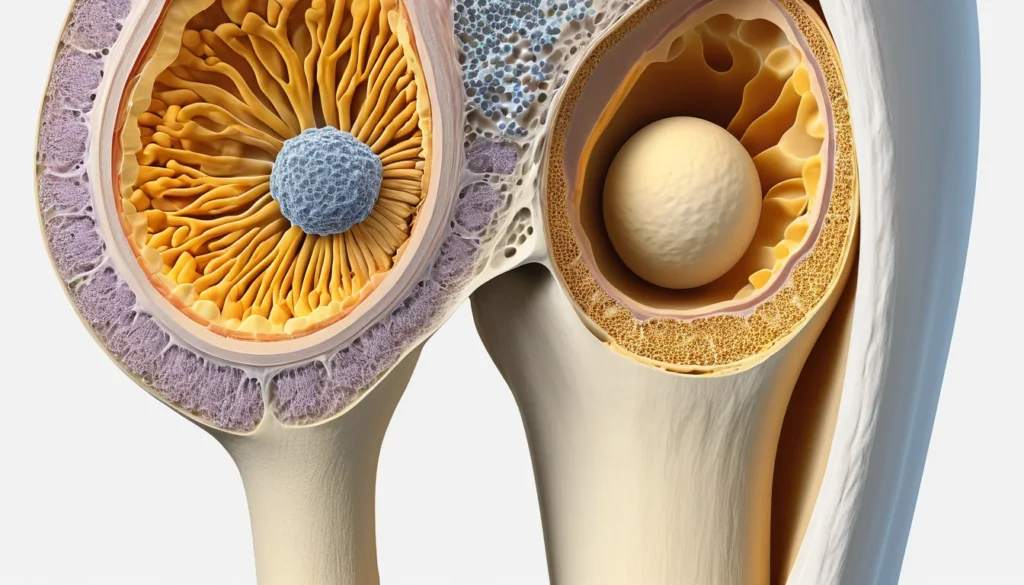
Osteosarcoma is a type of bone cancer that destroys healthy bone tissue as it grows. It most often appears near the knee — at the lower end of the thighbone (femur) or the upper end of the shinbone (tibia). In some cases, it can also develop in the upper arm bone (humerus), the hip, or the jaw.
This cancer is most common in children, teenagers, and young adults. However, it can occur at any age. Because it is aggressive, early detection and treatment are very important for the best possible outcome.
The survival rate for osteosarcoma depends on several factors. These include the size and location of the tumour, how far it has spread, and the patient’s overall health. According to the Canadian Cancer Society, outcomes improve significantly when the cancer is caught before it spreads to other parts of the body.
Causes and Risk Factors of Osteosarcoma
Doctors do not yet know the exact cause of osteosarcoma. However, several risk factors appear to increase a person’s chance of developing this bone cancer. Understanding these factors can help with early awareness.
Age and Growth Spurts
Osteosarcoma most often affects teenagers during periods of rapid bone growth. The cancer seems to be linked to fast-growing bones. This is why adolescents are at higher risk than younger children or older adults.
Sex and Height
Osteosarcoma occurs more often in males than females. In addition, taller children appear to have a slightly higher risk. Researchers believe this may be connected to the speed and extent of bone growth.
Previous Cancer Treatment
Children or adults who have received radiation therapy for another cancer face a higher risk of developing osteosarcoma later. Certain chemotherapy drugs — called alkylating agents — may also raise the risk. Therefore, long-term follow-up care after cancer treatment is very important.
Genetic Conditions
Certain inherited syndromes can increase the risk of osteosarcoma. These include:
Li-Fraumeni syndrome — a rare inherited disorder that raises the risk of several cancers
Rothmund-Thomson syndrome — a genetic condition linked to skeletal problems and cancer risk
Bloom syndrome — a rare disorder that affects DNA repair
Werner syndrome — a condition that causes premature aging
Diamond-Blackfan anaemia — a rare blood disorder that has been associated with bone tumours
Pre-Existing Bone Conditions
Paget’s disease of the bone is one pre-existing condition that raises osteosarcoma risk. In Paget’s disease, the normal cycle of bone breakdown and renewal speeds up too much. As a result, the new bone formed is weaker and more vulnerable to tumour development.
Types of Osteosarcoma
Doctors classify osteosarcoma by grade, which describes how quickly the cancer is likely to grow and spread. There are three main grades.
High-Grade Osteosarcoma
High-grade osteosarcoma is the fastest-growing type. The cancer cells look very abnormal under a microscope. Most osteosarcomas in children and teenagers fall into this category. Common subtypes include:
Osteoblastic osteosarcoma — the most common subtype, producing abnormal bone tissue
Chondroblastic osteosarcoma — produces cartilage-like tissue alongside bone
Fibroblastic osteosarcoma — contains a large amount of fibrous tissue
Small cell osteosarcoma — contains small, round cancer cells
Telangiectatic osteosarcoma — filled with blood-filled spaces, making it look like a blood vessel tumour
Intermediate-Grade Osteosarcoma
This grade is rare. The main type is called periosteal or juxtacortical osteosarcoma. It forms on the outer surface of the bone rather than inside it.
Low-Grade Osteosarcoma
Low-grade osteosarcoma grows slowly. It is less likely to spread quickly. However, it still requires prompt medical attention and treatment.
Symptoms of Osteosarcoma
The symptoms of osteosarcoma can be easy to overlook at first. They often resemble common growing pains in active children and teenagers. However, certain warning signs should not be ignored.
The main symptoms of osteosarcoma include:
Bone or joint pain — often described as a dull ache that comes and goes over weeks or months
Swelling or a lump near a bone or joint
Bone fractures — especially from minor injuries that would not normally break a bone
Pain at night — which may disrupt sleep
Limited movement in a nearby joint
Visible veins near the surface of the skin over the tumour area
Growing pains in children are normal. They typically cause achy legs and improve with rest and gentle massage. However, osteosarcoma pain tends to get worse over time — not better. Furthermore, growing pains usually do not cause swelling or a noticeable lump. If pain persists or worsens, it is important to have it checked by a healthcare provider.
How Is Osteosarcoma Diagnosed?
Diagnosing osteosarcoma involves several steps. Your doctor will use a combination of imaging tests, laboratory work, and a physical examination to build a complete picture.
Imaging Tests
Imaging is usually the first step when osteosarcoma is suspected. Common imaging tests include:
X-rays — often the first test done, can show abnormal changes in the bone
CT scan (computed tomography) — gives a detailed cross-section image of the bone and surrounding tissue
MRI (magnetic resonance imaging) — shows the extent of the tumour within the bone and soft tissue
Bone scan — checks whether the cancer has spread to other bones
PET scan (positron emission tomography) — helps detect cancer spread throughout the body
Biopsy
A biopsy is the only way to confirm osteosarcoma. During a biopsy, a small sample of bone or tissue is removed from the affected area. This can be done with a needle or through a small surgical cut. A specialist then examines the sample under a microscope to look for cancer cells.
Blood Tests
Certain blood tests can support a diagnosis. For example, a test measuring serum alkaline phosphatase may show elevated levels in people with osteosarcoma. However, high alkaline phosphatase can also result from other conditions. Therefore, blood tests alone are not enough to diagnose this cancer.
Medical and Family History
Your doctor will also ask about your personal and family health history. A history of certain genetic conditions or previous cancer treatment can raise the likelihood of osteosarcoma.
Treatment Options for Osteosarcoma
Treatment for osteosarcoma usually involves a combination of surgery and chemotherapy. Radiation therapy may also be used in certain cases. A team of specialists — including orthopaedic oncologists, medical oncologists, and paediatric oncologists — will work together to plan the best approach for each patient.
Surgery
The goal of surgery is to remove the tumour completely. Whenever possible, surgeons aim to save the affected limb in a procedure called limb-salvage surgery. In some cases, a rotationplasty — a specialised surgical technique — may be used. This involves repositioning the lower leg to function as a new joint. Amputation may be necessary if the tumour cannot be safely removed while preserving the limb.
Chemotherapy
Chemotherapy is usually given both before and after surgery. Before surgery, it helps shrink the tumour and makes removal easier. After surgery, it targets any remaining cancer cells that may have spread. Mayo Clinic outlines current osteosarcoma treatment approaches in detail for patients and families.
Radiation Therapy
Radiation therapy is not always used for osteosarcoma, because bone tumours often do not respond as well to radiation as other cancers do. However, it may be recommended when surgery cannot fully remove the tumour or when the cancer has spread.
Multidisciplinary Care in Canada
In Canada, osteosarcoma is treated at major cancer centres and children’s hospitals across the country. Provincial health plans typically cover the cost of cancer diagnosis and treatment, including surgery, chemotherapy, and radiation. Your family doctor or paediatrician can refer you to a specialist. Health Canada provides information on cancer care resources available to Canadians.
When to See a Doctor
You should see a doctor if your child — or you — experience bone pain that does not improve after a few weeks. This is especially true if the pain is getting worse, occurring at night, or accompanied by swelling near a bone or joint.
Start by visiting your family doctor or a walk-in clinic. Describe the symptoms clearly, including when they started and whether anything makes them better or worse. Your doctor can order an X-ray to begin the investigation. If needed, they will refer you to a specialist at a regional cancer centre.
Do not wait to see if pain “goes away on its own” when swelling is also present. Early diagnosis of osteosarcoma leads to better treatment outcomes. Always consult a qualified healthcare provider for any health concerns — only a doctor can properly assess your symptoms and recommend the right next steps.
Frequently Asked Questions About Osteosarcoma
What is osteosarcoma and who does it affect?
Osteosarcoma is the most common type of malignant bone tumour. It most often affects children, teenagers, and young adults during periods of rapid bone growth. However, osteosarcoma can develop at any age and in any bone in the body.
What are the early warning signs of osteosarcoma?
The earliest signs of osteosarcoma are often bone or joint pain that comes and goes, and swelling near a bone. Pain that worsens at night or does not improve with rest should be taken seriously. Unlike normal growing pains, osteosarcoma symptoms tend to get worse over time rather than improve.
Is osteosarcoma curable?
Osteosarcoma can be treated, and survival rates have improved significantly with modern medicine. When osteosarcoma is caught before it spreads to other organs, the five-year survival rate is considerably higher. Treatment outcomes depend on the tumour’s grade, location, size, and the patient’s overall health.
How is osteosarcoma different from growing pains?
Growing pains are normal in children and typically cause a dull ache in the legs that improves with rest and massage. Osteosarcoma pain, by contrast, tends to worsen over time and may be accompanied by visible swelling or a lump near the bone. If your child’s bone pain is persistent, worsening, or comes with swelling, see a family doctor right away.
Does osteosarcoma treatment require surgery?
Yes, surgery is almost always part of osteosarcoma treatment. Surgeons aim to remove the tumour while preserving the limb whenever possible, using a technique called limb-salvage surgery. Chemotherapy is typically given before and after surgery to improve the chances of success.
Is osteosarcoma covered under Canadian provincial health plans?
Yes, in Canada, osteosarcoma diagnosis and treatment — including surgery, chemotherapy, and radiation therapy — are generally covered under provincial and territorial health plans. Your family doctor can provide a referral to a cancer specialist or children’s hospital where osteosarcoma care is available. Contact your provincial health authority for specific coverage details in your area.
Key Takeaways
Osteosarcoma is the most common type of malignant bone tumour, most often affecting teenagers and young adults. It most commonly develops near the knee, but can occur in any bone, including the shoulder, hip, and jaw. Key warning signs include persistent bone pain, swelling near a joint, and fractures from minor injuries. Risk factors include rapid growth spurts, male sex, previous radiation treatment, and certain inherited genetic conditions. Diagnosis involves X-rays, MRI, CT scans, blood tests, and a biopsy to confirm the presence of cancer cells. Treatment usually combines surgery (often limb-salvage surgery) and chemotherapy, sometimes with radiation therapy. In Canada, osteosarcoma treatment is covered by provincial health plans. Start with your family doctor or a walk-in clinic if you are concerned about symptoms. Always speak with a qualified healthcare provider for a proper diagnosis and personalised treatment plan.