Opitz syndrome is a rare genetic condition that affects how certain parts of the body form before birth. It is usually noticed at birth because of visible differences in the face, mouth, and other areas. This article explains what causes Opitz syndrome, what signs to look for, and how Canadian families can find the right support.
What Is Opitz Syndrome?
Opitz syndrome is a congenital disorder, meaning it is present from birth. It affects structures that develop from a specific layer of tissue in the embryo called the mesoderm. This tissue gives rise to many important parts of the body, including facial bones, the urinary tract, and parts of the heart.
The condition was originally described as two separate disorders: Opitz G syndrome and Opitz BBB syndrome. However, doctors eventually recognised that both share a very similar set of symptoms. The main difference is how each form is inherited. Today, most specialists treat them as two forms of the same condition.
Opitz syndrome is considered a rare disorder. The X-linked form affects approximately 1 in 100,000 males. The autosomal dominant form belongs to a broader group of disorders linked to a chromosomal change, which affects roughly 1 in 5,000 people overall. Because it is rare, many Canadians may never have heard of it — but early diagnosis can make a big difference for affected children and their families.
Types of Opitz Syndrome and Their Genetic Causes
Understanding the genetics behind Opitz syndrome helps explain why it affects some people differently than others. There are two main forms, each caused by a different genetic change.
X-Linked Opitz Syndrome (Opitz BBB)
This form is caused by a mutation in a gene called MID1, found on the short arm of the X chromosome (Xp22). The MID1 gene carries instructions for making a protein called midline-1 (also known as midin). This protein plays an important role in controlling microtubules — tiny, rigid structures inside cells that act like a support framework.
Microtubules help cells keep their shape. They also carry substances between cells and play a key role in cell division. When the MID1 gene does not work properly, a specific enzyme called protein phosphatase 2A builds up inside cells. This build-up disrupts how microtubules function. As a result, cells struggle to divide and connect with neighbouring cells in a healthy way.
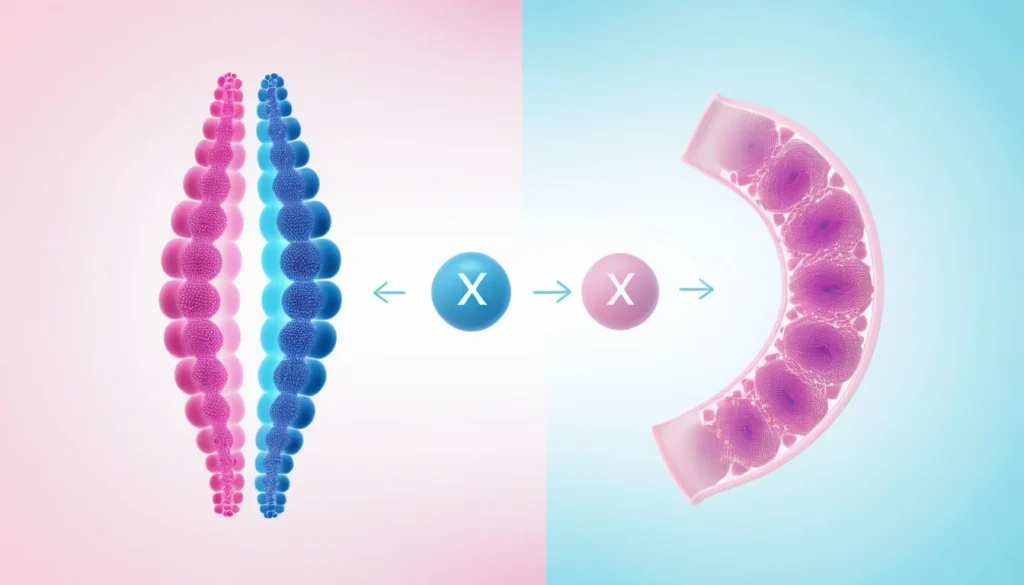
Because this form is X-linked, it mainly affects males more severely. Females have two X chromosomes, so a healthy copy of the gene on the second X chromosome can often compensate. Males, however, only have one X chromosome — so a mutation on that single X chromosome has a much greater impact.
Importantly, a father with an X-linked condition does not pass it to his sons. Sons inherit their Y chromosome from their father, not their X. However, sons can acquire the mutation through a new, spontaneous change called a de novo mutation.
Autosomal Dominant Opitz Syndrome (Opitz G)
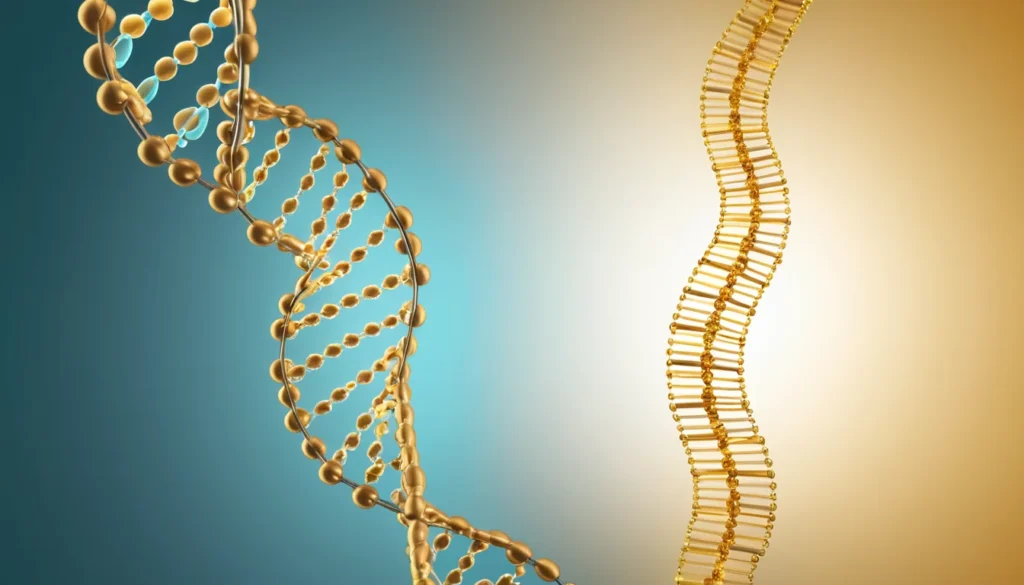
This form appears to be caused by a deletion — a missing piece — of genetic material on the long arm of chromosome 22, specifically at a location called 22q11.2. This places Opitz G syndrome within a broader family of conditions known as 22q11.2 deletion syndromes.
Autosomal dominant means that only one copy of the affected chromosome needs to carry the deletion for the condition to appear. Both males and females can be equally affected by this form. The deletion can be inherited from a parent or can occur as a new change in the child.
Researchers are actively studying the genes involved in both forms of Opitz syndrome. As genetic science advances, our understanding of these conditions continues to grow.
Signs and Symptoms of Opitz Syndrome
Opitz syndrome affects multiple parts of the body. Symptoms can range from mild to more serious, depending on the individual. Below are the most common signs that doctors look for.
Facial and Head Features
Children with Opitz syndrome often have noticeable differences in the face and head area. These are usually the first signs observed at birth. Common features include:
Hypertelorism — widely spaced eyes
A broad or flat nasal bridge
Cleft lip (cheiloschisis) — a split or opening in the upper lip
Cleft palate (palatoschisis) — an opening in the roof of the mouth
Slanted eyelid openings (palpebral fissures)
Epicanthal folds — small skin folds that cover the inner corner of the eyes
These facial features are present at birth and are often the first clues that lead to further testing. A cleft lip or palate, for example, can be spotted during a newborn examination or even before birth on an ultrasound.
Urogenital Features in Males
Boys with Opitz syndrome may also have differences in the urogenital area. These include:
Cryptorchidism — one or both testicles have not descended into the scrotum
Bifid scrotum — the scrotum is divided into two separate sections
Hypospadias — the opening of the urethra (the tube that carries urine out of the body) is in an unusual position, rather than at the tip of the penis
These differences are typically identified during a routine physical examination of a newborn male.
Other Associated Conditions
In addition to facial and urogenital features, Opitz syndrome can affect other organ systems. Further medical findings may include:
Abnormalities of the oesophagus, trachea (windpipe), or larynx (voice box)
Pulmonary hypoplasia — underdevelopment of the lungs
Imperforate anus — the anal opening is blocked or absent at birth
Heart defects
Kidney abnormalities
Hypogenesis or agenesis of the corpus callosum — this means the band of nerve fibres connecting the two halves of the brain is underdeveloped or absent
Intellectual disability or developmental delays
Not every child with Opitz syndrome will have all of these features. Some children have only mild signs, while others face more complex medical needs. Therefore, each child’s situation is unique and requires personalised care.
How Is Opitz Syndrome Diagnosed?
Diagnosis of Opitz syndrome often begins with a clinical examination by a doctor who notices characteristic physical features in a newborn. However, confirming the diagnosis requires genetic testing.
A geneticist — a doctor who specialises in inherited conditions — will typically review the child’s symptoms and family history. Genetic testing may include chromosomal analysis or specific gene sequencing to look for mutations in the MID1 gene or deletions at 22q11.2.
In Canada, genetic testing and counselling services are available through most major hospitals and children’s health centres. Your family doctor can provide a referral to a medical genetics programme. Provincial health plans generally cover diagnostic genetic testing when ordered by a physician, though coverage details vary by province. It is worth checking with your provincial health authority for specifics.
Prenatal diagnosis may also be possible in some cases, particularly if there is a known family history of the condition. Speak with your obstetrician or a genetic counsellor for guidance. For more information on genetic conditions, visit Health Canada’s official health information resource.
Treatment and Management Options
There is currently no cure for Opitz syndrome. However, many of its features can be treated or managed effectively. Early intervention is key to improving a child’s quality of life.
A team of specialists typically works together to support a child with Opitz syndrome. This team may include a paediatrician, geneticist, cardiologist, urologist, speech-language pathologist, and developmental therapist, among others. In Canada, this kind of coordinated care is often arranged through children’s hospitals or developmental paediatrics programmes.
Surgical Interventions
Many of the physical features associated with Opitz syndrome can be corrected or improved through surgery. For example, cleft lip and palate repairs are common procedures performed in infancy. Surgery can also address hypospadias, undescended testicles, and imperforate anus. Cardiac defects may also require surgical treatment depending on their severity.
Developmental and Therapeutic Support
Children with Opitz syndrome may benefit greatly from early developmental support. Speech therapy can help with communication challenges, especially if a cleft palate has affected speech development. Occupational and physical therapy can support motor skills and daily functioning.
If intellectual disability is present, special education programmes and learning support services available through Canadian school boards can play a valuable role. Families are encouraged to connect with their local school district as early as possible to begin planning. According to Mayo Clinic’s overview of congenital birth defects, early therapeutic intervention consistently leads to better outcomes for children with complex conditions.
Ongoing Monitoring
Regular follow-up with a paediatrician and relevant specialists is important. Children with Opitz syndrome may need monitoring of their heart, kidneys, and neurological development over time. Routine developmental assessments help track progress and identify any new needs as the child grows.
When to See a Doctor
If you notice any unusual physical features in your newborn — such as widely spaced eyes, a cleft lip or palate, or differences in the genital area — speak with your doctor right away. These signs do not always indicate Opitz syndrome, but they do warrant prompt medical evaluation.
Your family doctor is a good first point of contact. They can assess your child, discuss your concerns, and refer you to the appropriate specialists if needed. If you do not have a family doctor, a walk-in clinic can provide an initial assessment and help coordinate further care.
If you have a family history of Opitz syndrome or a related genetic condition, consider speaking with a genetic counsellor before or during pregnancy. Genetic counsellors can explain your risks, discuss testing options, and help you prepare. For broader information on rare disorders, the World Health Organization’s health fact sheets offer reliable global health guidance.
As always, this article is intended for general information only. Please consult your doctor or a qualified healthcare provider for advice specific to your child’s situation.
Frequently Asked Questions About Opitz Syndrome
What is Opitz syndrome?
Opitz syndrome is a rare genetic disorder present from birth that causes differences in how certain parts of the body develop. It commonly affects the face, mouth, and urogenital area, among other systems. There are two forms of Opitz syndrome, each caused by a different genetic change.
Is Opitz syndrome hereditary?
Yes, Opitz syndrome is a genetic condition and can be inherited. The X-linked form (Opitz BBB) is passed through the X chromosome, while the autosomal dominant form (Opitz G) involves a deletion on chromosome 22. In some cases, the genetic change occurs spontaneously with no family history of the condition.
How is Opitz syndrome diagnosed in Canada?
Opitz syndrome is typically diagnosed through a combination of clinical examination and genetic testing. A family doctor can refer you to a medical geneticist or a children’s health centre for further evaluation. Genetic testing is generally covered by provincial health plans when ordered by a physician.
Can Opitz syndrome be treated?
There is no cure for Opitz syndrome, but many of its symptoms can be effectively managed. Surgical procedures can correct features like cleft lip, cleft palate, and heart defects. Speech therapy, developmental support, and regular specialist follow-up also play an important role in improving quality of life.
Does Opitz syndrome affect intelligence?
Some children with Opitz syndrome experience intellectual disability or developmental delays, but this varies widely between individuals. Not all children with the condition are affected in this way. Early developmental therapy and educational support can make a significant difference in a child’s learning and daily functioning.
How common is Opitz syndrome?
Opitz syndrome is considered a rare condition. The X-linked form affects approximately 1 in 100,000 males. The autosomal dominant form is part of a broader group of 22q11.2 deletion syndromes, which collectively affect about 1 in 5,000 people.
Key Takeaways
Opitz syndrome is a rare genetic condition present from birth that affects facial structure, the urogenital system, and other organs.
There are two forms: the X-linked form (caused by a MID1 gene mutation) and the autosomal dominant form (linked to a 22q11.2 chromosomal deletion).
Common signs include widely spaced eyes, cleft lip or palate, and in males, differences in genital development.
Diagnosis involves genetic testing, available through Canadian hospitals and genetics programmes covered by most provincial health plans.
While there is no cure, surgery, therapy, and specialist care can significantly improve a child’s outcomes.
If you have concerns about your child, start by speaking with your family doctor or visiting a walk-in clinic for an initial assessment and referral.