Mites are tiny parasites that can cause a surprising range of health problems — from itchy skin to serious infectious diseases. These small creatures live on or near the human body, and many Canadians encounter them without even realising it. This article explains what mites are, how they affect your health, and what you can do to protect yourself and your family.
What Are Mites?
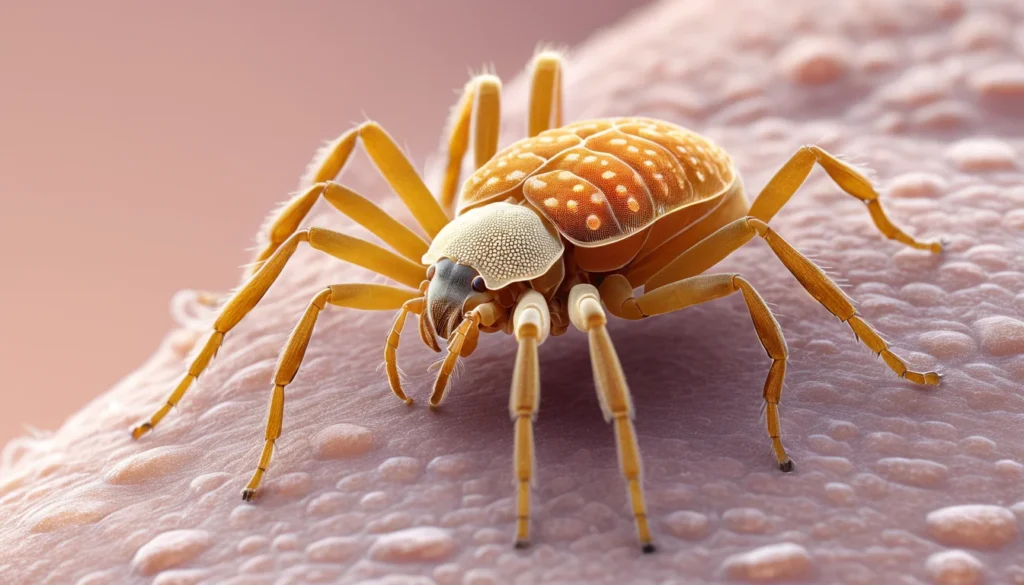
Mites are microscopic arthropods — the same broad group that includes insects, spiders, and ticks. However, unlike insects, mites do not have clearly separated body sections. Their head, chest, and abdomen are all fused into one compact body.
Most mites that affect humans are ectoparasites. This means they live on the outside of the body, usually on the skin. Many of them are blood-feeders, meaning they survive by feeding on the blood of their host — including humans.
There are thousands of mite species in the world. Only a small number directly affect human health. In Canada, the most important ones include dust mites, scabies mites, and ticks — which are technically a type of mite.
Types of Mites That Affect Human Health
Understanding the different types of mites helps you know what symptoms to watch for. Some mites cause only mild skin irritation, while others can transmit serious diseases.
Dust Mites
Dust mites are among the most common mites found in Canadian homes. They do not bite or feed on blood. Instead, they feed on dead skin cells shed by humans and pets.
Dust mites thrive in warm, humid environments. You will often find them in mattresses, pillows, carpets, and upholstered furniture. They are too small to see without a microscope.
The real health concern with dust mites is their waste and dead bodies. When people inhale these particles — often found in household dust — it can trigger allergic reactions and asthma attacks. This is especially true for people who are already prone to respiratory conditions.
Scabies Mites
The scabies mite, known scientifically as Sarcoptes scabiei, burrows into the outer layers of human skin. This causes an intensely itchy rash that gets worse at night.
Scabies spreads through close, prolonged skin contact with an infected person. It can also spread through shared clothing or bedding, though this is less common. Scabies is seen in all communities across Canada, including in crowded living conditions such as care homes and shelters.
In addition, scabies mite larvae — the youngest stage of the mite — can cause similar skin irritation even before they mature into adults.
Ticks
Ticks are technically classified as a type of mite. They are larger than most other mites and are well known for spreading infectious diseases. In Canada, ticks are a growing public health concern, particularly in Ontario, Quebec, British Columbia, and the Maritime provinces.
The blacklegged tick — also called the deer tick — is the main species responsible for spreading Lyme disease in Canada. Ticks can also transmit other serious illnesses, which are described in the next section.
For more information on ticks in Canada, visit Health Canada’s official health information page.
Diseases and Conditions Caused by Mites
Mites are responsible for a wide range of health conditions. Some are minor and easy to treat. Others are serious and require prompt medical attention.
Skin Conditions
The most common health effect from mites is skin irritation. Scabies causes a red, pimple-like rash with intense itching. Scratch marks from itching can break the skin and lead to secondary bacterial infections if left untreated.
Chigger mites — also called harvest mites — are found in grassy and wooded areas across Canada. Their larvae attach to human skin and cause red, extremely itchy welts. The larvae do not burrow into the skin but inject a digestive fluid that breaks down skin cells.
Asthma and Allergies
Dust mites are one of the most common indoor triggers of asthma in Canada. When people breathe in dust that contains dead mite bodies or their waste products, the immune system can react strongly.
This reaction may cause sneezing, a runny nose, itchy eyes, and in more serious cases, asthma attacks. Children and the elderly are particularly vulnerable. According to Mayo Clinic’s allergy and asthma resource centre, dust mite allergy is one of the leading causes of year-round allergic rhinitis.
Furthermore, even people who have never had allergies before can develop a sensitivity to dust mites over time, especially if they live in damp or poorly ventilated homes.
Tick-Borne Infectious Diseases
Ticks — as a type of mite — are capable of transmitting several serious infections. These include:
Lyme disease — caused by the bacterium Borrelia burgdorferi, spread by blacklegged ticks. Symptoms include a bull’s-eye rash, fever, fatigue, and joint pain.
Rocky Mountain spotted fever and other rickettsial diseases — bacterial infections that cause fever, rash, and in severe cases, organ damage.
Q fever — a bacterial infection that causes flu-like symptoms, sometimes leading to pneumonia or heart complications.
Arboviral fevers — viral infections transmitted by ticks, causing various types of fever and, in some cases, neurological symptoms.
Relapsing fever (Borreliosis) — a recurring fever caused by different Borrelia bacteria species, also spread by certain ticks.
As a result of climate change, tick habitats in Canada are expanding northward. Canadians who spend time outdoors — especially hikers, campers, and gardeners — face an increasing risk of tick exposure. The World Health Organization’s vector-borne disease information provides global context on tick-borne illness trends.
How Mites Spread and Where You Find Them
Mites spread in different ways depending on their type. Understanding how they spread helps you take the right steps to reduce your risk.
Dust mites are not contagious between people. They simply live in your home environment, in the dust and soft furnishings around you. However, scabies mites spread very easily from person to person through skin-to-skin contact.
Ticks live outdoors in grassy fields, forests, and leaf litter. They wait on vegetation and latch onto a passing human or animal host. They do not jump or fly — they simply climb on when you brush past them.
In Canada, tick season generally runs from April to November, though ticks can be active on mild winter days as well. This makes year-round awareness important, especially if you live near wooded areas.
How to Protect Yourself from Mites
The good news is that there are clear, practical steps you can take to reduce your exposure to mites and the health risks they bring.
Reducing Dust Mites in Your Home
Wash bedding weekly in hot water (at least 60°C).
Use allergen-proof covers on mattresses and pillows.
Vacuum carpets and soft furniture regularly using a HEPA-filter vacuum.
Keep indoor humidity below 50% — use a dehumidifier if needed.
Remove or reduce wall-to-wall carpeting, especially in bedrooms.
Keep stuffed animals off beds, or wash them regularly in hot water.
Preventing Tick Bites Outdoors
Wear long sleeves and pants when hiking or working in wooded or grassy areas.
Tuck your pants into your socks to prevent ticks from crawling up your legs.
Use an insect repellent that contains DEET or icaridin on exposed skin.
After time outdoors, check your entire body for ticks — including behind ears, in the hairline, underarms, and behind the knees.
Shower within two hours of coming indoors to wash off any unattached ticks.
Check pets for ticks regularly, especially after they have been outside.
Preventing Scabies
Avoid prolonged skin contact with anyone who has an active scabies infection.
Do not share towels, clothing, or bedding with an infected person.
If someone in your household has scabies, all close contacts should be treated at the same time, even if they have no symptoms yet.
When to See a Doctor
You should speak with a healthcare provider if you notice any of the following symptoms and suspect mite exposure is the cause.
For scabies, see your family doctor or visit a walk-in clinic if you develop an intensely itchy rash — especially if the itching is worse at night. Scabies is easily treated with prescription creams or oral medication, but it does not go away on its own.
For tick bites, remove the tick carefully using fine-tipped tweezers and save it in a sealed container. Then contact your provincial health line or family doctor as soon as possible. In many provinces, you can submit the tick for testing through your local public health unit. If you develop a bull’s-eye rash, fever, fatigue, or joint pain within days to weeks of a tick bite, seek medical attention promptly. Early treatment of Lyme disease and other tick-borne illnesses is much more effective than late treatment.
For asthma or allergy symptoms that you believe are triggered by dust mites, speak with your family doctor. They may refer you to an allergist for testing. Your provincial health plan covers many allergy and asthma assessments. Effective treatments — including antihistamines, nasal sprays, and immunotherapy — are available.
If you do not have a family doctor, walk-in clinics across Canada can assess tick bites, skin rashes, and allergy symptoms. You can also call your provincial health line (such as 811 in most provinces) for guidance.
Always consult a qualified healthcare provider before starting any treatment for mite-related conditions. This article is for general information only and does not replace professional medical advice.
Frequently Asked Questions About Mites
What are the most common signs of mites on humans?
The most common signs of mites on humans include intense itching, a red or pimple-like rash, and visible burrow tracks in the skin — especially in the case of scabies mites. Dust mites do not cause visible skin bites but can trigger sneezing, runny nose, and asthma symptoms. If you suspect mites are causing your symptoms, see a doctor for a proper diagnosis.
Can mites live in your bed?
Yes — dust mites commonly live in mattresses, pillows, and bedding, feeding on dead skin cells. They are not visible to the naked eye, but they are present in virtually every home. Washing your bedding weekly in hot water and using allergen-proof mattress covers are the most effective ways to reduce dust mites in your bed.
How do I know if I have been bitten by a tick?
A tick bite may appear as a small red bump, similar to a mosquito bite, and is often painless at first. If the tick carried Lyme disease, a distinctive bull’s-eye rash may develop around the bite within 3 to 30 days. Always check your body thoroughly after time outdoors in wooded or grassy areas, and contact your doctor or provincial health line if you find an attached tick.
Are mites dangerous to children?
Mites can pose real health risks to children, particularly dust mites, which are a leading trigger of childhood asthma and allergies in Canada. Scabies mites can also spread quickly among children in schools and daycares. If your child develops unexplained itching, a rash, or breathing difficulties, speak with your family doctor or visit a walk-in clinic.
How do you get rid of mites in your home?
To reduce mites in your home, wash all bedding in hot water (60°C or higher), vacuum regularly with a HEPA-filter vacuum, and keep indoor humidity below 50%. For scabies mites on the body, you will need a prescription treatment from your doctor — home cleaning alone is not enough. Reducing dust and improving ventilation in your home can significantly lower dust mite levels over time.
Is Lyme disease common in Canada?
Lyme disease is the most common tick-borne illness in Canada, and reported cases have been rising each year due to expanding tick populations. It is most common in parts of Ontario, Quebec, British Columbia, Nova Scotia, and New Brunswick. Early diagnosis and antibiotic treatment are very effective, so see your doctor promptly if you have been bitten by a tick or develop Lyme disease symptoms.
Key Takeaways
Mites are tiny arthropods that can live on human skin or in household dust. The main types affecting Canadians are dust mites, scabies mites, and ticks. Dust mites trigger asthma and allergies by releasing particles that irritate the airways. Scabies causes intense itching and rash and spreads through close skin contact. Ticks transmit serious diseases including Lyme disease, rickettsial infections, and Q fever. Tick habitats in Canada are