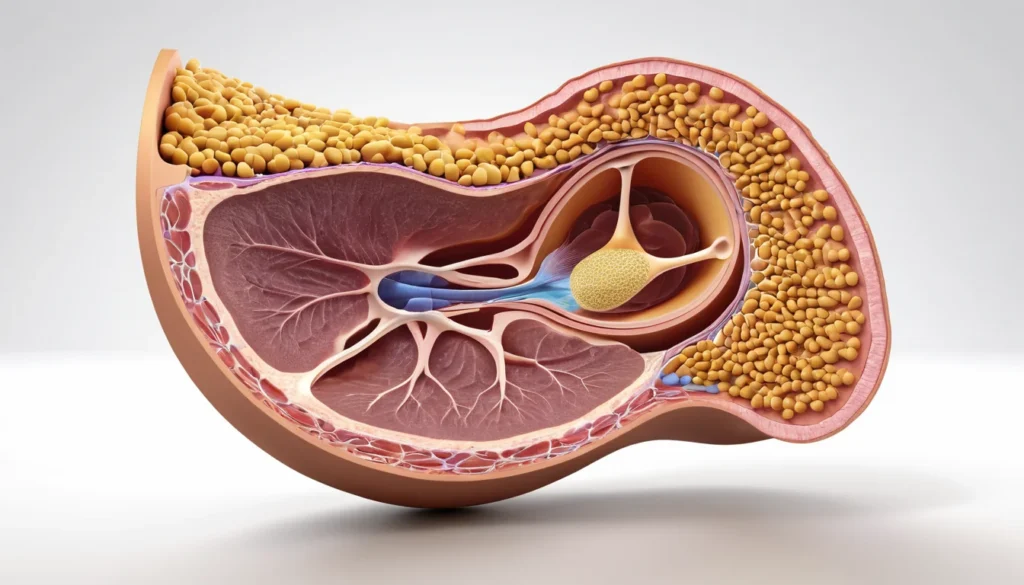
Your liver is one of the hardest-working organs in your body. Understanding liver disease risk factors is one of the most important steps you can take to protect your long-term health. This article explains what puts your liver at risk, what warning signs to watch for, and when to reach out to your family doctor or a walk-in clinic.
What Does Your Liver Actually Do?
Your liver is a large gland that plays a central role in your digestive system. It filters toxins from your blood, helps process nutrients, and activates many medications after you swallow them.
It also plays a key role in breaking down fats and sugars, especially during digestion. When the liver is damaged, these essential jobs suffer — and that can affect your entire body.
Most medications you take by mouth pass through the liver first. The liver activates them before they reach their target in the body. This is called “first-pass metabolism,” and it is one reason the liver is so vulnerable to long-term medication use.
Key Liver Disease Risk Factors to Know
Several factors can raise your risk of developing liver disease. Some are lifestyle-related, while others involve infections or underlying health conditions. However, the good news is that many of these risk factors can be managed or reduced.
Alcohol Use
Alcohol is the leading liver disease risk factor for conditions like cirrhosis, fatty liver disease, and liver cancer. When you drink alcohol, it breaks down liver cells repeatedly. Over time, this constant damage and repair cycle can lead to serious problems.
Healthy liver cells are replaced roughly every few years. However, when alcohol causes repeated small injuries, new cells form too quickly and without proper recovery time. This accelerated cell turnover significantly raises the risk of liver cancer.
Chronic daily drinking is especially dangerous — more so, in fact, than a single episode of heavy drinking. Daily alcohol dependence keeps the liver under constant stress, with no time to heal between exposures.
According to Health Canada’s guidance on alcohol use, even moderate drinking carries health risks that Canadians should be aware of. If you are concerned about your drinking habits, your family doctor or a walk-in clinic can connect you with support resources available through your provincial health plan.
Viral Hepatitis (Hepatitis B, C, and Others)
Hepatitis B and C are viral infections that directly attack liver cells. They are among the most common liver disease risk factors worldwide. These viruses trigger ongoing immune responses in the liver, which leads to long-term inflammation and cell damage.
People living with chronic hepatitis B or C face a higher risk of cirrhosis and liver cancer. The liver is under continuous attack, which means cells are constantly being destroyed and replaced — a dangerous cycle.
Hepatitis A is a separate type of infection, sometimes called “infectious hepatitis.” It is most commonly caught in childhood through contaminated food or water. While hepatitis A can resolve on its own, it may leave the liver in a weakened state. People who had hepatitis A as children should monitor their liver health as they age.
For more information on hepatitis in Canada, the World Health Organization’s hepatitis fact sheet is a reliable starting point.
Autoimmune Conditions
Autoimmune diseases occur when your immune system mistakenly attacks your own body’s cells. In these conditions, the immune system treats healthy liver cells as foreign invaders and launches an attack against them.
This immune response can be either direct — targeting liver cells outright — or indirect, through immune cells that activate inside the liver itself. Either way, liver cells suffer ongoing damage.
Autoimmune liver involvement is very common in people with autoimmune diseases. In addition, the immune system becomes overactive, increasing the number of immune cells circulating in the body. This further stresses the liver over time.
Conditions like autoimmune hepatitis, primary biliary cholangitis, and lupus all fall into this category. If you have been diagnosed with any autoimmune condition, ask your doctor about monitoring your liver function regularly.
Medications and Liver Health
Most medications you take by mouth travel to the liver before reaching the rest of your body. The liver activates these drugs, processes their byproducts, and eventually eliminates them from your system. This cycle repeats with every dose you take.
Each pass through the liver leaves a small residual trace. Furthermore, the activation process itself can sometimes damage liver cells or place extra strain on them. This is why long-term or high-dose medication use is considered one of the important liver disease risk factors.
Some medications bypass the liver entirely. For example, nitroglycerine for chest pain is placed under the tongue, absorbing directly into the bloodstream. Suppositories also avoid first-pass liver metabolism. However, most oral medications do not have this option.
Every medication has what is called a “half-life” — the time it takes for the body to process and eliminate half of the dose. Medications with a longer half-life remain in circulation longer and may place a greater burden on the liver over time.
Never stop or change your medications without speaking to your doctor first. If you take multiple medications long-term, ask your family doctor or pharmacist whether your liver function should be monitored.
Other Risk Factors: Diabetes, High Cholesterol, and Obesity
Non-alcoholic fatty liver disease (NAFLD) is one of the fastest-growing liver conditions in Canada. It is closely linked to type 2 diabetes, high cholesterol, and obesity. In this condition, excess fat builds up in liver cells, causing inflammation and, over time, potential scarring.
High blood sugar from diabetes forces the liver to work harder to regulate glucose levels. As a result, liver cells are placed under metabolic stress. Similarly, high cholesterol and triglycerides can lead to fat deposits forming inside the liver.
A diet high in processed foods and low in fibre increases these risks significantly. However, even modest lifestyle changes — like reducing sugar intake, increasing physical activity, and eating more vegetables — can make a meaningful difference. Your provincial health plan may cover dietitian consultations; ask your family doctor for a referral.
Cirrhosis: The End Stage of Liver Damage
Cirrhosis is a condition where healthy liver tissue is replaced by scar tissue. It is the final common pathway for many liver disease risk factors, including chronic alcohol use, hepatitis, and autoimmune conditions.
Once scar tissue forms, it cannot be reversed. The liver gradually loses its ability to filter blood, produce proteins, and regulate metabolism. In advanced cases, liver transplantation may be the only treatment option.
The encouraging news is that cirrhosis takes years or even decades to develop. Early detection and lifestyle changes can significantly slow its progression. The Mayo Clinic’s overview of cirrhosis provides a thorough explanation of how this condition develops and what can be done.
When to See a Doctor
Many liver conditions develop silently, without obvious symptoms in the early stages. Therefore, it is important to know which warning signs deserve prompt attention.
Contact your family doctor or visit a walk-in clinic if you notice any of the following:
Yellowing of the skin or eyes (jaundice)
Persistent fatigue or weakness that doesn’t improve with rest
Swelling in the abdomen or legs
Dark-coloured urine or pale stools
Nausea, loss of appetite, or unexplained weight loss
Pain or tenderness in the upper right side of your abdomen
If you have one or more liver disease risk factors — such as heavy alcohol use, a history of hepatitis, or an autoimmune condition — ask your doctor about routine blood tests to check your liver enzymes. These simple tests, covered under most provincial health plans, can catch problems early.
Your family doctor can also refer you to a hepatologist (liver specialist) or gastroenterologist if needed. Early intervention is always more effective than waiting for symptoms to worsen.
Frequently Asked Questions About Liver Disease Risk Factors
What are the most common liver disease risk factors in Canada?
The most common liver disease risk factors in Canada include heavy or chronic alcohol use, viral hepatitis (especially hepatitis B and C), obesity, type 2 diabetes, and high cholesterol. Autoimmune conditions and long-term use of certain medications also raise the risk. Speak with your family doctor if any of these apply to you.
Can liver disease be reversed if caught early?
In many cases, early-stage liver disease can be slowed or even partially reversed with lifestyle changes and proper medical treatment. The liver has a remarkable ability to regenerate healthy tissue when the source of damage is removed. However, advanced scarring (cirrhosis) is generally not reversible, which is why early detection matters.
How does alcohol cause liver disease?
Alcohol is one of the top liver disease risk factors because it repeatedly breaks down and destroys liver cells. The liver tries to repair itself, but chronic daily drinking does not allow enough recovery time. Over years, this cycle leads to fatty liver, alcoholic hepatitis, and eventually cirrhosis or liver cancer.
Is hepatitis A as dangerous as hepatitis B or C?
Hepatitis A is generally less dangerous than hepatitis B or C because it does not cause chronic infection. However, it can still weaken the liver, especially if not treated properly during childhood. People who had hepatitis A as children should ask their doctor about monitoring liver health as they grow older.
Can taking too many medications damage your liver?
Yes, long-term or high-dose use of medications is a recognized liver disease risk factor. Most oral medications are processed by the liver, and repeated cycles of activation and elimination can stress or damage liver cells over time. Always follow your doctor’s guidance on dosage, and ask about liver monitoring if you take multiple medications regularly.
Does autoimmune disease always affect the liver?
Not always, but liver involvement is very common in people with autoimmune conditions. The immune system’s overactivity can cause inflammation and cell damage in the liver, even when the liver is not the primary organ being targeted. If you have an autoimmune disease, ask your doctor whether regular liver function tests are right for you.
Key Takeaways
Alcohol is the number one liver disease risk factor for cirrhosis, fatty liver, and liver cancer.
Hepatitis B and C cause chronic liver inflammation and significantly raise the risk of long-term complications.
Autoimmune conditions can lead to ongoing liver cell damage, even when the liver is not the primary target.
Long-term medication use places repeated stress on the liver through the activation and elimination cycle.
Diabetes, obesity, and high cholesterol are leading drivers of non-alcoholic fatty liver disease in Canada.
Cirrhosis is preventable in most cases when risk factors are identified and managed early.
Talk to your family doctor or walk-in clinic if you have any liver disease risk factors — routine blood tests can catch problems before symptoms appear.
This article is for informational purposes only and does not replace professional medical advice. Always consult your family doctor or a qualified healthcare provider about your personal health concerns.