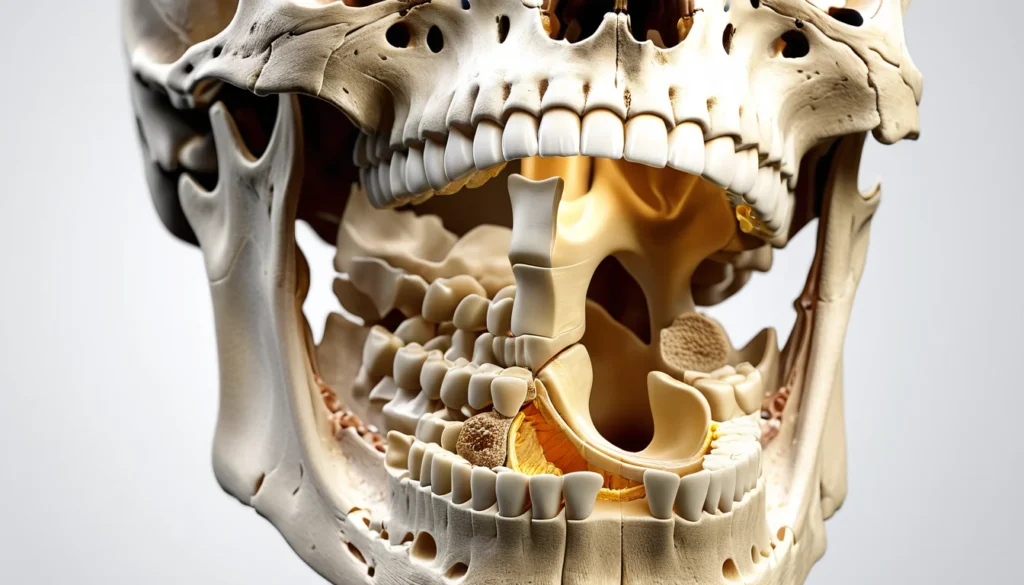
Jaw tumours and cysts are uncommon growths that form on or around the jawbone (mandible) and the soft tissues of the mouth. While most of these growths are benign (non-cancerous), some can grow quickly and aggressively, damaging surrounding bone and tissue. This article explains the main types of jaw tumours, their symptoms, causes, and treatment options available to Canadians.
What Are Jaw Tumours and Cysts?
A jaw tumour is a mass of tissue caused by the abnormal, uncontrolled growth of cells in or around the mandible. A cyst, on the other hand, is a round, hollow sac filled with liquid or semi-solid material.
Both jaw tumours and cysts can be odontogenic or non-odontogenic. Odontogenic means the growth starts in the cells and tissues involved in tooth development. Non-odontogenic growths begin in the bone or surrounding soft tissue instead.
Although most jaw tumours are benign, they can still cause serious damage. Some grow rapidly and invade nearby bone and tissue. As a result, early diagnosis and treatment are important.
Common Types of Jaw Tumours and Cysts
There are several types of jaw tumours and cysts. Each has different characteristics, behaviour, and treatment needs. Here are the most frequently diagnosed types.
Ameloblastoma
An ameloblastoma is a rare, usually benign tumour. It originates in the cells that form tooth enamel (the hard, protective outer layer of teeth). This tumour most often develops in the lower jaw, near the molar region.
Despite being benign, ameloblastoma is aggressive. It can come back after treatment. However, surgery is generally successful and reduces the chance of recurrence.
Central Giant Cell Granuloma
This benign tumour grows from bone cells. It most often appears in the front portion of the lower jaw. There are two forms: an aggressive type that grows quickly through bone, and a less aggressive type that may cause no symptoms at all.
In most cases, surgery is the standard treatment for central giant cell granuloma.
Dentigerous Cyst
A dentigerous cyst is the most common type of jaw cyst. It develops from special cells at the base of a tooth before the tooth has erupted through the gum. The cyst often surrounds a permanent tooth but can involve any tooth type.
Odontogenic Keratocyst
Despite being classified as a cyst, the odontogenic keratocyst behaves more like a tumour. It tends to come back after treatment, which is why it is sometimes called a keratocystic odontogenic tumour. It grows slowly but can seriously damage jaw bone and soft tissue, especially if left untreated for a long time.
This cyst most commonly develops in the lower jaw, near the third molar (wisdom tooth).
Odontogenic Myxoma
An odontogenic myxoma is a rare, benign, slow-growing jaw tumour. It is found most often in the lower jaw. Despite its slow growth, it can become large and invade surrounding bone and tissue. Like other jaw tumours, it carries a risk of returning after treatment.
Odontoma
An odontoma is the most common odontogenic tumour. It is usually small and causes no symptoms. However, it can interfere with normal tooth development. Odontomas are made of the same tissue as teeth and often grow into a tooth-like shape.
Other Types of Jaw Tumours
Additional, less common types of jaw tumours and cysts include:
Calcifying epithelial odontogenic tumour
Glandular odontogenic cyst
Squamous odontogenic tumour
Ossifying fibroma
Osteoblastoma
Cementoblastoma
For a broader overview of benign jaw conditions, Mayo Clinic’s guide to jaw tumours and cysts provides helpful information.
Signs and Symptoms of Jaw Tumours
Signs and symptoms of jaw tumours vary depending on the type of growth present. Many jaw tumours and cysts cause no noticeable symptoms in their early stages. This makes them easy to overlook for a long time.
In fact, most jaw tumours are discovered by accident during a routine dental X-ray taken for another reason entirely. The tumour only becomes visible to the patient in more advanced stages.
When symptoms do appear, they may include:
A visible swelling or lump on the jaw or inside the mouth
Pain or tenderness in the jaw area
Difficulty chewing or swallowing
Loose or shifting teeth
Numbness in the lower lip or chin
Swollen lymph nodes in the neck
Fever (if infection is present)
Because jaw tumours can be silent for so long, regular dental check-ups are one of the best ways to catch them early.
What Causes Jaw Tumours?
In general, the exact cause of most jaw tumours is not fully understood. However, researchers have identified some contributing factors.
Odontogenic jaw tumours and cysts begin in the cells involved in normal tooth formation. Non-odontogenic tumours start in bone cells or nearby soft tissue instead. Some jaw tumours are linked to gene mutations or inherited genetic syndromes.
Gorlin-Goltz Syndrome
One known genetic link is Gorlin-Goltz syndrome, also called basal cell naevus syndrome. People with this condition carry a mutation in a gene that normally suppresses tumour growth. This mutation is inherited.
Individuals with Gorlin-Goltz syndrome often develop multiple odontogenic jaw tumours, skin cancers, and other related health conditions. For more information on genetic conditions linked to cancer, visit Health Canada’s official health resources.
How Are Jaw Tumours Diagnosed?
To properly diagnose a jaw tumour or cyst, your doctor or dentist will recommend a series of tests. These tests help identify the type of growth and plan the best course of treatment.
Imaging Tests
Imaging tests give doctors a clear picture of the size, shape, and location of the growth. Common imaging tests include:
X-ray: The most common first step, often done at a routine dental visit
CT scan (computed tomography): Provides detailed cross-sectional images of the jaw
MRI (magnetic resonance imaging): Shows soft tissue involvement in greater detail
Biopsy
A biopsy involves removing a small sample of tissue from the tumour or cyst. A pathologist then examines the sample under a microscope. This test confirms whether the growth is benign or cancerous and identifies the exact tumour type.
Once your medical team has this information, they will classify the tumour and develop a personalized treatment plan.
Treatment Options for Jaw Tumours
Treatment for jaw tumours depends on the type, size, stage, and behaviour of the growth. Your care team will also consider your overall health and personal preferences when recommending a plan.
Because jaw tumours often require a range of expertise, treatment typically involves a multidisciplinary team. This team may include an oral and maxillofacial surgeon, a dentist, an oncologist, and other specialists.
Surgical Treatment
Surgery is the most common treatment for jaw tumours and cysts. The type of surgery depends on the size and aggressiveness of the growth. Options range from minor cyst removal to more extensive jaw reconstruction.
For aggressive tumours like ameloblastoma, wider surgical removal reduces the risk of the tumour coming back. Reconstructive procedures may follow to restore jaw function and appearance.
Non-Surgical Treatment
Some smaller or less aggressive cysts may be treated with decompression or drug therapy, depending on the case. Certain medications can help manage the growth before or instead of surgery.
Your care team will weigh all options carefully. The goal is always to remove the growth while preserving as much healthy tissue and function as possible. For more information on cancer treatment approaches, the World Health Organization’s cancer fact sheet offers a useful global perspective.
When to See a Doctor or Dentist in Canada
You should speak with your family doctor or dentist if you notice any changes in your mouth or along the outside of your jaw. Do not wait to see if it goes away on its own.
Book an appointment promptly if you experience any of the following:
Any new lump or swelling in or around the mouth
Jaw pain that does not improve
Difficulty chewing, opening your mouth, or swallowing
A tooth that becomes loose without an obvious reason
Numbness in your lip, chin, or tongue
Fever alongside jaw swelling
If you do not have a family doctor, a walk-in clinic can provide an initial assessment and refer you to a specialist if needed. Many provincial health plans in Canada cover referrals to oral and maxillofacial surgeons when medically necessary. Check with your provincial health authority for coverage details in your area.
Remember, most jaw tumours are found by accident on routine dental X-rays. This is one more reason to keep up with your regular dental appointments, even when you feel fine.
Frequently Asked Questions About Jaw Tumours
Are jaw tumours always cancerous?
No, most jaw tumours are benign (non-cancerous). However, even benign jaw tumours can be aggressive and cause serious damage to surrounding bone and tissue. It is always important to have any jaw growth properly evaluated by a doctor or dentist.
How are jaw tumours treated in Canada?
Treatment for jaw tumours in Canada typically involves surgery, and in some cases, additional therapies such as medication or reconstruction. Your care team will include specialists such as an oral and maxillofacial surgeon. Most treatments are covered under provincial health plans when medically necessary.
What are the early signs of a jaw tumour?
Many jaw tumours cause no symptoms in their early stages, making them hard to detect without imaging. When symptoms do appear, they may include swelling, jaw pain, loose teeth, or difficulty chewing. Regular dental X-rays are one of the best ways to catch jaw tumours early.
Can jaw tumours come back after treatment?
Yes, some types of jaw tumours have a tendency to recur after treatment. Ameloblastoma and odontogenic keratocysts, for example, are known for higher recurrence rates. This is why follow-up appointments and imaging after treatment are very important.
What is the most common type of jaw cyst?
The dentigerous cyst is the most common type of jaw cyst. It forms from cells around an unerupted tooth and can surround any type of tooth. It is usually benign and treated with surgical removal.
Should I go to a walk-in clinic or my family doctor for a jaw lump?
Either option is a good starting point. Your family doctor or a walk-in clinic can assess the lump and refer you to a dentist or specialist if needed. A referral to an oral and maxillofacial surgeon may be arranged if a jaw tumour is suspected.
Key Takeaways
Jaw tumours and cysts are uncommon growths on or around the jawbone. Most are benign, but some can be aggressive.
Common types include ameloblastoma, dentigerous cysts, odontogenic keratocysts, and odontogenic myxoma.
Many jaw tumours cause no early symptoms and are found by accident during routine dental X-rays.
Diagnosis involves imaging tests (X-ray, CT, MRI) and sometimes a biopsy.
Surgery is the most common treatment. A multidisciplinary team guides care.
Some types of jaw tumours can recur after treatment, so ongoing follow-up is essential.
If you notice any lump, swelling, or pain in your jaw or mouth, see your family doctor, dentist, or walk-in clinic promptly.
Always consult a qualified healthcare professional for a proper diagnosis and personalized treatment plan. This article is for general information only.