Jaundice in babies is one of the most common conditions seen in newborns across Canada. It causes the skin, eyes, and mucous membranes to turn yellow due to a build-up of bilirubin in the blood. While it often resolves on its own within a few days, some cases require medical attention. This article explains what causes jaundice in babies, what symptoms to watch for, and when to contact your family doctor or local walk-in clinic.
What Is Jaundice in Babies?
Jaundice happens when a yellow pigment called bilirubin builds up in the blood faster than the body can remove it. Bilirubin forms naturally as red blood cells break down. Normally, the liver filters it out and passes it through the digestive system.
In newborns, the liver is still developing. It may not yet be able to process bilirubin quickly enough. As a result, the pigment builds up and causes that familiar yellow tint in the skin and eyes.
If jaundice goes untreated, the yellow colour can sometimes shift to a greenish tone. This happens because of another pigment called biliverdin, which is also found in bile. For this reason, early monitoring is important.
Why Jaundice in Babies Is So Common
Newborns produce more bilirubin than adults do. They are born with a higher number of red blood cells, which break down quickly after birth. Their livers simply cannot keep up at first.
There are three key reasons jaundice in babies develops so frequently:
Newborns have more red blood cells than adults, leading to more bilirubin production.
A newborn’s liver is still maturing and cannot filter bilirubin efficiently.
Bilirubin can be reabsorbed in the intestines before the baby passes it out through stool.
In most cases, the liver catches up within a week or two. However, some babies need extra support to bring their bilirubin levels down safely.
Types of Jaundice in Babies
Physiological Jaundice
This is the most common type of jaundice in babies. It appears as a normal response to the newborn’s limited ability to process bilirubin in the first days of life. It usually appears between days two and four after birth and clears up on its own.
Breastfeeding Jaundice
This type develops in the first week of life. It happens when a baby is not getting enough breast milk, either because of a low milk supply or difficulty latching. Feeding more frequently helps bring bilirubin levels down. A lactation consultant — a specially trained breastfeeding expert — can offer helpful support through this process.
Breast Milk Jaundice Syndrome
About 2% of healthy breastfed babies develop jaundice after the first week. This is linked to certain substances in breast milk that slow the liver’s ability to process bilirubin. It is generally mild and resolves without stopping breastfeeding.
Jaundice from Blood Cell Breakdown
Some babies develop jaundice because red blood cells are breaking down too quickly. This can be caused by Rh incompatibility (when the baby and mother have different blood types), having too many red blood cells, or internal bleeding.
Jaundice Linked to Liver Function
In rarer cases, jaundice in babies is related to liver problems such as infection, hepatitis, or cystic fibrosis. This type requires closer medical evaluation and treatment.
Causes and Risk Factors
During pregnancy, the mother’s liver removes bilirubin on behalf of the baby. After birth, the baby’s liver must take over that job. For some babies, this transition takes longer than expected.
Certain conditions increase the risk of jaundice in babies. These include:
Blood type incompatibility (Rh factor): A small number of babies have a different blood type than their mother, which causes red blood cells to break down faster.
Internal bleeding: Bleeding inside the body raises bilirubin levels quickly.
Liver conditions: Hepatitis and cystic fibrosis can both affect how the liver handles bilirubin.
Genetic conditions: G6PD deficiency is one example that can lead to higher bilirubin levels.
Viral or bacterial infections: These can affect the liver’s ability to function properly.
Blood disorders: Haemolytic anaemia causes red blood cells to break down faster than normal.
Furthermore, some groups of babies are more likely to develop jaundice than others:
Premature babies: Their livers are even less developed, making it harder to clear bilirubin.
Breastfed babies who are not feeding well: Poor feeding slows the passage of bilirubin through the digestive system.
Babies of East Asian or Mediterranean heritage: Research shows a higher rate of jaundice in these groups.
According to Mayo Clinic’s overview of infant jaundice, physiological jaundice is the most common form and usually poses no long-term risk when monitored properly.
Signs and Symptoms to Watch For
The most obvious sign of jaundice in babies is a yellow tint to the skin and the whites of the eyes. This yellowing usually appears between the second and fourth day after birth. It often starts on the face and spreads downward to the chest, belly, arms, and legs.
You can do a simple check at home. Press gently on your baby’s forehead or nose. If the skin looks yellow where you pressed, your baby may have mild jaundice. Always check in good lighting — natural daylight works best.
In addition to yellow skin, watch for these signs:
The yellowing is spreading or getting darker
The whites of the eyes look yellow
Your baby seems unusually sleepy or hard to wake
Your baby is not gaining weight or is feeding poorly
Your baby cries inconsolably
Any other changes that concern you as a parent
Bilirubin levels typically peak between days three and seven after birth. If your baby is discharged from hospital before 72 hours, they should be seen by a healthcare provider within two days of going home. Most Canadian maternity wards have screening policies in place before discharge.
The World Health Organization’s newborn care guidelines recommend that all newborns be assessed for jaundice regularly in the first week of life.
When to See a Doctor
Most cases of jaundice in babies are mild and resolve without treatment. However, some situations call for prompt medical attention. Do not wait if you notice any of the warning signs listed above.
In Canada, you have several options for getting your baby checked quickly:
Your family doctor: Call your family doctor’s office as soon as you notice symptoms. Many clinics offer same-day appointments for newborns.
Walk-in clinic: If your family doctor is unavailable, a walk-in clinic can assess your baby’s condition and check bilirubin levels.
Emergency department: If your baby is very difficult to wake, not feeding at all, or the yellowing is spreading rapidly, go to the nearest emergency department right away.
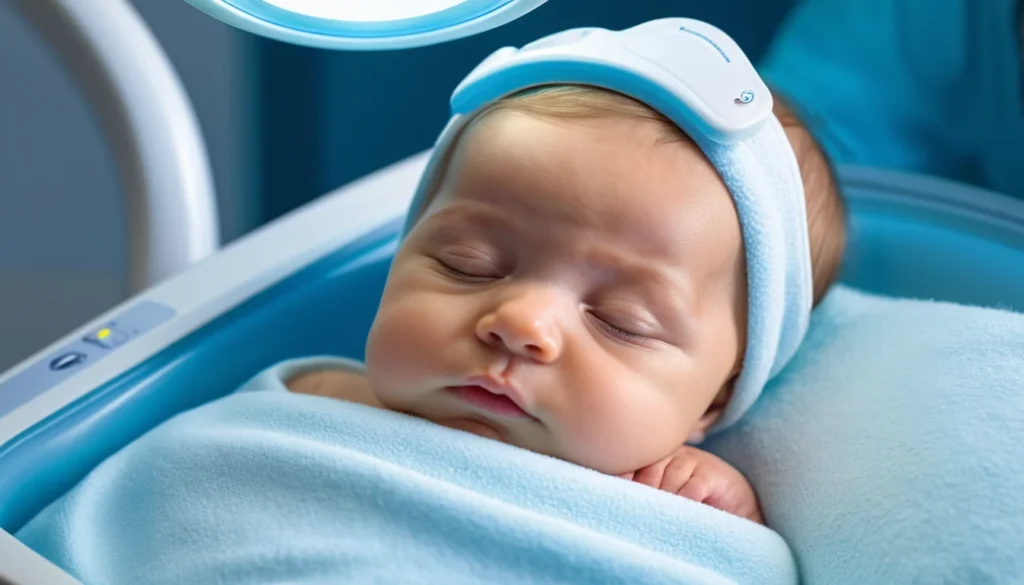
Bilirubin levels can be checked with a simple skin scanner or a blood test. If levels are too high, your doctor may recommend phototherapy — a safe light treatment commonly used in Canadian hospitals and neonatal units. Your provincial health plan covers this treatment when it is medically necessary.
Always speak with a qualified healthcare provider before drawing conclusions about your baby’s health. A trained professional can assess the full picture and guide you on next steps.
For more information on newborn health, visit Health Canada’s official health information resources.
Frequently Asked Questions About Jaundice in Babies
How long does jaundice in babies last?
Physiological jaundice in babies usually clears up within one to two weeks in full-term newborns. Premature babies may take a little longer to fully recover. If jaundice persists beyond two weeks, contact your family doctor for further testing.
Is jaundice in babies dangerous?
Mild jaundice in babies is very common and is usually not dangerous when monitored closely. However, very high bilirubin levels that go untreated can cause serious complications, including brain damage. This is why regular check-ups in the first week of life are so important.
Should I stop breastfeeding if my baby has jaundice?
In most cases, you should not stop breastfeeding if your baby has jaundice. Feeding more frequently — about eight to twelve times a day — actually helps flush bilirubin out of the body. Talk to your doctor or a lactation consultant if you have concerns about your milk supply or your baby’s feeding.
How is jaundice treated in Canadian hospitals?
The most common treatment for jaundice in babies in Canadian hospitals is phototherapy, which uses special blue lights to help break down bilirubin in the skin. In more severe cases, a blood transfusion may be needed. Both treatments are covered under provincial health plans when medically necessary.
What does jaundice look like in a newborn?
Jaundice in babies appears as a yellow tint to the skin and the whites of the eyes. It usually starts on the face and spreads downward toward the belly, arms, and legs. Check your baby in natural daylight for the most accurate colour assessment.
When should I take my jaundiced baby to a walk-in clinic or emergency room?
Take your baby to a walk-in clinic if your family doctor is unavailable and you notice the yellowing is spreading, your baby is not feeding well, or they seem unusually sleepy. Go directly to the emergency room if your baby is very hard to wake, has a high-pitched cry, or the jaundice appears to be getting worse very quickly.
Key Takeaways
Jaundice in babies is very common and is caused by a build-up of bilirubin as the newborn’s liver matures.
The most common form — physiological jaundice — usually clears up within one to two weeks without treatment.
Yellow skin and eyes are the main signs. Always check your baby in natural daylight.
Breastfeeding frequently helps lower bilirubin levels. A lactation consultant can help if feeding is difficult.
Premature babies and babies with certain health conditions face a higher risk of jaundice.
Most Canadian hospitals screen newborns for jaundice before discharge. Follow up with your family doctor or walk-in clinic within two days if your baby goes home early.
Seek medical attention promptly if your baby shows warning signs such as extreme sleepiness, poor feeding, or rapidly spreading yellowing.
Always consult your family doctor or a qualified healthcare provider for a proper diagnosis and personalised guidance.