An intravenous injection is one of the fastest and most effective ways to deliver medication into the body. Instead of swallowing a pill or receiving a shot into muscle, a healthcare provider injects fluid directly into a vein. This gets medicine into your bloodstream almost instantly. In this article, we explain how intravenous injections work, why they are used, what to expect during the procedure, and when you should talk to your doctor or visit a walk-in clinic.
What Is an Intravenous Injection?
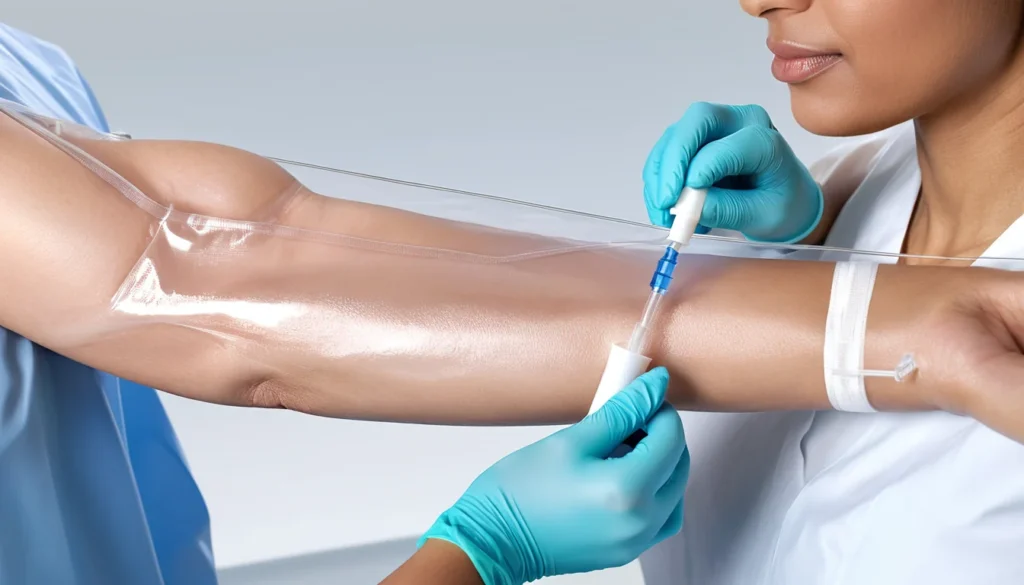
The word “intravenous” comes from the Latin words for “within” and “vein.” An intravenous injection delivers liquid — usually medication or fluids — directly into a vein using a needle and syringe. This bypasses the digestive system entirely. As a result, the medicine reaches every part of your body through the bloodstream very quickly.
This method is different from other types of injections. For example, an intramuscular injection goes into a muscle, and a subcutaneous injection goes just under the skin. Both of those methods absorb more slowly. An intravenous injection, however, works almost immediately.
You may receive an intravenous injection in a hospital, a clinic, or even at home if you have a home care nurse. In Canada, many provincial health plans cover IV treatments when they are medically necessary. Your family doctor or specialist will determine if this method is right for you.
Why Doctors Use Intravenous Injections
Healthcare providers choose intravenous injections for several important reasons. The most common reason is speed. When a patient needs medication to act quickly — such as during an emergency — an IV injection is the fastest route available. According to Mayo Clinic, intravenous delivery allows drugs to take effect within seconds to minutes.
Another reason is effectiveness. Some medications are irritating to muscle tissue. Giving those drugs as an intramuscular injection could cause pain, swelling, or damage at the injection site. An intravenous injection avoids this problem because the drug immediately dilutes into the bloodstream.
Furthermore, some medicines simply do not work if swallowed. The digestive system breaks them down before they can reach the bloodstream. Therefore, the intravenous route is the only safe and effective option for those drugs.
Common Uses of Intravenous Injections
Doctors and nurses use intravenous injections in many situations. Here are some of the most common:
Emergency medicine: Delivering life-saving drugs quickly during a heart attack, stroke, or severe allergic reaction.
Antibiotics: Treating serious infections that oral antibiotics cannot reach fast enough.
Chemotherapy: Delivering cancer-fighting drugs directly into the bloodstream.
Hydration: Replacing fluids and electrolytes in patients who cannot drink on their own.
Pain management: Providing rapid relief for severe or post-surgical pain.
Nutritional support: Feeding patients who cannot eat or absorb nutrients normally.
In Canadian hospitals, intravenous therapy is one of the most common medical procedures performed every day. It is a routine and well-established part of modern healthcare.
Who Can Perform an Intravenous Injection?
An intravenous injection is not something anyone can perform at home without training. It requires precise anatomical knowledge. The provider must be able to tell veins apart from arteries, locate a suitable vein, and insert the needle at the correct angle and depth.
In Canada, only licensed healthcare professionals perform intravenous injections. These include registered nurses, licensed practical nurses, physicians, and paramedics. Some specially trained patients with chronic conditions — such as those on home IV therapy — may learn to manage their own IV lines under close medical supervision.
Attempting an intravenous injection without proper training is dangerous. It can cause serious harm, including infection, air embolism, or damage to blood vessels. Always rely on a qualified healthcare provider for this procedure.
Training and Qualifications Required
Nurses and doctors who perform intravenous injections complete detailed training in vascular anatomy. They learn how to select the right vein, how to use a tourniquet properly, and how to handle complications if they arise. This training is part of their regulated healthcare education in Canada.
In addition, healthcare facilities have strict protocols for IV procedures. These protocols help prevent infections and ensure patient safety. The Health Canada guidelines on safe injection practices outline these standards for healthcare providers across the country.
How an Intravenous Injection Is Performed
If you have never had an intravenous injection before, knowing what to expect can help ease your anxiety. The procedure follows clear, consistent steps. Most people find it only mildly uncomfortable.
Step 1 — Choosing the Right Vein
The healthcare provider first looks for a suitable vein. The most common site is the inside of the elbow, called the antecubital fossa. The veins there are close to the surface and easy to see. However, the provider may also use veins on the forearm or the back of the hand if needed.
The choice of vein depends on its size, visibility, and condition. Veins that have been used many times before may become harder to access. Therefore, providers rotate sites when possible to protect vein health.
Step 2 — Applying a Tourniquet
Next, the provider wraps a tourniquet — a tight band — around your upper arm. This slows blood flow back to the heart, causing the vein to swell and become more visible. It also makes the vein firmer, which makes it easier to insert the needle accurately.
The tourniquet stays in place only for a short time. The provider removes it as soon as the needle enters the vein successfully.
Step 3 — Cleaning the Skin and Inserting the Needle
The provider cleans the skin over the vein with an antiseptic swab. This reduces the risk of introducing bacteria into the bloodstream. Then, they insert the needle at a shallow angle into the vein.
The provider confirms correct placement by drawing back the plunger slightly. If blood flows back into the syringe, the needle is in the vein. This step is important. It confirms the medication will go into the vein and not into surrounding tissue.
Step 4 — Injecting the Medication
An intravenous injection must be given slowly and carefully. Providers typically use syringes with a capacity of 5 to 10 millilitres. The needle used is usually 4 to 5 centimetres long with a short bevel — meaning the angled tip is small and precise.
Injecting too fast can cause serious side effects. These include a burning sensation in the vein, a drop in blood pressure, or an irregular heartbeat. The provider monitors you throughout the injection for any signs of a reaction.
Step 5 — Removing the Needle and Applying Pressure
Once the injection is complete, the provider removes the needle smoothly and quickly. They then apply firm pressure to the site for three to four minutes. This pressure helps the vein seal and prevents bruising, which doctors call an ecchymosis.
A small bandage or gauze pad is placed over the site afterward. You may notice mild soreness or a small bruise in the hours that follow. This is normal and usually fades within a day or two.
Possible Risks and Side Effects
Like any medical procedure, an intravenous injection carries some risks. Most are minor and temporary. However, it is important to know what to watch for after you receive one.
Common, mild side effects include:
Bruising or tenderness at the injection site
Mild swelling or redness around the vein
A brief stinging or burning sensation during the injection
Less common but more serious risks include:
Infiltration: The needle slips out of the vein and fluid enters surrounding tissue. This causes swelling and discomfort.
Phlebitis: Inflammation of the vein, causing warmth, redness, and pain along the vein.
Infection: Bacteria can enter the bloodstream if the skin is not properly cleaned. This is rare in clinical settings with proper technique.
Air embolism: Air bubbles enter the bloodstream. This is very rare and providers take careful steps to prevent it.
Allergic reaction: Some people react to the medication being injected.
The World Health Organization’s guidance on injection safety emphasizes that trained staff and proper equipment dramatically reduce these risks. In Canadian healthcare settings, safety standards are strictly enforced.
When to See a Doctor or Visit a Walk-In Clinic
After receiving an intravenous injection, pay attention to how the injection site looks and feels over the next 24 to 48 hours. Most people recover without any issues. However, some signs suggest you need medical attention.
Contact your family doctor or go to a walk-in clinic if you notice:
Increasing redness, warmth, or swelling at the injection site
Pus or discharge from the site
A fever above 38°C
Pain that gets worse instead of better
A hard lump or cord forming along the vein
Call 911 or go to your nearest emergency room right away if you experience chest pain, difficulty breathing, dizziness, or a rapid heartbeat after an IV injection. These could be signs of a rare but serious complication.
If you are unsure whether your symptoms are normal, do not wait. Walk-in clinics across Canada are available without an appointment and can assess your concern quickly. Your health and safety always come first. As always, this article is for general information only — please consult your doctor or a licensed healthcare provider for advice specific to your situation.
Frequently Asked Questions
What is an intravenous injection used for?
An intravenous injection delivers medication or fluids directly into a vein for fast, whole-body effect. Doctors use it for emergencies, antibiotics, chemotherapy, hydration, and pain relief. It works faster than oral medication or intramuscular injections because it goes straight into the bloodstream.
Does an intravenous injection hurt?
Most people feel a brief pinch or sting when the needle enters the vein during an intravenous injection. Some people also notice a mild burning sensation as the medication is delivered. Discomfort is usually short-lived and manageable, and healthcare providers take steps to make the experience as comfortable as possible.
Where on the body is an intravenous injection given?
The most common site for an intravenous injection is the inside of the elbow, where veins are easy to see and access. Providers may also use veins in the forearm or the back of the hand. The best site depends on vein size, visibility, and the patient’s medical history.
How long does an intravenous injection take?
An intravenous injection is given slowly to reduce the risk of side effects, so the process can take anywhere from one to several minutes depending on the volume of fluid. After the injection, the nurse or doctor will apply pressure to the site for three to four minutes. The entire visit may take 15 to 30 minutes in a clinic setting.
Is an intravenous injection covered by provincial health plans in Canada?
In Canada, intravenous injections given in a hospital or clinic setting are generally covered by provincial and territorial health plans when they are medically necessary. Coverage for home IV therapy or certain medications may vary by province and individual circumstances. Check with your provincial health authority or family doctor to understand what is covered under your plan.
What should I watch for after an intravenous injection?
After an intravenous injection, it is normal to have mild soreness or a small bruise at the injection site for a day or two. However, you should contact your family doctor or walk-in clinic if you develop increasing redness, swelling, warmth, fever, or pain at the site. Seek emergency care immediately if you experience chest pain, trouble breathing, or dizziness.
Key Takeaways
An intravenous injection delivers medication or fluids directly into a vein for fast, effective treatment throughout the body.
It is faster and more powerful than oral or intramuscular routes, making it ideal for emergencies and certain medications.
Only trained and licensed healthcare professionals — such as registered nurses and physicians — should perform this procedure.
The inside of the elbow is the most common injection site, though forearm and hand veins are also used.
The procedure involves a tourniquet, careful needle insertion, slow injection, and three to four minutes of pressure afterward to prevent bruising.
Mild soreness and minor bruising are normal. Signs of infection, increasing pain, or fever after the procedure need medical attention.
In Canada, medically necessary intravenous injections in hospitals and clinics are generally covered by provincial health plans.
Always speak with your family doctor or a qualified healthcare provider before undergoing any injection therapy.