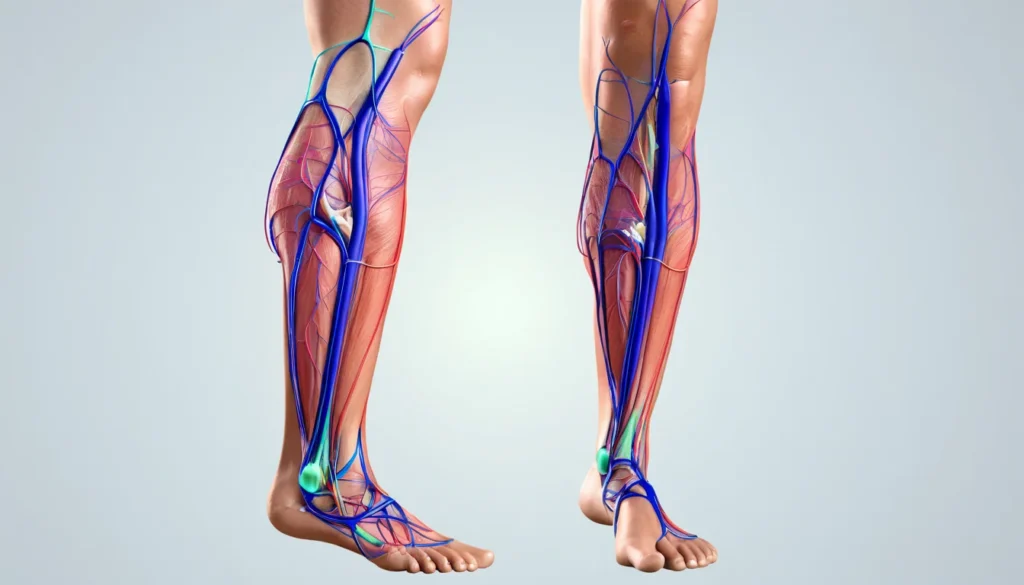
If your legs feel tired, swollen, and hard to lift — especially in summer — you are not alone. Heavy legs are a common sign of poor venous circulation, and warm weather makes the problem worse. This article explains why it happens, what you can do at home to get relief, and when it is time to visit your family doctor or a walk-in clinic.
Why Do Heavy Legs Get Worse in Summer?
Heat causes your blood vessels to widen. This is a normal response, but it puts extra pressure on the veins in your legs. When the small valves inside your veins cannot keep up, blood begins to pool. As a result, your legs feel swollen, achy, and heavy.
People with varicose veins or chronic venous insufficiency feel this most strongly. However, even healthy people can notice the sensation during a long, hot Canadian summer. Humidity adds to the problem by slowing the body’s ability to cool itself down.
According to Mayo Clinic’s overview of varicose veins, poor vein valve function is one of the leading causes of leg heaviness and swelling, particularly in warm conditions.
Top Lifestyle Changes to Relieve Heavy Legs
The good news is that several simple daily habits can make a real difference. These changes support healthy blood flow and reduce the feeling of heaviness in your legs. Try adding them one at a time so they become part of your routine.
Move Your Body Every Day
Walking is one of the best things you can do for your veins. Aim for at least 30 minutes of walking each day. This gentle activity helps your calf muscles pump blood back up toward your heart, reducing pooling in the lower legs.
If you sit or stand at work for long periods, take short movement breaks every 15 to 30 minutes. Try rotating your ankles, climbing a few stairs, or simply standing up and shifting your weight. These small movements keep circulation active throughout the day.
Avoid crossing your legs when seated. This position restricts blood flow and can make heavy legs feel worse by the end of the day.
Stay Well Hydrated
Drinking enough water is especially important during summer. Aim for at least two litres per day. Proper hydration keeps your blood at a healthy thickness, which helps it flow more easily through your veins.
Try adding a squeeze of lemon to your water. Lemon water supports the body in flushing out excess fluid, which can reduce leg puffiness. Furthermore, limiting your salt intake helps prevent water retention that worsens swelling.
Elevate Your Legs in the Evening
At the end of the day, lie down and prop your legs up above the level of your heart for 15 to 20 minutes. This simple position uses gravity to help drain pooled blood back toward your upper body. Many people notice immediate relief from heavy legs after this practice.
You can place a firm pillow or a folded blanket under your calves and ankles. Make this part of your evening wind-down routine for the best results.
Use a Cooling Leg Gel or Cream
Topical gels and creams designed for tired legs can offer quick comfort. Apply them using gentle upward strokes, starting at the ankle and moving toward the thigh. This massage motion encourages fluid to move away from the lower leg.
Look for products that contain menthol, horse chestnut, or arnica. These ingredients help soothe inflammation and give a cooling sensation. Ask your pharmacist at your local pharmacy for a recommendation that suits your skin.
What to Eat (and Avoid) for Better Circulation
Your diet plays a bigger role in vein health than most people realise. Certain foods support healthy blood vessels, while others increase inflammation and make circulation worse.
Foods That Support Vein Health
Focus on a diet rich in fibre, fruits, and vegetables. Berries, citrus fruits, leafy greens, and whole grains all contain antioxidants and flavonoids that strengthen the walls of blood vessels. In addition, foods high in fibre help maintain a healthy weight, which reduces pressure on your leg veins.
Oily fish such as salmon and mackerel contain omega-3 fatty acids. These healthy fats help reduce inflammation throughout the body, including in your veins. Try to include them in your meals two to three times per week.
Foods to Limit or Avoid
Processed foods, fried foods, and red or cured meats promote inflammation. They can make venous symptoms worse over time. Similarly, excess salt causes water retention that directly contributes to leg swelling.
Alcohol causes blood vessels to dilate and can interfere with normal vein function. Limiting alcohol — especially during hot weather — is a practical way to reduce the severity of heavy legs. Refined carbohydrates like white bread and sugary snacks also drive inflammation, so it is worth reducing these where possible.
Healthline’s guide to foods that improve blood flow offers a helpful list of nutrient-rich options to add to your shopping list.
Natural Supplements That May Help Poor Circulation
Some people find that natural supplements support their vein health alongside lifestyle changes. Several ingredients have been studied for their effects on blood flow and inflammation. Always speak with your family doctor or pharmacist before starting any new supplement, particularly if you take prescription medications.
Nattokinase
Nattokinase is an enzyme derived from natto, a traditional Japanese food made from fermented soybeans. Research suggests it has antithrombotic and thrombolytic properties, meaning it may help break down fibrin — a protein involved in blood clot formation. A study published by researchers including Y. Weng and colleagues highlighted nattokinase as a potential oral agent for cardiovascular protection.
This enzyme may help support normal blood viscosity and flow. However, it can interact with blood-thinning medications. If you take any anticoagulants or have a clotting disorder, talk to your doctor before trying nattokinase.
Bromelain
Bromelain is an enzyme found naturally in pineapple. Studies have shown it may reduce swelling, ease pain, and lower inflammation in the affected area. Research reviewed in a study by R. Pavan and colleagues found that bromelain showed promise in supporting cases of thrombosis and thrombophlebitis.
For people dealing with heavy legs and mild swelling, bromelain may offer some relief as part of a broader approach to vein health.
Hesperidin and Polyphenols
Hesperidin is a flavonoid found in oranges and other citrus fruits. It has anti-inflammatory and vasodilatory properties, meaning it helps widen blood vessels and improve peripheral circulation. Some studies suggest hesperidin may specifically help women who experience cold sensitivity and leg heaviness.
Grape seed extract and pomegranate are rich in polyphenols and proanthocyanidins. These compounds have strong antioxidant effects — reportedly up to 20 times more potent than vitamin E and 50 times more than vitamin C. They support the health and elasticity of blood vessel walls, which is important for managing poor circulation.
According to Health Canada’s guidance on natural health products, supplements sold in Canada must meet safety and quality standards. Look for products with a Natural Product Number (NPN) on the label to ensure they have been reviewed by Health Canada.
Compression Socks and Other Practical Tools
Compression socks or stockings are widely used to manage venous symptoms. They apply gentle, graduated pressure to the legs, helping veins push blood upward toward the heart. Many Canadians find them especially useful during long flights, road trips, or workdays that involve standing or sitting for hours.
You can find compression socks at most pharmacies across Canada. They come in different levels of compression. Mild compression (15–20 mmHg) is available over the counter, while stronger levels require a prescription. Ask your family doctor or pharmacist which level is right for you.
Cooling leg baths can also provide quick relief. Fill a basin with cool water and soak your feet and calves for 10 to 15 minutes. Alternating between warm and cool water encourages blood vessels to contract and expand, which stimulates circulation.
When to See a Doctor About Heavy Legs
Most cases of heavy legs are not dangerous, but some symptoms warrant a prompt visit to your family doctor or a walk-in clinic. Do not ignore these warning signs.
Sudden, severe swelling in one leg only
Pain, redness, or warmth in the calf — these can be signs of deep vein thrombosis (DVT)
Skin changes such as discolouration, ulcers, or hardening around the ankle
Varicose veins that bleed or become very painful
Swelling that does not improve after elevating your legs
Shortness of breath along with leg swelling — seek emergency care immediately
Deep vein thrombosis is a serious condition where a blood clot forms in a deep vein, usually in the leg. If left untreated, the clot can travel to the lungs and cause a pulmonary embolism, which is life-threatening. If you suspect DVT, go to an emergency department or call 911 right away.
Your provincial health plan covers visits to your family doctor for concerns about circulation and vein health. If you do not have a family doctor, a walk-in clinic can assess your symptoms and refer you to a specialist if needed. In Ontario, for example, you can use Health811 (call 811) to speak with a registered nurse at any time.
Frequently Asked Questions About Heavy Legs
What causes heavy legs and poor circulation?
Heavy legs are usually caused by poor venous circulation, where weakened vein valves allow blood to pool in the lower limbs. Heat, prolonged sitting or standing, excess weight, and conditions like varicose veins all contribute to this problem. Genetics and hormonal factors can also play a role.
Why do my legs feel heavier in summer?
Warm temperatures cause your blood vessels to dilate, which increases the workload on your vein valves. When these valves struggle to keep up, blood pools in the legs, making them feel swollen and heavy. People with existing venous conditions tend to notice this effect most strongly during hot weather.
How do I get rid of the heavy leg feeling quickly?
Elevating your legs above heart level for 15 to 20 minutes provides fast relief from heavy legs. Applying a cooling gel with upward massage strokes and taking a cool foot bath can also help right away. For longer-term relief, daily walking and staying hydrated make a significant difference.
Can supplements help with heavy legs and poor circulation?
Some natural supplements — including nattokinase, bromelain, hesperidin, and grape seed extract — have shown promise in supporting venous circulation and reducing inflammation. However, supplements are not a replacement for medical treatment, and some can interact with medications. Always check with your family doctor or pharmacist before starting any supplement.
Are heavy legs a sign of deep vein thrombosis (DVT)?
Heavy legs alone are not usually a sign of DVT, but sudden swelling, pain, warmth, or redness in one leg — particularly the calf — can be warning signs. If you experience these symptoms, see a doctor promptly or go to an emergency department. DVT is a serious condition that requires immediate medical attention.
Do compression socks help with heavy legs?
Yes, compression socks are one of the most effective tools for managing heavy legs caused by poor venous circulation. They apply gentle pressure that helps veins return blood toward the heart. Mild compression socks are available at most Canadian pharmacies without a prescription.
Key Takeaways
Heavy legs are a common sign of poor venous circulation, made worse by summer heat.
Daily walking, staying hydrated, and elevating your legs are simple and effective habits.
A diet rich in fibre, fruits, and vegetables supports healthy blood vessels.
Natural supplements like nattokinase, bromelain, and hesperidin may help — but always check with your doctor or pharmacist first.
Compression socks are widely available at Canadian pharmacies and can provide real relief.
See your family doctor or visit a walk-in clinic if symptoms are severe, sudden, or involve only one leg.
Seek emergency care immediately if you suspect deep vein thrombosis or experience shortness of breath with leg swelling.
This article is for informational purposes only and does not replace professional medical advice. If you have concerns about your circulation or vein health, please speak with your family doctor or visit a walk-in clinic. Your provincial health plan covers assessments for conditions like these.