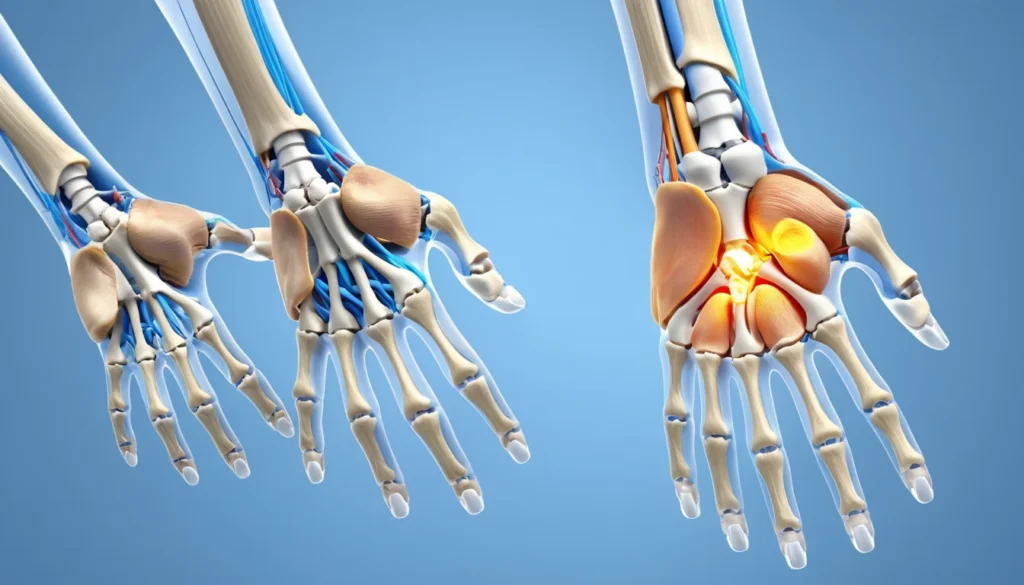
Hand exercises for arthritis are one of the safest and most effective ways to manage joint pain, stiffness, and reduced mobility in your fingers and wrists. If you’re among the millions of Canadians living with arthritis, these gentle daily movements can help you maintain independence and keep your hands functioning well — no gym membership or special equipment required.
Why Hand Exercises for Arthritis Are Recommended by Doctors
The good news is that arthritis hand stretches are backed by medical research and recommended by healthcare professionals across Canada. Whether you have osteoarthritis or rheumatoid arthritis, performing targeted finger and wrist exercises can reduce swelling, improve flexibility, and strengthen the small muscles that support your hand joints. Below, you’ll find 10 simple moves you can start doing at home today.
Why Hand Exercises for Arthritis Actually Work
Types of Arthritis Affecting the Hands: How Hand Exercises for Arthritis Can Help Each Type
| Type of Arthritis | Key Characteristics | Common Symptoms in Hands | Exercise Approach |
|---|---|---|---|
| Osteoarthritis (OA) | Most common form in Canada; caused by cartilage breakdown in finger and wrist joints over time | Bony nodules (Heberden’s/Bouchard’s nodes), aching pain, stiffness after rest, reduced grip strength | Gentle range-of-motion and strengthening exercises; focus on finger bends, thumb circles, and grip squeezes |
| Rheumatoid Arthritis (RA) | Autoimmune condition causing chronic joint inflammation; affects approximately 1% of Canadians | Symmetrical joint swelling, morning stiffness lasting over 30 minutes, warmth, and fatigue | Low-impact exercises during remission; avoid high-resistance moves during flare-ups; prioritize gentle stretching |
| Psoriatic Arthritis (PsA) | Inflammatory arthritis linked to psoriasis; can cause “sausage digits” (dactylitis) in fingers | Swollen fingers, nail changes, joint pain, stiffness, and skin plaques near affected joints | Flexibility and range-of-motion exercises; tendon glides and wrist rotations are particularly beneficial |
| Gout | Caused by uric acid crystal deposits in joints; less common in hands but can affect wrists and fingers | Sudden intense pain, redness, warmth, and swelling; episodes often occur at night | Exercise only between acute attacks; gentle mobility work helps maintain function and reduce recurrence risk |
| Thumb Basal Joint Arthritis | OA affecting the carpometacarpal (CMC) joint at the base of the thumb; very common in Canadians over 50 | Pain with pinching or gripping, swelling at thumb base, weakened pinch strength, difficulty with daily tasks | Targeted thumb opposition, extension, and gentle resistance exercises; avoid overloading the joint |
Arthritis gradually breaks down the cartilage and synovial tissue inside your joints. These tissues act like cushioning between your bones. When arthritis affects your hands and wrists, the result is pain, swelling, and stiffness — especially after periods of rest or heavy use.
Regular, gentle movement helps keep that cushioning tissue healthy. It also improves blood flow to the joints and strengthens the muscles around them. According to Mayo Clinic’s arthritis exercise guidance, staying active is one of the most important things you can do to manage arthritis symptoms.
Furthermore, hand exercises are non-invasive. They cost nothing and carry very low risk when done correctly. Most Canadians can do them at home, at work, or even while watching television.
Before You Begin: A Few Important Tips
Start slowly. These exercises are meant to ease pain — not cause it. If a movement hurts, stop right away and reduce the intensity.
However, some mild discomfort at the start is normal if your joints are very stiff. The key is to know the difference between a gentle stretch and sharp pain. Sharp pain is always a signal to stop.
You may also find it helpful to warm your hands before you begin. Hold them over a bowl of warm water for a few minutes. This loosens the joints and makes movement easier. In addition, many people find these exercises work best in the morning, when stiffness tends to be at its worst.
10 Hand Exercises for Arthritis to Reduce Joint Pain
1. Make a Fist
This is one of the best hand exercises for arthritis because you can do it anywhere. Start with your left hand open and fingers straight. Slowly curl your fingers into a gentle fist, with your thumb resting over your fingers — not tucked inside. Hold for a few seconds, then slowly open your hand and stretch your fingers wide. Repeat 10 times on each hand.
2. Finger Bends
Hold your left hand out in front of you with fingers straight. Slowly bend your thumb down toward your palm. Hold for 2 to 3 seconds, then straighten it. Next, bend your index finger down toward your palm, hold, and return. Continue with each finger in turn. Then repeat the whole sequence on your right hand.
3. Thumb Stretch
Hold your left hand out flat. Slowly bend your thumb across your palm, reaching it toward the base of your little finger. Do not worry if you cannot reach all the way — go as far as is comfortable. Hold for 2 to 3 seconds, then return to the starting position. Repeat 10 times on each hand.
4. Make an “O” Shape
Stretch your left hand out in front of you. Slowly curve all your fingers inward until your fingertips meet your thumb, forming an “O” shape. Hold the position for a few seconds, then straighten your fingers fully. Repeat several times on each hand throughout the day. This exercise is especially helpful when your hands feel numb or stiff.
5. Tabletop “L” Shape
Place your left hand flat on a table, with the pinky-finger side of your hand resting on the surface and your thumb pointing upward. Keep your thumb in place and slowly curl your other four fingers inward to form an “L” shape. Hold for a few seconds, then straighten your fingers and return to the start. Do 10 repetitions, then switch to your right hand.
6. Finger Lifts
Place your left palm flat on a table, facing down. Slowly lift each finger one at a time, starting with your thumb. Hold each finger up for 2 to 3 seconds before lowering it. Work through all five fingers, then repeat on your right hand. This exercise helps improve the range of motion in each individual joint.
7. Wrist Stretches
Your wrists need attention too. Hold your right arm out in front of you with your palm facing down. Use your left hand to gently press your right hand upward, until you feel a stretch along your wrist and forearm. Hold for a few seconds, then release. Do 10 repetitions, then switch sides.
For a second wrist exercise, rest your forearm on a flat surface. Make a loose fist and slowly bend your wrist upward. Hold briefly, then return to the starting position. Try not to let your fist tilt left or right. Repeat up to 10 times on each side.
8. Finger Spread
This exercise is particularly useful for people with rheumatoid arthritis. Simply spread your fingers as wide apart as you can. Hold the stretch for a few seconds, then relax. You can do this exercise anywhere — at the dinner table, on the couch, or in the shower. Repeat several times throughout the day. Never force the stretch if it causes pain.
9. Thumb-to-Fingertip Touch
Touch the tip of your thumb to the tip of each of your other fingers, one at a time. Move slowly and with control. Repeat this sequence at least 5 times on each hand. Over time, this exercise helps improve fine motor skills — things like buttoning a shirt, typing, or tying shoelaces. These are common challenges for people as arthritis progresses.
10. Finger Curl
Hold your fingers together with your palm flat and open. Slowly curl your fingertips toward the centre of your palm, as if forming a loose fist. Do not squeeze tightly. Then slowly open your hand again and repeat. To reduce any discomfort, warm your hands over a bowl of warm water before starting this movement.
According to Healthline’s guide to finger exercises for arthritis, consistent daily practice of these movements can lead to meaningful improvements in grip strength and flexibility over time.
How Often Should You Do These Exercises?
Most health professionals recommend doing hand exercises for arthritis at least once a day. Twice daily is even better, particularly if your mornings are very stiff. However, always listen to your body.
During a flare-up — when your arthritis symptoms suddenly get worse — it is best to rest and reduce the intensity of your exercises. Gentle movement is still fine, but avoid pushing through pain. As a result, you will protect your joints and recover more quickly.
Some people find it helpful to use supportive hand splints during flare-ups. A trained occupational therapist can recommend the right type for your needs. Many provincial health plans in Canada cover occupational therapy services, so check with your plan provider or family doctor.
The Public Health Agency of Canada’s arthritis resources also offer helpful guidance for managing arthritis day to day.
When to See a Doctor
Hand exercises for arthritis are a great self-care tool, but they are not a replacement for medical advice. If your joint pain is getting worse, spreading to new areas, or affecting your ability to work or care for yourself, it is time to speak with a healthcare professional.
You can start by visiting your family doctor or a walk-in clinic. They can assess your symptoms, refer you to a rheumatologist if needed, and connect you with an occupational therapist or physiotherapist. Many of these services are covered under provincial health plans across Canada.
Do not wait until your symptoms are severe. Early treatment and the right exercise programme can make a significant difference in how arthritis affects your quality of life.
Frequently Asked Questions About Hand Exercises for Arthritis
Are hand exercises for arthritis safe to do every day?
Yes, for most people, hand exercises for arthritis are safe to do daily. The key is to move gently and never push through sharp pain. If you are unsure, ask your family doctor or physiotherapist for guidance.
What is the best exercise for arthritic hands?
There is no single “best” exercise — a combination works best. However, making a gentle fist, finger bends, and the thumb-to-fingertip touch are among the most recommended hand exercises for arthritis. Doing a variety of movements keeps all the joints in your hand flexible.
Should I do hand exercises during an arthritis flare-up?
During a flare-up, it is best to rest and scale back your activity. Very gentle movement is usually fine, but avoid exercises that cause pain or put too much stress on inflamed joints. Talk to your doctor if you are unsure what is safe during a flare.
Can hand exercises actually reduce arthritis pain?
Yes. Research supports the use of hand exercises for arthritis as part of a broader pain management plan. Regular gentle movement improves blood flow, strengthens surrounding muscles, and helps maintain joint flexibility — all of which can reduce pain over time.
How long does it take to see results from hand exercises for arthritis?
Many people notice some improvement in stiffness and comfort within a few weeks of consistent daily practice. However, results vary depending on the type and severity of arthritis. Stick with your exercise programme and discuss your progress with your healthcare provider.
Do I need special equipment for arthritis hand exercises?
No special equipment is needed for most hand exercises for arthritis. All of the exercises in this article require only your hands and a flat surface. Some people choose to use a soft stress ball or therapy putty for added resistance, but these are optional.
Key Takeaways
Hand exercises for arthritis are a safe, low-cost way to reduce joint pain and stiffness.
Doing these exercises daily — even for just a few minutes — can improve flexibility and grip strength over time.
Always move gently. These exercises should never cause sharp or lasting pain.
Warm your hands before exercising to loosen stiff joints and make movement easier.
During a flare-up, rest and reduce intensity. Resume your full routine once symptoms settle.
Talk to your family doctor, a walk-in clinic, or a physiotherapist if your symptoms worsen or interfere with daily life.
Many provinces cover physiotherapy and occupational therapy — check your provincial health plan for details.
According to Mayo Clinic’s arthritis exercise guidance, this information is supported by current medical research.
For more information, read our guide on how healthy blood flow through your arteries supports joint health.
Always speak with a qualified healthcare provider before starting a new exercise programme, especially if you have been recently diagnosed with arthritis or have other health conditions.
Frequently Asked Questions
What is arthritis in the hands?
Arthritis in the hands is inflammation of one or more joints, causing pain, stiffness, and swelling. The most common types are osteoarthritis and rheumatoid arthritis. It primarily affects the knuckles, finger joints, and base of the thumb, gradually reducing grip strength and range of motion over time.
What are the first signs of arthritis in your hands?
Early signs include morning stiffness lasting more than 30 minutes, aching or tenderness around finger joints, mild swelling, and a weakened grip. You may also notice small bony bumps forming near your knuckles. Symptoms often worsen with cold weather or after periods of inactivity.
Do hand exercises for arthritis actually relieve joint pain?
Yes. Regular hand exercises for arthritis improve flexibility, strengthen surrounding muscles, and increase synovial fluid circulation, which lubricates joints. Studies show consistent gentle movement reduces stiffness and pain levels. Canadian physiotherapists recommend daily low-impact exercises like finger bends, fist stretches, and thumb opposition for measurable long-term relief.
How often should you do hand exercises for arthritis?
Most Canadian rheumatologists and physiotherapists recommend performing hand exercises for arthritis once or twice daily, completing 10 repetitions per movement. Always exercise during low-pain periods and warm hands beforehand using a warm cloth or water. Stop immediately if any exercise causes sharp or worsening pain.
When should you see a doctor about hand joint pain in Canada?
See a doctor if hand pain persists longer than six weeks, joints appear red or feel warm, swelling is significant, or daily tasks like buttoning clothes become difficult. Canadians should contact their family physician or request a referral to a rheumatologist for proper diagnosis and a personalized treatment plan.