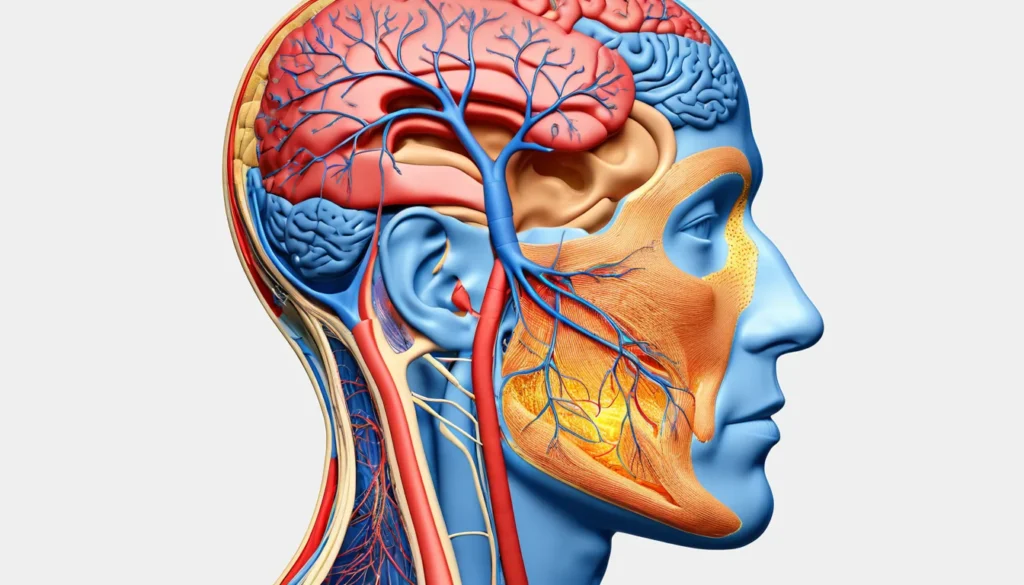
Giant cell arteritis is a serious condition that causes inflammation in the walls of your arteries — the blood vessels that carry oxygen-rich blood from your heart to the rest of your body. It most often affects the arteries in your head, especially around the temples. Without prompt treatment, it can lead to permanent vision loss, aortic aneurysm, or stroke. This article explains what giant cell arteritis is, who is at risk, and what steps to take if you notice symptoms.
What Is Giant Cell Arteritis?
Giant cell arteritis — also called temporal arteritis or cranial arteritis — is an inflammatory condition affecting medium and large arteries. When these arteries become inflamed, they swell and narrow. As a result, less blood and oxygen can reach vital tissues.
The condition most commonly targets the temporal arteries, which run along the sides of your head near the temples. However, it can also affect the aorta — the large artery that runs from your heart down through your chest and abdomen. Learn more about giant cell arteritis from the Mayo Clinic.
Symptoms of Giant Cell Arteritis
The symptoms of giant cell arteritis can vary from person to person. Some people experience only a few of them. It is important to recognize these signs early, because prompt treatment can prevent serious complications.
Common Symptoms to Watch For
Headaches: A persistent, often severe headache is one of the most common signs. Your scalp may feel tender when combing your hair, washing your head, or resting it on a pillow.
Jaw pain: You may feel aching or fatigue in your jaw when chewing or talking.
Vision problems: These include double vision, blurred vision, or sudden permanent vision loss in one eye.
Temple tenderness: The skin over your temples may feel sore or painful to the touch.
Unexplained weight loss: Losing weight without trying can be an early warning sign.
Fever: A low-grade fever may appear alongside other symptoms.
Flu-Like Symptoms at the Start
In many cases, giant cell arteritis begins with symptoms that feel like the flu. These include muscle aches throughout the body, fatigue, fever, and headaches. This makes it easy to mistake the condition for a common illness at first.
Pain and stiffness in the shoulders, neck, upper arms, or hips may also appear. These symptoms can point to a related condition called polymyalgia rheumatica. In fact, about half of all people with giant cell arteritis also have polymyalgia rheumatica.
What Causes Giant Cell Arteritis?
The exact cause of giant cell arteritis is not yet fully understood. Researchers believe the immune system mistakenly attacks the walls of certain arteries, causing inflammation. This swelling narrows the arteries and restricts blood flow to tissues and organs.
The arteries most often affected are the temporal arteries on the sides of the head. However, larger arteries — including the aorta — can also become inflamed. In some cases, only one section of an artery is affected while the rest remains normal.
Risk Factors for Giant Cell Arteritis
While anyone can develop this condition, certain factors make it more likely. Understanding your risk can help you and your family doctor stay alert to early warning signs.
Age
Giant cell arteritis almost exclusively affects adults over the age of 70. It is rarely seen in people under 50. The risk increases significantly as you get older.
Sex
Women are about twice as likely as men to develop giant cell arteritis. The reason for this difference is not fully understood, but hormonal and immune factors may play a role.
Geographic Background
People of Northern European or Scandinavian descent appear to have a higher risk of developing this condition. However, giant cell arteritis can affect people of any background.
Polymyalgia Rheumatica
If you already have polymyalgia rheumatica — a condition that causes stiffness and pain in the shoulders, neck, and hips — your risk of developing giant cell arteritis is higher. Approximately 10 to 15 percent of people with polymyalgia rheumatica also develop temporal arteritis.
Possible Complications of Giant Cell Arteritis
When giant cell arteritis goes untreated or is diagnosed late, it can lead to serious and sometimes life-threatening complications. These are the most important ones to know about.
Permanent Vision Loss (Blindness)
Blindness is the most serious complication of giant cell arteritis. When inflamed arteries restrict blood flow to the eyes, the tissues can become starved of oxygen. This can lead to sudden, permanent vision loss — sometimes in both eyes.
Unfortunately, vision loss caused by this condition is usually irreversible. This is why early diagnosis and treatment are so critical. If you notice any sudden change in your vision, seek care immediately.
Aortic Aneurysm
Giant cell arteritis raises your risk of developing an aortic aneurysm. An aneurysm is a bulge or ballooning in a weakened artery wall. When it occurs in the aorta, it can be life-threatening if the artery ruptures and causes internal bleeding.
An aortic aneurysm can develop months or even years after your initial diagnosis. Therefore, your doctor should monitor your aorta regularly using chest X-rays, ultrasound, CT scans, or MRI. Healthline provides a detailed overview of giant cell arteritis complications.
Stroke
In some cases, a blood clot can form inside an inflamed artery and completely block blood flow. If this happens to an artery supplying the brain, the result can be a stroke. The brain is deprived of oxygen and nutrients, causing potentially permanent damage.
Stroke is a less common complication of giant cell arteritis, but it remains a serious risk. Acting quickly at the first signs of the condition can reduce this danger significantly.
How Is Giant Cell Arteritis Diagnosed?
Diagnosing giant cell arteritis can be challenging. Its early symptoms closely resemble those of many common illnesses, including the flu or tension headaches. For this reason, your doctor will work to rule out other possible causes before making a diagnosis.
Physical Examination
Your doctor will ask about your medical history and symptoms in detail. They will also perform a thorough physical exam, paying close attention to the temporal arteries. These arteries may feel tender, have a reduced pulse, or appear visibly swollen or thickened.
Blood Tests
If your doctor suspects giant cell arteritis, they will likely order blood tests. One key test measures your erythrocyte sedimentation rate (ESR) — sometimes called the “sed rate.” A high ESR suggests there is inflammation somewhere in the body.
Your doctor may also test for C-reactive protein (CRP), another marker of inflammation. Elevated levels of both ESR and CRP together are a strong indicator of giant cell arteritis. In Canada, these tests are covered under most provincial health plans when ordered by your family doctor or specialist.
Biopsy
A temporal artery biopsy is often used to confirm the diagnosis. In this procedure, a small piece of the temporal artery is removed and examined under a microscope. This test can detect the abnormal immune cells — called giant cells — that give the condition its name.
Imaging Tests
Ultrasound, MRI, CT scans, and PET scans may also be used to check for inflammation in arteries throughout the body. These imaging tests help doctors assess how widespread the condition is and whether the aorta is involved. Health Canada provides guidance on accessing diagnostic services across the country.
When to See a Doctor
You should contact your family doctor or visit a walk-in clinic as soon as possible if you develop a new, severe headache — especially if it is accompanied by scalp tenderness, jaw pain, or any changes in your vision. Do not wait to see if symptoms improve on their own.
If you experience sudden vision loss or symptoms that could suggest a stroke — such as facial drooping, arm weakness, or slurred speech — call 911 or go to your nearest emergency room immediately. These are medical emergencies that require urgent care.
Your family doctor can refer you to a rheumatologist — a specialist in inflammatory conditions — for further evaluation and long-term management. In Canada, most provincial health plans cover this type of referral. Early treatment with corticosteroids (anti-inflammatory medicines) can prevent vision loss and other serious complications.
Always speak with your doctor before starting, stopping, or changing any treatment. The information in this article is for general educational purposes only and is not a substitute for professional medical advice.
Frequently Asked Questions About Giant Cell Arteritis
What are the first signs of giant cell arteritis?
The first signs of giant cell arteritis often include a new, persistent headache and tenderness along the temples. Some people also notice jaw pain when chewing, fatigue, or a low-grade fever that feels similar to the flu. Sudden vision changes are a serious early warning sign that requires immediate medical attention.
Can giant cell arteritis be cured?
Giant cell arteritis cannot be cured, but it can be effectively managed with treatment. Corticosteroids such as prednisone are the standard treatment and can quickly reduce inflammation and prevent complications. Most people need to continue treatment for one to two years or longer, under the care of a rheumatologist.
Is giant cell arteritis a serious condition?
Yes, giant cell arteritis is a serious condition that requires prompt medical care. Without treatment, it can lead to permanent blindness, aortic aneurysm, or stroke. However, when diagnosed and treated early, most people can manage their symptoms and avoid these severe complications.
Who is most at risk for giant cell arteritis?
Giant cell arteritis most commonly affects adults over the age of 70, and women are about twice as likely as men to develop it. People of Northern European or Scandinavian background also appear to have a higher risk. Those with a history of polymyalgia rheumatica should be especially watchful for symptoms.
How is giant cell arteritis different from a regular headache?
Unlike a typical tension headache, the headache caused by giant cell arteritis is often accompanied by scalp tenderness, temple pain, jaw aching, and sometimes vision changes. The pain tends to be persistent and located over the temples rather than across the forehead or the back of the head. If your headache comes with any of these additional symptoms, see your doctor promptly.
Does giant cell arteritis increase the risk of stroke?
Yes, in some cases giant cell arteritis can increase the risk of stroke. When inflammation causes a blood clot to block an artery supplying the brain, the result can be a stroke. This is a less common complication, but it highlights the importance of early diagnosis and treatment to protect brain health.
Key Takeaways
Giant cell arteritis is an inflammatory condition that affects the arteries, most often those near the temples.
Common symptoms include persistent headaches, scalp tenderness, jaw pain, and vision problems.
The condition most often affects women over age 70 and those with polymyalgia rheumatica.
Serious complications include permanent blindness, aortic aneurysm, and stroke — all of which are largely preventable with early treatment.
Diagnosis involves a physical exam, blood tests (ESR and CRP), and sometimes a temporal artery biopsy.
Treatment with corticosteroids is effective and covered under most Canadian provincial health plans with a doctor’s referral.
If you notice sudden vision loss or other urgent symptoms, go to your nearest emergency room or call 911 right away.
Talk to your family doctor or visit a walk-in clinic if you suspect you may have giant cell arteritis — early care makes a real difference.