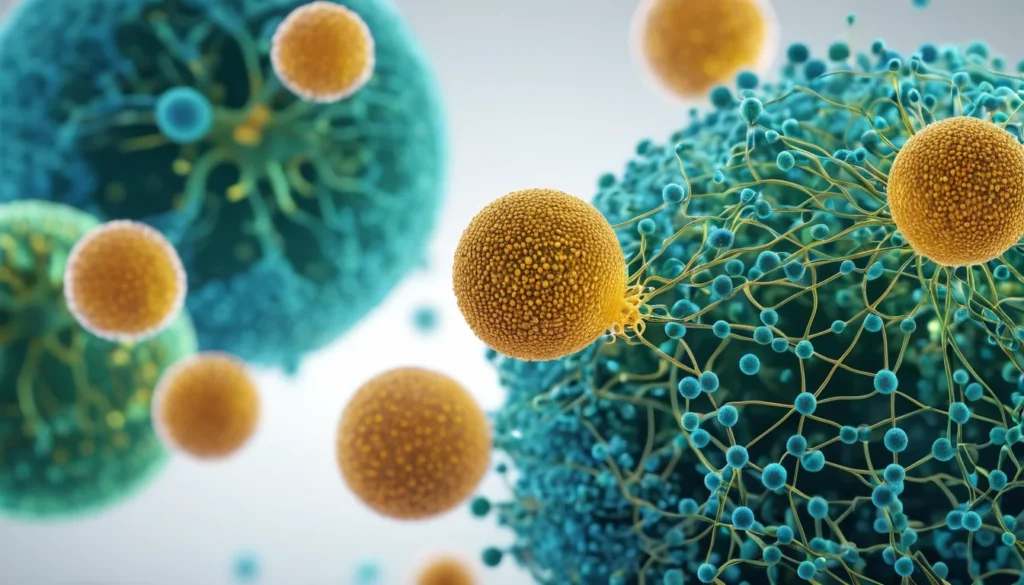
The story of germ theory is one of the most important chapters in medical history. For thousands of years, people had no idea that tiny, invisible organisms could make them sick. Today, we know that bacteria, viruses, and other microbes cause countless diseases — and that understanding has saved hundreds of millions of lives. This article explains how scientists discovered germs, developed vaccines, and created antibiotics that still protect us today.
What Are Microbes and Why Do They Matter?
Microbes are living organisms so small that you cannot see them with the naked eye. They include bacteria, viruses, fungi, and protozoa. Some microbes are harmless or even helpful — like the bacteria in your gut that aid digestion. However, others can cause serious illness.
Before scientists understood germ theory, people believed that diseases appeared on their own or were caused by “bad air.” This idea, called miasma theory, held back medical progress for centuries. As a result, infections spread freely in hospitals, homes, and communities without anyone knowing how to stop them.
Understanding how microbes work has shaped everything from hand-washing guidelines to the vaccines offered through provincial health programmes across Canada. For more background, visit Health Canada’s official health information.
The First Person to See Microbes
A Dutch scientist named Antony van Leeuwenhoek (1632–1723) was the first person in history to observe microbes directly. He did not use the microscopes that already existed at the time. Instead, he crafted his own special lenses with very short focal lengths — far more powerful than anything available in the 1600s.
For years, Leeuwenhoek used these lenses to examine everything around him. He studied water droplets, soil, and even samples from the human body. In 1675, he looked at a simple drop of pond water and saw tiny living creatures moving inside it. He had no idea just how important that moment would become.
Other Key Discoveries by Leeuwenhoek
Leeuwenhoek was remarkably productive for a self-taught scientist. He was the first person to describe sperm cells in 1677. He was also among the first to observe red blood cells up close. Furthermore, he noted that invisible living organisms exist everywhere in nature — including inside the human body.
He went on to classify different types of bacteria and protozoa. However, at the time, no one yet connected these tiny creatures to human disease. That breakthrough would come nearly two centuries later, when other scientists built on his detailed records.
Louis Pasteur and the Rise of Germ Theory
In the 1850s, a French chemist named Louis Pasteur began investigating why large batches of beer were spoiling at a local brewery. Using a microscope, he found thousands of microorganisms inside the ruined batches. His conclusion was bold: these microbes were not appearing because the beer had gone bad — they were the reason it went bad in the first place.
This was a direct challenge to the accepted science of the day. Therefore, many in the medical community mocked Pasteur at first. However, he continued his experiments with milk, vinegar, and other perishable liquids. He proved that heating a liquid to a specific temperature could kill harmful microbes without ruining the product. That process is still used today and carries his name — pasteurisation.
Pasteur’s Contribution to Vaccines
Pasteur became convinced that microbes did not just spoil liquids — they also caused human disease. He dedicated years of research to finding ways to protect people from harmful germs. In 1881, his research team produced a working vaccine against anthrax. A few years later, he developed a vaccine against rabies.
In 1868, Pasteur suffered a stroke that affected his ability to work independently. Despite this setback, he directed a team of researchers who carried his work forward. His determination changed the course of medicine permanently. You can learn more about how vaccines work through the World Health Organization’s vaccine information page.
Scientists Who Built on Germ Theory
Pasteur’s ideas inspired a generation of researchers around the world. Several of them made discoveries that are still relevant to everyday health in Canada and beyond. Their work turned germ theory from a bold idea into a proven science.
Edward Jenner and the Smallpox Vaccine
Edward Jenner (1749–1823) developed the first vaccine against smallpox. He noticed that milkmaids who caught cowpox — a mild illness — seemed protected from the far more dangerous smallpox. His work with cowpox material led to the world’s first successful vaccine. Interestingly, the virus responsible for smallpox was not formally identified until 12 years after Jenner’s vaccine was already in use.
Joseph Lister and Surgical Safety
Joseph Lister (1827–1912) made one of the most important discoveries in surgical history. He found a clear link between poor hygiene in operating rooms and patient deaths after surgery. As a result, he developed antiseptic principles that reduced infection rates dramatically. The standards he created form the basis of surgical cleanliness that hospitals across Canada still follow today.
Robert Koch and Identifying Specific Germs
Robert Koch (1843–1910) proved that specific microbes cause specific diseases. He identified the bacteria responsible for anthrax and tuberculosis. In doing so, he confirmed the core idea of germ theory — that each infectious disease has a particular microbial cause. Koch also developed new laboratory techniques, including methods to stain and photograph bacteria so other scientists could study them clearly.
Furthermore, Koch refined ways to grow bacterial cultures on solid surfaces in a lab setting. This made it possible to isolate and study individual germs with precision. His methods shaped how medical researchers work to this day.
Martinus Beijerinck and the Discovery of Viruses
Martinus Beijerinck (1851–1931) spent much of his career studying diseases that affected tobacco plants. In doing so, he helped identify a type of infectious agent that was even smaller than bacteria — what we now call a virus. His work encouraged other scientists to look beyond bacteria. By 1900, researchers had identified 21 new disease-causing microbes, along with vaccines for typhoid fever and plague.
The Development of Antibiotics
Perhaps the most life-changing result of germ theory was the development of antibiotics. These medicines kill bacteria or stop them from growing, saving countless lives every year. Before antibiotics, even minor infections could be fatal. A small cut, a tooth abscess, or a case of pneumonia could easily turn deadly.
The First Antibacterial Drug
The first substance considered a true antibiotic was Salvarsan, developed by German chemist Paul Ehrlich (1854–1915). Salvarsan was used to treat syphilis, which was one of the most widespread infections of the early 1900s. It marked the beginning of a new era in medicine — the idea that a specific chemical could target a specific pathogen.
Alexander Fleming and Penicillin
In 1928, Scottish scientist Sir Alexander Fleming made one of history’s most famous accidental discoveries. He noticed that a green mould called Penicillium notatum was destroying colonies of bacteria in his lab. Fleming famously said that nature produces penicillin — he simply found it. His discovery led directly to the development of penicillin as a medicine.
Penicillin went on to save enormous numbers of lives, especially during the Second World War. It remains one of the most widely used antibiotics in Canadian healthcare today.
Further Advances in Antibiotics
In 1935, German scientist Gerhard Domagk discovered sulfonamide. This drug could not kill bacteria outright, but it stopped them from multiplying — a property called bacteriostatic action. After that, researchers moved quickly. Streptomycin, chloramphenicol, and many other antibiotics followed over the next two decades. Each new discovery expanded doctors’ ability to treat infections that had once been untreatable.
For a deeper look at how antibiotics work and when they are needed, the Mayo Clinic’s guide to antibiotics offers clear, reliable information.
When to See a Doctor
Understanding germ theory helps explain why prompt medical care matters. If you have signs of a bacterial infection — such as a high fever, unusual discharge, a wound that is not healing, or symptoms that keep getting worse — you should see a healthcare provider. Your family doctor is always a good first call. If your family doctor is not available, a walk-in clinic can assess and treat many common infections.
Never take leftover antibiotics or someone else’s prescription. Antibiotic resistance is a growing concern in Canada, and using these medicines incorrectly makes them less effective for everyone. Your provincial health plan covers most visits to a family doctor or walk-in clinic, so there is no reason to wait if you are concerned about an infection.
Frequently Asked Questions About Germ Theory and Microbes
What is germ theory in simple terms?
Germ theory is the scientific idea that specific microorganisms — like bacteria and viruses — cause specific diseases. Before germ theory was accepted, most people believed illness was caused by bad air or imbalances in the body. This theory transformed modern medicine and led directly to vaccines, antibiotics, and hospital hygiene standards.
Who first discovered microbes?
Dutch scientist Antony van Leeuwenhoek is credited with discovering microbes in 1675. He built his own powerful microscope lenses and used them to observe tiny living organisms in a drop of water. However, the connection between microbes and disease — the foundation of germ theory — was established nearly 200 years later by Louis Pasteur and others.
How did germ theory change medicine?
Germ theory completely changed how doctors understand and treat illness. It led to the development of vaccines, antibiotics, surgical antiseptics, and public health measures like water treatment and food safety regulations. In Canada, these advances are reflected in everything from provincial immunisation programmes to food inspection standards.
What was the first antibiotic ever discovered?
The first substance considered a true antibiotic was Salvarsan, developed by Paul Ehrlich around 1909 to treat syphilis. However, penicillin — discovered by Alexander Fleming in 1928 — became the most widely used and is often called the first modern antibiotic. Penicillin is still commonly prescribed by family doctors and walk-in clinic physicians across Canada today.
Are all microbes harmful to humans?
No — the vast majority of microbes are harmless or even beneficial. Your body contains trillions of microorganisms that help with digestion, immunity, and overall health. Only a small fraction of known microbes cause disease in humans. Germ theory helps us identify which specific microbes are harmful so we can target them effectively.
What is the difference between bacteria and viruses?
Bacteria are single-celled living organisms that can reproduce on their own and are often treatable with antibiotics. Viruses are much smaller and need to invade a living cell to copy themselves — antibiotics do not work against viruses. Understanding this difference, which grew directly from germ theory, helps your doctor decide the right treatment for your illness.
Key Takeaways
Germ theory is the foundation of modern medicine — it proved that specific microbes cause specific diseases.
Antony van Leeuwenhoek first observed microbes in 1675 using lenses he built himself.
Louis Pasteur confirmed germ theory in the mid-1800s and pioneered the development of vaccines and the pasteurisation process.
Scientists like Joseph Lister, Robert Koch, and Edward Jenner built on Pasteur’s work to create antiseptic surgery, identify disease-causing bacteria, and develop new vaccines.
Antibiotics, beginning with Salvarsan and penicillin, transformed medicine in the 20th century and continue to save lives today.
If you suspect a bacterial infection, contact your family doctor or visit a walk-in clinic — your provincial health plan covers the visit.
Never use antibiotics without a prescription, and always complete the full course as directed to help prevent antibiotic resistance.