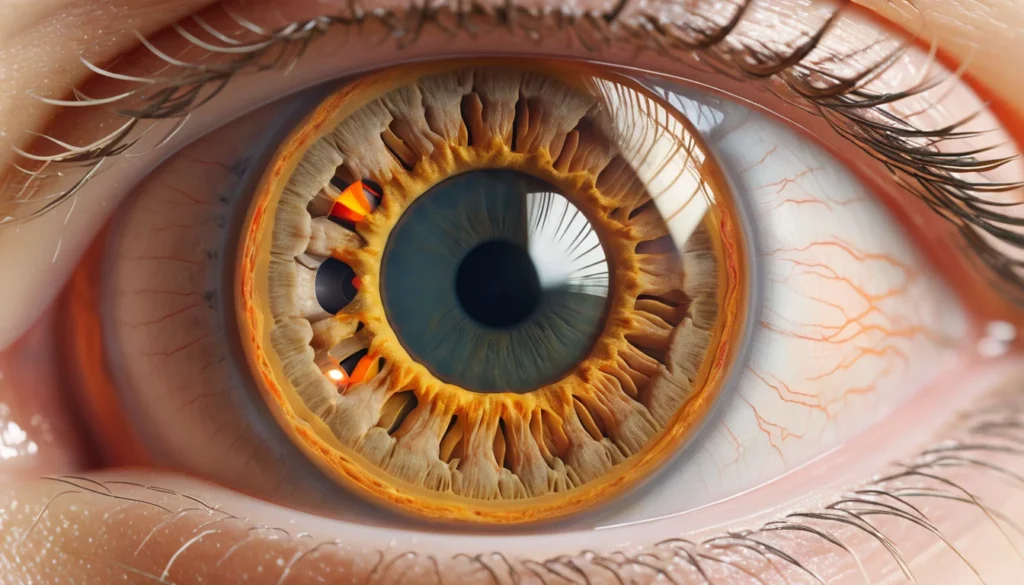
Eye bleeding — also called intraocular hemorrhage — happens when blood leaks into one or more parts of the eye. It can range from a harmless red patch on the white of your eye to a more serious condition that affects your vision. In this article, we explain the main types of eye bleeding, what causes them, and when you should see a healthcare provider.
What Is Eye Bleeding?
Eye bleeding is a broad term for any situation where blood escapes from a blood vessel inside or on the surface of the eye. The eye has several distinct layers and chambers. Because of this, bleeding can happen in different locations — and each location has its own causes and symptoms.
Some forms of eye bleeding are easy to spot. A bright red patch on the white of your eye, for example, is hard to miss. Other types of bleeding happen deep inside the eye and can only be detected during a proper eye exam.
Understanding the type of eye bleeding you may have is important. It helps you and your doctor figure out the right next steps. According to Mayo Clinic, many eye conditions — including bleeding — benefit from early detection and treatment.
Types of Eye Bleeding
There are several types of intraocular hemorrhage. The two most common are retinal hemorrhage and subconjunctival hemorrhage. However, bleeding can also occur in the vitreous chamber, the fluid-filled space inside the eye.
Retinal Hemorrhage
A retinal hemorrhage is eye bleeding that occurs within the retina. The retina is the thin layer of tissue at the back of your eye. It sends visual signals to your brain, so bleeding here can directly affect how well you see.
Retinal hemorrhages are often linked to underlying health conditions. Common causes include high blood pressure, diabetes, a blocked retinal vein, or age-related changes to the retina. Severe nearsightedness (myopia) can also be a contributing factor.
When the bleeding affects the central part of the retina — known as the macula — you may notice a loss of vision or blurry central vision. However, bleeding in the outer edges of the retina may cause no noticeable symptoms at all. In those cases, the bleeding is often only discovered during a routine eye exam using a slit lamp or ophthalmoscope.
Unfortunately, there is no known treatment that makes retinal hemorrhages disappear on their own. Managing the underlying cause — such as controlling blood pressure or blood sugar — is the most important step. A retinal hemorrhage can sometimes lead to a more serious condition called vitreous hemorrhage, which we cover below.
Subconjunctival Hemorrhage
A subconjunctival hemorrhage is eye bleeding that occurs just beneath the conjunctiva. The conjunctiva is the clear, thin membrane covering the white part of your eye. When a tiny blood vessel breaks under this membrane, you get a flat, bright red patch on the white of your eye.
This type of eye bleeding often looks alarming. However, it is usually harmless. Most people discover it by accident — for example, when they look in the mirror in the morning.
Subconjunctival hemorrhages do not cause pain. They also do not affect your vision. The redness typically extends from the edge where the cornea meets the white of the eye (called the limbus) and may spread across part or all of the white of the eye.
Vitreous Hemorrhage
Vitreous hemorrhage happens when blood leaks into the vitreous — the clear, jelly-like substance that fills the inside of your eye. This is a more serious form of eye bleeding. It can cause sudden, significant vision changes, including floaters, blurry vision, or even a complete loss of vision in the affected eye.
Vitreous hemorrhage can develop as a complication of retinal hemorrhage. It can also result from a retinal tear, diabetes-related eye disease, or an injury to the eye. This type of bleeding requires prompt medical attention.
Common Causes of Eye Bleeding
Eye bleeding has many possible causes. Some are minor and resolve on their own. Others point to a more serious underlying health condition. Here are the most common causes, depending on the type of bleeding.
Causes of Retinal Hemorrhage
High blood pressure (hypertension): Elevated blood pressure can damage the small vessels in the retina, causing them to leak.
Diabetes: Diabetic retinopathy is one of the leading causes of retinal eye bleeding in Canada. High blood sugar damages retinal blood vessels over time.
Retinal vein occlusion: A blockage in the vein that drains blood from the retina can cause blood to back up and leak into surrounding tissue.
Age-related macular degeneration (AMD): In its “wet” form, AMD causes abnormal blood vessels to grow under the retina and leak fluid or blood.
Severe myopia: Very high levels of nearsightedness can stretch and weaken retinal tissue, increasing bleeding risk.
Causes of Subconjunctival Hemorrhage
Straining: Coughing, sneezing, vomiting, or heavy lifting can raise pressure in the veins and burst a small vessel.
High blood pressure: A spike in blood pressure — for example, during a hypertensive episode — can trigger eye bleeding on the surface of the eye.
Blood-thinning medications: Medications like aspirin or warfarin can make it easier for blood vessels to leak.
Clotting disorders: Conditions that affect how blood clots can also cause subconjunctival hemorrhages.
Eye injury or trauma: A blow to the eye or rubbing the eye too hard can cause surface bleeding.
In many cases, a subconjunctival hemorrhage happens for no obvious reason. This is especially common in older adults. However, if you experience repeated episodes, it is worth discussing with your family doctor. It may signal uncontrolled blood pressure or a blood disorder that needs attention.
Recognising the Symptoms
Symptoms of eye bleeding depend heavily on the type and location of the bleeding. Knowing what to watch for can help you decide when to seek care.
Symptoms of Retinal Hemorrhage
Blurry or reduced central vision
Seeing dark spots or shadows in your visual field
No symptoms at all (in cases of peripheral bleeding)
Because retinal hemorrhage can be symptom-free, regular eye exams are important — especially if you have diabetes or high blood pressure. Health Canada recommends regular checkups as part of managing chronic conditions like diabetes, which can affect eye health.
Symptoms of Subconjunctival Hemorrhage
A bright red patch on the white of the eye
No pain or discomfort in most cases
No change in vision
Mild scratchiness or irritation (occasionally)
Symptoms of Vitreous Hemorrhage
Sudden onset of floaters (spots or cobwebs in your vision)
Blurred or hazy vision
A reddish tint to your vision
Partial or complete vision loss in severe cases
Vitreous hemorrhage symptoms should never be ignored. If you experience sudden floaters, flashes of light, or a loss of vision, seek medical attention right away.
Diagnosis and Treatment in Canada
Diagnosing eye bleeding typically requires a thorough eye examination. Your doctor or optometrist may use an ophthalmoscope or slit lamp to examine the back of your eye. In some cases, imaging tests like optical coherence tomography (OCT) or fluorescein angiography may be needed.
Treatment for Retinal Hemorrhage
There is no direct treatment to remove a retinal hemorrhage. Instead, treatment focuses on the underlying cause. Controlling blood pressure, managing blood sugar levels, and monitoring retinal health are the key strategies. In some cases, laser therapy or injections may be recommended by a specialist.
Treatment for Subconjunctival Hemorrhage
Most subconjunctival hemorrhages do not need any treatment. The blood is gradually reabsorbed by the body, and the redness disappears on its own — usually within one to two weeks. You do not need eye drops or medication in most cases. However, if your eye feels dry or irritated, preservative-free artificial tears may provide comfort.
Treatment for Vitreous Hemorrhage
Small vitreous hemorrhages may clear on their own over several weeks or months. Your doctor may recommend resting with your head elevated to help the blood settle. In more severe cases, a surgical procedure called a vitrectomy may be necessary to remove the blood from inside the eye.
Treatment options in Canada are widely available through provincial health plans. Your family doctor can refer you to an ophthalmologist (eye specialist) if needed. Most medically necessary eye procedures are covered through provincial coverage, though wait times may vary by province.
When to See a Doctor
Not all eye bleeding is an emergency. However, it is always wise to get checked out — especially if you are unsure of the cause.
See your family doctor or visit a walk-in clinic if:
You notice a red patch on your eye for the first time
You have had repeated episodes of subconjunctival hemorrhage
You have high blood pressure, diabetes, or a blood clotting disorder
The red patch appeared after an eye injury or trauma
You are taking blood thinners and notice eye bleeding
Seek emergency care immediately if:
You experience sudden vision loss or significant blurring
You see sudden floaters, flashes of light, or a curtain over your vision
You have had a serious eye injury
Your symptoms are accompanied by severe headache, nausea, or vomiting
In Canada, you can walk into most walk-in clinics for non-emergency eye concerns. For urgent eye symptoms, visit your nearest emergency department. Many provinces also have dedicated eye emergency services through major hospitals and ophthalmology centres. As always, your family doctor is your best first point of contact for any new or recurring health concern.
For more information on eye health and related conditions, visit the Healthline eye health resource centre.
Frequently Asked Questions About Eye Bleeding
Is eye bleeding serious?
Eye bleeding can range from minor to serious depending on where it occurs. A subconjunctival hemorrhage — the bright red patch on the white of the eye — is usually harmless and clears up on its own. However, eye bleeding inside the eye, such as retinal or vitreous hemorrhage, can affect vision and may require medical treatment.
What causes a red spot on the white of the eye?
A red spot on the white of your eye is most often caused by a subconjunctival hemorrhage — a small broken blood vessel just beneath the surface. Common triggers include coughing, sneezing, straining, or a rise in blood pressure. This type of eye bleeding is generally not painful and resolves without treatment in one to two weeks.
Can high blood pressure cause eye bleeding?
Yes, high blood pressure is a well-known cause of eye bleeding. It can damage the small blood vessels in the retina, leading to retinal hemorrhage. It can also trigger a subconjunctival hemorrhage during a sudden spike in blood pressure. Managing your blood pressure through lifestyle changes and medication is important for protecting your eye health.
How long does eye bleeding take to heal?
A subconjunctival hemorrhage typically clears up within one to two weeks without any treatment. Retinal hemorrhages may take longer and depend on the underlying cause and severity. Vitreous hemorrhage can take weeks to months to resolve, and in some cases surgery may be needed to speed up recovery.
Should I go to the emergency room for eye bleeding?
You should go to the emergency room if you experience sudden vision loss, new floaters, flashes of light, or a shadow across your vision — these are signs of serious eye bleeding that need immediate attention. A simple red patch on the white of the eye without pain or vision changes can wait for a visit to your family doctor or walk-in clinic. When in doubt, it is always safer to get checked.
Can diabetes cause eye bleeding?
Yes, diabetes is one of the leading causes of eye bleeding in Canada. Over time, high blood sugar damages the tiny blood vessels in the retina — a condition known as diabetic retinopathy. This can lead to retinal hemorrhage and, in advanced cases, vitreous hemorrhage. Regular eye exams are strongly recommended for anyone living with diabetes.
Key Takeaways
Eye bleeding refers to blood leaking into or onto any part of the eye, and it has several distinct forms. Subconjunctival hemorrhage — the red patch on the white of the eye — is the most common type and is usually harmless, clearing up within two weeks. Retinal hemorrhage is more serious and is often linked to diabetes, high blood pressure, or age-related eye disease. Vitreous hemorrhage can cause sudden, significant vision loss and requires prompt medical attention. Managing underlying conditions like high blood pressure and diabetes is key to preventing eye bleeding. In Canada, your family doctor or walk-in clinic is a great first stop for non-urgent eye concerns. Emergency symptoms — like sudden vision loss or floaters — require immediate