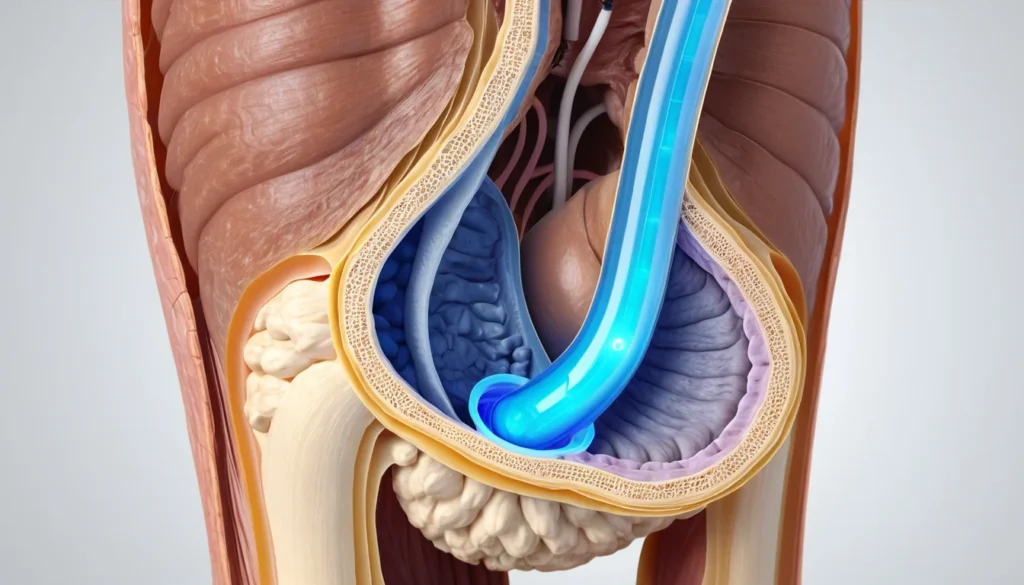
Epispadias is a rare congenital condition — meaning it is present from birth — in which the opening of the urethra (the tube that carries urine out of the body) is not in its normal position. In boys, this opening appears on the top surface of the penis instead of at the tip. In girls, the urethra is shorter and positioned incorrectly. Epispadias is a serious condition that almost always requires surgical treatment, and it often comes with lifelong challenges such as urinary incontinence and changes in sexual function. This article explains what epispadias is, what causes it, how it is diagnosed, and what treatment options are available to Canadians.
What Is Epispadias?
Epispadias is a structural birth defect that affects the urinary tract. In a typical body, the urethra opens at the tip of the penis in males or just in front of the vagina in females. With epispadias, that opening is misplaced — sitting on the upper surface of the penis or, in girls, split open along the top wall of the urethra.
This condition is considered very rare. It affects roughly 1 in 117,000 boys and 1 in 484,000 girls, according to research cited by the Mayo Clinic. Because it is so uncommon, many Canadians — including some healthcare providers — may never encounter it directly.
Epispadias falls on a spectrum of related conditions. At the more severe end, it is almost always connected to a condition called bladder exstrophy. Understanding this connection is important for families navigating a diagnosis.
Epispadias and Bladder Exstrophy
Bladder exstrophy occurs when the bladder develops outside the abdomen. The abdominal wall does not close properly before birth, leaving the bladder exposed. Epispadias and bladder exstrophy are so closely linked that doctors often treat them together as part of the same spectrum, called the bladder exstrophy-epispadias complex (BEEC).
In most cases of epispadias, some degree of bladder involvement is present. However, epispadias can also occur on its own, without full bladder exstrophy. In these isolated cases, the condition may be less severe but still requires careful medical attention.
Causes and Risk Factors of Epispadias
Doctors do not fully understand why epispadias occurs. It is a defect that develops very early in pregnancy — during the first few weeks after conception — when the urinary and reproductive structures are forming. Something disrupts this development, though the exact trigger is not always clear.
Research suggests that epispadias results from a problem with the cloacal membrane, a structure that plays a key role in forming the lower abdomen, bladder, and genitalia in a developing baby. When this membrane does not develop correctly, the structures it shapes are affected.
Possible Contributing Factors
No single cause has been confirmed. However, researchers have identified several possible contributing factors:
Genetics: Epispadias can run in families, though this is uncommon. Having one child with the condition slightly raises the risk for future pregnancies.
Environmental exposures: Some studies suggest that certain exposures during early pregnancy may play a role, though no specific substance has been confirmed as a cause.
Random developmental errors: In many cases, epispadias appears to occur by chance, with no clear family history or known risk factor.
For more information on birth defects and their causes, Health Canada provides resources for families and caregivers.
Recognising the Symptoms of Epispadias
The most obvious sign of epispadias is a visible abnormality in the position of the urethral opening. In newborns, this is typically identified right after birth during a routine physical examination. In Canada, newborns are assessed by a physician or midwife shortly after delivery, and structural abnormalities like this are usually caught at that stage.
However, the symptoms of epispadias go beyond what is visible on the outside. The condition affects several aspects of urinary and reproductive function.
Symptoms in Males
The urethral opening is located on the top (dorsal) surface of the penis rather than at the tip
The penis may appear shorter, wider, or curved upward (a condition called dorsal chordee)
Urinary incontinence — difficulty controlling the flow of urine — is very common
The pubic bones may be wider apart than normal
Some boys experience a widened or split appearance at the tip of the penis
Symptoms in Females
The urethra is shorter than normal and opens in the wrong position
The clitoris may be split into two separate parts
The labia (outer folds of skin) may be widely separated
Urinary incontinence is nearly universal in girls with epispadias
Recurrent urinary tract infections (UTIs) may occur due to abnormal urine flow
In both sexes, epispadias can affect sexual function and fertility later in life. These long-term concerns are an important part of care planning for families and older patients.
How Is Epispadias Diagnosed?
In most cases, epispadias is diagnosed at birth through physical examination. The visible abnormality makes it relatively straightforward to identify, even though the condition itself is rare. A specialist — usually a paediatric urologist — will confirm the diagnosis and assess how severe it is.
Sometimes, epispadias is detected before birth during a prenatal ultrasound. If the bladder appears abnormal or is not filling and emptying correctly on the scan, doctors may suspect bladder exstrophy or a related condition. However, epispadias alone can be difficult to see on ultrasound.
Diagnostic Tests and Assessments
Once epispadias is suspected, the medical team will use several tools to understand the full picture:
Ultrasound: To examine the kidneys, bladder, and urinary tract for additional abnormalities
Voiding cystourethrogram (VCUG): An X-ray test that shows how the bladder fills and empties
MRI or CT scan: Used in more complex cases to get a detailed view of the pelvic structures
Urodynamic testing: Assesses how well the bladder and urethra store and release urine
These tests help the surgical team plan the best approach for reconstruction. In Canada, paediatric urology centres — often located in major children’s hospitals in cities like Toronto, Vancouver, and Montreal — are equipped to manage this complex condition.
Treatment Options for Epispadias
Surgical reconstruction is the main treatment for epispadias. There is no non-surgical cure. The goals of surgery are to reposition the urethra correctly, improve urinary control, and support healthy sexual function and body image as the child grows.
Surgery is typically performed in stages, beginning in infancy and continuing through early childhood. The exact timing and number of procedures depend on the severity of the epispadias and whether bladder exstrophy is also present.
Surgical Procedures
The most commonly used surgical approach is called the complete primary repair of bladder exstrophy and epispadias (CPRE). This procedure addresses the bladder, abdominal wall, and urethra at the same time. For isolated epispadias without bladder involvement, a simpler repair may be used.
Key surgical goals include:
Moving the urethral opening to its correct position
Reconstructing the penis or urethra to improve appearance and function
Repairing the bladder neck to improve urinary control
Closing the abdominal wall if bladder exstrophy is present
Additional surgeries — such as bladder augmentation or the creation of a urinary diversion — may be needed later if incontinence continues. These decisions are made over time, in close partnership between the family and the medical team.
Managing Urinary Incontinence
Urinary incontinence is one of the most persistent challenges for people with epispadias. Even after successful surgery, many children and adults continue to experience some degree of leakage. Treatment options include pelvic floor physiotherapy, medications to relax or strengthen the bladder, and further surgical procedures.
Clean intermittent catheterisation (CIC) — a method where a thin tube is inserted into the bladder to drain urine at regular intervals — is also used by some patients. Healthcare teams in Canada work closely with families to find the approach that fits best with daily life.
Long-Term Outlook and Quality of Life
With modern surgical techniques, most children with epispadias grow up to lead full and active lives. However, the condition does require lifelong follow-up care. Regular check-ins with a urologist help monitor kidney health, bladder function, and urinary continence over time.
Sexual function and fertility are important long-term considerations. Many people with epispadias — both male and female — can have satisfying sexual relationships and, in some cases, biological children. However, fertility challenges are more common in this population, and specialist support may be needed.
Mental health and self-image are also important parts of the picture. Growing up with a visible difference and ongoing medical needs can be difficult. Access to psychological support, peer groups, and patient advocacy organisations can make a meaningful difference. The Healthline guide to living with urological conditions offers practical tips for managing day-to-day challenges.
When to See a Doctor
If your newborn is diagnosed with epispadias in hospital, the care team will guide you through the next steps before you go home. You do not need to navigate this alone — paediatric specialists will be involved from the start.
However, if you notice anything unusual about your child’s genital area, urinary stream, or ability to control urination, speak with your family doctor or visit a walk-in clinic as soon as possible. These concerns are worth raising even if you are not sure something is wrong. Early assessment is always better than waiting.
For older children or adults who have already been treated for epispadias, ongoing follow-up with a urologist is strongly recommended. If you experience new symptoms — such as increased leakage, pain, recurrent UTIs, or concerns about sexual health — do not hesitate to bring them up at your next appointment or seek a referral through your provincial health plan.
As always, this article is for general information only. Please speak with a qualified healthcare provider for advice specific to your situation.
Frequently Asked Questions About Epispadias
What is epispadias and how common is it?
Epispadias is a rare birth defect where the urethral opening is located in the wrong position — on the top of the penis in boys, or along the upper urethra in girls. It affects approximately 1 in 117,000 males and 1 in 484,000 females. Because epispadias is so uncommon, it is almost always managed by specialist paediatric urologists at major children’s hospitals.
Can epispadias be detected before birth?
In some cases, signs of epispadias — or the related condition bladder exstrophy — may be visible on a prenatal ultrasound, particularly if the bladder appears abnormal. However, epispadias alone can be difficult to detect before birth. Most cases are identified during the physical examination that takes place right after delivery.
Is epispadias the same as hypospadias?
No — epispadias and hypospadias are two different conditions. In hypospadias, the urethral opening is on the underside of the penis. In epispadias, the opening is on the top surface. Epispadias is generally considered more severe and is more frequently linked to bladder abnormalities than hypospadias.
What does epispadias surgery involve?
Epispadias surgery aims to move the urethral opening to the correct position, reconstruct the affected structures, and improve urinary continence. Surgery is usually done in stages, starting in infancy. The specific procedures depend on the severity of the epispadias and whether bladder exstrophy is also present.
Will my child be incontinent for life after epispadias treatment?
Urinary incontinence is one of the most common long-term challenges associated with epispadias, even after successful surgery. However, many children improve significantly with additional procedures, physiotherapy, and medication. Ongoing care with a urologist is important to monitor progress and adjust treatment as the child grows.
Can people with epispadias have children?
Many people treated for epispadias are able to have biological children, though fertility challenges are more common in this group compared to the general population. Specialist referrals to a fertility clinic or reproductive urologist may be helpful for those planning a family. Speaking with your family doctor is a good first step.
Key Takeaways
Epispadias is a rare congenital condition where the urethral opening is in the wrong position — on the top of the penis in males or along the upper urethra in females. It is almost always associated with bladder exstrophy, a related birth defect affecting the bladder and abdominal wall. The exact cause is unknown, but it results from a disruption in early fetal development, usually in the first weeks of pregnancy. Surgical reconstruction is the only effective treatment. Surgery typically begins in infancy and may continue in stages through early childhood. Urinary incontinence and effects on sexual function are common long-term challenges, but many people with epispadias live full and healthy lives with proper ongoing care. In Canada, specialist paediatric urology centres at major children’s hospitals are best equipped to manage this condition. Always consult your family doctor, walk-in clinic, or a specialist