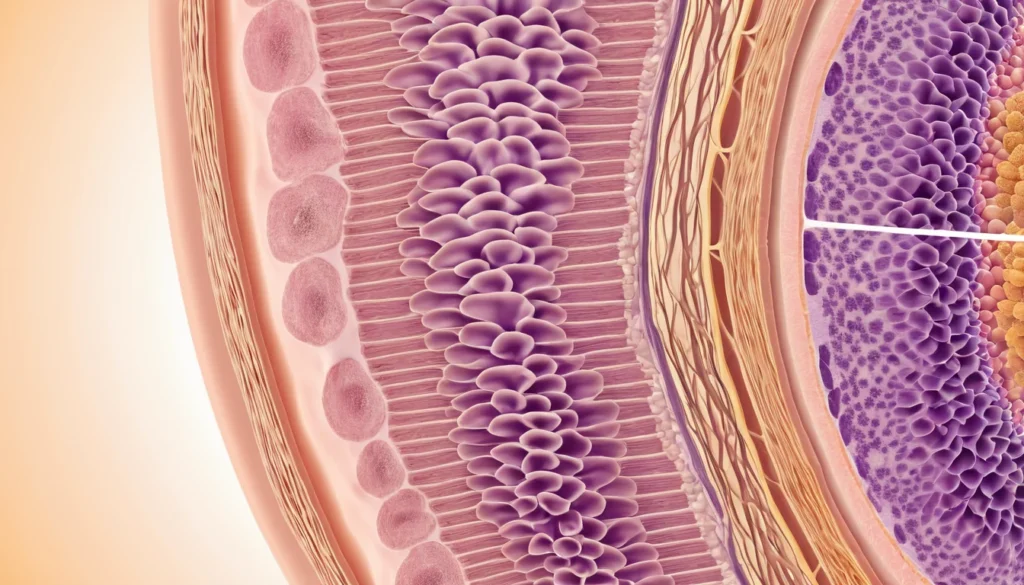
Dermatomyositis is a rare inflammatory disease that affects both the muscles and the skin. It causes muscle weakness and a distinctive skin rash that can appear on the face, eyelids, hands, and limbs. This condition is believed to have an autoimmune origin, meaning the body’s immune system mistakenly attacks its own healthy tissue. In this article, we explain what dermatomyositis is, what symptoms to watch for, how it is diagnosed, and what treatment options are available to Canadians.
What Is Dermatomyositis?
Dermatomyositis belongs to a group of diseases called inflammatory myopathies. These are conditions where the immune system causes ongoing inflammation in the muscles. Over time, this inflammation leads to muscle weakness and, in the case of dermatomyositis, noticeable skin changes as well.
This condition is considered rare. However, it is twice as common in women as in men. It most often appears between the ages of 20 and 50, but it can also affect children. When it occurs in children, doctors refer to it as juvenile dermatomyositis.
In some cases, dermatomyositis is linked to an underlying cancer, particularly visceral (internal organ) cancers. For this reason, doctors may recommend cancer screening when an adult is first diagnosed. You can learn more about inflammatory conditions from Health Canada’s official health resources.
Recognising the Symptoms of Dermatomyositis
Dermatomyositis has two main groups of symptoms: skin-related signs and muscle-related signs. Both can range from mild to severe. Recognising these early can make a real difference in how well treatment works.
Skin Symptoms
The skin symptoms of dermatomyositis are often the first thing people notice. A reddish or violet-coloured rash typically appears on the eyelids first. It then spreads symmetrically across the face, and may extend to the arms, hands, and lower limbs.
These rashes often appear as flat, pink-to-violet patches. They can cause a sensation of warmth or burning on the skin. In many cases, they are also accompanied by swelling (oedema) of the face and the upper portions of the arms and legs.
The distinctive violet discolouration around the eyelids is known as a heliotrope rash. This is one of the hallmark signs that doctors look for when considering a dermatomyositis diagnosis. Flat, reddish patches over the knuckles, known as Gottron’s papules, are another common skin sign.
Muscle Symptoms
Muscle weakness is the second major sign of dermatomyositis. This weakness typically affects the muscles closest to the trunk of the body — such as the shoulders, upper arms, hips, and thighs. As a result, everyday tasks can become very difficult.
People with dermatomyositis may struggle to climb stairs, lift objects above their head, or rise from a seated position. In more advanced cases, even swallowing or breathing can become affected. This happens because the disease can reach the muscles involved in those functions.
It is important to note that muscle pain is not always present. Some people experience significant weakness without much discomfort. This is why the condition can sometimes go unrecognised for a period of time.
Dermatomyositis in Children
Juvenile dermatomyositis shares many features with the adult form, but there are some important differences. Children are more likely to develop calcinosis — deposits of calcium that form in the soft tissues under the skin. These deposits can feel like hard lumps and may cause pain or limit movement.
Because the muscles are affected during critical growing years, children with dermatomyositis may also experience delays in growth and physical development. This makes early diagnosis and careful management especially important for young patients.
Treatment in children must also address their ongoing need for healthy movement and motor development. Physiotherapy and occupational therapy play a key role alongside medication. Parents should work closely with a paediatric specialist and their child’s family doctor.
Causes and Risk Factors
Dermatomyositis is believed to be an autoimmune condition. This means the immune system — which normally protects the body — begins to attack healthy muscle and skin tissue instead. Researchers are still working to fully understand why this happens.
Certain factors may increase a person’s risk. These include a family history of autoimmune diseases, certain viral infections, and prolonged exposure to some environmental triggers. However, no single cause has been confirmed.
In adults, particularly those over 40, dermatomyositis can sometimes be a sign of an underlying cancer. The cancer may appear before, at the same time as, or after the dermatomyositis diagnosis. For this reason, thorough medical investigation is always recommended when an adult is newly diagnosed. The Mayo Clinic’s overview of dermatomyositis provides further detail on known risk factors.
How Is Dermatomyositis Diagnosed?
Diagnosing dermatomyositis involves several steps. Your doctor will start with a full physical exam and review your symptoms and medical history. From there, additional tests are usually needed to confirm the diagnosis.
Common diagnostic tests include:
Blood tests — to check for elevated muscle enzymes (such as creatine kinase) and specific antibodies linked to autoimmune muscle diseases
Electromyography (EMG) — a test that measures the electrical activity of muscles
MRI (Magnetic Resonance Imaging) — to identify areas of muscle inflammation
Muscle biopsy — a small tissue sample taken from an affected muscle for examination
Skin biopsy — a sample of affected skin tissue to confirm the rash pattern
Cancer screening — recommended for adults to rule out an associated malignancy
In Canada, your family doctor will typically coordinate these tests and refer you to a rheumatologist or neurologist for specialist care. Depending on your province, wait times for specialists can vary, so it is a good idea to speak with your doctor as soon as you notice concerning symptoms.
Treatment Options for Dermatomyositis
There is no cure for dermatomyositis, but treatment can significantly reduce symptoms and improve quality of life. The main goal is to control inflammation, restore muscle strength, and prevent complications.
Corticosteroids
The primary treatment for dermatomyositis is corticosteroids, such as prednisone. These are anti-inflammatory medications given in high doses at first. Once the muscle symptoms stabilise, the dose is gradually reduced over a period of two to three years.
Long-term corticosteroid use can have side effects, including bone thinning, weight gain, and increased blood sugar. Your doctor will monitor you closely and may adjust the treatment plan accordingly. Never stop taking corticosteroids without speaking to your doctor first.
Other Medications
If corticosteroids alone are not enough, doctors may add other immunosuppressive medications. These include drugs such as methotrexate, azathioprine, or mycophenolate mofetil. These medications help calm the immune system’s overactive response.
In some cases, intravenous immunoglobulin (IVIG) therapy may be used. This involves infusions of protective proteins that help regulate the immune system. Biologic drugs are also being studied as potential treatment options for difficult-to-treat cases.
Physiotherapy and Rehabilitation
Medication alone is not the full picture. Physiotherapy is an important part of managing dermatomyositis, especially for restoring muscle strength and maintaining mobility. A registered physiotherapist can design a safe exercise programme suited to your needs.
Occupational therapy can also help patients adapt their daily routines and home environment. This is particularly valuable when muscle weakness affects tasks like dressing, cooking, or climbing stairs. In children, these therapies are especially important for supporting healthy motor development.
Treating Associated Cancer
When dermatomyositis is linked to an underlying cancer, treating the cancer often leads to improvement in the dermatomyositis symptoms as well. The two conditions are closely connected in these cases. Therefore, identifying and treating the cancer is a critical part of the overall care plan.
More information on autoimmune and inflammatory conditions can be found through Healthline’s patient-friendly guide to dermatomyositis.
When to See a Doctor
You should speak with a doctor if you notice an unusual skin rash, especially around your eyelids or knuckles, combined with muscle weakness. These symptoms together are a warning sign that should not be ignored.
In Canada, your first point of contact should be your family doctor. If you do not have one, a walk-in clinic can assess your symptoms and refer you to the appropriate specialist. Early diagnosis leads to better outcomes, so do not wait to seek help.
If you experience sudden severe muscle weakness, difficulty swallowing, or shortness of breath, go to your nearest emergency department or call 911 immediately. These can be signs of a serious complication that requires urgent care.
As always, the information in this article is for general educational purposes only. Please consult your family doctor or a qualified healthcare professional before making any decisions about your health or treatment.
Frequently Asked Questions About Dermatomyositis
What are the first signs of dermatomyositis?
The first signs of dermatomyositis are often a violet or reddish skin rash around the eyelids and muscle weakness in the shoulders or hips. Many people notice the rash before they become aware of the muscle weakness. If you experience both together, speak with your family doctor as soon as possible.
Is dermatomyositis a serious disease?
Yes, dermatomyositis is a serious condition that requires medical attention and long-term management. Without treatment, it can lead to significant muscle weakness, difficulty swallowing, and in some cases, life-threatening complications. However, with proper care, many people with dermatomyositis are able to manage their symptoms effectively.
Can dermatomyositis be cured?
There is currently no known cure for dermatomyositis, but treatment can control the disease and reduce symptoms significantly. Most patients require long-term medication, such as corticosteroids or immunosuppressants, along with physiotherapy. Some patients achieve remission, meaning their symptoms go away for an extended period of time.
Is dermatomyositis linked to cancer?
In some adults, dermatomyositis is associated with an underlying cancer, most commonly in the ovaries, lungs, stomach, or colon. For this reason, doctors typically recommend cancer screening when an adult is newly diagnosed with dermatomyositis. Treating the cancer often helps improve the dermatomyositis symptoms as well.
Can children get dermatomyositis?
Yes, children can develop dermatomyositis, and when they do, it is called juvenile dermatomyositis. Children are more likely to develop calcium deposits in soft tissue (calcinosis) and may experience delays in physical growth and development. Early treatment and physiotherapy are especially important for children with this condition.
How is dermatomyositis treated in Canada?
In Canada, dermatomyositis is typically treated by a rheumatologist or neurologist, following a referral from your family doctor or walk-in clinic. Treatment usually begins with high-dose corticosteroids, which are gradually reduced over time. Physiotherapy, occupational therapy, and in some cases additional immunosuppressive medications are also part of the treatment plan.
Key Takeaways
Dermatomyositis is a rare autoimmune disease that causes skin rashes and progressive muscle weakness.
It is twice as common in women as in men and most often appears between ages 20 and 50.
Key skin signs include a violet rash around the eyelids (heliotrope rash) and flat patches over the knuckles (Gottron’s papules).
Muscle weakness typically affects the shoulders, hips, and thighs, making everyday tasks difficult.
In adults, dermatomyositis may be associated with an underlying cancer, so thorough screening is recommended.
In children, the condition can cause calcium deposits in soft tissue and delays in growth.
Treatment involves corticosteroids, immunosuppressive medications, physiotherapy, and occupational therapy.
In Canada, speak with your family doctor or visit a walk-in clinic if you notice symptoms of dermatomyositis.
Always consult a qualified healthcare professional for personal medical advice and treatment decisions.