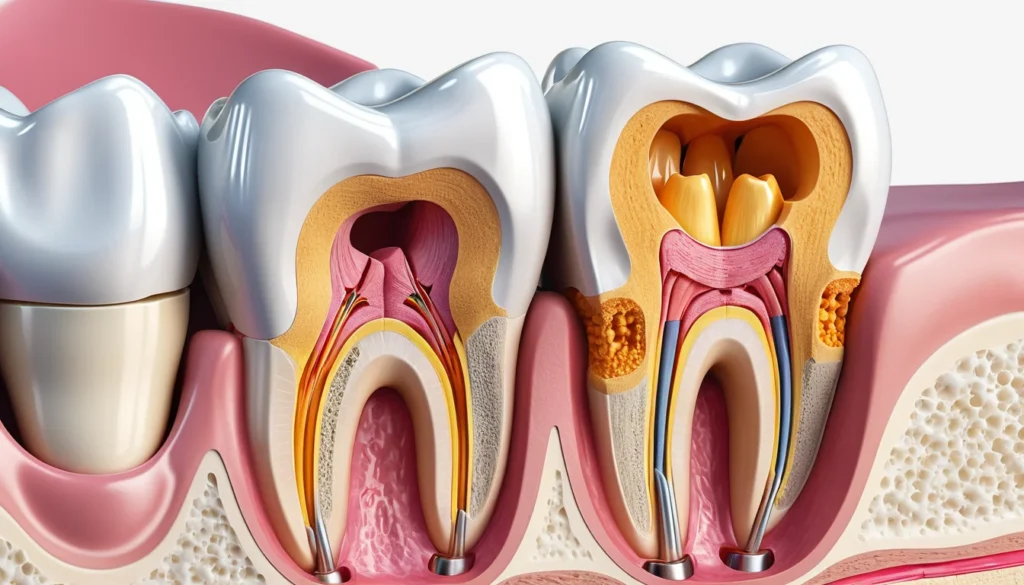
A dental abscess is a pocket of pus that forms inside or around a tooth. It happens when bacteria infect the tissue surrounding your tooth. Without treatment, a dental abscess can spread and become a serious health problem. This article explains the causes, symptoms, and treatment options available to Canadians.
What Is a Dental Abscess?
A dental abscess forms when your body tries to fight off a bacterial infection in your mouth. Pus collects in a small pocket near the root of the tooth or in the surrounding gum tissue. The result is often intense, throbbing pain and swelling.
There are two main types of dental abscesses. A periapical abscess forms at the tip of the tooth root. A periodontal abscess forms in the gum tissue beside the root. Both types need professional dental care to heal properly.
Common Causes of a Dental Abscess
A dental abscess almost always starts with a bacterial infection. Several things can allow bacteria to enter your tooth or gum tissue.
Untreated tooth decay: A cavity that is not filled can let bacteria reach the inner pulp of the tooth.
Cracked or chipped tooth: A break in the tooth enamel gives bacteria an entry point.
Gum disease: Advanced gum disease pulls the gum away from the tooth, creating pockets where bacteria collect.
Dental injury: A blow to the mouth can damage the tooth pulp, even if no crack is visible.
When bacteria reach the pulp — the soft tissue inside your tooth — they multiply quickly. The infection then spreads to the surrounding bone and tissue. As a result, a painful abscess forms.
Symptoms of a Dental Abscess
The symptoms of a dental abscess can range from mild discomfort to severe pain. Some symptoms appear suddenly, while others develop slowly over time.
Pain and Sensitivity
The most common symptom is a strong, throbbing toothache. The pain often gets worse when you chew or bite down. You may also notice your tooth feels pushed upward, making it hard to close your mouth normally.
Your tooth may also be very sensitive to heat or cold. In some cases, the pain may decrease on its own. However, this does not mean the infection is gone — it may mean the bone around the tooth has started to break down.
Swelling and Other Signs
A dental abscess can cause noticeable swelling in your face, cheek, or jaw. You might also notice these symptoms:
Red, swollen gums
A small pimple-like bump on the gum near the tooth
Yellow pus or blood draining from a swollen spot in your mouth
A bad or bitter taste in your mouth
A fever of 38°C or higher
A grey or pinkish discolouration of the tooth
Swelling in your neck or throat
Swelling that spreads to your neck or throat is a medical emergency. It can affect your airway and breathing. Go to your nearest emergency room immediately if this happens.
When to See a Doctor or Dentist
A dental abscess will not go away on its own. You should see a dentist as soon as possible if you notice any signs of infection. In Canada, most provincial health plans cover some dental services for children, but adult dental care is often paid out of pocket or through private insurance.
If you do not have a regular dentist, a walk-in dental clinic can often see you quickly. If you have a fever along with tooth pain or swelling, contact your family doctor or visit a walk-in medical clinic as well. Your doctor can prescribe antibiotics to help control the infection before your dental appointment.
Go to Emergency Right Away If You Have:
Swelling spreading to your neck, throat, or eye area
Difficulty swallowing or breathing
A high fever above 39°C that does not respond to medication
Pain that does not improve within two hours of taking an over-the-counter pain reliever
These signs may mean the infection has spread beyond your tooth. This is a serious situation that requires urgent medical attention. Health Canada recommends seeking emergency care any time an infection may be spreading to other parts of the body.
How Dentists Diagnose a Dental Abscess
Your dentist will examine your mouth carefully to find signs of infection. They will gently tap the affected tooth, since an abscessed tooth is usually very sensitive to pressure. They may also apply a warm or cold object to the tooth to test your sensitivity.
Your dentist will ask you about your pain — how long you have had it, where it is, and how severe it feels. In addition, they will likely take a dental X-ray. An X-ray helps your dentist see the extent of the infection and check whether the bone around the tooth has been affected.
Treatment Options for a Dental Abscess
Treating a dental abscess always requires professional care. Home remedies can ease the pain temporarily, but they cannot clear the infection. Your dentist will recommend the best treatment based on how severe the abscess is.
Professional Dental Treatments
Your dentist has several options to treat a dental abscess effectively:
Drainage: Your dentist makes a small opening in the abscess to drain the pus. This usually brings fast pain relief.
Root canal treatment: If the inner pulp of the tooth is infected, a root canal removes the infected tissue and saves the tooth. A crown is often placed on the tooth afterward to protect it.
Tooth extraction: If the tooth is too damaged to save, your dentist may need to remove it. Drainage of the abscess will still be performed during the procedure.
Antibiotics: Your dentist may prescribe antibiotics to help clear the infection, especially if it has spread to nearby tissue.
According to the Mayo Clinic’s guide on tooth abscess treatment, antibiotics alone are not enough to treat a dental abscess. Draining the infection is always a necessary step.
Who Needs Antibiotics Before Dental Treatment?
Some people need to take antibiotics before any dental procedure. This is called antibiotic prophylaxis. Your dentist may recommend this if you have any of the following conditions:
Damaged or artificial heart valves
Congenital heart defects
A history of bacterial endocarditis (a heart infection)
Diabetes or another condition that weakens your immune system
Liver disease such as cirrhosis
Artificial joints such as a hip replacement
Long-term use of corticosteroids for conditions like Crohn’s disease or asthma
Tell your dentist about all your medical conditions and medications before your appointment. This helps them plan the safest treatment for you.
Home Care to Manage Pain and Swelling
While you wait for your dental appointment, you can take steps at home to manage the pain and swelling. These measures will not treat the infection, but they can make you more comfortable.
Cold Compress
Apply a cold pack or a bag of ice wrapped in a cloth to the outside of your cheek. Do this for 20 minutes at a time. Avoid applying heat to the area, as warmth can make swelling worse.
Over-the-Counter Pain Relievers
Several common medications can help ease the pain of a dental abscess:
Acetaminophen (such as Tylenol): Reduces pain and fever, but does not reduce swelling.
Ibuprofen (such as Advil or Motrin): Reduces both pain and swelling. Do not take on an empty stomach.
Naproxen (such as Aleve): Another anti-inflammatory option that also reduces swelling.
Aspirin: Can reduce pain and swelling, but is not recommended for pregnant women, people with bleeding disorders, or anyone under 20 years of age.
Always read the label carefully before taking any medication. Follow the recommended dosage and check for any interactions with other medicines you take. For more guidance, Healthline’s overview of tooth abscess home care offers helpful tips on managing symptoms safely.
How to Prevent a Dental Abscess
Good oral hygiene is the best way to prevent a dental abscess. Most dental abscesses start with tooth decay or gum disease — both of which are largely preventable.
Follow these habits to protect your teeth and gums:
Brush your teeth at least twice a day with fluoride toothpaste
Floss between your teeth every day to remove food and plaque
Limit sugary foods and drinks that feed harmful bacteria
Drink fluoridated tap water when possible
Replace your toothbrush every three to four months
See your dentist for regular check-ups and cleanings — ideally every six months
Wear a mouthguard during contact sports to protect your teeth from injury
Furthermore, do not ignore a toothache or a cavity. Getting small problems fixed early prevents them from becoming serious infections. Many provinces and territories offer low-cost or subsidized dental programmes for children, seniors, and low-income residents — check with your provincial health authority to see what coverage is available in your area.
Frequently Asked Questions About Dental Abscesses
Can a dental abscess go away on its own?
No, a dental abscess will not go away without treatment. The infection may seem to improve if the abscess ruptures and drains on its own, but the source of the infection is still present. You should always see a dentist to properly treat a dental abscess and prevent it from spreading.
Is a dental abscess a dental emergency?
Yes, a dental abscess should be treated urgently. If you have swelling spreading to your neck or throat, difficulty breathing or swallowing, or a high fever, go to the emergency room right away. For pain without those severe symptoms, contact a dentist or walk-in dental clinic as soon as possible.
How long does it take for a dental abscess to heal after treatment?
Most people feel significant relief within a day or two after a dentist drains a dental abscess. Full healing of the surrounding tissue typically takes one to two weeks. If you were prescribed antibiotics, complete the full course even if you feel better sooner.
What happens if a dental abscess is left untreated?
An untreated dental abscess can spread to the jaw, neck, or brain — a life-threatening situation. The infection can also destroy the bone around the tooth, leading to tooth loss. Prompt treatment is always the safest choice when dealing with a dental abscess.
Can I go to a walk-in clinic for a tooth abscess in Canada?
Yes, a walk-in medical clinic can assess your symptoms and prescribe antibiotics to help control the infection. However, a medical doctor cannot drain the abscess or perform dental procedures — you will still need to see a dentist for full treatment of a dental abscess.
Does a root canal cure a dental abscess?
A root canal treats the infected pulp inside the tooth, which is often the source of a dental abscess. By removing the infected tissue and sealing the tooth, a root canal can save the tooth and resolve the abscess. Your dentist may also prescribe antibiotics alongside the procedure to clear any remaining infection.
Key Takeaways
A dental abscess is a painful pocket of pus caused by a bacterial tooth or gum infection.
Common causes include untreated cavities, cracked teeth, and gum disease.
Symptoms include throbbing pain, swelling, fever, and pus near the affected tooth.
Swelling that spreads to your neck or throat is a medical emergency — go to the ER immediately.
Treatment always requires professional dental care, including drainage, a root canal, or tooth extraction.
Over-the-counter pain relievers and cold compresses can ease discomfort while you wait for your appointment.
Good oral hygiene and regular dental check-ups are the best ways to prevent a dental abscess.
If you do not have a regular dentist, a walk-in dental clinic or your family doctor can help you get started with care.
This article is for informational purposes only and does not replace professional medical or dental advice. Always consult a licensed dentist or your family doctor for diagnosis and treatment of a dental abscess or any oral health concern.