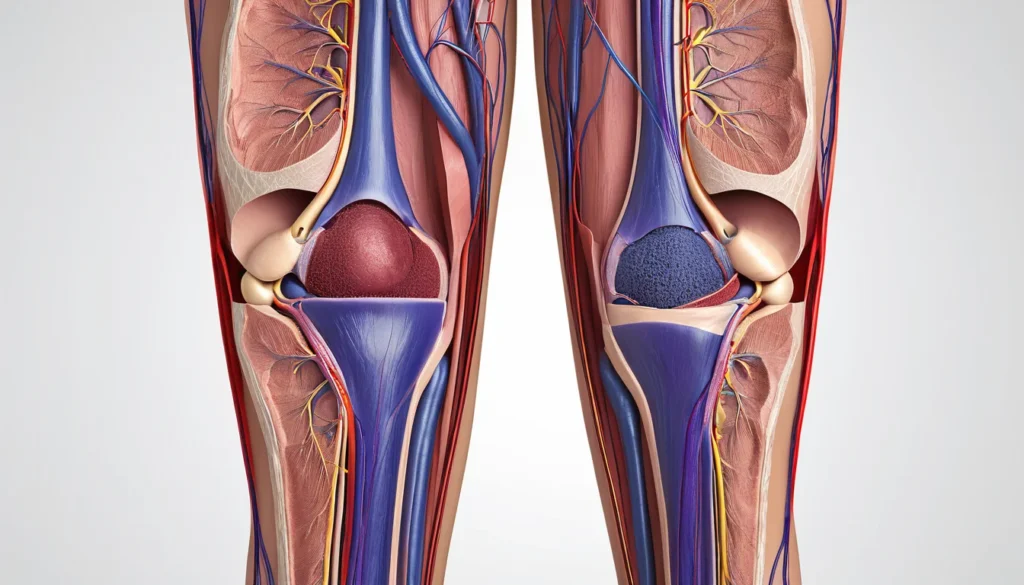
Deep vein thrombosis (DVT) happens when a blood clot forms in a deep vein, most often in the legs, pelvis, or arms. It is a serious medical condition that can become life-threatening if left untreated. In Canada, thousands of people develop DVT every year — and many don’t even know they have it. This article explains what causes DVT, how to recognize the symptoms, and when to seek care from your family doctor or a walk-in clinic.
What Is Deep Vein Thrombosis?
A blood clot, also called a thrombus, can form in two types of veins: surface veins (just under the skin) or deep veins (further inside the body). Clots in surface veins — a condition called thrombophlebitis — rarely cause serious problems. However, clots in deep veins are a different story.
Deep vein thrombosis develops when a clot forms in a deep vein, most commonly in the calf or thigh. If a piece of that clot breaks off, it can travel through the bloodstream and reach the lungs. This is called a pulmonary embolism, and it can be fatal.
In addition, DVT can cause long-term damage to the vein walls. About 25% of DVT cases lead to a condition called post-thrombotic syndrome. This can cause ongoing pain, swelling, skin colour changes, and open sores on the affected limb.
What Causes Deep Vein Thrombosis?
Three main factors can trigger the development of deep vein thrombosis. Understanding them can help you lower your personal risk.
Slow Blood Flow
When blood moves too slowly through your veins, clots are more likely to form. This can happen after surgery or during long periods of inactivity. For example, sitting still on a long flight from Toronto to Vancouver — or a cross-country road trip — can slow blood flow in your legs significantly.
Damage to Blood Vessel Walls
Injuries to veins can happen during surgery or after physical trauma. A damaged vein wall creates the right conditions for a clot to start forming. Certain surgical procedures, especially orthopaedic operations like hip or knee replacement, carry a higher risk.
Changes in Blood Composition
Some cancers and inherited conditions can make your blood clot faster than normal. These changes in the blood’s chemistry create a state called hypercoagulability — meaning the blood clots too easily. This is one reason DVT can occur even in people who seem otherwise healthy.
Risk Factors for Deep Vein Thrombosis
Some risk factors for DVT cannot be changed, such as a genetic condition you were born with. Others are temporary and depend on your circumstances. Knowing your risk factors is the first step toward prevention.
Major Risk Factors
Bed rest for more than 3 days — especially after surgery or serious illness
Inherited clotting disorders — such as Factor V Leiden, Protein C deficiency, Protein S deficiency, or Antithrombin III deficiency
Major trauma — such as a serious accident or injury
Surgery — particularly hip, knee, abdominal, or chest surgery related to cancer
Cancer and cancer treatments — both the disease and chemotherapy raise clot risk
Spinal cord injury causing paralysis
A central venous catheter — a tube placed in a large vein for medical treatment
Minor Risk Factors
These factors may have a small effect on their own. However, when several are combined, they can significantly raise your risk of developing deep vein thrombosis.
Varicose veins, heart attack, heart failure, or stroke
Long-distance travel — sitting still for many hours in a car or on a plane
Pregnancy — especially right after a vaginal birth or a Caesarean section
Age over 40 — the risk increases gradually as you get older
Being overweight or obese
Hormonal birth control pills — some research shows these may increase the risk of pulmonary embolism as a complication of DVT
Hormone therapy — including estrogen replacement, raloxifene for osteoporosis, or tamoxifen for breast cancer. Some studies suggest that estrogen-progestin patches may carry a lower DVT risk than pills.
Smoking
Furthermore, Health Canada recognizes that several of these risk factors — such as obesity, smoking, and inactivity — are also linked to broader cardiovascular health concerns. Addressing them can benefit your overall health as well.
Symptoms of Deep Vein Thrombosis
One of the most challenging things about DVT is that it often causes few or no symptoms at all. When symptoms do appear, they tend to affect only the limb where the clot has formed.
Common DVT Symptoms
Swelling — either in the entire affected leg or arm, or along the path of the affected vein, which may feel like a firm cord under the skin
Warmth — the skin over the clot may feel warmer than the surrounding area
Pain or tenderness — this may be a constant ache in the calf or thigh, or it may only appear when you touch the area or put weight on the leg
Redness or skin colour changes — the skin may look red or have a slightly bluish tone
It is worth noting that several other conditions share similar symptoms. For example, a Baker’s cyst (a fluid-filled lump behind the knee) or cellulitis (a skin infection) can look very much like DVT. Therefore, it is important not to self-diagnose.
Symptoms of Pulmonary Embolism
Sometimes, the first sign that someone has DVT is actually a pulmonary embolism — a clot that has already travelled to the lungs. This is a medical emergency. Call 911 immediately if you notice any of the following:
Sudden shortness of breath
Chest pain that gets worse when you breathe in
A cough that brings up blood
A rapid or irregular heartbeat
According to the Mayo Clinic’s deep vein thrombosis overview, clots that originate in the deep veins of the legs are the most common cause of pulmonary embolism. As a result, treating DVT early is critical.
How Is Deep Vein Thrombosis Diagnosed?
Because DVT often has no symptoms, many cases are only discovered when a clot is found in the lungs. In fact, a pulmonary embolism often points doctors back toward an undetected DVT in the legs.
When DVT is suspected, your doctor will arrange testing right away. The most common test is a duplex ultrasound, which uses sound waves to check blood flow in your veins. It is painless and widely available across Canadian provinces. Depending on your situation, your doctor may also order blood tests, a CT scan, or other imaging.
Treatment for deep vein thrombosis begins as soon as a diagnosis is confirmed and there is a risk that the clot will grow or break apart. Treatment usually involves blood thinners (anticoagulants), which prevent new clots from forming and allow the body to slowly break down the existing clot. Your provincial health plan may cover these medications — check with your pharmacist or family doctor for details specific to your province.
For more detailed clinical information, the Healthline guide to deep vein thrombosis provides a thorough breakdown of diagnostic steps and treatment options.
When to See a Doctor
If you notice swelling, pain, warmth, or redness in one leg or arm — especially after surgery, a long trip, or a period of bed rest — do not wait. Contact your family doctor as soon as possible. If you cannot get a same-day appointment, a walk-in clinic can assess your symptoms and arrange urgent testing if needed.
If you experience sudden shortness of breath, chest pain, or cough up blood, call 911 or go to your nearest emergency department immediately. These could be signs of a pulmonary embolism, which is a life-threatening emergency.
You should also talk to your doctor about DVT risk before any planned surgery, a long-haul flight, or if you are starting hormone therapy or birth control pills. Your doctor can help you take preventive steps, such as compression stockings, staying active, or adjusting medications.
Always speak with a qualified healthcare provider before making any decisions about your health. The information in this article is for general educational purposes only and does not replace professional medical advice.
Frequently Asked Questions About Deep Vein Thrombosis
What are the first signs of deep vein thrombosis?
The first signs of deep vein thrombosis often include swelling, pain, or warmth in one leg, particularly in the calf or thigh. Some people also notice redness or a firm cord-like area along the vein. However, many people with DVT have no symptoms at all, which is why medical testing is so important.
Can deep vein thrombosis go away on its own?
A deep vein thrombosis clot does not reliably go away on its own and should always be evaluated by a doctor. Without treatment, the clot can grow larger or break off and travel to the lungs, causing a potentially fatal pulmonary embolism. Medical treatment with blood thinners is usually required.
What is the difference between DVT and a regular leg cramp?
A regular leg cramp usually resolves within minutes and is not accompanied by swelling or skin changes. Deep vein thrombosis pain tends to be persistent and is often combined with swelling, redness, or warmth in the affected limb. If your leg pain does not go away quickly — especially after surgery or a long trip — see a doctor to rule out DVT.
How is deep vein thrombosis treated in Canada?
In Canada, deep vein thrombosis is most commonly treated with anticoagulant medications, also known as blood thinners, which help prevent the clot from growing and reduce the risk of pulmonary embolism. Treatment may be managed by your family doctor or a specialist, and some medications are covered under provincial drug benefit programmes. Compression stockings may also be recommended to reduce swelling and prevent post-thrombotic syndrome.
Does flying cause deep vein thrombosis?
Long flights can increase the risk of deep vein thrombosis because sitting still for many hours slows blood flow in the legs. The risk is generally low for healthy people but rises if you have other risk factors, such as a recent surgery or a clotting disorder. To reduce your risk, stand up and walk around periodically, stay hydrated, and talk to your doctor about compression stockings before a long trip.
Who is most at risk for deep vein thrombosis in Canada?
People most at risk for deep vein thrombosis include those over 40, individuals who have recently had surgery (especially hip or knee surgery), pregnant women, and people with inherited clotting disorders. Lifestyle factors such as smoking, obesity, and long periods of inactivity also raise the risk. If you have several of these risk factors, speak with your family doctor about prevention strategies.
Key Takeaways
Deep vein thrombosis is a blood clot that forms in a deep vein, most often in the leg.
DVT can be life-threatening if the clot travels to the lungs and causes a pulmonary embolism.
Many people have no symptoms, which makes awareness of risk factors especially important.
Common risk factors include surgery, long periods of inactivity, pregnancy, smoking, and certain medications or inherited conditions.
Symptoms — when they occur — include leg swelling, pain, warmth, and redness.
Sudden shortness of breath or chest pain is a medical emergency — call 911 right away.
DVT is diagnosable and treatable. Talk to your family doctor or visit a walk-in clinic if you are concerned.
Prevention matters: stay active, avoid smoking, and discuss your personal risk with a healthcare provider.