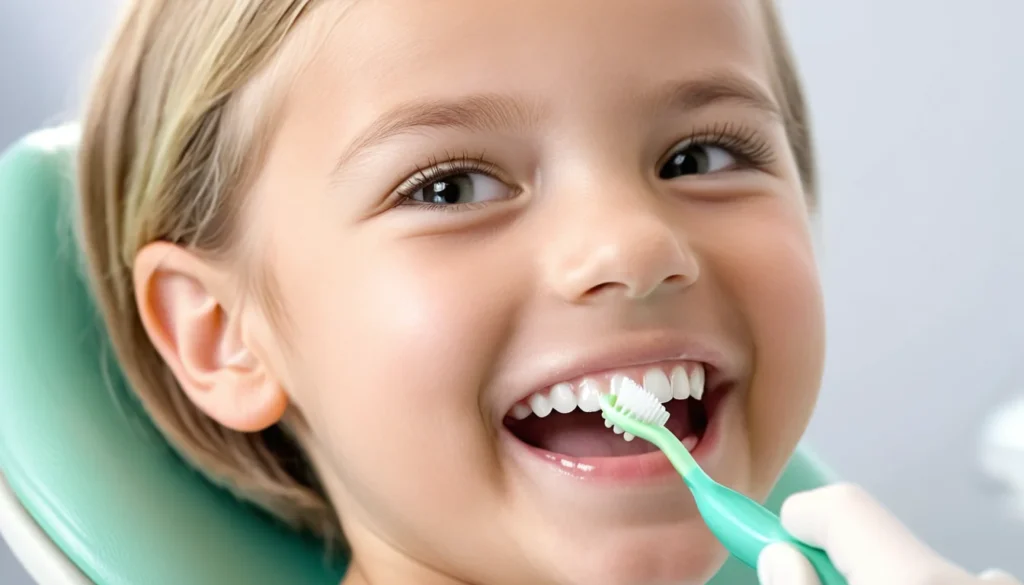
Taking care of children’s teeth is one of the most important things you can do for your child’s long-term health. Healthy teeth help kids chew, speak clearly, and smile with confidence. This guide covers everything Canadian parents need to know — from the first tooth to preventing cavities. As always, talk to your family dentist or doctor if you have specific concerns about your child’s dental development.
How Children’s Teeth Develop
Many parents are surprised to learn that children’s teeth begin forming before birth. The tooth buds are already present in the jaw during pregnancy. By the time your baby arrives, the groundwork for their first smile is already in place.
The first baby teeth usually appear around 4 months of age. The lower central incisors — the two bottom front teeth — are typically first to break through the gums. The upper front teeth follow closely behind.
All 20 baby teeth usually appear by age 3. However, the exact order and timing can vary from child to child. This is completely normal, so try not to worry if your child’s teeth come in a little differently than expected.
When Do Permanent Teeth Come In?
Permanent teeth start to arrive around age 6. The first molars and lower incisors are usually the first to appear. This process continues gradually until around age 21.
Most adults end up with 28 permanent teeth. If wisdom teeth come in fully, that number can reach 32. Many people have their wisdom teeth removed due to crowding or other dental issues. Your dentist can advise you on whether this is necessary for your child as they get older.
Why Baby Teeth Matter More Than You Think
Some parents assume baby teeth aren’t important because they fall out anyway. In fact, children’s teeth — even the temporary ones — play a crucial role in your child’s development. Neglecting them can lead to lasting problems.
Healthy baby teeth allow your child to chew food properly and get the nutrition they need. They also help your child form sounds and words correctly as they learn to speak. Speech difficulties can sometimes be traced back to early tooth loss or decay.
Furthermore, baby teeth hold space in the jaw for the permanent teeth coming in behind them. They act as natural guides, directing adult teeth into the correct position. If a baby tooth is lost too early due to decay or injury, nearby teeth can shift and crowd the space. This can lead to alignment problems that may require orthodontic treatment later.
Bone and Muscle Development
Baby teeth also support the healthy development of your child’s jaw bones and muscles. The act of chewing stimulates the jaw and encourages proper growth. Therefore, keeping baby teeth healthy is about much more than just a pretty smile.
According to Health Canada, oral health is closely linked to overall health. Problems in the mouth can affect a child’s ability to eat, sleep, and concentrate at school.
How to Brush Your Child’s Teeth
You can start brushing your child’s teeth as soon as the first one appears. Use a soft-bristled toothbrush designed for infants. At this stage, you don’t need toothpaste — a damp brush is enough.
Once your child is old enough to spit — usually around age 3 — you can introduce a fluoride toothpaste. Use only a pea-sized amount. Fluoride helps strengthen enamel and protect against cavities, but too much can cause a condition called fluorosis in young children.
Teaching Good Brushing Habits
By age 4 or 5, children can start brushing on their own. However, they still need supervision until about age 7 or 8. Children’s fine motor skills are still developing, and they may miss spots without realising it.
Teeth should be brushed twice a day — once in the morning and once before bed. When teaching your child to brush properly, follow these steps:
Hold the toothbrush at a 45-degree angle to the gums.
Use small, gentle circular motions — avoid scrubbing hard.
Brush the outer surface of each tooth, both top and bottom.
Repeat the same motion along the inner surfaces of the teeth and gums.
Gently brush the tongue to remove bacteria and freshen breath.
Use dental floss once a day to clean between teeth where the brush can’t reach.
Making brushing fun can help build a lifelong habit. Try using a timer, playing a favourite song, or letting your child pick out their own toothbrush. Positive reinforcement goes a long way with young children.
Baby Bottle Tooth Decay: What Canadian Parents Should Know
One of the most common dental problems in infants is baby bottle tooth decay. This is a serious form of early childhood tooth decay caused by frequent and prolonged exposure to sugary liquids. It can affect children’s teeth even before the first birthday.
The liquids most often linked to this condition include:
Cow’s milk and infant formula
Breast milk
Fruit juice
Sweetened drinks and flavoured waters
When sweet liquids pool around your baby’s teeth — especially during sleep — bacteria in the mouth feed on the sugars. As a result, they produce acids that attack and erode tooth enamel. This process can happen quickly in young children, whose enamel is thinner than that of adults.
How to Prevent Baby Bottle Tooth Decay
The most effective prevention is simple: never put your baby to bed with a bottle containing anything other than water. If your child has become used to falling asleep with a sweet drink, try weaning them off it gradually. Over two to three weeks, dilute the drink with more and more water until the bottle contains only water.
After each feeding, gently wipe your baby’s gums and any teeth with a clean, damp cloth or gauze pad. This removes sugary residue before bacteria have a chance to act on it. It also gets your baby used to having their mouth cleaned, which makes the transition to a toothbrush easier.
For more information on protecting your infant’s oral health, the Mayo Clinic’s guide to infant dental care is an excellent resource.
Fluoride and Children’s Dental Health
Fluoride is a naturally occurring mineral that strengthens tooth enamel and helps prevent cavities. It is one of the most effective tools we have for protecting children’s teeth. In Canada, many municipal water supplies contain fluoride at levels recommended for dental health.
If your family uses well water or bottled water, your child may not be getting enough fluoride. Talk to your dentist or family doctor about whether a fluoride supplement is appropriate. Your provincial health plan may cover fluoride treatments applied in the dental office — check with your provider to find out what is included in your coverage.
However, too much fluoride during tooth development can cause dental fluorosis — white spots or streaks on the enamel. This is why it’s important to use only the recommended amount of toothpaste and to supervise young children while brushing.
When to See a Doctor or Dentist
The Canadian Dental Association recommends that children have their first dental visit within 6 months of their first tooth appearing, or by their first birthday — whichever comes first. Early visits help identify any concerns before they become bigger problems.
You should contact your family doctor, walk-in clinic, or dentist if you notice any of the following:
White or brown spots on your child’s teeth — these may be early signs of decay.
Swollen, red, or bleeding gums.
Your child complains of tooth pain or sensitivity.
A tooth is chipped, cracked, or knocked out.
Teeth that seem very delayed in coming in, or teeth coming in at unusual angles.
Persistent bad breath that doesn’t improve with brushing.
Many provincial health plans in Canada include some level of dental coverage for children. For example, the Canadian Dental Care Plan has been expanding access to dental services for eligible families. Ask your family doctor or dentist about programmes available in your province. If you don’t have a regular dentist, a walk-in dental clinic can be a good starting point.
The World Health Organization’s fact sheet on oral health confirms that dental disease is largely preventable with the right habits and regular professional care.
Frequently Asked Questions About Children’s Teeth
When do children’s teeth start coming in?
Most children’s teeth begin to appear around 4 to 6 months of age. The lower front teeth usually come in first, followed by the upper front teeth. All 20 baby teeth are typically present by age 3, though timing varies between children.
When should I take my child to the dentist for the first time?
The Canadian Dental Association recommends a first dental visit within 6 months of your child’s first tooth appearing, or by age 1. Starting early helps your child get comfortable with dental visits and allows the dentist to catch any problems with children’s teeth early. Many provincial health plans in Canada cover children’s dental visits, so check what your plan includes.
How do I prevent cavities in my child’s baby teeth?
Brush your child’s teeth twice a day with a soft toothbrush and a pea-sized amount of fluoride toothpaste. Avoid putting your child to bed with a bottle of juice or milk, as this is a leading cause of early tooth decay. Regular dental check-ups are also key to keeping children’s teeth healthy.
Is it normal for baby teeth to come in crooked?
Yes, it is fairly common for baby teeth to come in slightly crooked or at odd angles. In many cases, they straighten out on their own as more teeth appear and the jaw grows. However, if you are concerned about your child’s teeth alignment, it is always a good idea to speak with your dentist.
What is baby bottle tooth decay and how can I avoid it?
Baby bottle tooth decay happens when a baby’s teeth are frequently exposed to sugary liquids like juice, milk, or formula — especially during sleep. The sugars feed bacteria that produce acids, which damage the enamel of children’s teeth. To prevent it, never put your baby to bed with a bottle containing anything other than water, and wipe their gums after feedings.
At what age should children brush their own teeth?
Children can begin practising brushing around age 4 or 5, but they need a parent or caregiver to supervise and help until about age 7 or 8. Young children lack the coordination to clean all surfaces of their teeth effectively on their own. Supervising brushing ensures children’s teeth are being cleaned thoroughly every time.
Key Takeaways
Children’s teeth begin forming before birth and the first baby teeth usually appear around 4 to 6 months of age.
Baby teeth are essential — they support chewing, speech, jaw development, and guide permanent teeth into place.
Start brushing early — as soon as the first tooth appears, using a soft brush and, once your child can spit, a pea-sized amount of fluoride toothpaste.
Supervise brushing until age 7 or 8 to make sure your child is cleaning all surfaces of their teeth properly.
Avoid baby bottle tooth decay by never putting your child to bed with a bottle of juice, milk, or formula.
Book the first dental visit by age 1 or within 6 months of the first tooth appearing.
Check your provincial health coverage — many Canadian dental programmes offer support for children’s dental care.
Talk to your family doctor or dentist if you notice any signs of tooth decay, pain, or unusual development in your child’s teeth.