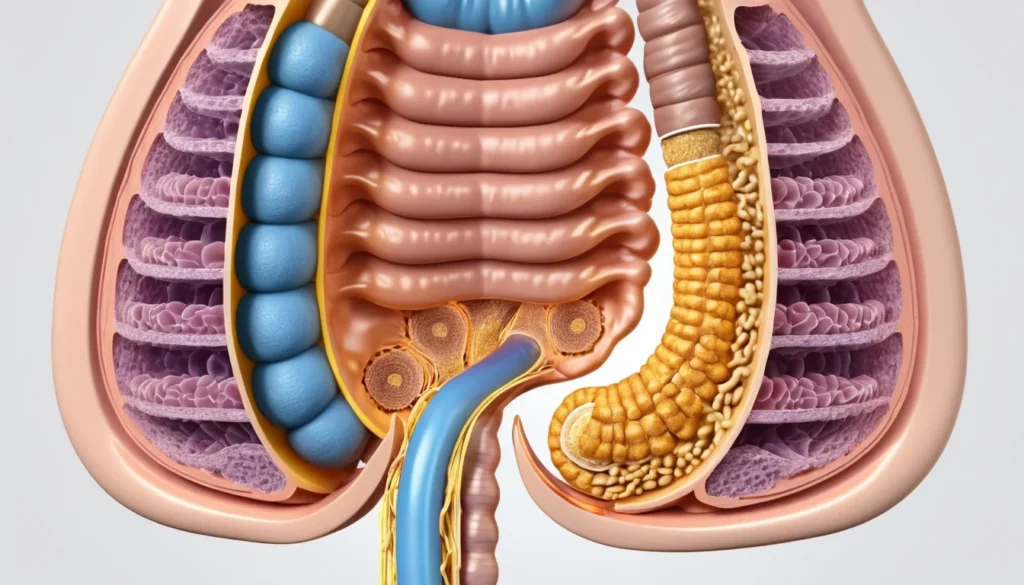
Celiac disease is an immune condition triggered by eating gluten — a protein found in wheat, barley, and rye. When someone with celiac disease eats gluten, their immune system attacks the lining of the small intestine. Over time, this damage makes it harder for the body to absorb key nutrients like iron, calcium, folate, and fat. In Canada, celiac disease affects roughly 1 in 100 people, though many cases go undiagnosed for years.
What Is Celiac Disease?
Celiac disease goes by several names, including gluten-sensitive enteropathy, celiac sprue, and non-tropical sprue. No matter what you call it, the condition works the same way. Eating gluten triggers an abnormal immune response that damages the small intestine.
The small intestine is lined with tiny finger-like projections called villi. These villi dramatically increase the surface area available to absorb vitamins, minerals, and other nutrients. In people with celiac disease, the villi become flattened and inflamed. As a result, the intestine loses its ability to absorb nutrients properly — a condition called malabsorption.
According to Health Canada, gluten is found in many common foods, as well as in some medications, vitamins, and even certain lip balms. This makes managing the condition a daily effort.
What Causes Celiac Disease?
Researchers do not yet know the exact cause of celiac disease. However, studies have identified a strong genetic component. Certain genes appear to increase a person’s risk of developing the condition.
If you have a first-degree relative — a parent, sibling, or child — with celiac disease, your risk rises to about 10%. In other words, one in ten close family members of someone with celiac disease will eventually develop it themselves.
Environmental Triggers
Genetics alone do not tell the full story. Environmental factors can trigger celiac disease in people who are already genetically predisposed. Viral and bacterial infections, in particular, may set off changes in the small intestine that start the process.
Once those changes occur, eating gluten activates an immune response. The immune system mistakenly attacks the intestinal lining, causing the characteristic damage seen in celiac disease. Researchers are still working to fully understand how genes, immune factors, and environmental triggers interact.
Symptoms of Celiac Disease
Symptoms of celiac disease vary widely from person to person. Some people experience mild discomfort that is easy to overlook. Others face severe symptoms that significantly affect daily life. Symptoms can also come and go, which often delays diagnosis.
Digestive Symptoms
The most common symptoms relate directly to the digestive system. These include:
Bloating and gas — caused by poor digestion in the small intestine and colon
Abdominal discomfort — ranging from mild cramping to stomach pain
Diarrhoea — stools are often watery, pale, foamy, and foul-smelling
Greasy, sticky stools — a sign that the body is not absorbing fat properly
Vomiting — more common in children than adults
Children tend to experience these digestive symptoms more frequently and more intensely than adults. Furthermore, children with untreated celiac disease may fail to grow and gain weight normally because their bodies cannot absorb enough nutrients.
Symptoms Beyond the Gut
Celiac disease does not stop at the digestive system. Because the body cannot absorb key nutrients, many other systems are affected. These non-digestive symptoms are common and are easy to mistake for other conditions, which is one reason celiac disease is often missed.
Fatigue and weakness — often linked to iron-deficiency anaemia
Unexplained weight loss — despite a normal or healthy appetite
Bone and joint pain — due to poor calcium and vitamin D absorption
Delayed puberty — in adolescents
Missed or irregular periods — and in some cases, fertility problems
Memory and concentration difficulties — sometimes called “brain fog”
Irritability in children and depression in adults
Frequent respiratory infections
Because these symptoms overlap with so many other conditions, the average Canadian waits years before receiving a correct diagnosis. If you or your child have several of these symptoms together, it is worth discussing celiac disease with a healthcare provider.
How Celiac Disease Progresses
Celiac disease is a chronic condition. This means it does not go away on its own. However, symptoms can improve dramatically — and intestinal damage can heal — when a person follows a strict gluten-free diet.
Left untreated, the ongoing damage to the small intestine can lead to serious long-term complications. These include:
Iron-deficiency anaemia — due to poor iron absorption
Rickets in children — caused by vitamin D deficiency
Osteopenia and osteoporosis — weak or thinning bones in adults
Nutritional deficiencies — affecting folate, zinc, and other key vitamins and minerals
One important feature of celiac disease is that symptoms can flare up and then subside. This pattern sometimes gives people the false impression that they are getting better. In reality, intestinal damage continues as long as gluten remains in the diet.
For a deeper look at how celiac disease affects the body over time, Mayo Clinic’s celiac disease overview is a reliable and detailed resource.
Risk Factors for Celiac Disease
Anyone can develop celiac disease, but certain factors increase the risk. Understanding these risk factors can help you and your family doctor catch the condition earlier.
Family History
As mentioned, having a first-degree relative with celiac disease raises your risk significantly. If someone in your immediate family has been diagnosed, ask your family doctor about screening, even if you have no obvious symptoms.
Associated Health Conditions
People with certain other health conditions are more likely to develop celiac disease. These include:
Type 1 diabetes
Autoimmune thyroid disease (such as Hashimoto’s thyroiditis)
Down syndrome
Sjögren’s syndrome
Selective IgA deficiency
Dermatitis herpetiformis — a skin rash caused by gluten sensitivity
Iron-deficiency or folate-deficiency anaemia with no clear explanation
If you have any of these conditions, talk to your doctor about whether testing for celiac disease makes sense for you. Early diagnosis helps prevent long-term complications.
When to See a Doctor
You do not need a specialist referral to start the conversation. Your family doctor or a local walk-in clinic can order initial blood tests to screen for celiac disease. Most provincial health plans cover these tests when there is a clinical reason to order them.
Take Your Child to a Doctor If They Have
Sudden or unexplained weight loss
Diarrhoea lasting more than one to two weeks
Slowed growth or poor weight gain
Ongoing fatigue or low mood that lasts more than a week and has no obvious cause (such as a cold or flu)
Adults Should Seek Medical Advice If They Experience
Persistent bloating, gas, or diarrhoea
Unexplained fatigue or anaemia
Bone pain or a history of fractures without significant injury
Fertility problems or irregular periods
A return of symptoms after previously feeling well on a gluten-free diet
If you have already been diagnosed with celiac disease and your symptoms return or worsen, see your doctor promptly. This may signal accidental gluten exposure, or in some cases, a need to re-evaluate your treatment plan. You can also call 811 (Health Link or Telehealth, depending on your province) to speak with a registered nurse at no cost.
For additional guidance on gluten-related conditions, Healthline’s guide to celiac disease symptoms offers clear, evidence-based information.
Always speak with a qualified healthcare provider before making any changes to your diet or treatment plan. The information in this article is for general educational purposes only and is not a substitute for professional medical advice.
Frequently Asked Questions About Celiac Disease
What is celiac disease and how does it affect the body?
Celiac disease is an autoimmune condition where eating gluten causes the immune system to attack the lining of the small intestine. Over time, this damage prevents the body from absorbing key nutrients like iron, calcium, and folate. Left untreated, celiac disease can lead to anaemia, bone loss, and other serious health problems.
What foods contain gluten and should be avoided with celiac disease?
People with celiac disease must avoid all foods containing wheat, barley, and rye. This includes bread, pasta, cereals, baked goods, beer, and many processed foods. Even small amounts of gluten can trigger an immune response and damage the intestine.
How is celiac disease diagnosed in Canada?
Diagnosis typically starts with a blood test that looks for specific antibodies linked to celiac disease. If the blood test is positive, a gastroenterologist usually performs an endoscopy and takes a small biopsy of the small intestine to confirm the diagnosis. Your family doctor or a walk-in clinic can order the initial blood test, and most provincial health plans cover it when there is a medical reason.
Can celiac disease develop in adults, or is it only a childhood condition?
Celiac disease can develop at any age — in infants, teenagers, adults, and even seniors. Many Canadians are diagnosed in adulthood, sometimes after years of unrecognised symptoms. The condition is lifelong, but symptoms can be well managed with a strict gluten-free diet.
Is there a cure for celiac disease?
There is currently no cure for celiac disease, but the condition can be effectively managed through a strict, lifelong gluten-free diet. Once gluten is removed from the diet, the intestinal lining typically begins to heal and symptoms improve. Regular follow-up with your doctor is important to monitor your health and nutritional status.
What is the difference between celiac disease and gluten intolerance?
Celiac disease is an autoimmune condition that causes measurable damage to the small intestine and can be confirmed through blood tests and biopsy. Gluten intolerance — also called non-coeliac gluten sensitivity — causes similar digestive symptoms but does not produce the same intestinal damage or immune markers. Both conditions improve on a gluten-free diet, but only celiac disease carries the risk of long-term complications like anaemia and osteoporosis.
Key Takeaways
Celiac disease is an immune condition triggered by gluten — a protein in wheat, barley, and rye.
It damages the small intestine and prevents proper absorption of nutrients like iron, calcium, and folate.
Symptoms range from digestive issues like bloating and diarrhoea to fatigue, bone pain, and mood changes.
Children may show slowed growth or failure to thrive; adults often experience anaemia or unexplained fatigue.
Having a first-degree relative with the condition raises your risk by about 10%.
There is no cure, but a strict gluten-free diet allows the intestine to heal and symptoms to resolve.
Your family doctor or a walk-in clinic can order initial blood tests; most provincial health plans cover screening.
If you suspect celiac disease in yourself or your child, speak with a healthcare provider as soon as possible.