Heart & Cardiovascular Health
Triglycerides: What Your Levels Mean for Your Heart
Triglycerides are fatty substances your body makes from the food you eat. When you consume calories that your body does not use …
Evidence-based health articles researched by our editorial team and sourced from trusted Canadian and international health authorities.
Triglycerides are fatty substances your body makes from the food you eat. When you consume calories that your body does not use …
Metabolic syndrome is not a single disease. Instead, it is a group of related health problems that tend to cluster together in the …
Keeping your cholesterol levels in a healthy range is one of the most powerful things you can do to protect your heart.
Most Canadians have heard that cholesterol is bad for the heart. However, the real story is more nuanced.
Triglycerides are the most common form of fat in the human body. After you eat, your body uses the calories it needs for immediate …
Cholesterol is a waxy, fat-like substance that your liver naturally produces. Your body actually needs cholesterol to function …
If your doctor has prescribed medication to lower your cholesterol, you are not alone. Millions of Canadians take these drugs …
There are many cholesterol myths that confuse Canadians every day. Some people avoid eggs completely.
Starting statin therapy after a heart attack within the first 24 hours may significantly reduce the risk of dying.
A stress test is one of the most useful tools doctors have for checking your heart health. It shows how your heart performs when …
Metabolic syndrome happens when several risk factors appear in the same person at the same time.
Your heart muscle needs a steady supply of oxygen-rich blood to work properly. This blood travels through vessels called coronary …
A heart attack is a medical emergency that happens when one or more coronary arteries become blocked.
Angina is your heart’s way of telling you it is not getting enough oxygen. It usually happens when the coronary arteries — the …
Your heart is a muscle. Like any muscle, it needs a steady supply of blood and oxygen to keep working. The coronary arteries …
Your heart is a powerful muscle. It pumps oxygen and nutrients to every organ in your body through your blood.
Coronary artery disease happens when the large and medium arteries that supply your heart with blood become damaged or diseased.
A heart attack is a medical emergency that affects millions of people every year. It happens when blood flow to the heart muscle …
Your heart has four valves that keep blood flowing in the right direction. The pulmonary valve sits between the right ventricle …
Your heart has four valves that keep blood moving in the right direction. The mitral valve sits between the left atrium and the …
Your heart has four chambers: two ventricles and two atria. The left ventricle is responsible for pumping blood out to your entire …
Your heart has four valves that control blood flow in one direction. The mitral valve sits between the left atrium (upper chamber) …
Your heart has four valves that act like one-way doors. They open and close with each heartbeat to keep blood moving in the right …
Your arteries are blood vessels that carry oxygen-rich blood from your heart to the rest of your body.
Your circulatory system has two main types of blood vessels: arteries and veins. Arteries carry oxygen-rich blood from your heart …
When blood does not move properly, it can pool and form clots inside the heart. If a clot breaks free and travels to the brain, it …
Raynaud’s phenomenon is a vascular condition that causes small blood vessels in the skin to overreact to cold temperatures or …
The aorta is the large artery that carries blood from your heart to the rest of your body. In aortic coarctation, a section of …
Peripheral vascular disease happens when arteries or veins become narrowed, blocked, or damaged. The causes vary widely.
Raynaud’s disease is the primary form of a condition that causes sudden, temporary spasms in the small arteries of the fingers.
Giant cell arteritis — also called temporal arteritis or cranial arteritis — is an inflammatory condition affecting medium and …
Peripheral artery disease happens when the arteries that carry blood to your limbs become narrow or blocked.
Your artery health plays a central role in keeping your heart, brain, and entire body working properly.
An aortic aneurysm is a serious condition where the body’s largest blood vessel becomes dangerously enlarged.
An abdominal aortic aneurysm is a serious but often silent condition that affects thousands of Canadians every year.
Varicose veins are large, swollen veins that bulge under the skin. They often appear twisted or rope-like, and they are most …
Esophageal varices are similar to varicose veins, but they form deep inside the body. They develop when scar tissue in the liver …
A leg ulcer is an open wound on the lower leg or foot that takes more than six weeks to heal.
Venous leg ulcers are also called stasis ulcers or varicose ulcers. They develop as a result of a condition called venous …
Your blood vessels constantly adjust their size to control blood flow throughout your body.
A blood clot, also called a thrombus, can form in two types of veins: surface veins (just under the skin) or deep veins (further …
Deep vein thrombosis happens when a blood clot forms inside a deep vein, most often in the lower leg or thigh.
Your blood needs to flow freely through your veins and arteries to keep you healthy. Sometimes, however, an abnormal blood clot …
Post-thrombotic syndrome (PTS) develops as a complication after a deep vein thrombosis. A DVT is a blood clot that forms in a deep …
Churg-Strauss syndrome — also called eosinophilic granulomatosis with polyangiitis (EGPA) — is one of several forms of vasculitis, …
Antiphospholipid syndrome happens when your immune system mistakenly produces harmful proteins called antiphospholipid antibodies.
HSP is more common in males than females, at a ratio of about 2:1. Around 75% of all cases occur in children under the age of 11.
If your legs feel tired, swollen, and hard to lift — especially in summer — you are not alone.
In a healthy body, blood flows freely through your arteries and veins. When you injure a blood vessel, your body responds by …
For Canadians living with diabetes, diabetic foot problems are one of the most serious — and most preventable — complications of …
Diabetic neuropathy happens when high blood sugar damages nerves throughout the body. Over months and years, glucose acts like a …
Your veins carry blood from your arms, legs, and organs back to your heart. Healthy leg veins have small one-way valves that keep …
Phlebitis affects two types of veins in the body: superficial veins and deep veins. Superficial veins sit just below the skin and …
Pressure sores are injuries to the skin and the tissue underneath it. When one area of skin is pressed against a surface for too …
Superficial venous insufficiency (SVI) happens when blood refluxes — or flows the wrong way — through the veins just beneath the …
A central venous catheter is a thin, flexible tube inserted into a large vein in your body.
Varicose veins are enlarged veins that bulge beneath the surface of the skin. They most commonly appear on the calves and thighs.
An amputation can happen in two ways. A traumatic amputation occurs suddenly due to an accident or injury.
New research suggests that testosterone and heart health are closely linked in middle-aged men.
Broken heart syndrome is a medical condition, not just a feeling. Doctors also call it Takotsubo cardiomyopathy or stress …
Acute coronary syndrome is an umbrella term. It describes any condition where the heart muscle does not get enough oxygen-rich …
Brugada syndrome is a type of heart arrhythmia — an abnormal heart rhythm. It affects tiny structures in the heart called ion …
Rheumatic heart disease happens when rheumatic fever damages one or more of the heart’s four valves.
A heart stent is a small mesh tube that doctors place inside a narrowed artery to restore healthy blood flow.
Cardiac rehabilitation is not just about exercise. It is a complete, team-based approach to heart health recovery.
After a heart attack or heart surgery, getting back to everyday life can feel overwhelming.
A heart attack is one of the most serious medical emergencies a person can face. Knowing heart attack first aid — what to do and …
Your heart sits in the centre of your chest, wrapped in a double-layered sac called the pericardium. The inner layer hugs the …
Your heart health affects every part of your life — yet most Canadians don’t think about it until something goes wrong.
Your heart is more than just a pump. It is an electrical pump with two pairs of chambers working together in a precise, …
A palpitation is the feeling of being aware of your own heartbeat. Your child might describe it as their heart “pounding,” …
Myocarditis means inflammation of the myocardium — the muscle that makes up the walls of your heart.
Most people never think twice about the magnets on their refrigerator. However, new research suggests that fridge magnets and …
Most Canadians know that chest pain can signal a heart problem. However, many people don’t realize that arm pain and heart attack …
Heart failure does not mean the heart has stopped working. It means the heart is not pumping as efficiently as it should.
Your heart has four chambers. The upper two are called the atria, and the lower two are called the ventricles.
Orthostatic hypotension — also called postural hypotension — occurs when your blood pressure drops suddenly after you change …
Blood pressure measures the force of blood pushing against your artery walls. It is recorded as two numbers: systolic (the …
Your heart is a muscle. Like any muscle, it can grow larger when it works harder than usual.
Your heart has a right lower chamber called the right ventricle. Its job is to pump blood through the pulmonary arteries and into …
Most Canadians know that high blood pressure and vision problems are both serious health concerns — but fewer realize they are …
Potassium is an electrolyte, meaning it carries a small electrical charge that helps your cells function.
Your heart beats in a steady rhythm controlled by electrical signals. Normally, these signals start in the right atrium — one of …
New research suggests a surprising link between muscle mass and heart disease risk. Studies show that men with lower muscle mass …
The inside of your heart is lined with a thin layer of tissue called the endocardium. Endocarditis occurs when this lining becomes …
As a result, the right ventricle loses its ability to contract and relax properly. This abnormal tissue also disrupts the heart’s …
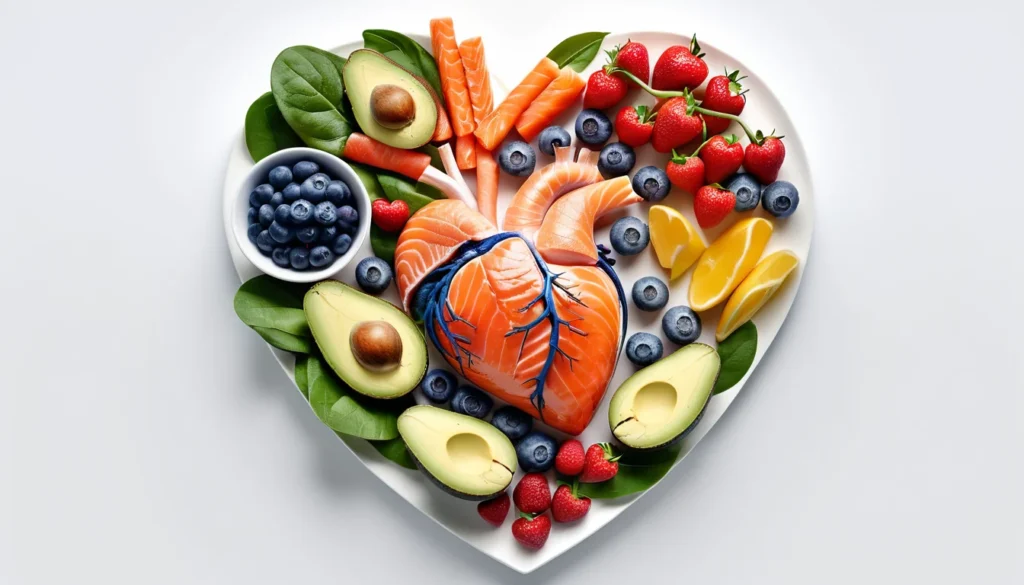
A heart-healthy diet is one of the most powerful tools you have to protect your heart. Nutrition experts and cardiologists agree …
Potassium is a mineral found abundantly in soil, water, and the foods we eat. It is essential to virtually every living thing — …
If you have renal denervation for resistant hypertension on your radar, you are not alone. Thousands of Canadians struggle with …
Sudden palpitations, weakness, shortness of breath, and sweating can be frightening. These are common heart arrhythmia symptoms, …
High blood pressure is defined as a reading consistently above 140/90 mmHg. When blood pressure stays high over months or years, …
Carney complex is a genetic syndrome that belongs to a group of conditions called multiple neoplasia syndromes.
Your heart has a natural pacemaker called the sinoatrial (SA) node. It sends electrical signals that tell your heart when to beat.
Cardiovascular disease covers a wide range of conditions, including coronary artery disease, heart failure, and stroke.
Understanding chest pain causes could save your life. Chest pain is one of the most common reasons Canadians visit walk-in clinics …
Your target heart rate is one of the most useful tools for exercising safely and effectively.
Cardiomyopathy means the heart muscle has become weakened, thickened, or stiffened. As a result, the heart cannot pump blood as …
Your heart muscle normally stretches and relaxes with every heartbeat. In restrictive cardiomyopathy, the muscle loses this …
Hypertrophic cardiomyopathy (HCM) occurs when the heart muscle grows thicker than it should.
Your heart is a muscle, and like any muscle, it can weaken. With dilated cardiomyopathy, the walls of the heart stretch and thin …
A pacemaker is a small electronic device implanted in your chest to help control an abnormal heart rhythm.
Heart disease symptoms can be subtle. They do not always feel dramatic or severe. In fact, many people mistake them for …
Cardiovascular disease (CVD) refers to a wide range of conditions that affect the heart and blood vessels.
Many Canadians use the term “heart disease” to mean blocked arteries. However, heart disease actually covers a wide range of …
Heart disease affects hundreds of thousands of Canadians every year. According to Health Canada, cardiovascular disease remains …
Cardiopulmonary disease refers to a group of conditions that affect the heart and lungs together.
Cardiac asthma occurs when fluid builds up in the lungs — a condition called pulmonary edema. This fluid makes it very hard to …
A heart arrhythmia is any change to the heart’s normal, steady rhythm. A child’s heart may beat too fast, too slow, or skip beats …
Coronary angioplasty is also called percutaneous transluminal coronary angioplasty (PTCA). The word “percutaneous” simply means …
Your heart is a pump. It works every second of the day to move blood through your entire body.
Cardiac amyloidosis happens when proteins in the body change shape and become abnormal. These misfolded proteins, called amyloid …
Heart conditions in children cover a wide range of problems. Some affect the structure of the heart.
Your heart health matters more than your genes. Research shows that lifestyle choices — not family history — play the biggest role …
LDL cholesterol is one of the most important markers your doctor monitors to assess your heart disease risk, yet many Canadians …