Your bone health affects nearly every part of your body. Bones do far more than hold you upright — they store calcium, produce blood cells, and protect your vital organs. Understanding how your bones work can help you catch problems early and keep your skeleton strong for life. This guide covers bone structure, common bone conditions, and when to talk to your doctor.
What Are Bones and Why Do They Matter for Bone Health?
Bones are rigid, highly mineralized structures that form your skeleton. Together, they give your body its shape and allow you to move. However, their job goes well beyond simple support.
Bones are your body’s main storage site for calcium. Keeping calcium levels steady in your blood is critical for your heart, muscles, and nerves to work properly. When your diet lacks calcium, your body pulls it directly from your bones — and that can weaken them over time.
According to Health Canada, getting enough calcium and vitamin D throughout your life is one of the most important steps you can take to protect your bones.
The Different Types of Bones in Your Body
Not all bones are the same shape or size. In fact, doctors group bones into three main types based on their form and function.
Flat Bones
Flat bones include the skull, ribs, shoulder blades, and breastbone. These bones protect your internal organs and provide attachment points for large muscle groups. They are broad and relatively thin compared to other bone types.
Short Bones
Short bones are found in your wrists (the carpal bones) and your feet (the tarsal bones), as well as in your spine (vertebrae). They are roughly cube-shaped and are built to absorb and distribute force. As a result, they play a big role in balance and movement.
Long Bones
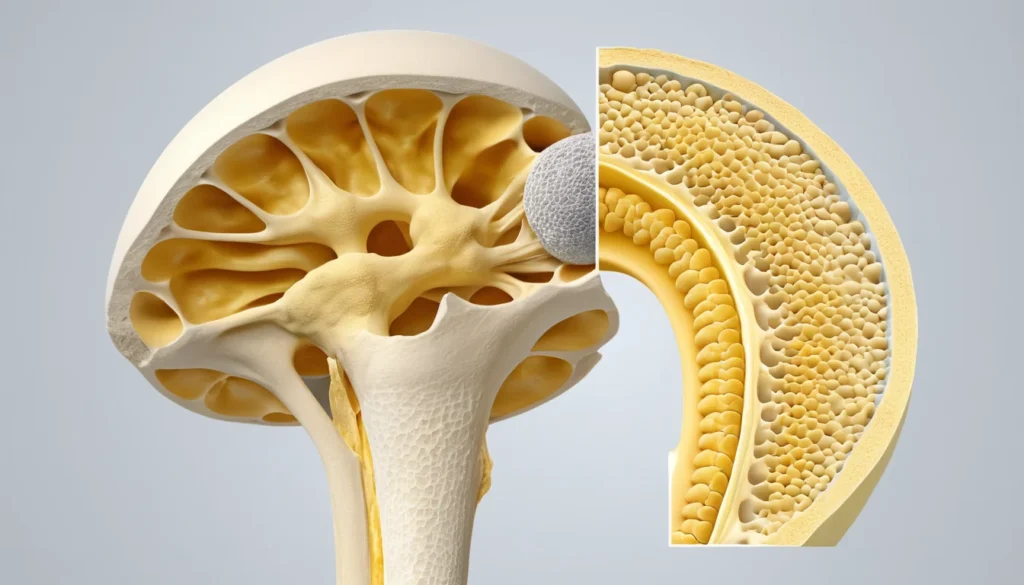
Long bones include the femur (thigh), tibia and fibula (lower leg), humerus (upper arm), and the bones of the forearm. These bones drive most of your major movements. They have a long central shaft called the diaphysis and two rounded ends called epiphyses, which are covered in smooth cartilage where joints form.
Between the shaft and the end of a long bone lies a zone called the metaphysis. In children, this area contains a growth plate — a layer of cartilage responsible for lengthening bones during childhood. Once a child finishes growing, the growth plate hardens into solid bone.
How Bone Structure Supports Bone Health
Bone is a living tissue. It constantly breaks down and rebuilds itself throughout your life. Understanding its structure helps explain why bone health can change — and what can go wrong.
The Outer Layer: Periosteum and Cortical Bone
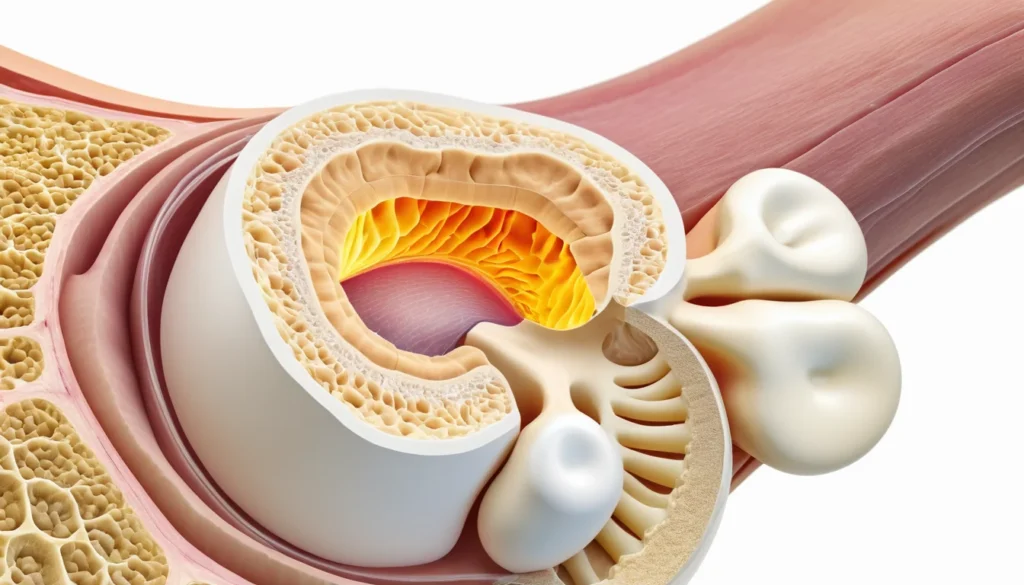
The outer surface of every bone is covered by a thin membrane called the periosteum. This membrane allows bones to grow thicker and helps them repair after a fracture by forming new bone tissue called callus. Just beneath it lies cortical bone — also called compact bone — which is dense and hard, similar in texture to ivory. This is the tough outer shell that gives bones their strength.
The Inner Layer: Spongy Bone and Bone Marrow
Beneath the cortical layer, many bones contain spongy bone — also called trabecular bone. Despite its name, spongy bone is not weak. Its honeycomb-like structure actually helps absorb shock and reduce overall weight. Furthermore, spongy bone houses red bone marrow, the tissue responsible for producing your blood cells — including red blood cells, white blood cells, and platelets.
What Bone Tissue Is Made Of
Bone tissue contains three key elements. First, there is the osteoid layer — a protein framework made mainly of collagen. Second, there is a mineral component made of calcium and phosphorus, which gives bone its hardness. Third, there are three families of specialised cells:
Osteoblasts — cells that build new bone matrix
Osteocytes — mature bone cells that maintain bone tissue
Osteoclasts — cells that break down old bone tissue
This constant cycle of building and breaking down bone is called remodelling. For good bone health, the process needs to stay balanced. When osteoclasts break down bone faster than osteoblasts can rebuild it, bones become weaker.
For a deeper look at how bone tissue works, visit this resource from the Mayo Clinic on osteoporosis and bone density.
Common Bone Conditions and Diseases
Many conditions can affect your bones. Some are inherited, while others develop over time due to nutrition, lifestyle, or other health problems. Here are the most important ones to know about.
Osteoporosis
Osteoporosis is one of the most common bone diseases in Canada, particularly among women over 50. It causes bones to lose density and become fragile, making fractures far more likely — even from a minor fall. In many cases, people do not know they have osteoporosis until a bone breaks. However, a bone density scan (called a DEXA scan) can detect it early. Your provincial health plan may cover this test if you meet certain risk criteria — ask your family doctor.
Paget’s Disease of Bone
Paget’s disease is an acquired condition where bone remodelling becomes disrupted. Affected bones grow larger but weaker and more prone to deformity. It most often affects the pelvis, skull, spine, and legs. The cause is not fully understood, but it is more common in people over 55.
Bone Fractures
A fracture is a break in a bone. Treatment depends on the location and severity. Most fractures are treated with a cast or splint (orthopaedic management), while more complex breaks may require surgery — a technique called osteosynthesis, where metal rods, plates, or screws hold the bone in place while it heals.
Bone Infections
Osteomyelitis is a bacterial infection of the bone. It can develop after an injury, surgery, or through the bloodstream. Bone tuberculosis is another serious infection, though it is less common in Canada today. Both conditions require prompt medical treatment — typically antibiotics or, in severe cases, surgery.
Bone Conditions Linked to Other Diseases
Some bone problems are secondary to other health conditions. For example, chronic kidney disease can cause a condition called renal osteodystrophy, where the kidneys’ failure to regulate minerals weakens the bones. Similarly, an overactive thyroid or parathyroid gland can cause the body to pull too much calcium from bones, reducing their density over time.
Bone Tumours
Bone tumours can be benign (non-cancerous) or malignant (cancerous). Benign tumours include osteomas, chondromas, and osteoblastomas — these generally do not spread and are often monitored rather than treated immediately. Malignant bone tumours include osteosarcoma, chondrosarcoma, fibrosarcoma, and Ewing’s sarcoma. Secondary bone tumours — where cancer spreads to bone from another organ — are actually more common than primary bone cancers. The World Health Organization provides detailed information on cancer, including bone cancers.
How to Support Your Bone Health Every Day
The good news is that you can take real steps to protect your bones at every age. Building strong bones early in life is ideal — but it is never too late to start.
Get enough calcium. Adults generally need 1,000–1,200 mg of calcium per day. Good sources include dairy products, fortified plant-based milks, leafy greens, and canned fish with bones.
Get enough vitamin D. Vitamin D helps your body absorb calcium. In Canada, the long winters mean many people are deficient. Ask your doctor about supplementation.
Exercise regularly. Weight-bearing exercise — such as walking, hiking, dancing, or strength training — stimulates bone growth and slows bone loss.
Avoid smoking. Smoking reduces bone density and slows healing after fractures.
Limit alcohol. Heavy alcohol use interferes with calcium absorption and increases fracture risk.
Prevent falls. For older adults, fall prevention is critical. Remove trip hazards at home, use grab bars in bathrooms, and talk to your doctor about balance exercises.
When to See a Doctor About Bone Health
Many bone conditions develop slowly and quietly. That is why regular check-ups with your family doctor are so important. Your doctor can order blood tests to check calcium and vitamin D levels, refer you for a bone density scan, and screen for conditions like osteoporosis before they become serious.
You should visit your family doctor or a walk-in clinic if you experience:
Persistent bone or joint pain that does not improve
A fracture from a minor injury or fall
Unexplained back pain or loss of height
Swelling, warmth, or redness over a bone (possible infection)
A family history of osteoporosis or bone disease
If you are a woman over 50, a man over 65, or have risk factors such as long-term steroid use or a previous fracture, ask your doctor about bone density testing. Many provincial health plans across Canada cover this screening for eligible patients.
This article is for informational purposes only and does not replace professional medical advice. Always consult your doctor or a qualified healthcare provider about any concerns related to your bone health.
Frequently Asked Questions About Bone Health
What are the signs of poor bone health?
Poor bone health often has no obvious symptoms until a fracture occurs. However, warning signs can include persistent bone or joint pain, loss of height over time, a stooped posture, and fractures that happen from minor bumps or falls. If you notice any of these, speak with your family doctor about checking your bone density.
How much calcium do I need for good bone health?
Most adults need between 1,000 and 1,200 mg of calcium per day to maintain good bone health. You can get calcium from dairy products, fortified plant-based milks, almonds, canned salmon with bones, and leafy greens like kale. If your diet falls short, your doctor may recommend a supplement.
Does osteoporosis only affect older women?
No — while osteoporosis is most common in women after menopause, it can also affect men, younger adults with certain medical conditions, and people who use long-term corticosteroids. Bone health is important at every age, and building strong bones early in life provides protection later on.
Is a bone density scan covered by my provincial health plan in Canada?
Coverage for bone density scans (DEXA scans) varies by province and depends on your risk factors. Most provincial health plans in Canada cover the test for women over 65, post-menopausal women with risk factors, and people with prior fractures. Ask your family doctor or check your provincial health authority’s website for details.
What exercises are best for bone health?
Weight-bearing and resistance exercises are the most effective for improving bone health. These include walking, jogging, dancing, hiking, and strength training with weights or resistance bands. Aim for at least 150 minutes of moderate activity per week, as recommended by the Canadian Physical Activity Guidelines.
Can bone loss be reversed?
In many cases, significant bone loss cannot be fully reversed, but it can be slowed and managed effectively. Good bone health habits — including adequate calcium and vitamin D, regular exercise, and avoiding smoking — can help maintain bone density. Your doctor may also prescribe medication to reduce further bone loss if you have been diagnosed with osteoporosis.
Key Takeaways
Bones do much more than support your body — they store calcium and produce your blood cells.
There are three main bone types: flat, short, and long, each with a different role.
Bone is a living tissue that constantly rebuilds itself through a process involving osteoblasts and osteoclasts.
Osteoporosis is the most common bone disease in Canada and often shows no symptoms until a fracture occurs.
Calcium, vitamin D, and weight-bearing exercise are the three pillars of good bone health at any age.
See your family doctor if you have bone pain, unexplained fractures, or a family history of bone disease.
Bone density screening may be covered by your provincial health plan — ask your doctor if you qualify.