You may have heard of raw honey or manuka honey — but blue honey health benefits are now catching the attention of natural health researchers around the world. This unique product blends traditional beehive ingredients with concentrated plant extracts, giving it a striking blue colour and a range of potential therapeutic uses. In this article, we explore what blue honey is, what the research suggests, and how it might fit into a broader approach to everyday wellness.
What Is Blue Honey?
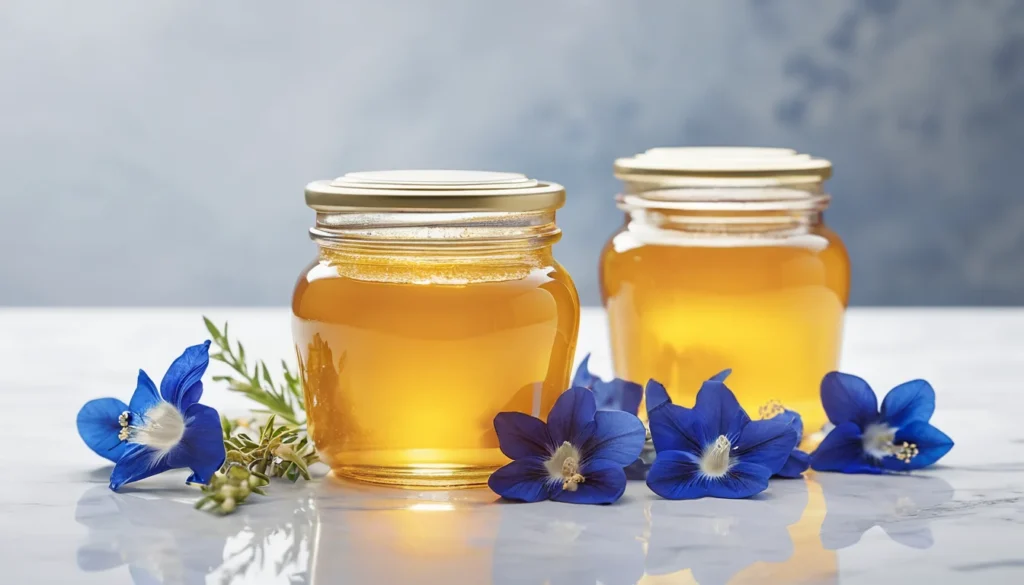
Blue honey is not made by bees fed blue food dye. It is a specially formulated natural health product that combines honey and royal jelly with plant-based extracts. The blue colour comes from a pigment found in blue-green algae, known scientifically as phycocyanin.
This type of product falls under the broader category of apitherapy — the use of beehive products for health purposes. Apitherapy has been studied for decades, and Healthline offers a detailed overview of royal jelly and its potential health effects. Royal jelly, one of the key ingredients in blue honey, is a substance produced by worker bees to feed queen bees and growing larvae.
In some formulations, blue honey contains up to 12 natural ingredients. These typically include honey, royal jelly, and concentrated extracts from medicinal plants and marine algae. Together, these ingredients are believed to support immune function, cellular regeneration, and overall wellness.
Blue Honey Health Benefits: What Researchers Have Found
Interest in blue honey grew in part from early research into blue-green algae extracts. Pilot studies explored the use of these extracts in children with serious immune-related illnesses. While some of this early research was not completed, the initial findings pointed to promising anti-inflammatory and immune-supporting properties.
Researchers found that the combination of phycocyanin — the blue pigment from algae — and royal jelly may be among the most potent known stimulants of stem cells. Stem cells are the building blocks the body uses to repair and regenerate tissue. This is why blue honey is sometimes studied in the context of post-operative recovery and nerve regeneration.
Furthermore, some formulations have been explored for their potential to reduce the cellular damage caused by UV radiation and environmental toxins. However, it is important to understand that most of this research is still in early stages. Always speak with your family doctor before adding any new supplement to your routine.
Blue Honey and Immune Support
One of the most commonly reported uses of blue honey is immune system support. The combination of honey, royal jelly, and plant pigments may help the body respond more effectively to infections. Some users report using it alongside prescribed antibiotics or other medications to support recovery.
For example, one clinical observation involved a patient with a serious intestinal tumour. After using a blue honey formulation alongside conventional treatment for 90 days, the disease stabilised. After a second course, the patient reportedly entered remission. This is a single case report, not a clinical trial, so it should be interpreted with caution. However, it does highlight the growing interest among healthcare researchers.
In addition, the World Health Organization notes that complementary approaches are increasingly being studied alongside conventional cancer care. If you or a loved one are managing a serious illness, please talk to your oncologist or specialist before making any changes.
Blue Honey for Skin Protection and UV Exposure
Canadian summers can be intense. Many parts of the country experience high UV index readings from June through August. Sun protection is always the first line of defence — sunscreen, protective clothing, and avoiding peak sun hours are essential steps.
However, some researchers suggest that a course of blue honey may offer additional cellular support if you have been accidentally exposed to strong UV radiation. A four-week course is often suggested for general use. People in higher-risk groups — such as those with a family history of skin cancer, young children, or individuals with compromised immune systems — may benefit from a longer six-week course during the summer months.
This does not replace sunscreen. Health Canada’s sun safety guidelines are clear that physical protection from UV rays is non-negotiable. Blue honey, if used, should be seen as a complementary measure only.
Blue Honey for Sleep, Hormonal Balance, and Menopause
Sleep problems are extremely common, especially during the warmer summer months. Many Canadians struggle to fall asleep or stay asleep when temperatures rise. Blue honey formulations have been reported to support sleep quality — but not in the way a sedative works.
Unlike sleeping pills, which act quickly and can create dependency, blue honey works gradually. It is believed to support nerve regeneration over time, which in turn may improve the quality of sleep. One case involved a person who had struggled with insomnia for years. After about one month of use, their sleep began to improve. By the third month, they were sleeping through the night uninterrupted.
This slow-acting nature is important to understand. Many people expect immediate results and stop too soon. Natural health products like blue honey typically require consistent use over several weeks or months before the benefits become clear.
Blue Honey and Menopause Symptoms
Some beehive-based products, particularly royal jelly in honey at higher concentrations, are used to help manage menopause symptoms. Royal jelly contains compounds that may support hormonal and nervous system regulation. Over several courses of use, some women report a gradual reduction in hot flashes, mood changes, and feelings of anxiety.
Again, these effects are not immediate. Apicultural products work over time, and results vary from person to person. If you are going through menopause and are interested in natural options, speaking with your family doctor or a naturopath is a smart first step.
Blue Honey for Urinary Tract Infections and Colds
Summer months bring a spike in urinary tract infections (UTIs), particularly in women. This is partly due to increased activity, travel, and heat-related dehydration. Some apitherapy-based products combine bee pollen, royal jelly, and red-pigment plant extracts to help support the body during antibiotic treatment for UTIs.
These products are not a replacement for antibiotics. Rather, they may help strengthen the immune system so the body responds better to prescribed treatment. If you suspect a UTI, visit your walk-in clinic or family doctor for proper diagnosis and treatment. Do not delay medical care.
For common colds and respiratory issues, honey-based products containing propolis are well-known in natural health circles. Propolis — a resin-like substance bees use to seal their hives — has documented antimicrobial properties. Some formulations also include pine extract in honey for cough and breathing support. These may be used as complementary remedies alongside standard cold care.
When to See a Doctor
Natural health products like blue honey can play a supportive role in your wellness routine. However, they are not a substitute for medical care. If you are dealing with a serious condition — such as cancer, a chronic infection, or significant hormonal imbalance — please speak with your family doctor before trying any new supplement.
In Canada, your family doctor or a walk-in clinic is always your first point of contact for health concerns. Most provincial health plans cover consultations for new or worsening symptoms. If you are already on prescription medication, check with your pharmacist before adding any natural health product, as interactions are possible.
Health Canada regulates natural health products sold in Canada. Look for a Natural Product Number (NPN) on the label, which confirms the product has been reviewed for safety and quality.
Frequently Asked Questions About Blue Honey
What is blue honey made of?
Blue honey is a natural health product made from honey, royal jelly, and concentrated plant extracts. Its distinctive colour comes from phycocyanin, a blue pigment found in blue-green algae. Some formulations contain up to 12 natural ingredients designed to support immune health and cellular regeneration.
What are the main blue honey health benefits?
The reported blue honey health benefits include immune system support, improved sleep quality, cellular regeneration, and protection against environmental stressors like UV radiation. Some researchers are also exploring its use alongside conventional treatments for serious illness. However, most evidence is still preliminary, and you should consult your doctor before use.
Is blue honey safe to take with prescription medication?
Blue honey is generally considered safe as a natural health product, but interactions with prescription medications are possible. Always speak with your pharmacist or family doctor before combining any supplement with prescribed treatments. This is especially important if you are managing a chronic condition or taking blood thinners, immunosuppressants, or hormone therapies.
How long does it take for blue honey to work?
Unlike pharmaceutical sedatives or antibiotics, blue honey does not act quickly. Most people need to complete at least one full course — typically four to six weeks — before noticing any changes. Consistent use over multiple courses is often recommended for best results, particularly for sleep and hormonal health.
Can blue honey help with sleep problems?
Some users report improved sleep quality after consistent use of blue honey formulations, particularly those containing royal jelly and blue algae extract. The product is thought to support nerve regeneration over time, which may gradually improve sleep patterns. However, if you have chronic insomnia, speak with your family doctor or visit a walk-in clinic for a proper assessment.
Where can I buy blue honey in Canada?
Blue honey and similar apitherapy products may be available through natural health retailers, online supplement stores, or specialty health food shops across Canada. Look for products that carry a Health Canada Natural Product Number (NPN) on the label to ensure they meet Canadian safety standards. When in doubt, ask your naturopath or pharmacist for guidance.
Key Takeaways
Blue honey is a natural health product combining honey, royal jelly, and plant extracts, including blue algae pigment.
The main blue honey health benefits being studied include immune support, cellular regeneration, improved sleep, and UV protection.
Blue honey works slowly — expect to complete several weeks of consistent use before seeing results.
It is not a replacement for conventional medical treatment, but may complement prescribed care when used properly.
Always look for a Health Canada NPN on any natural health product you buy in Canada.
Talk to your family doctor or walk-in clinic before starting any new supplement, especially if you take prescription medication or manage a chronic condition.
Sun protection through sunscreen and clothing remains the primary defence against UV damage — natural health products are supplementary only.