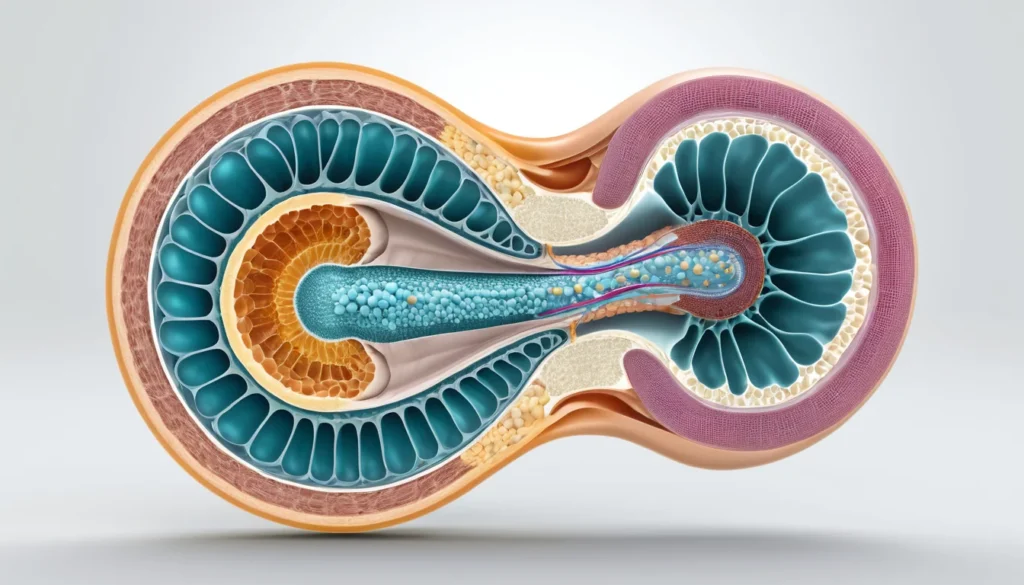
Azoospermia is a medical condition where a man’s semen contains no sperm at all. It affects between 5% and 10% of men who are diagnosed with infertility. The good news is that many men with this condition still have options for becoming fathers. This article explains the types, causes, diagnosis, and treatment of azoospermia in plain language.
What Is Azoospermia?
Azoospermia means that a man produces semen during ejaculation, but that semen contains zero sperm. This is different from aspermia, where no semen is produced at all. Many men are surprised to learn they have this condition, because it causes no obvious symptoms.
It is most often discovered when a couple is having trouble conceiving. A simple semen analysis is usually the first step. However, a diagnosis of azoospermia does not always mean a man can never father a child. In many cases, effective treatment options are available.
Types of Azoospermia
Doctors generally divide azoospermia into four main types. Understanding which type you have is important, because treatment depends on the cause. Your family doctor or a urologist can help determine the type through testing.
Pre-testicular Azoospermia
This type happens when the body does not send the right hormonal signals to the testicles. As a result, the testicles are not properly stimulated to produce sperm. Low levels of follicle-stimulating hormone (FSH) are often seen in these cases.
Common causes include hypopituitarism (a problem with the pituitary gland), high prolactin levels, and the use of testosterone supplements. Chemotherapy can also affect sperm production in this way.
Testicular Azoospermia
This is the most common type. It accounts for 49% to 93% of all azoospermia cases. In this type, the testicles themselves cannot produce sperm properly, even when hormonal signals are normal.
FSH levels are often elevated in these men. Causes include genetic conditions like Klinefelter syndrome, undescended testicles (cryptorchidism), radiation therapy, and previous surgery. Inflammatory conditions in the reproductive tract can also play a role.
Post-testicular (Obstructive) Azoospermia
In this type, the testicles do produce sperm. However, a blockage somewhere in the reproductive tract prevents sperm from reaching the semen. This is sometimes called obstructive azoospermia.
Common causes include a previous vasectomy, a congenital absence of the vas deferens, or a blockage caused by a past infection. This type is often treatable, which is encouraging for men who receive this diagnosis.
Idiopathic Azoospermia
In some cases, no clear cause can be found. This is called idiopathic azoospermia. Several risk factors may contribute, including age and body weight.
Recent research has linked this type to overweight and obesity. Ejaculatory problems, such as retrograde ejaculation (where sperm travels backward into the bladder), can also result in no sperm appearing in semen.
What Causes Azoospermia?
Azoospermia can have many different causes. These range from genetic factors to lifestyle choices. Understanding the cause is the first step toward finding the right treatment.
Genetic Causes
Chromosomal abnormalities are a significant cause of azoospermia. The more severe the sperm production problem, the more likely a genetic cause is involved. Klinefelter syndrome and XX male syndrome are two well-known genetic conditions linked to this condition.
In about 13% of men with azoospermia, defects on the Y chromosome affect sperm development. Conditions like Kallmann syndrome and Prader-Willi syndrome can also reduce the hormones needed for sperm production. Learn more about male infertility causes from Mayo Clinic.
Hormonal Causes
The testicles need proper hormonal signals from the pituitary gland to produce sperm. If those hormones are missing or too low, sperm production suffers greatly. This is why hormonal testing is a key part of any azoospermia evaluation.
Men who use anabolic steroids to build muscle — whether taken by mouth or injection — can seriously disrupt their body’s natural hormone production. This can lead to azoospermia. In many cases, stopping steroid use allows sperm production to recover.
Physical and Structural Causes
A varicocele is a condition where the veins in the scrotum become enlarged. Poor blood drainage causes blood to pool in the scrotum, which raises the temperature around the testicles. This higher temperature can harm sperm production.
Testicular failure refers to the inability of the testicles’ sperm-producing tissue to mature sperm cells properly. This is often linked to genetic problems. Previous infections, surgery, or trauma to the testicles can also cause physical damage that leads to azoospermia.
How Is Azoospermia Diagnosed?
Azoospermia is usually discovered during a fertility investigation. Doctors confirm the diagnosis with at least two separate semen analyses performed on different days. Both tests must show zero sperm to confirm the condition.
Medical History and Physical Exam
Your doctor will ask about your medical history, past surgeries, infections, and any medications you take, including supplements or steroids. A physical examination of the testicles and surrounding structures is also part of the process. This helps identify any obvious structural problems.
Hormone and Lab Tests
Blood tests measure key hormone levels, including FSH, luteinizing hormone (LH), testosterone, prolactin, and thyroid-stimulating hormone. These results help identify whether the problem is hormonal, testicular, or obstructive. Genetic testing may also be recommended to check for chromosomal abnormalities.
Imaging and Biopsy
A transrectal ultrasound can check for blockages or cysts in the ejaculatory ducts and seminal vesicles. A urine test after ejaculation can detect retrograde ejaculation. In some cases, a testicular biopsy is needed to assess whether sperm are being produced inside the testicles. Read more about azoospermia testing from Healthline.
Treatment Options for Azoospermia
Treatment for azoospermia depends entirely on the type and underlying cause. The goal is either to restore natural sperm production or to retrieve sperm directly for use in assisted reproduction. Many men find that effective options are available to them.
Hormonal and Medical Treatment
If azoospermia is caused by a hormonal imbalance, such as high prolactin levels, hormone therapy may be enough to restore fertility. Men who have been using anabolic steroids may see sperm production return after stopping steroid use. In cases where the pituitary gland is not stimulating the testicles properly, gonadotropin therapy can restart sperm production.
Surgical Treatment
For obstructive azoospermia, surgery may be able to remove the blockage. A vasectomy reversal is one example. Varicocele repair is another surgical option that can improve sperm production in some men.
For non-obstructive azoospermia, doctors can sometimes retrieve sperm directly from the testicles through a procedure called testicular sperm extraction (TESE). The retrieved sperm can then be used for in vitro fertilization (IVF). The World Health Organization provides global data on infertility and its impact.
Assisted Reproductive Technology
Even when sperm production is severely limited, modern reproductive technology offers hope. Sperm retrieved through TESE can be used with intracytoplasmic sperm injection (ICSI), where a single sperm is injected directly into an egg. Many fertility centres across Canada offer these services. Coverage varies by province, so check with your provincial health plan for details.
When to See a Doctor
You should speak with your family doctor if you and your partner have been trying to conceive for 12 months without success — or after six months if the woman is over 35. Azoospermia causes no pain or visible symptoms, so testing is the only way to know if it is a factor.
Your family doctor can order an initial semen analysis and refer you to a urologist or fertility specialist if needed. If you do not have a family doctor, a walk-in clinic can provide a referral or initial testing. Do not hesitate to bring up your concerns — male infertility is a medical issue, and effective help is available.
Always consult a qualified healthcare provider before starting any treatment. The information in this article is for general educational purposes only and is not a substitute for professional medical advice.
Frequently Asked Questions About Azoospermia
Can a man with azoospermia still father a child?
Yes, in many cases a man with azoospermia can still father a child. If the testicles are producing sperm, doctors can retrieve sperm directly and use it for IVF. Even men with non-obstructive azoospermia sometimes have small amounts of sperm that can be extracted.
What are the most common causes of azoospermia?
Azoospermia can be caused by genetic conditions, hormonal imbalances, physical blockages, or testicular damage. Common causes include Klinefelter syndrome, varicocele, vasectomy, steroid use, and past infections or surgery. A doctor can run tests to identify the specific cause in your case.
How is azoospermia diagnosed?
Azoospermia is diagnosed through at least two semen analyses that both show zero sperm. Further testing, including blood hormone levels, genetic testing, and sometimes a testicular biopsy, helps identify the type and cause. Your family doctor or a urologist will guide you through this process.
Is azoospermia permanent?
Not always. Whether azoospermia is permanent depends on its cause. Hormonal azoospermia and obstructive azoospermia are often treatable. However, severe testicular damage caused by genetic conditions may be harder to reverse. Speaking with a fertility specialist gives you the most accurate picture of your situation.
Does azoospermia affect sexual function or drive?
No, azoospermia does not affect a man’s ability to have sex or his sex drive. Ejaculation looks and feels normal, even though semen contains no sperm. The condition is only detectable through a laboratory semen analysis.
Can lifestyle changes improve azoospermia?
In some cases, yes. Stopping anabolic steroid use, losing excess weight, and avoiding heat exposure to the scrotum may help improve sperm production. However, lifestyle changes alone are usually not enough when a structural or genetic cause is present. Always discuss your options with a healthcare provider.
Key Takeaways
Azoospermia means there is no sperm in a man’s semen. It affects 5%–10% of infertile men.
There are four main types: pre-testicular, testicular, post-testicular (obstructive), and idiopathic.
Causes include genetic conditions, hormonal problems, physical blockages, and steroid use.
Diagnosis involves semen analysis, hormone blood tests, imaging, and sometimes genetic testing or biopsy.
Many treatment options exist, including hormone therapy, surgery, sperm retrieval, and IVF.
If you are concerned about fertility, speak with your family doctor or visit a walk-in clinic for a referral.
Coverage for fertility treatments varies by province — check with your provincial health plan for details.