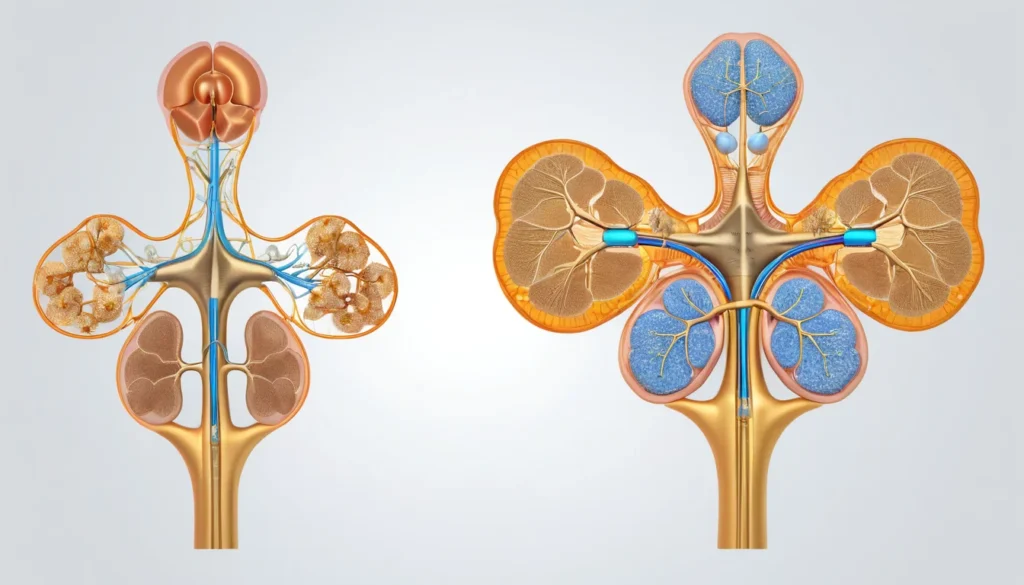
An androstenedione test is a simple blood test that measures a key hormone your body uses to produce both testosterone and estrogen. Whether your doctor suspects a hormonal imbalance or wants to investigate symptoms like irregular periods, excess hair growth, or early puberty, this test provides critical insight into how your adrenal glands and reproductive organs are functioning. For Canadians, understanding when and why this test is ordered can help you take charge of your health.
Understanding Your Androstenedione Test Results in Canada
Androstenedione is a steroid hormone produced primarily by the adrenal glands and the ovaries or testes. Your body converts this androstenedione hormone into other essential hormones that regulate everything from energy levels to reproductive health. When androstenedione levels are too high or too low, it can point to conditions such as polycystic ovary syndrome, congenital adrenal hyperplasia, or adrenal tumours. This guide explains what to expect from the test, how to prepare, and what your results may mean within the Canadian healthcare system.
What Is Androstenedione?
Interpreting Androstenedione Test Results: Conditions, Characteristics, and Management
| Condition | Key Characteristics | Common Symptoms | Management Approach |
|---|---|---|---|
| Congenital Adrenal Hyperplasia (CAH) | Elevated androstenedione due to enzyme deficiency (21-hydroxylase); often detected at birth through provincial newborn screening | Ambiguous genitalia in newborns, early puberty, rapid growth followed by short stature | Corticosteroid replacement therapy (hydrocortisone); monitored by a Canadian endocrinologist |
| Polycystic Ovary Syndrome (PCOS) | Mildly to moderately elevated androstenedione; associated with insulin resistance and ovarian cysts | Irregular menstrual cycles, hirsutism, acne, difficulty conceiving | Lifestyle modifications, metformin, hormonal contraceptives; referral to a reproductive endocrinologist |
| Adrenal Tumour (Adenoma or Carcinoma) | Significantly elevated androstenedione; may also raise cortisol and DHEA-S levels | Rapid virilization, abdominal pain, unexplained weight changes, Cushing-like features | Imaging (CT/MRI), possible surgical referral; managed at a Canadian tertiary care centre |
| Ovarian Tumour | Elevated androstenedione originating from ovarian tissue; often unilateral | Virilization, voice deepening, clitoral enlargement, menstrual irregularities | Pelvic ultrasound, possible surgical removal; oncology or gynecology referral |
| Low Androstenedione (Adrenal Insufficiency) | Below-normal levels indicating reduced adrenal function; may coincide with low cortisol and DHEA | Chronic fatigue, low blood pressure, dizziness, unexplained weight loss | Hormone replacement therapy; long-term follow-up with an endocrinologist under provincial health care |
Androstenedione is a steroid hormone produced mainly by your adrenal glands and your ovaries or testes. Your body converts it into other important hormones, including testosterone and estrogen. Think of it as a raw ingredient your body uses to make the hormones it needs every day.
Even though androstenedione is often called a “male hormone precursor,” it matters for everyone. In women, it contributes to estrogen levels. In men, it helps support testosterone production. Keeping androstenedione in a healthy range is important for overall hormonal health.
According to Healthline’s overview of androstenedione, this hormone has mild estrogen-like activity on its own, even before the body converts it into other hormones. This means that when levels rise too high, it can cause noticeable physical changes.
Why Would a Doctor Order an Androstenedione Test?
Your family doctor or specialist may order an androstenedione test for several reasons. The test helps evaluate how well your adrenal glands are working. It can also help detect tumours on the adrenal glands at an early stage.
In addition, the test is commonly used to investigate symptoms that suggest a hormonal imbalance. For example, a doctor might order it if you are experiencing unexplained acne, unusual hair growth, or missed periods. It is also used when fertility issues or delayed puberty are a concern.
Common Reasons the Test Is Ordered
Hirsutism: Excessive or unwanted hair growth on the face, chest, or back in women.
Acne: Persistent or severe acne that does not respond to usual treatments.
Amenorrhoea: Missed or irregular menstrual periods without a clear cause.
Infertility: Difficulty becoming pregnant after trying for an extended period.
Delayed puberty: When puberty is significantly later than expected in a child or teenager.
Suspected adrenal tumour: When imaging or symptoms suggest a growth on the adrenal glands.
Adrenal gland disorders: Such as congenital adrenal hyperplasia (CAH), a condition where the adrenal glands do not produce hormones correctly.
Furthermore, the test may be part of a broader hormonal panel. Your doctor might combine it with tests for cortisol, DHEA, testosterone, or other hormones to get a full picture of your adrenal and reproductive health.
Who Is Most Likely to Need an Androstenedione Test?
Women are more commonly referred for an androstenedione test than men. This is because elevated androstenedione in women tends to cause more obvious symptoms, such as hirsutism and menstrual changes. However, men and children can also be tested when adrenal problems are suspected.
Children who show signs of early puberty — such as pubic hair or body odour developing before age 8 in girls or age 9 in boys — may also be tested. Early puberty can sometimes be caused by the adrenal glands producing too much androstenedione.
In Canada, your family doctor is usually the first person to identify that this test is needed. They may then refer you to an endocrinologist, a doctor who specialises in hormones, for further evaluation and management.
How the Androstenedione Test Works
Preparing for the Test
Preparing for an androstenedione test is straightforward. For women who are still menstruating, the test is typically done one week before or one week after your period. This timing matters because hormone levels naturally shift throughout your menstrual cycle.
Always follow the specific instructions your doctor or lab gives you. In some cases, you may be asked to avoid certain medications before the test. Therefore, tell your doctor about any supplements or medications you are currently taking, including herbal products.
The Blood Draw
The test itself is a simple blood draw. A health professional will take a small sample of blood, usually from a vein in your arm. The process takes only a few minutes and causes minimal discomfort.
In Canada, your doctor will send the sample to a certified laboratory. Most provincial health plans cover this test when it is medically necessary. However, coverage can vary by province, so it is worth confirming with your provincial health plan or your doctor’s office beforehand.
The Testing Method
Laboratories analyse androstenedione levels using a highly accurate method called liquid chromatography-tandem mass spectrometry (LC-MS/MS). This technique is considered the gold standard for measuring steroid hormones. It is very precise and can detect even small changes in hormone levels.
As a result, the results from this method are highly reliable. Your doctor will use them alongside your symptoms and other test results to make an informed diagnosis.
Understanding Your Androstenedione Test Results
Once your results come back, your doctor will compare them to the normal reference range for your age and sex. Reference ranges can vary slightly between laboratories. Therefore, always discuss your specific results with your doctor rather than comparing them to general numbers found online.
What Do High Androstenedione Levels Mean?
Elevated androstenedione levels can point to several conditions. The most common causes include polycystic ovary syndrome (PCOS), congenital adrenal hyperplasia, and adrenal gland tumours. In some cases, high levels may also be linked to ovarian tumours.
It is important to note that a normal androstenedione level does not completely rule out an adrenal tumour. Some tumours can produce other hormones without raising androstenedione significantly. This is one reason why doctors often order several tests together.
According to Mayo Clinic’s information on hormone testing, interpreting hormone test results always requires looking at the full clinical picture, not just a single number.
What Do Low Androstenedione Levels Mean?
Low androstenedione levels are less common but can also be significant. They may suggest that the adrenal glands are not producing enough hormones, a condition known as adrenal insufficiency. Low levels can also occur with certain medications or other hormonal disorders.
In addition, low levels in children may help explain delayed puberty. Your doctor will factor this into the overall assessment of your child’s growth and development.
Factors That Can Affect Results
Several things can influence your androstenedione levels beyond underlying medical conditions. These include:
Time of day the blood is drawn (levels tend to be higher in the morning)
Phase of the menstrual cycle
Pregnancy
Certain medications, including corticosteroids and hormonal contraceptives
High levels of physical stress or illness
Age (levels naturally decline after menopause)
For this reason, your doctor will consider your full medical history when reviewing your results. A single test result rarely tells the whole story.
Androstenedione and Common Conditions It Helps Diagnose
Polycystic Ovary Syndrome (PCOS)
PCOS is one of the most common hormonal conditions in women of reproductive age. It affects up to 10% of Canadian women. Women with PCOS often have elevated androgen levels, including androstenedione, which can cause irregular periods, acne, and excess hair growth.
Testing androstenedione alongside other androgens helps confirm a PCOS diagnosis. Early diagnosis and management can significantly improve quality of life and reduce long-term health risks such as type 2 diabetes.
Congenital Adrenal Hyperplasia (CAH)
CAH is a group of inherited disorders that affect the adrenal glands. In people with CAH, the adrenal glands cannot produce cortisol properly. As a result, the body produces excess androgens, including androstenedione, to compensate.
CAH can cause early puberty in children, fertility problems in adults, and a range of other symptoms. The androstenedione test is a key part of diagnosing and monitoring this condition. Health Canada supports evidence-based management of hormonal disorders like CAH through provincial health programmes.
Adrenal Gland Tumours
Both benign and cancerous tumours of the adrenal glands can cause elevated androstenedione. However, as mentioned earlier, some tumours may not raise androstenedione at all. This is why the test is used alongside imaging studies such as CT scans or MRIs when a tumour is suspected.
Prompt detection of adrenal tumours is important. Most adrenal tumours are benign, but early diagnosis ensures you get the right treatment as quickly as possible.
When to See a Doctor
You should speak with your family doctor if you notice any of the symptoms that suggest a hormonal imbalance. These include unusual hair growth, persistent acne, missed periods, unexplained weight changes, or signs of early puberty in a child. Do not wait to see if symptoms resolve on their own.
In Canada, your family doctor is your first point of contact for concerns like these. If you do not have a family doctor, a walk-in clinic can help assess your symptoms and refer you for appropriate testing. Many provincial health plans cover diagnostic blood tests when ordered by a licensed physician.
If your doctor suspects a hormonal disorder, they may refer you to an endocrinologist or a gynaecologist for further evaluation. Getting a proper diagnosis is the first step toward effective treatment and better health outcomes.
Always consult a qualified healthcare provider before drawing any conclusions from your test results. This article is for informational purposes only and does not replace professional medical advice.
Frequently Asked Questions About the Androstenedione Test
What is an androstenedione test used for?
An androstenedione test measures the level of a hormone that the body uses to make testosterone and estrogen. Doctors use this test to investigate hormonal imbalances, evaluate adrenal gland function, and help diagnose conditions such as PCOS, congenital adrenal hyperplasia, and adrenal tumours. It is often ordered alongside other hormone tests for a complete picture.
What does a high androstenedione level mean?
A high result on an androstenedione test can indicate conditions such as polycystic ovary syndrome (PCOS), congenital adrenal hyperplasia, or a tumour on the adrenal glands. It may also explain symptoms like excess hair growth, acne, or irregular periods in women. Your doctor will interpret the result alongside your symptoms and other test findings.
Do I need to fast before an androstenedione blood test?
Fasting is not usually required before an androstenedione test, but your doctor may give you specific instructions based on your situation. For women, the test is typically scheduled one week before or after menstruation to get the most accurate reading. Always follow the preparation guidelines provided by your doctor or lab.
Is the androstenedione test covered by provincial health plans in Canada?
In most provinces, the androstenedione test is covered by provincial health plans when it is deemed medically necessary and ordered by a licensed physician. Coverage can vary by province and territory, so it is a good idea to confirm with your doctor’s office or your provincial health authority. Walk-in clinic referrals may also qualify for coverage.
Can men and children have an androstenedione test?
Yes, both men and children can have an androstenedione test when there is a clinical reason to do so. In children, it may be ordered to investigate early puberty or delayed puberty. In men, the test can help evaluate adrenal gland health or investigate certain tumours.
How long does it take to get androstenedione test results?
According to Mayo Clinic’s guide to congenital adrenal hyperplasia, this information is supported by current medical research.
For more information, read our guide on prostate disease and hormonal health in Canada.
Turnaround time for an androstenedione test result typically ranges from a few days to about a week, depending on the laboratory and your province. Because the test uses a specialised method called liquid chromatography-tandem mass spectrometry, it may take slightly longer than routine blood tests. Your doctor’s office will notify you when your results are ready.
Key Takeaways
Androstenedione is a hormone made mainly by the adrenal glands. It is a building block for testosterone and estrogen. An androstenedione test is a blood test used to evaluate adrenal gland function and investigate hormonal imbalances. Common reasons for the test include hirsutism, acne, irregular periods, infertility, delayed puberty, and suspected adrenal tumours. For women, the test is best done one week before or after menstruation for the most accurate results. The test uses a precise laboratory method called LC-MS/MS, which is the gold standard for measuring steroid hormones. High levels may indicate PCOS, congenital adrenal hyperplasia, or an adrenal tumour. Low levels may suggest adrenal insufficiency. In Canada, your family doctor or a walk-in clinic is a good first stop if you have symptoms of a hormonal imbalance.
Frequently Asked Questions
What is an androstenedione test?
An androstenedione test is a blood test that measures androstenedione, a hormone produced by the adrenal glands and ovaries or testes. It helps diagnose conditions like congenital adrenal hyperplasia, polycystic ovary syndrome (PCOS), adrenal tumours, and hormonal imbalances affecting sexual development in both men and women.
What are the symptoms that indicate you need an androstenedione test?
Symptoms that may prompt an androstenedione test include irregular or absent menstrual periods, excessive facial or body hair in women, severe acne, early puberty in children, unexplained infertility, or signs of virilization. In men, symptoms may include feminization, such as enlarged breast tissue or reduced fertility.
How is high androstenedione treated in Canada?
Treatment depends on the underlying cause. Options may include corticosteroid medications to regulate adrenal hormone production, hormonal therapies, or surgical removal of adrenal or ovarian tumours. Canadian healthcare providers may also recommend lifestyle modifications and ongoing monitoring through regular blood tests to manage hormone levels effectively.
Can you prevent abnormal androstenedione levels?
Some causes of abnormal androstenedione levels, like congenital adrenal hyperplasia, cannot be prevented. However, maintaining a healthy weight, managing stress, and following a balanced diet can support hormonal health. Early diagnosis through routine checkups helps prevent complications associated with prolonged hormonal imbalances, particularly in women with PCOS.
When should you see a doctor about an androstenedione test result?
See a doctor if you experience unexplained symptoms like irregular periods, unusual hair growth, persistent acne, or early puberty in your child. In Canada, consult your family physician or an endocrinologist if test results fall outside the normal reference range, as abnormal levels may indicate a serious underlying adrenal or reproductive condition.