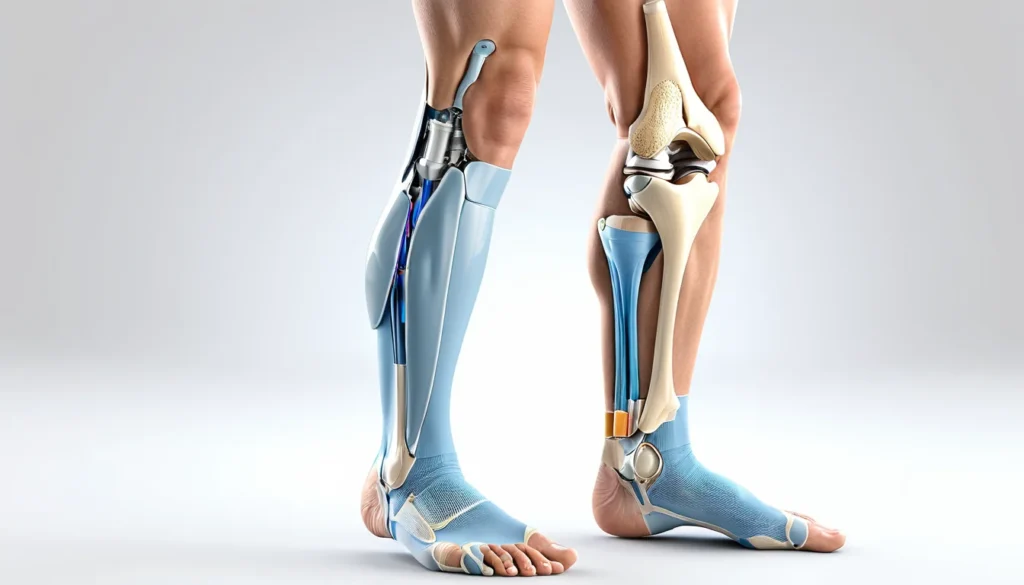
Amputation is the surgical or traumatic removal of a limb or part of a limb, such as an arm, leg, hand, or foot. It is one of the oldest surgical procedures in medicine, yet it remains a life-changing event for thousands of Canadians each year. This article explains the causes, types, surgical process, complications, and recovery involved in amputation — and when to speak with your family doctor or visit a walk-in clinic.
What Is Amputation?
An amputation can happen in two ways. A traumatic amputation occurs suddenly due to an accident or injury. A surgical amputation is a planned procedure performed to save a person’s life or health.
In vascular surgery, amputations of the arms are rare. However, surgeons frequently remove fingers, toes, or sections of the foot, lower leg, or thigh when blood flow to the area is severely reduced. In some cases, a prosthetic limb can replace the amputated part and restore function.
Amputation affects more than just the body. Patients often experience emotional challenges, including depression and anxiety, which can extend the recovery period significantly.
Common Causes of Amputation
There are several major causes of amputation. Understanding these causes can help Canadians recognize risk factors early and work with their healthcare providers to prevent serious complications.
Vascular Disease and Diabetes
Most lower limb amputations happen because the arteries in the legs become blocked or hardened — a condition called atherosclerosis. When blood cannot reach the tissues, they begin to die. This can lead to gangrene, a serious and life-threatening infection.
Because diabetes can accelerate artery hardening, approximately 30 to 40 percent of all amputations are performed on people with diabetes. Diabetic patients are at risk of developing diabetic foot (also known as Charcot foot), as well as chronic skin ulcers on the feet. About seven percent of people with diabetes will develop an active or previously healed foot ulcer, which tends to recur. Of those, between five and fifteen percent will eventually require an amputation — particularly older men who smoke.
When hardening of the arteries becomes so severe that gangrene develops and pain becomes constant, amputation may be the only safe option. In some cases, doctors first try stenting the affected blood vessels or performing a bypass surgery to restore circulation. However, not every patient is a suitable candidate for these procedures. You can learn more about vascular risk factors at Health Canada.
Trauma and Injury
About 75 percent of upper limb amputations result from traumatic injuries. Common causes include motor vehicle accidents, motorcycle crashes, workplace accidents, combat injuries, and animal bites. These amputations are often sudden and require emergency surgical care.
Infections and Tumours
Severe bone infections such as osteomyelitis can destroy tissue to the point where amputation becomes necessary. In addition, malignant tumours — including sarcomas and osteosarcomas — may require removal of the affected limb to prevent the cancer from spreading.
Congenital Conditions
Some children are born with limb differences. These can include congenital amniotic band syndrome, phocomelia, or other conditions that affect limb development before birth.
Types and Levels of Amputation
Amputation can occur at many different levels, depending on how much of the limb is affected. Surgeons always aim to preserve as much healthy tissue as possible.
Upper Limb Amputations
Shoulder disarticulation: Removal of the entire arm at the shoulder joint
Forequarter amputation: Removal of the arm, shoulder blade, and collarbone
Transhumeral amputation: Removal above the elbow, preserving the shoulder joint
Elbow disarticulation: Removal at the elbow joint
Transradial amputation: Removal below the elbow
Wrist disarticulation: Removal at the wrist
Metacarpal amputation: Removal through the hand bones
Digital amputation: Removal of one or more fingers
Lower Limb Amputations
Hemipelvectomy: Internal (part of the pelvis removed, leg saved) or external (leg cannot be saved)
Hip disarticulation: Removal of the entire leg at the hip joint
Transfemoral amputation: Removal above the knee
Knee disarticulation: Removal at the knee joint
Transtibial amputation: Removal below the knee
Ankle disarticulation: Removal at the ankle
Partial foot amputation: Removal of part of the foot
Toe amputation: Removal of one or more toes
How Amputation Surgery Works
Before surgery, doctors use several tests to assess the extent of damage and plan the procedure. These may include X-rays, angiography, Doppler ultrasound, arteriography, venography, and radioactive tracer injections to evaluate blood flow.
During the surgery, the surgeon first ties off the blood vessels supplying and draining the limb. This step prevents dangerous bleeding. Next, the muscles are carefully cut, and the bone is divided using an oscillating saw.
After the bone is smoothed and shaped, the surgeon wraps the remaining muscle and skin over the end of the bone. This creates the residual limb, often called the stump. Proper muscle stabilisation at the end of the stump is important — it allows the muscles to contract efficiently and helps prevent muscle wasting over time.
Complications of Amputation
Like all major surgeries, amputation carries a risk of complications. These can be general or local, and some may affect long-term rehabilitation.
General Complications
Because mobility is reduced after amputation, patients face a higher risk of complications such as pressure sores and deep vein thrombosis (DVT) — dangerous blood clots that form in the deep veins, usually in the legs. Doctors typically prescribe anticoagulant medications such as heparin to lower this risk. Furthermore, patients with existing heart or vascular disease may face increased risk of angina, heart attack, or stroke during recovery.
Local Complications
Infection at the wound site is a common local complication. Surgeons prescribe antibiotics to reduce this risk. However, healing can be slow, especially in patients with poor circulation or diabetes.
In rare cases, a second surgery may be needed to revise the stump or remove additional tissue. Also in exceptional cases, involuntary muscle contractions — called contractures — can develop at the knee or hip. These contractures are often difficult to correct and can prevent a patient from using a prosthetic limb. Therefore, physiotherapy should begin as soon as possible after surgery to prevent them.
Phantom Limb Pain
Phantom pain is one of the most well-known complications of amputation. It refers to the sensation of pain in the part of the limb that has been removed. The pain is usually mild but can be very uncomfortable and distressing.
Over time, most patients adapt to the absence of the limb, and the phantom pain gradually decreases or disappears entirely. If phantom pain is severe or persistent, speak with your family doctor about treatment options. For more information, Mayo Clinic’s guide to phantom pain offers helpful detail.
Amputation Recovery and Rehabilitation
Losing a limb is a permanent disability. It affects a person’s self-image, daily self-care, and ability to move around. Recovery is a long process that involves both physical and emotional healing.
Rehabilitation begins immediately after surgery, even while the patient is still in the acute care phase of treatment. Once the patient’s condition stabilises, a more comprehensive rehabilitation programme is developed. This programme is typically tailored to the individual and may involve physiotherapists, occupational therapists, prosthetists, and mental health professionals.
Prosthetic limbs can significantly improve mobility and independence for many amputees. Modern prosthetics have advanced considerably, offering options that allow people to walk, work, and participate in sports. Provincial health plans across Canada may cover some or all of the cost of a prosthetic device, depending on your province. Check with your provincial health authority or family doctor to find out what is covered under your plan.
Emotional support is equally important. Depression and anxiety are common after amputation, and Canadian patients can access mental health services through their family doctor, walk-in clinic referrals, or community mental health centres. You do not have to navigate this alone. Healthline’s overview of amputation and recovery also provides a useful patient-friendly resource.
When to See a Doctor
If you or a loved one has diabetes, peripheral artery disease, or any condition affecting blood flow to the limbs, it is important to see your family doctor regularly. Early management can often prevent complications from reaching the point where amputation becomes necessary.
Visit a walk-in clinic or go to the emergency room right away if you notice any of the following warning signs:
A wound on the foot or leg that is not healing
Blackening or darkening of skin on the toes or foot
Severe, constant pain in the leg or foot
Signs of infection such as redness, warmth, swelling, or discharge from a wound
A sudden cold, pale, or numb limb, which may signal a blocked artery
After an amputation, contact your surgical team or family doctor if you develop a fever, notice increased redness or discharge at the wound site, or experience worsening pain. Early intervention can prevent serious complications.
Always consult your doctor or a qualified healthcare professional before making decisions about your treatment or recovery plan. The information in this article is for general educational purposes only and does not replace professional medical advice.
Frequently Asked Questions About Amputation
What is the most common reason for amputation in Canada?
The most common reason for amputation in Canada is poor blood circulation caused by diabetes and peripheral artery disease. These conditions can lead to non-healing wounds, infection, and gangrene in the lower limbs. Managing blood sugar levels and cardiovascular health is key to reducing this risk.
What is phantom limb pain after amputation?
Phantom limb pain is a sensation of pain that feels like it is coming from the part of the limb that was removed during amputation. It is a real neurological experience, not imagined. Most patients find that phantom pain decreases over time, and various treatments are available through your healthcare provider.
How long does amputation recovery take?
Recovery after amputation varies from person to person, but most people spend several weeks in hospital before transitioning to a rehabilitation programme. Full rehabilitation, including learning to use a prosthetic limb, can take several months to over a year. Your healthcare team will create a personalised recovery plan for you.
Does provincial health insurance in Canada cover prosthetics after amputation?
Coverage for prosthetics after amputation varies by province. Most provincial health plans cover some portion of prosthetic limb costs, and additional support may be available through workplace insurance or disability benefit programmes. Ask your family doctor or a rehabilitation specialist to help you navigate the options in your province.
Can amputation be prevented in diabetic patients?
In many cases, amputation in diabetic patients can be prevented with early and consistent medical care. Controlling blood sugar, inspecting feet daily, treating wounds promptly, and managing cardiovascular risk factors all significantly reduce the chance of requiring an amputation. Regular check-ups with your family doctor are essential for diabetic foot health.
What is a below-the-knee amputation?
A below-the-knee amputation, also called a transtibial amputation, removes the lower leg below the knee joint while preserving the knee. This type of amputation generally allows for better rehabilitation outcomes compared to above-the-knee amputation. Many patients are fitted with a prosthetic limb and can return to walking with proper physiotherapy support.
Key Takeaways
Amputation is the removal of a limb or part of a limb, either due to trauma or surgery.
The most common causes in Canada include diabetes, peripheral artery disease, trauma, infection, and cancer.
Between 30 and 40 percent of all amputations are performed on patients with diabetes.
Amputations can occur at many levels, from a single toe to an entire limb.
Complications include phantom pain, deep vein thrombosis, infection, and contractures — most of which can be managed with early treatment.
Rehabilitation begins immediately after surgery and includes physiotherapy, prosthetics, and mental health support.
Provincial health plans may cover prosthetic devices — check with your family doctor or provincial health authority.
Early action and good management of chronic conditions like diabetes can prevent many amputations.