Adenoid tissue is a small but important part of your immune system, located at the back of your nose and throat. When this tissue becomes enlarged, it can cause breathing problems, sleep disruption, and repeated ear or throat infections. This article explains what adenoid tissue is, how it works, what happens when it grows too large, and what your options are for treatment in Canada.
What Is Adenoid Tissue?
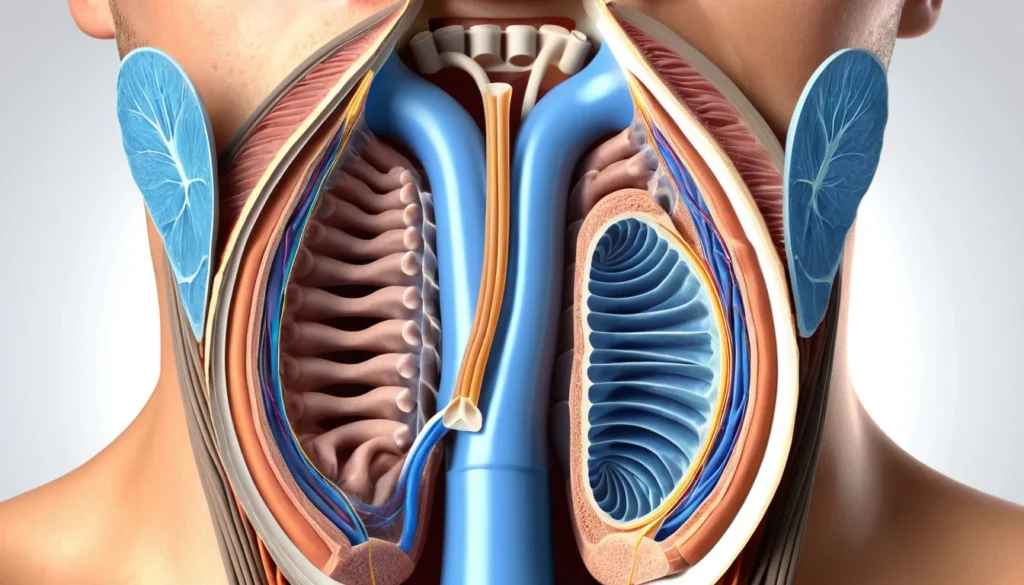
Adenoid tissue refers to a mass of lymphoid tissue sitting at the top of the throat, behind the nose. It is also called the pharyngeal tonsil or Luschka’s tonsil. Unlike the tonsils you can see at the back of your mouth, adenoid tissue is hidden from view.
This tissue is part of the lymphatic system. It helps your body fight off bacteria and viruses, especially during early childhood. Think of it as one of your body’s first lines of defence against infection.
Adenoid tissue is present from birth and usually grows through early childhood. In most people, it begins to shrink naturally around age 7 or 8. By the time a person reaches adulthood, the adenoid tissue has often become very small or nearly disappeared entirely.
How Adenoid Tissue Works in the Body
Your lymphatic system is a network of tissues and organs that help remove waste, toxins, and other unwanted materials. Adenoid tissue plays a key role in this system, particularly in children. It traps germs that enter through the nose and mouth.
When bacteria or viruses pass through the upper airway, adenoid tissue produces white blood cells and antibodies. These fight off infection and help train the immune system. This is why the adenoid tissue is most active — and most important — during early childhood.
However, because the adenoid tissue is constantly exposed to germs, it can become infected or inflamed. When this happens repeatedly, the tissue may grow larger than normal. This condition is known as adenoid hypertrophy, or enlarged adenoids.
Adenoid Tissue vs. Tonsils: What Is the Difference?
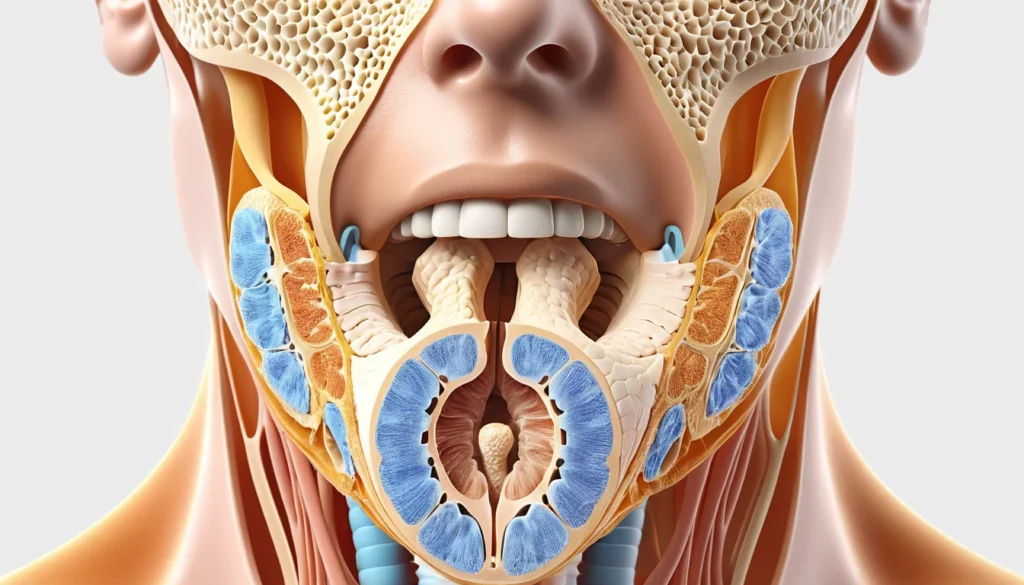
Many people confuse adenoid tissue with the tonsils. Both are made of lymphoid tissue and both are part of the immune system. However, they are located in different parts of the throat.
The tonsils sit at the sides of the back of your mouth. You can see them if you open your mouth wide and look in a mirror. Adenoid tissue, on the other hand, sits higher up, behind the nose. A doctor needs a small camera or an X-ray to get a clear look at it.
Both can become enlarged and cause similar symptoms. In some cases, a child may have both enlarged adenoid tissue and enlarged tonsils at the same time. For more on how the lymphatic system works, visit Healthline’s guide to the lymphatic system.
Causes of Enlarged Adenoid Tissue
Adenoid tissue can become enlarged for several reasons. The most common cause is repeated infection. Each time the adenoid tissue fights off a virus or bacteria, it may swell slightly. Over time, this swelling can become permanent.
Allergies are another common cause. Chronic nasal allergies, such as hay fever or dust mite allergies, can keep the adenoid tissue in a constant state of mild inflammation. As a result, the tissue gradually grows larger.
In some children, the adenoid tissue is simply larger than average from birth. This is not caused by infection or illness. It is just a natural variation in size. These children may show symptoms of enlarged adenoid tissue even without a history of frequent illness.
Risk Factors for Adenoid Enlargement
Certain factors may make a child more likely to develop enlarged adenoid tissue. These include:
Repeated upper respiratory infections, such as colds and strep throat
Chronic allergies, including allergic rhinitis
A family history of enlarged adenoids or tonsils
Exposure to second-hand smoke or air pollution
Attendance at daycare or school, where germs spread easily
Adults can also develop problems with adenoid tissue, though this is much less common. In adults, persistent enlargement should always be checked by a doctor, as it can sometimes signal other conditions.
Symptoms of Enlarged Adenoid Tissue
Enlarged adenoid tissue can cause a wide range of symptoms. Many of these relate to blocked airflow through the nose. Breathing through the mouth is one of the most noticeable signs in children.
Common symptoms include:
Persistent blocked or stuffy nose, even without a cold
Breathing through the mouth, especially during sleep
Loud snoring at night
Noisy or laboured breathing
A nasal-sounding voice
Trouble swallowing, especially solid foods
Frequent ear infections or hearing problems
Disrupted sleep or restlessness at night
Daytime tiredness or difficulty concentrating
In more serious cases, enlarged adenoid tissue can contribute to obstructive sleep apnoea. This is a condition where breathing repeatedly stops and starts during sleep. Sleep apnoea in children can affect behaviour, growth, and learning if left untreated.
Adenoid Face: A Long-Term Effect
When a child breathes through their mouth for a long time, it can affect the way their face develops. Doctors sometimes call this “adenoid face.” Features may include a narrow face, an open mouth at rest, and a slightly elongated appearance to the jaw.
This happens because the muscles and bones of the face respond to the way a child breathes over time. Early treatment of enlarged adenoid tissue can help prevent these long-term changes. Therefore, it is important not to wait too long before seeking medical advice.
You can learn more about the effects of enlarged adenoids on children’s health from the Mayo Clinic’s overview of enlarged adenoids.
How Adenoid Tissue Is Diagnosed
If you or your child has symptoms that suggest enlarged adenoid tissue, your family doctor is the best first point of contact. They will ask about symptoms, how long they have lasted, and whether there is a history of ear or throat infections.
A physical examination usually comes next. Because adenoid tissue is not visible to the naked eye, your doctor may use a small mirror placed at the back of the throat. They may also use a thin, flexible camera called a nasopharyngoscope to look directly at the adenoid tissue.
In some cases, an X-ray of the neck may be taken. This can show how large the adenoid tissue is and how much it is blocking the airway. Your family doctor may also refer your child to a specialist such as an ear, nose, and throat (ENT) surgeon, especially if symptoms are severe or persistent.
Hearing Tests and Sleep Studies
If your child has frequent ear infections or hearing difficulties, your doctor may recommend a hearing test. Enlarged adenoid tissue can block the Eustachian tubes, which connect the throat to the middle ear. This can lead to fluid build-up and hearing loss.
In cases where sleep apnoea is suspected, a sleep study may be ordered. This test monitors breathing patterns, oxygen levels, and sleep quality overnight. In Canada, sleep studies are generally covered by provincial health plans when referred by a physician.
Treatment Options for Enlarged Adenoid Tissue
Treatment depends on the severity of symptoms and the underlying cause. Not all cases of enlarged adenoid tissue require surgery. In many children, the tissue shrinks on its own as they get older.
For mild to moderate cases, your doctor may recommend watchful waiting. This means monitoring symptoms over time to see if they improve. In the meantime, treatment may focus on managing the underlying cause, such as allergies.
Non-Surgical Treatments
If allergies are contributing to adenoid enlargement, your doctor may recommend nasal corticosteroid sprays. These sprays reduce inflammation in the nasal passages and can help shrink the adenoid tissue over time. They are available by prescription and are considered safe for children when used as directed.
Antihistamines and decongestants may also be used to manage allergy symptoms. Saline nasal rinses can help clear the nasal passages and reduce irritation. These are simple, low-cost options that many Canadian families use at home.
If a bacterial infection is causing repeated inflammation, a course of antibiotics may be prescribed. However, antibiotics do not work for viral infections, which are the more common cause of colds and upper respiratory illness.
Adenoidectomy: Surgical Removal
When symptoms are severe, persistent, or causing complications such as sleep apnoea or repeated ear infections, a doctor may recommend an adenoidectomy. This is a surgical procedure to remove the adenoid tissue entirely.
Adenoidectomy is one of the most common surgeries performed on children in Canada. It is a relatively short procedure, usually taking about 30 minutes under general anaesthesia. Most children go home the same day and recover fully within one to two weeks.
The adenoid tissue does not grow back in most cases. Removing it does not weaken the immune system significantly, because other parts of the lymphatic system take over its functions. For more information on this procedure, see Health Canada’s patient resources.
When to See a Doctor
You should speak with your family doctor if you notice ongoing symptoms that suggest enlarged adenoid tissue. These symptoms include persistent mouth breathing, loud snoring, frequent ear infections, or signs of poor sleep in your child.
If you do not have a family doctor, a walk-in clinic is a good first step. Most provinces allow walk-in clinic visits for non-emergency concerns like these. The clinic doctor can assess symptoms and provide a referral if needed.
Seek immediate medical attention if your child stops breathing for noticeable periods during sleep, turns blue around the lips, or seems extremely tired and difficult to wake. These can be signs of severe sleep apnoea that need urgent care.
As a general reminder, always consult your doctor or a qualified healthcare provider before starting any treatment or making decisions about your child’s health. Only a professional who knows your child’s full history can give you the right advice.
Frequently Asked Questions About Adenoid Tissue
What is adenoid tissue and where is it located?
Adenoid tissue is a mass of lymphoid tissue located at the back of the nose, high in the throat. It is part of the immune system and helps fight infection in young children. Unlike the tonsils, adenoid tissue cannot be seen without special medical instruments.
What are the signs that adenoid tissue is enlarged?
Common signs of enlarged adenoid tissue include a persistently stuffy nose, breathing through the mouth, loud snoring, and frequent ear infections. Children may also seem tired during the day or have trouble concentrating. If these symptoms last more than a few weeks, it is worth speaking with a doctor.
Does removing adenoid tissue affect the immune system?
Removing adenoid tissue does not significantly weaken the immune system. Other lymphoid tissues in the body take over its role in fighting infection. Most children who have an adenoidectomy do not experience more illnesses afterward than before.
Can adults have problems with adenoid tissue?
Yes, although it is much less common, adults can develop enlarged or inflamed adenoid tissue. In adults, persistent symptoms should always be evaluated by a doctor. In rare cases, adenoid enlargement in adults may need further investigation to rule out other conditions.
Is adenoid surgery covered by provincial health plans in Canada?
In most Canadian provinces, an adenoidectomy is covered by the provincial health plan when deemed medically necessary. Your family doctor or specialist will provide the necessary referral and documentation. Coverage details can vary, so it is always a good idea to confirm with your provincial health authority.
At what age does adenoid tissue naturally shrink?
Adenoid tissue typically begins to shrink around age 7 to 8 and continues to reduce in size through adolescence. By adulthood, it is often very small or undetectable. This natural process means that some children who experience problems with adenoid tissue may see their symptoms improve on their own over time.
Key Takeaways
Adenoid tissue is lymphoid tissue at the back of the nose and throat that helps fight infection in children.
It naturally shrinks during adolescence and is usually not a concern in healthy adults.
Enlarged adenoid tissue can cause mouth breathing, snoring, ear infections, and sleep problems.
Common causes include repeated infections and chronic allergies.
Treatment ranges from nasal sprays and allergy management to surgical removal (adenoidectomy).
Adenoidectomy is a common, safe procedure in Canada and is generally covered by provincial health plans.
If you notice persistent symptoms in your child, speak with your family doctor or visit a walk-in clinic.
Always consult a healthcare professional before pursuing any treatment plan.