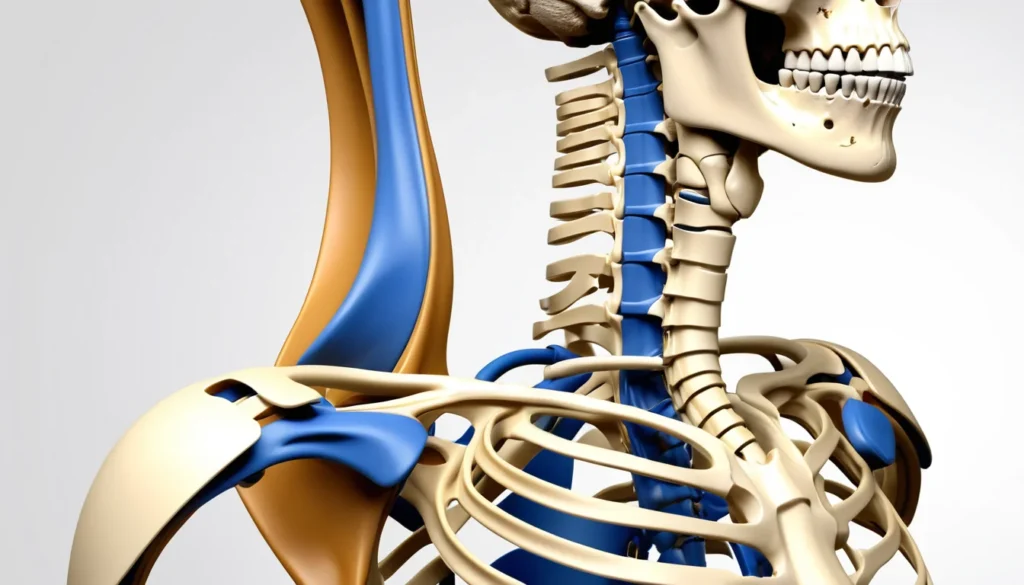
The acromion is a small but important bony structure at the top of your shoulder. It forms the highest point of the shoulder blade, also called the scapula. Understanding what the acromion does — and what can go wrong with it — can help you take better care of your shoulder health. This article explains the anatomy, common conditions, symptoms, and when to visit your family doctor or a walk-in clinic.
What Is the Acromion?
The acromion is a bony projection that extends from the top of the shoulder blade. It sits above the shoulder joint and forms part of the roof over it. You can actually feel it if you run your finger along the top of your shoulder — it is the hard, flat bump right at the tip.
The word “acromion” comes from the Greek words meaning “peak of the shoulder.” That name fits well. It is the highest point of the entire shoulder complex. It connects to the collarbone (clavicle) through a joint called the acromioclavicular (AC) joint.
The acromion plays a key role in protecting the shoulder. It acts like a roof over the rotator cuff tendons and the bursa, which is a small fluid-filled sac that reduces friction. Without the acromion, these soft tissues would be exposed to direct impact and wear.
The Acromion and the Shoulder Joint
The shoulder is one of the most mobile joints in the human body. It allows your arm to move in almost every direction. The acromion helps guide and protect these movements by keeping the soft tissues underneath in place.
Between the acromion and the rotator cuff tendons, there is a narrow space called the subacromial space. This space is only a few millimetres wide. When something narrows it further — such as a bone spur or swelling — pain and injury can follow.
Types of Acromion Shape
Not every acromion looks the same. Researchers have identified three main shapes. Each shape carries a different level of risk for shoulder problems.
Type I (Flat): The underside of the acromion is flat. This shape puts the least pressure on the rotator cuff tendons. It is associated with the lowest risk of injury.
Type II (Curved): The underside curves gently downward. This is the most common shape. It carries a moderate risk of impingement over time.
Type III (Hooked): The front edge hooks downward. This shape significantly narrows the subacromial space. It is strongly linked to rotator cuff tears and shoulder impingement.
Some researchers also describe a fourth type, called a flat or convex shape, though the three-type classification remains most widely used. Your doctor can identify your acromion type through imaging such as an X-ray or MRI.
What Causes a Hooked Acromion?
A hooked acromion can be something you are born with. However, it can also develop over time. Repeated overhead activities — such as swimming, painting, or working on a construction site — can gradually change the shape of the acromion. Bone spurs may also grow on the underside, creating a hook-like appearance.
Age is another factor. As we get older, our tendons become less elastic. At the same time, the acromion may develop additional bony growth. This combination increases the risk of shoulder problems significantly.
Common Acromion-Related Conditions
Several shoulder conditions involve the acromion directly. These range from mild irritation to serious structural damage. Understanding each one helps you recognize symptoms early.
Shoulder Impingement Syndrome
Shoulder impingement is one of the most common causes of shoulder pain in Canadian adults. It happens when the rotator cuff tendons get pinched between the acromion and the upper arm bone (humerus). This pinching causes pain, especially when you lift your arm above your head.
Activities like reaching into a high cabinet, throwing a ball, or swimming can trigger symptoms. The pain often feels sharp at first and may become a dull ache over time. Many Canadians manage this condition well with physiotherapy and rest. Learn more about rotator cuff and shoulder injuries at Mayo Clinic.
Rotator Cuff Tears
The rotator cuff is a group of four muscles and their tendons that surround the shoulder joint. A hooked acromion can repeatedly rub against these tendons, leading to partial or full tears. Rotator cuff tears are more common in people over 40.
A partial tear means the tendon is damaged but still attached. A full tear means the tendon has separated completely from the bone. Both types cause significant pain and weakness. However, not all tears need surgery — many respond well to physiotherapy and other non-surgical treatments.
Acromioclavicular (AC) Joint Injury
The AC joint connects the acromion to the collarbone. It is a common site of injury, especially from falls onto the shoulder or direct impacts — which are common in contact sports like hockey or football. An AC joint sprain or separation can cause pain, swelling, and a visible bump at the top of the shoulder.
In Canada, AC joint injuries are frequently seen in emergency departments and walk-in clinics after sports-related accidents. Most minor AC joint injuries heal with rest, ice, and over-the-counter pain relief. More severe separations may need physiotherapy or surgical repair.
Subacromial Bursitis
Bursitis occurs when the bursa beneath the acromion becomes inflamed. This small sac normally cushions the tendons from the bone. When irritated, it swells and causes pain with almost any shoulder movement. The pain is often worse at night and may disrupt sleep.
Subacromial bursitis frequently occurs alongside impingement syndrome. Therefore, treatment usually addresses both conditions at the same time. Healthline has a helpful overview of bursitis and its treatment options.
Symptoms to Watch For
Acromion-related problems share several common symptoms. Recognizing them early can prevent the condition from getting worse. Here are the most common signs:
Pain at the top or front of the shoulder
Pain that worsens when lifting your arm above shoulder height
Weakness in the arm or shoulder
A clicking, snapping, or catching sensation in the shoulder
Pain that disturbs sleep, especially when lying on the affected side
Reduced range of motion in the shoulder
Swelling or tenderness around the shoulder tip
These symptoms can develop gradually or appear suddenly after an injury. In addition, they can affect daily tasks like getting dressed, reaching behind your back, or carrying groceries. Do not ignore persistent shoulder pain — early treatment almost always leads to better outcomes.
Diagnosis and Treatment Options
If your shoulder is bothering you, a healthcare provider will first take a detailed history and perform a physical exam. They may ask you to raise your arm in different directions while they watch for pain or restriction. This helps them narrow down which structures are involved.
Imaging Tests
Your doctor may order imaging to get a clearer picture. An X-ray can show the shape of your acromion and any bone spurs. An MRI provides more detail about the soft tissues — including the rotator cuff tendons and bursa. Ultrasound is another tool some clinicians use to assess tendons in real time.
In Canada, imaging is typically requested through your family doctor or specialist. Wait times can vary by province. However, your doctor will prioritize based on the severity of your symptoms.
Non-Surgical Treatments
Most acromion-related conditions respond well to non-surgical care. Treatment usually begins with rest and activity modification. Your doctor or physiotherapist may recommend the following:
Physiotherapy: Targeted exercises strengthen the rotator cuff and improve posture. This takes pressure off the acromion and surrounding tissues.
Ice and heat therapy: Ice reduces swelling in the early stages. Heat can help relax tight muscles later in recovery.
Anti-inflammatory medications: Over-the-counter options like ibuprofen can help manage pain and swelling. Always follow the recommended dose.
Corticosteroid injections: If other treatments do not help, a corticosteroid injection into the subacromial space can reduce inflammation. These are typically given by a physician.
Furthermore, posture correction plays a big role in recovery. Slouching at a desk or rounding your shoulders puts extra stress on the acromion and the structures beneath it. A physiotherapist can guide you through ergonomic changes at work and at home.
Surgical Options
Surgery is considered when non-surgical treatments have not worked after several months. The most common procedure is called subacromial decompression, or acromioplasty. During this surgery, a surgeon trims the underside of the acromion to create more space for the tendons below.
This procedure is often done arthroscopically — meaning through very small incisions using a tiny camera. Recovery time varies but typically involves several weeks of physiotherapy. As a result, most patients regain good shoulder function. Health Canada provides guidance on navigating surgical care and patient rights in Canada.
When to See a Doctor
You should visit your family doctor or a walk-in clinic if you have shoulder pain that lasts more than a week or two without improvement. Do not wait if your pain is severe, if you cannot lift your arm, or if your shoulder feels unstable or gives way.
A sudden injury — such as a fall or a direct blow to the shoulder — also warrants a prompt visit. In that case, a walk-in clinic can assess you quickly and arrange imaging if needed. Your family doctor can then follow up with a referral to a physiotherapist or an orthopaedic specialist if required.
Always remember that shoulder conditions are very treatable, especially when caught early. A knowledgeable healthcare provider can help you find the right treatment plan for your specific situation. Never self-diagnose or delay care if your symptoms are affecting your daily life.
Frequently Asked Questions
What is the acromion and where is it located?
The acromion is a bony projection at the very top of the shoulder blade (scapula). It forms the highest point of the shoulder and connects to the collarbone through the acromioclavicular joint. You can feel it as the hard, flat tip at the top of your shoulder.
What problems can the acromion cause?
A misshapen or hooked acromion can narrow the space beneath it, pinching the rotator cuff tendons and bursa. This leads to conditions like shoulder impingement syndrome, subacromial bursitis, and rotator cuff tears. These problems cause shoulder pain, weakness, and reduced movement.
How is an acromion problem treated?
Most acromion-related conditions are treated without surgery through physiotherapy, rest, anti-inflammatory medication, and corticosteroid injections. If these methods do not provide relief after several months, a surgeon may perform a minimally invasive procedure to create more space under the acromion. Recovery typically involves several weeks of guided physiotherapy.
Can a hooked acromion heal on its own?
A hooked acromion will not change shape on its own, but the symptoms it causes can often be managed effectively without surgery. Strengthening the muscles around the shoulder and improving posture can reduce pressure on the affected area. Many people live comfortably with a hooked acromion by following a consistent physiotherapy programme.
Is acromion pain common in Canada?
Yes, shoulder pain related to the acromion is very common among Canadian adults, particularly those over 40 or those who do repetitive overhead work or sport activities. Shoulder impingement and rotator cuff injuries are among the most frequent reasons Canadians visit physiotherapy clinics and orthopaedic specialists. Early assessment through your family doctor or walk-in clinic is the best first step.
What does acromion pain feel like?
Acromion-related pain is usually felt at the front or top of the shoulder and may radiate down the outer arm. It often worsens when raising the arm above shoulder height or reaching behind the back. Many people also notice the pain is worse at night, especially when lying on the affected side.
Key Takeaways
The acromion is a bony tip at the top of the shoulder blade that protects the rotator cuff tendons and bursa.
There are three main acromion shapes — flat, curved, and hooked — and a hooked shape increases the risk of shoulder problems.
Common conditions linked to the acromion include shoulder impingement, rotator cuff tears, AC joint injuries, and subacromial bursitis.
Symptoms include shoulder pain, weakness, clicking sensations, and disturbed sleep.
Most conditions respond well to non-surgical treatments such as physiotherapy, rest, and anti-inflammatory medication.
Surgery is available when other treatments fail and involves trimming the acromion to create more space for the tendons.
See your family doctor or visit a walk-in clinic if your shoulder pain persists, worsens, or follows an injury.
Always consult a qualified healthcare provider before beginning any treatment for shoulder pain.