Achondroplasia is the most common cause of dwarfism in the world. It is a bone growth disorder that affects how the skeleton develops, leading to shorter arms, legs, and stature. In Canada and globally, achondroplasia affects approximately one in every 20,000 live births. This article explains what achondroplasia is, what causes it, how it is diagnosed, and what support and treatment options are available to Canadians living with this condition.
What Is Achondroplasia?
Achondroplasia is a genetic condition that affects bone growth, particularly the long bones of the arms and legs. The word comes from the Greek meaning “without cartilage formation.” However, the real problem is not a lack of cartilage — it is that cartilage does not convert into bone normally during development.
People with achondroplasia have a normal-sized trunk but shorter limbs. Their head may also appear larger than average, with a prominent forehead. Intelligence and life expectancy are generally normal, though some health complications can arise over time.
Achondroplasia is classified as a rare disorder. It is not a disease that develops over time — it is present from birth and remains a lifelong condition. For many people living with achondroplasia, the focus is on managing complications and living full, active lives.
Causes of Achondroplasia: The Role of Genetics
Achondroplasia is caused by a change (mutation) in the FGFR3 gene — short for fibroblast growth factor receptor 3. This gene normally helps regulate bone growth. When the mutation occurs, FGFR3 becomes overactive and slows the growth of bone.
In about 80% of cases, the mutation is not inherited from a parent. Instead, it happens randomly — what doctors call a “de novo” or spontaneous mutation. This means a child can be born with achondroplasia even when neither parent carries the gene change.
However, achondroplasia can also be inherited. It follows an autosomal dominant pattern, which means only one copy of the changed gene is needed to cause the condition. If one parent has achondroplasia, each child has a 50% chance of inheriting it. If both parents have the condition, the risk is higher, and some gene combinations can be life-threatening for the baby.
Advanced paternal age (older fathers) has been linked to a slightly higher chance of the spontaneous mutation occurring. Researchers continue to study the exact mechanisms behind this link. For more detailed genetic information, you can visit the Health Canada official resource page.
Signs and Symptoms of Achondroplasia
The signs of achondroplasia are usually visible at birth, and in many cases, the condition can even be detected before birth through ultrasound. Knowing what to look for helps families and healthcare providers plan for appropriate support early on.
Physical Features
The most recognizable feature of achondroplasia is short stature. The average adult height for someone with achondroplasia is about 131 cm (4 feet, 4 inches) for men and 124 cm (4 feet, 1 inch) for women. Other common physical features include:
Shorter arms and legs, especially the upper arms and thighs
A larger-than-average head (macrocephaly) with a prominent forehead
A flattened bridge of the nose
Crowded teeth due to a smaller jaw
Curved lower spine (lordosis or kyphosis)
Bowed legs
Flexible joints, particularly in the elbows and knees
Short, wide hands with a “trident” finger pattern
Developmental and Health Concerns
Children with achondroplasia may reach some milestones — such as sitting and walking — slightly later than other children. This is largely due to the structural differences in their bodies, not intellectual development. Most children with achondroplasia have typical cognitive development.
However, several health issues can arise and should be monitored carefully. These include:
Sleep apnea — breathing pauses during sleep, often due to airway narrowing
Ear infections — more frequent due to differences in ear canal structure
Hydrocephalus — a build-up of fluid around the brain, which can occur in some infants
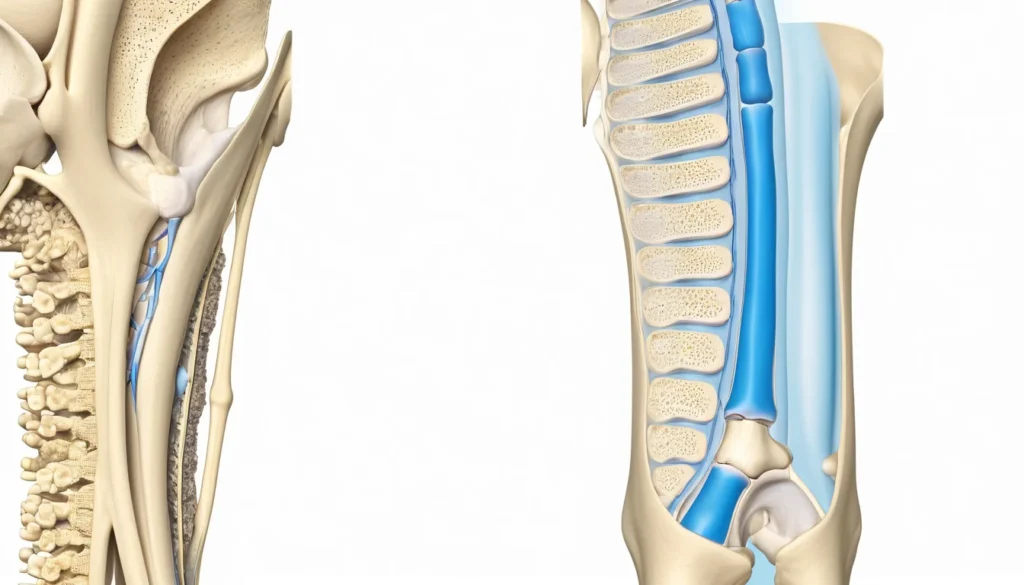
Spinal stenosis — narrowing of the spinal canal, which can cause pain or weakness in adults
Back pain — a common concern in adults due to spinal curvature
Weight gain — which can worsen joint and spine problems if not managed
Early monitoring by a knowledgeable healthcare team can catch these issues before they become serious. You can learn more about bone and growth disorders at the Mayo Clinic’s guide to achondroplasia.
How Is Achondroplasia Diagnosed?
Achondroplasia can be diagnosed before or after birth. Diagnosis usually combines imaging, physical assessment, and genetic testing.
Prenatal Diagnosis
During routine prenatal ultrasounds, healthcare providers may notice signs of achondroplasia as early as the second trimester. These signs include shorter-than-expected limb measurements. If achondroplasia is suspected, genetic testing of the amniotic fluid (amniocentesis) or placental tissue (chorionic villus sampling) can confirm the FGFR3 mutation.
In Canada, prenatal screening programmes are available through provincial health plans. If your ultrasound raises concerns, your family doctor or midwife can refer you to a genetic counsellor or maternal-fetal medicine specialist.
Postnatal Diagnosis
After birth, a paediatrician may recognize the physical features of achondroplasia during a newborn exam. X-rays of the skeleton can reveal the characteristic bone changes. A blood test for the FGFR3 gene mutation confirms the diagnosis.
Early diagnosis is important so that families can connect with specialists — including paediatric orthopaedic surgeons, neurologists, and physiotherapists — who understand achondroplasia well.
Treatment and Management of Achondroplasia
There is no cure for achondroplasia, but there are several treatments and strategies that can improve quality of life and manage complications. Care is usually coordinated through a team of specialists.
Medical Treatments
In 2021, a new medication called vosoritide (Voxzogo) was approved in some countries for children with achondroplasia who are still growing. This drug works by blocking the overactive FGFR3 pathway, helping bones grow at a closer-to-normal rate. As of 2024, it has received approval in Canada and may be covered depending on your provincial drug plan. Speak with your specialist about eligibility.
Growth hormone therapy has also been used in some cases, though its effectiveness for achondroplasia specifically is more limited than for other growth conditions. It is not a standard treatment but may be considered in certain situations.
Surgical Options
Some individuals choose limb lengthening surgery. This is a major procedure that gradually stretches the bone over months. It can add height and improve function in some cases. However, it is not right for everyone, involves significant recovery time, and requires careful discussion with a specialist team.
Surgery may also be needed to treat spinal stenosis, hydrocephalus, or severe skeletal deformities. These decisions are made on an individual basis, based on symptoms and quality of life.
Supportive Care and Lifestyle
Physiotherapy and occupational therapy play an important role in helping people with achondroplasia stay active and independent. Adaptive equipment — such as step stools, raised toilet seats, and specially fitted vehicles — can make daily life easier and safer.
Maintaining a healthy weight is especially important for people with achondroplasia, as extra weight puts more stress on the spine and joints. A dietitian can help with personalized nutrition guidance. Furthermore, regular low-impact exercise — such as swimming or cycling — can support joint health without adding excessive strain. More information on living with bone conditions is available through Healthline’s achondroplasia resource.
Living With Achondroplasia in Canada
Many Canadians with achondroplasia live full, independent, and rewarding lives. With the right support, most people manage well in school, work, and community settings. However, social and accessibility challenges are real and should not be minimized.
In Canada, people with achondroplasia may qualify for disability support programmes through their province, including the Disability Tax Credit (DTC) and other provincial benefits. Connecting with advocacy organizations can help families understand their rights and access resources.
Schools across Canada are required to provide accommodations for students with physical differences. This may include adjusted furniture, extra time for tasks, or physical support. Families should work closely with school boards and healthcare teams to put the right plan in place.
Mental health support is also important. Children and adults with achondroplasia may face bullying, social exclusion, or challenges with body image. Counselling, peer support groups, and community organizations can make a meaningful difference in overall wellbeing.
When to See a Doctor
If you or your child shows signs that may be related to achondroplasia, speak with your family doctor as soon as possible. In Canada, your family doctor is your first point of contact for a referral to a geneticist or specialist. If you do not have a family doctor, a walk-in clinic can provide an initial assessment and referral.
Seek prompt medical attention if a child with achondroplasia experiences any of the following:
Difficulty breathing during sleep or loud, irregular snoring
Signs of hydrocephalus, such as a rapidly growing head circumference or unusual irritability
Weakness, numbness, or changes in bladder or bowel function (possible signs of spinal cord compression)
Developmental delays beyond what is expected
Severe or worsening back pain
Adults with achondroplasia should have regular check-ups with their healthcare provider to monitor for spinal stenosis and other complications that can develop over time. Always consult a qualified healthcare professional before making any changes to your treatment plan or starting new therapies.
Frequently Asked Questions About Achondroplasia
What is achondroplasia and how common is it?
Achondroplasia is the most common form of dwarfism, caused by a mutation in the FGFR3 gene that affects bone growth. It occurs in approximately one in every 20,000 live births worldwide. Most cases of achondroplasia occur as a spontaneous genetic mutation, with no family history of the condition.
Is achondroplasia hereditary?
Achondroplasia can be inherited, but in about 80% of cases, it results from a new (spontaneous) gene mutation rather than being passed down from a parent. When a parent has achondroplasia, each child has a 50% chance of inheriting the condition. Genetic counselling is strongly recommended for families with a history of achondroplasia.
Can achondroplasia be detected before birth?
Yes, achondroplasia can often be detected during a prenatal ultrasound, usually in the second trimester, when shorter-than-normal limb measurements are observed. Genetic testing through amniocentesis or chorionic villus sampling can confirm the FGFR3 mutation before birth. In Canada, prenatal screening programmes are available through provincial health plans.
What is the life expectancy for someone with achondroplasia?
Most people with achondroplasia have a normal or near-normal life expectancy. However, certain complications — such as sleep apnea, spinal stenosis, and cardiovascular issues — can affect health over time if left unmanaged. Regular medical follow-up is important for people living with achondroplasia throughout their lives.
Is there a treatment or cure for achondroplasia?
There is currently no cure for achondroplasia, but treatments are available to manage symptoms and complications. A medication called vosoritide has been approved in Canada to help slow bone growth abnormalities in children who are still growing. Physiotherapy, surgery, and supportive care also play important roles in managing achondroplasia effectively.
Does achondroplasia affect intelligence?
No, achondroplasia does not affect intelligence. People with achondroplasia have typical cognitive development and intellectual ability. The condition affects bone and skeletal growth only, and most individuals with achondroplasia lead full, independent, and intellectually rich lives.
Key Takeaways
Achondroplasia is the most common form of dwarfism, caused by a mutation in the FGFR3 gene. It affects approximately one in 20,000 births and is present from birth. About 80% of cases result from a spontaneous mutation, not an inherited one. Common features include shorter limbs, a larger head, and a normal-sized trunk. Intelligence and life expectancy are generally normal, though health complications require monitoring. Achondroplasia can be detected before birth through ultrasound and genetic testing. Treatments include vosoritide medication, physiotherapy, surgery when needed, and supportive care. Canad