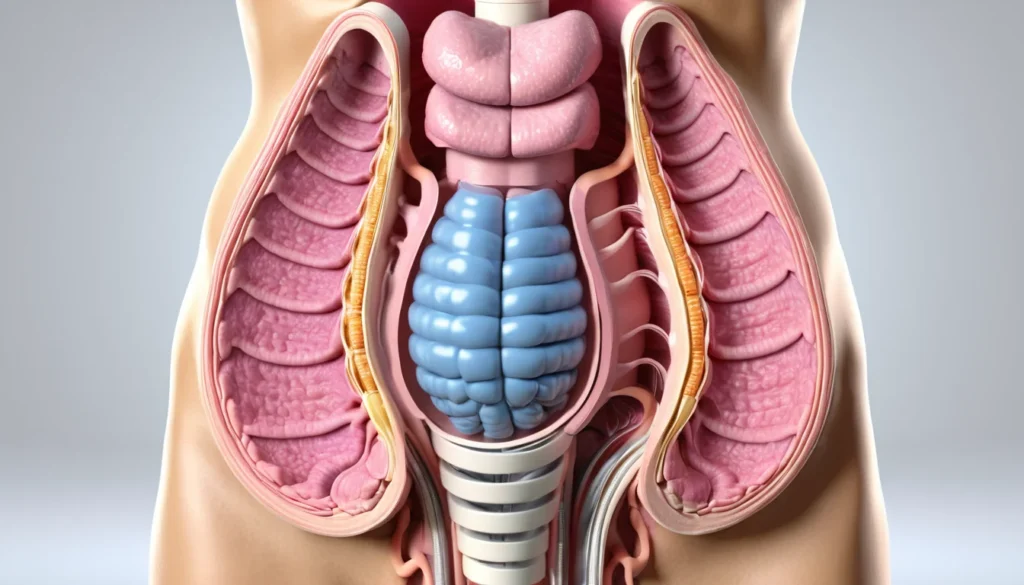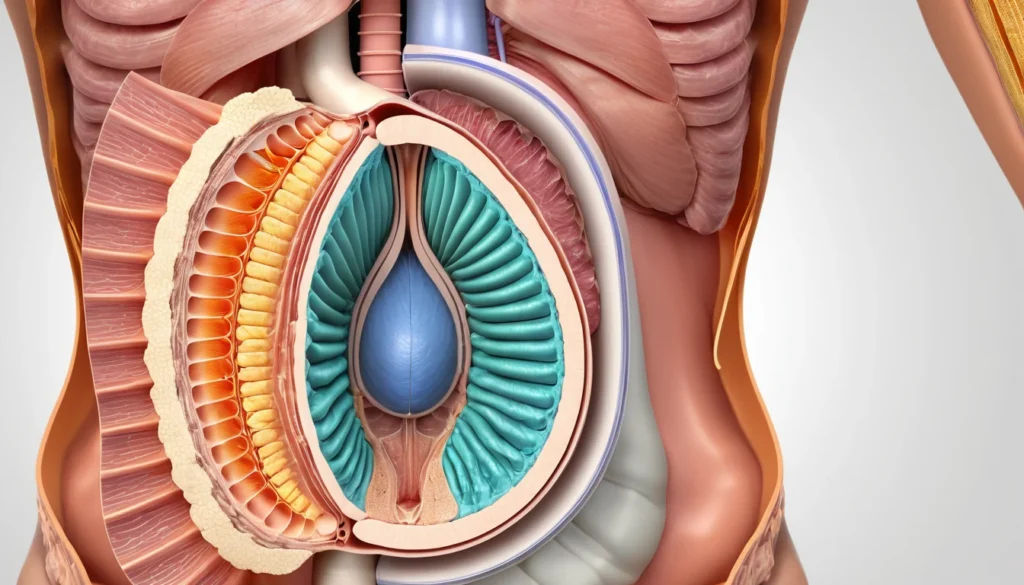
Achalasia is a rare but serious swallowing disorder that affects the muscles of the esophagus — the tube that carries food from your mouth to your stomach. In achalasia, the lower esophageal sphincter (the muscular valve at the bottom of the esophagus) fails to relax properly during swallowing. As a result, food and liquid have difficulty passing into the stomach. This article explains what achalasia is, how it is diagnosed, and what treatment options are available to Canadians.
What Is Achalasia?
The esophagus normally works by squeezing food downward using a series of coordinated muscle contractions called peristalsis. In people with achalasia, these normal wave-like contractions are absent or severely weakened in the lower two-thirds of the esophagus.
At the same time, the lower esophageal sphincter stays abnormally tight. In a healthy esophagus, this sphincter opens when you swallow to let food pass through. With achalasia, it does not open properly. This means food, liquid, and even saliva can build up in the esophagus instead of moving into the stomach.
Achalasia is considered an esophageal motility disorder. According to Mayo Clinic’s overview of achalasia, the condition affects roughly 1 in 100,000 people per year. It can develop at any age, but it is most commonly diagnosed in adults between 25 and 60 years old.
What Causes Achalasia?
Doctors do not yet fully understand what causes achalasia. However, research suggests that the condition results from damage to the nerve cells in the esophageal wall. These nerves are responsible for co-ordinating the muscle movements that push food downward.
Possible Triggers
Some researchers believe an autoimmune reaction may be involved. This means the body’s immune system may mistakenly attack the nerve cells in the esophagus. In some parts of the world, a parasitic infection called Chagas disease can cause similar damage to the esophagus, but this is rare in Canada.
Genetics may also play a small role. A family history of achalasia slightly increases your risk. Furthermore, some studies suggest a possible link between certain viral infections and the onset of the condition, though this connection is still being studied.
What Achalasia Is Not
It is important to note that achalasia is not caused by diet, lifestyle choices, or stress. It is also different from gastroesophageal reflux disease (GERD), although both conditions affect the esophagus. If you are experiencing swallowing difficulties, your family doctor can help identify the right cause.
Recognizing the Symptoms of Achalasia
The symptoms of achalasia tend to develop gradually over months or even years. Many people adapt to the discomfort without realizing something is seriously wrong. This makes early diagnosis more challenging.
The most common symptom is dysphagia, which means difficulty swallowing. People with achalasia often feel like food is getting stuck in their chest or throat. This can happen with both solid foods and liquids, which sets achalasia apart from many other swallowing problems.
Common Symptoms to Watch For
Difficulty swallowing both solids and liquids
Regurgitation of undigested food or liquid
Chest pain or discomfort, especially after eating
Heartburn that does not respond to antacids
Unexplained weight loss due to difficulty eating
Coughing or choking, particularly at night
A feeling of fullness or pressure behind the breastbone
In some cases, people may inhale small amounts of regurgitated food into the lungs. This is called aspiration and can lead to pneumonia if left unaddressed. Therefore, it is important not to ignore persistent swallowing difficulties.
How Is Achalasia Diagnosed?
Diagnosing achalasia typically involves several tests. Your family doctor or a gastroenterologist — a specialist in digestive diseases — will usually order these tests after reviewing your symptoms and medical history.
Esophageal Manometry
This is the most important test for diagnosing achalasia. A thin, flexible tube is passed through your nose or mouth into your esophagus. It measures the pressure and muscle activity inside the esophagus as you swallow. Achalasia shows a very distinct pattern on this test, making it the gold standard for diagnosis.
Barium Swallow X-Ray
During this test, you swallow a chalky liquid called barium. The barium coats the inside of your esophagus and shows up clearly on X-rays. In achalasia, the images often reveal a characteristic “bird-beak” appearance at the lower end of the esophagus where it narrows at the sphincter.
Upper Endoscopy
A gastroenterologist may also perform an upper endoscopy. This involves passing a thin, flexible camera down your throat to look directly at the esophagus and stomach. While this test cannot diagnose achalasia on its own, it helps rule out other conditions such as cancer or strictures that can mimic achalasia symptoms.
In Canada, your provincial health plan typically covers these diagnostic procedures when referred by a physician. Ask your family doctor for a referral if you have ongoing swallowing concerns. For more information on digestive health assessments, visit Health Canada’s official health information page.
Treatment Options for Achalasia
There is currently no cure that fully restores normal esophageal function. However, several effective treatments can relieve symptoms and significantly improve quality of life. The goal of achalasia treatment is to reduce pressure at the lower esophageal sphincter and help food move into the stomach more easily.
Pneumatic Dilation
This is one of the most commonly used treatments for achalasia. A balloon is inserted into the lower esophageal sphincter and inflated to stretch and weaken the muscle. The procedure is done during an endoscopy and requires no major surgery. Many patients experience significant relief, though some may need the procedure repeated over time.
Surgical Myotomy (Heller Myotomy)
In this procedure, a surgeon cuts the tight muscles of the lower esophageal sphincter to allow food to pass more easily. Today, most surgeons perform this as a minimally invasive laparoscopic procedure. It has a high long-term success rate and is often combined with an anti-reflux procedure to prevent heartburn afterward.
POEM Procedure
Peroral Endoscopic Myotomy (POEM) is a newer, less invasive technique. A gastroenterologist uses an endoscope to cut the sphincter muscles from inside the esophagus, with no external incisions. POEM is available at several major Canadian medical centres and has shown excellent results. However, it carries a higher risk of acid reflux compared to surgical myotomy.
Botox Injections
Botulinum toxin (Botox) can be injected directly into the lower esophageal sphincter during an endoscopy. This temporarily relaxes the sphincter muscle and relieves symptoms. It is a lower-risk option and is often recommended for older patients or those who are not good candidates for surgery. The effects typically last between 6 and 12 months before repeat injections are needed.
Medications
Certain medications, such as calcium channel blockers or nitrates, can relax the esophageal sphincter. However, these drugs tend to be less effective than the procedures described above. They may be used as a short-term option while waiting for a procedure or for patients who cannot tolerate other treatments.
For a detailed comparison of these treatment approaches, Healthline’s guide to achalasia treatments provides useful information written for general readers.
Living With Achalasia
Managing achalasia day-to-day involves more than just medical treatment. Simple changes in eating habits can make a meaningful difference in comfort and quality of life.
Eating slowly and chewing food thoroughly can help reduce the feeling of food getting stuck. Drinking plenty of water with meals may also help wash food down into the stomach. Many people find that standing upright after meals — rather than lying down — eases symptoms as well.
Emotional and Nutritional Impact
Achalasia can take a toll beyond the physical. Difficulty eating at social events or restaurants can feel isolating. In addition, unintended weight loss from reduced food intake can become a concern. Speaking with a registered dietitian can help you maintain a balanced, nutritious diet despite swallowing challenges.
If you feel anxious or discouraged about your condition, this is completely normal. Many Canadians living with chronic digestive conditions benefit from speaking with a mental health professional or joining a support community. Your family doctor can connect you with the right resources through your provincial health plan.
When to See a Doctor
You should speak with your family doctor if you experience persistent difficulty swallowing, unexplained weight loss, or food coming back up after eating. These symptoms should never be ignored, even if they seem mild at first.
If you do not have a family doctor, a walk-in clinic can be a good first step. A walk-in physician can assess your symptoms, order initial tests, and refer you to a gastroenterologist if needed. Early diagnosis of achalasia leads to better outcomes, so do not delay seeking care.
Seek emergency care immediately if you experience severe chest pain, as this can sometimes be confused with a heart attack. It is always better to get checked out and rule out a serious cause. As with any health concern, please consult a qualified healthcare provider for advice tailored to your personal situation.
Frequently Asked Questions About Achalasia
Is achalasia a serious condition?
Achalasia is a chronic condition that requires ongoing management, but it is not typically life-threatening when properly treated. Without treatment, achalasia can lead to complications such as aspiration pneumonia, severe weight loss, and a small increased risk of esophageal cancer over time. Seeing a doctor early is the best way to manage the condition effectively.
Can achalasia go away on its own?
Unfortunately, achalasia does not go away on its own. It is a progressive condition, meaning symptoms typically worsen over time without treatment. However, with the right medical intervention, most people with achalasia can experience significant symptom relief and a good quality of life.
What does achalasia feel like?
Most people with achalasia describe a sensation of food or liquid getting stuck in the middle of the chest after swallowing. You may also experience regurgitation of undigested food, chest discomfort, and sometimes heartburn that does not respond to regular antacids. These symptoms can vary in severity from person to person.
How is achalasia treated in Canada?
In Canada, achalasia is treated by gastroenterologists and thoracic surgeons at hospitals and digestive health centres across the country. Common treatments include pneumatic dilation, laparoscopic Heller myotomy, and the POEM procedure, all of which are available at major Canadian medical centres. Most procedures are covered under provincial health plans when referred by a physician.
Is achalasia the same as GERD?
No, achalasia and GERD (gastroesophageal reflux disease) are two different conditions, although they can share some similar symptoms like heartburn and chest discomfort. GERD involves stomach acid flowing back up into the esophagus, while achalasia involves the esophageal muscles failing to move food downward properly. A doctor can run specific tests to tell the two conditions apart.
Can diet help manage achalasia symptoms?
Diet alone cannot treat achalasia, but certain eating habits can help reduce discomfort day to day. Eating slowly, taking small bites, drinking water with meals, and avoiding very dry or dense foods can make swallowing easier. A registered dietitian can help you build a meal plan that works with your achalasia and keeps your nutrition on track.
Key Takeaways
Achalasia is a rare esophageal motility disorder that makes swallowing difficult by preventing the lower esophageal sphincter from relaxing properly.
The most common symptoms include difficulty swallowing both solids and liquids, regurgitation, chest discomfort, and unexplained weight loss.
Diagnosis involves tests such as esophageal manometry, a barium swallow X-ray, and upper endoscopy.
Effective treatments are available, including pneumatic dilation, surgical myotomy, the POEM procedure, and Botox injections.
There is no cure, but treatment significantly improves symptoms and quality of life for most patients.
If you have persistent swallowing difficulties, speak with your family doctor or visit a walk-in clinic as soon as possible.
Always consult a qualified healthcare professional for a diagnosis and treatment plan tailored to your individual needs.