The abducens nerve is the sixth of twelve cranial nerves in your body. It plays a key role in controlling eye movement. Without it working properly, you may struggle to move your eye outward — and everyday tasks like reading or driving can become difficult. This article explains what the abducens nerve does, what can go wrong with it, and when to reach out to your family doctor or visit a walk-in clinic.
What Is the Abducens Nerve?
The abducens nerve is also called the sixth cranial nerve, or cranial nerve VI. Doctors use Roman numerals to label each of the twelve cranial nerves that connect your brain to different parts of your head and body. The abducens nerve is one of the smallest of these nerves, but it has an important job.
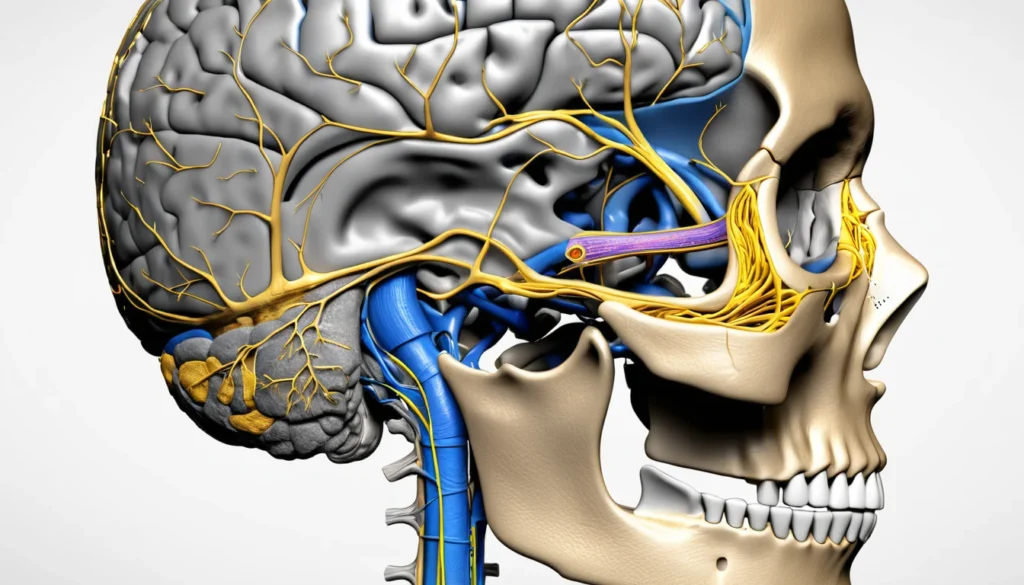
This nerve starts deep inside the brainstem, in a region called the pons. From there, it travels a long path through the skull before reaching the eye socket. That long path is one reason the abducens nerve is so vulnerable to injury or pressure.
The nerve connects to a muscle called the lateral rectus muscle. This muscle sits on the outer side of your eyeball. When it contracts, it pulls the eye outward — away from your nose. This movement is called abduction, which is where the nerve gets its name.
How the Abducens Nerve Controls Eye Movement
Your eyes need to work together as a team. To look at something, both eyes must move in a smooth, coordinated way. Several cranial nerves work together to make this happen. The abducens nerve handles one very specific movement: moving the eye outward, toward your ear.
For example, when you look to the right, your right eye moves outward thanks to its abducens nerve. At the same time, your left eye moves inward using a different nerve and muscle. This teamwork lets both eyes focus on the same point at the same time.
Without proper abducens nerve function, this coordination breaks down. The affected eye cannot move outward as it should. As a result, the eyes point in different directions, and your brain receives two slightly different images. This causes double vision, also called diplopia.
The Role of the Lateral Rectus Muscle
The lateral rectus is the only muscle controlled by the abducens nerve. It is one of six muscles that surround each eyeball. Together, these six muscles — each controlled by different nerves — allow the eye to move in every direction.
If the lateral rectus muscle is weak or paralysed, the eye will tend to drift inward toward the nose. This happens because the muscles pulling the eye inward are still working, but nothing is pulling it outward to balance them. This inward drift is a key sign that the abducens nerve may be affected.
What Happens When the Abducens Nerve Is Damaged?
Damage to the abducens nerve causes a condition called sixth nerve palsy, or abducens nerve palsy. This is one of the most common types of cranial nerve palsy that doctors see. It can affect people of any age, from young children to older adults.
The most noticeable symptom is double vision. This double vision is usually horizontal — meaning the two images appear side by side rather than one above the other. It tends to be worse when you look toward the side of the affected eye.
In some cases, a person may also develop a head turn. The brain is very good at adapting. To avoid seeing double, some people unconsciously turn their head so the affected eye does not need to look outward as much. This can reduce the double vision without treating the underlying cause.
Common Causes of Abducens Nerve Palsy
Many different conditions can damage or compress the abducens nerve. Some of the most common causes include:
High blood pressure (hypertension): This is one of the leading causes in adults. It can reduce blood flow to the nerve.
Diabetes: High blood sugar can damage small blood vessels that supply cranial nerves.
Increased pressure inside the skull: Any condition that raises pressure in the brain can stretch or compress the abducens nerve along its long path.
Head injury or trauma: A blow to the head can damage the nerve directly or affect the brainstem.
Tumours: A growth near the brainstem, skull base, or along the nerve’s path can press on it.
Multiple sclerosis (MS): This autoimmune disease can damage the protective coating around nerve fibres, including the abducens nerve.
Stroke: A stroke affecting the brainstem can disrupt the nerve’s signal.
Meningitis or other infections: Inflammation around the brain can affect cranial nerves.
In children, sixth nerve palsy sometimes appears after a viral illness. In many of these cases, the palsy is temporary and resolves on its own. However, it always needs proper evaluation by a doctor to rule out more serious causes.
How Is Abducens Nerve Palsy Diagnosed?
A doctor diagnoses abducens nerve problems through a combination of physical examination and medical tests. The process usually begins with a careful history and a neurological eye examination.
During the exam, your doctor will ask you to follow a moving object with your eyes. They look for any limitation in outward eye movement and check whether double vision is present. They will also check your other eye movements and overall neurological function.
Depending on the findings, your doctor may order additional tests. These can include:
MRI or CT scan: These imaging tests show detailed pictures of the brain, brainstem, and skull. They help identify tumours, strokes, or other structural problems.
Blood tests: These check for diabetes, high blood pressure, inflammatory conditions, and infections.
Lumbar puncture (spinal tap): In some cases, this test checks the fluid around the brain and spinal cord for signs of infection or increased pressure.
In Canada, your family doctor will typically start this process. They may then refer you to a neurologist or ophthalmologist — a doctor who specialises in eye conditions — for further assessment. Health Canada provides guidance on accessing specialist care through your provincial health plan.
Treatment Options for Abducens Nerve Palsy
Treatment for abducens nerve palsy depends on the underlying cause. There is no single approach that works for everyone. Therefore, getting an accurate diagnosis first is essential.
If the palsy is caused by diabetes or high blood pressure, controlling those conditions is the first priority. In many cases, the nerve recovers on its own over weeks to months once the underlying cause is managed. Your doctor will monitor your progress during this time.
In the meantime, there are ways to manage double vision while you recover:
Patching one eye: Covering one eye eliminates double vision immediately. This can help with daily tasks, though it is not a long-term solution.
Prism lenses: Special glasses with prism lenses can bend light so that both eyes receive a single, unified image. An optometrist can fit these for you.
Botulinum toxin (Botox) injections: In some cases, doctors inject the opposing eye muscle to reduce the inward pull on the affected eye. This can help prevent the eye muscles from tightening permanently.
Surgery: If the palsy does not resolve after six to twelve months, eye muscle surgery may be considered to realign the eyes.
If a tumour or structural problem is causing the palsy, treatment will target that underlying condition. This may involve surgery, radiation, or other medical therapies, depending on the situation. Mayo Clinic offers detailed information on cranial nerve palsy treatment options.
Recovery and Outlook
The outlook for abducens nerve palsy varies widely. Many people with palsy caused by diabetes or high blood pressure recover fully within three to six months. However, recovery is not guaranteed and depends heavily on the cause and how quickly treatment begins.
In children with palsy following a viral illness, recovery is usually complete within a few months. In contrast, palsy caused by a tumour or stroke may be longer lasting or permanent, depending on the situation.
Furthermore, even after recovery, some people are left with mild limitations in eye movement. Regular follow-up with your doctor or specialist is important to track your progress and adjust treatment as needed.
When to See a Doctor
New double vision is always a reason to seek medical attention. Do not wait to see if it goes away on its own. Double vision can be a sign of serious conditions affecting the brain, and early diagnosis leads to better outcomes.
You should see your family doctor as soon as possible if you notice:
Sudden double vision, especially if it came on quickly
One eye that appears to drift inward or cannot move outward
Double vision combined with headache, weakness, or difficulty speaking
Any new eye movement problem in a child
If your symptoms are severe or came on very suddenly, go to the nearest emergency department. Sudden double vision combined with other neurological symptoms — like weakness, numbness, or trouble speaking — can signal a stroke, which is a medical emergency.
If your symptoms are milder or developed gradually, start by contacting your family doctor. If you do not have a family doctor, a walk-in clinic can assess you and arrange referrals if needed. Most provincial health plans in Canada cover specialist referrals through your primary care provider. Healthline explains more about the signs and symptoms of sixth nerve palsy.
Always speak with a qualified healthcare provider before drawing conclusions about your own health. This article is meant to inform, not to replace professional medical advice.
Frequently Asked Questions About the Abducens Nerve
What does the abducens nerve do?
The abducens nerve controls the lateral rectus muscle, which moves the eye outward toward the ear. It is the sixth cranial nerve and is responsible for one specific type of eye movement called abduction. Without it, the eye cannot move properly to the side.
What causes abducens nerve palsy?
Abducens nerve palsy can be caused by diabetes, high blood pressure, head injury, stroke, tumours, or increased pressure in the skull. In children, it sometimes follows a viral infection and often resolves on its own. A doctor needs to evaluate the cause to guide proper treatment.
Is abducens nerve palsy serious?
It can be serious, depending on the underlying cause. Damage to the abducens nerve from minor causes like a viral illness often heals fully on its own. However, palsy caused by a stroke, tumour, or serious neurological condition requires prompt medical attention and treatment.
Can the abducens nerve heal on its own?
In many cases, yes. When the cause is diabetes, high blood pressure, or a viral illness, the abducens nerve often recovers within three to six months with proper management. However, recovery depends on the cause and how quickly treatment begins, so always follow up with your doctor.
What does it feel like when the abducens nerve is damaged?
The most common symptom is double vision, where you see two images side by side. You may also notice that one eye drifts inward and cannot move outward properly. Some people develop a natural head turn to reduce the double vision without realising they are doing it.
How is abducens nerve palsy treated in Canada?
Treatment starts by managing the underlying cause, such as controlling blood sugar or blood pressure. Your family doctor will likely refer you to a neurologist or ophthalmologist through your provincial health plan for further care. Options include prism glasses, eye patching, injections, or surgery in longer-lasting cases.
Key Takeaways
The abducens nerve is the sixth cranial nerve. It controls the muscle that moves the eye outward.
Damage to this nerve causes sixth nerve palsy, with double vision as the main symptom.
Common causes include diabetes, high blood pressure, head injury, stroke, and tumours.
Many cases resolve on their own once the underlying cause is treated, often within three to six months.
New double vision should always be assessed by a doctor. Do not wait for it to pass on its own.
In Canada, your family doctor or a walk-in clinic can start the evaluation and arrange specialist referrals through your provincial health plan.
Always consult a qualified healthcare provider for advice specific to your situation.