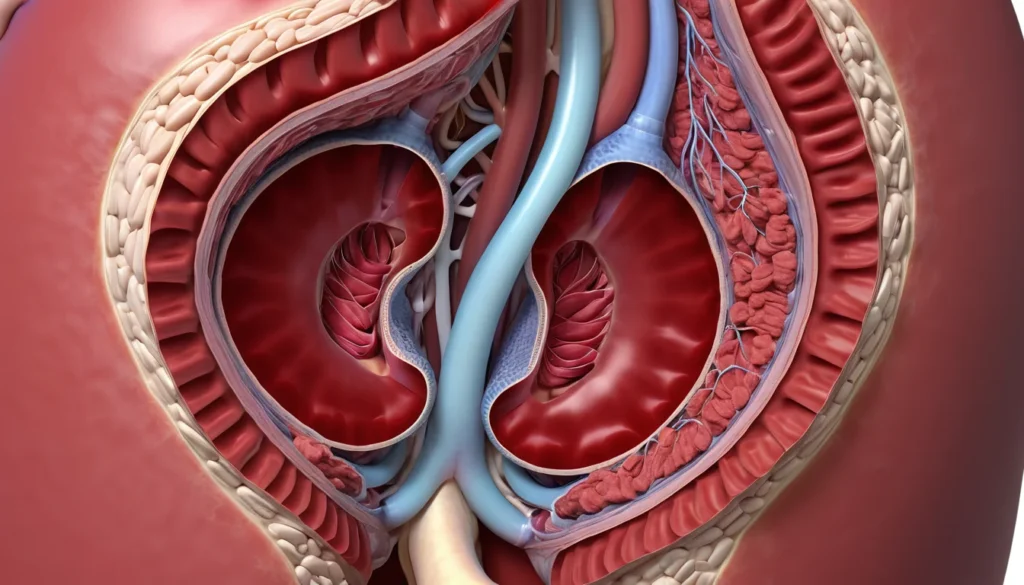
An abdominal aortic aneurysm is a serious but often silent condition that affects thousands of Canadians every year. It happens when the lower part of the aorta — the body’s largest blood vessel — bulges outward like a balloon. Without proper screening and treatment, it can rupture with little warning and become life-threatening. This guide explains what you need to know, from risk factors and symptoms to diagnosis and treatment options available through the Canadian healthcare system.
What Is an Abdominal Aortic Aneurysm?
The aorta runs from your heart down through your chest and abdomen. It carries oxygen-rich blood to the rest of your body. When the wall of the aorta weakens, a section can bulge outward — this bulge is called an aneurysm.
In an abdominal aortic aneurysm, this bulge occurs in the part of the aorta that sits in your belly. A normal abdominal aorta is about 2 centimetres wide. Doctors consider it an aneurysm when it grows beyond 3 centimetres. The bigger it gets, the greater the risk of it rupturing.
A rupture is a medical emergency. Globally, about 90% of people whose aortic aneurysm ruptures do not survive — most never make it to hospital. Of those who do reach emergency surgery, only about half survive. By contrast, the risk of dying from planned surgery on an unruptured aneurysm is under 5%. This is why early detection matters so much.
Symptoms of Abdominal Aortic Aneurysm
One of the most dangerous aspects of an abdominal aortic aneurysm is that it usually causes no symptoms at all. Many people carry this condition for years without knowing it. This is why it is sometimes called a “silent” disease.
In some cases, people who are slim and have a large aneurysm may feel a pulsing sensation in their abdomen. However, this is not common. Most people feel completely normal until something goes wrong.
Warning Signs of a Rupture
If you suddenly feel severe pain in your abdomen or lower back, this is a red flag. Pain in these areas can signal that an aneurysm is about to rupture — or already has. This is a life-threatening emergency. Call 911 immediately.
Do not wait to see if the pain passes. Do not drive yourself to a walk-in clinic. Go straight to the nearest emergency room or call emergency services right away.
Causes and Risk Factors
Most abdominal aortic aneurysms are linked to atherosclerosis — the build-up of fatty deposits inside artery walls. This weakens the artery wall over time, making it more likely to bulge. Therefore, the risk factors for an aneurysm are similar to those for heart disease and stroke.
The main risk factors include:
Smoking: This is one of the strongest risk factors. Smoking damages blood vessel walls and significantly increases the chance of developing an aneurysm.
Age: Risk increases sharply after age 65.
Being male: Men are about four to six times more likely to develop this condition than women.
High blood pressure (hypertension): Puts constant stress on artery walls.
High cholesterol: Contributes to artery wall damage.
Family history: Having a close relative with an aortic aneurysm raises your risk.
Other cardiovascular conditions: Such as coronary artery disease or peripheral artery disease.
Interestingly, diabetes appears to offer some protection against aortic aneurysms. Researchers believe this may be because diabetes causes the artery walls to stiffen and calcify, which may prevent them from bulging outward.
For more information on cardiovascular risk factors, visit Health Canada’s cardiovascular health resources.
How Is an Abdominal Aortic Aneurysm Diagnosed?
Because an abdominal aortic aneurysm rarely causes symptoms, it is most often found through medical imaging — sometimes by accident during a scan done for another reason. In other cases, a doctor finds it during a routine check-up or screening.
Doppler Ultrasound
A Doppler ultrasound is the most common first step. It is non-invasive, painless, and widely available across Canada. This test uses sound waves to create images of your aorta. It can quickly show whether an aneurysm is present and how large it is.
Doctors recommend screening with ultrasound for anyone who has cardiovascular risk factors. This includes people with a history of high blood pressure, high cholesterol, or smoking. It is also recommended for those who already have other vascular conditions, such as narrowed carotid arteries or peripheral artery disease.
CT Scan with Contrast Dye
If an aneurysm is found, a CT (computed tomography) scan with contrast dye gives a much more detailed picture. This helps doctors measure the aneurysm precisely and plan the best treatment. It shows the exact size, shape, and position of the bulge in relation to nearby blood vessels.
MRI and Aortography
In some cases, an MRI (magnetic resonance imaging) or an aortography (an X-ray of the aorta using contrast dye) may be used. These give additional detail when a CT scan alone is not enough to plan surgery. Furthermore, aneurysms are sometimes discovered during imaging tests done for completely unrelated conditions.
Once an abdominal aortic aneurysm is confirmed, your family doctor will refer you to a vascular surgeon. They will assess the size and shape of the aneurysm and recommend the right course of action. Learn more about how aneurysms are evaluated at the Mayo Clinic’s abdominal aortic aneurysm diagnosis guide.
Treatment Options for Abdominal Aortic Aneurysm
Treatment depends on the size of the aneurysm. Not all aneurysms need immediate surgery. In fact, for smaller aneurysms, watchful waiting combined with medication is often the safest approach.
Small Aneurysms (3 to 5.5 cm): Medical Management
For aneurysms between 3 and 5.5 centimetres, the risk of rupture is low. As a result, surgery is not usually recommended right away. Instead, your doctor will monitor the aneurysm regularly with ultrasound scans — typically every 6 to 12 months.
There is no medication that can shrink an aneurysm. However, medicines can slow its growth and protect the artery wall. Your doctor may prescribe:
Blood pressure medications: Keeping blood pressure low reduces the force on the weakened artery wall. Beta-blockers are often used.
Statins: These lower cholesterol and may help stabilise the aneurysm.
Smoking cessation support: Quitting smoking is the single most important lifestyle change. It has been shown to slow the growth rate of aneurysms significantly.
It is important to note that no natural health products, herbal remedies, or homeopathic treatments have been shown to have any benefit for aortic aneurysms. Always follow the advice of a qualified medical professional.
Larger Aneurysms (Over 5.5 cm): Surgical Treatment
When an aneurysm reaches 5.5 centimetres or larger, the risk of rupture increases enough that surgery is recommended. There are two main surgical options. Both are effective, and together they cover almost all patients.
1. Endovascular Repair (EVAR)
This is a minimally invasive procedure. The surgeon inserts a special stent-graft — a tube made of fabric and metal — into the aorta through small cuts in the groin. The graft lines the inside of the aneurysm, sealing it off from blood flow. This reduces pressure on the weakened wall and eliminates the risk of rupture.
The advantages of endovascular repair include a shorter hospital stay, lower immediate surgical risk, and a faster recovery. It does not usually require an intensive care unit (ICU) stay. However, it is not suitable for all patients, as the aneurysm must have the right shape and position. In addition, long-term follow-up is essential because the graft can shift over time and may require a second procedure.
2. Open Surgical Repair
In open surgery, the surgeon makes an incision in the abdomen and replaces the damaged section of aorta with a synthetic graft, which is sewn directly to the healthy aorta above and below the aneurysm. This is a more invasive procedure with a longer recovery time and a short ICU stay afterward.
However, open repair is suitable for virtually all patients, regardless of the aneurysm’s shape. Furthermore, long-term complications are less common compared to endovascular repair, making it a more durable solution for many patients.
Your vascular surgeon will discuss which option is best for your specific situation. Both techniques are available at major vascular surgery centres across Canada, and most provincial health plans cover these procedures. For more on surgical options, see Healthline’s overview of aortic aneurysm treatments.
When to See a Doctor
If you are over 65 and have ever smoked, talk to your family doctor about screening for an abdominal aortic aneurysm. Screening is simple and painless. Early detection could save your life.
You should also speak with your doctor if you have multiple cardiovascular risk factors — such as high blood pressure, high cholesterol, or a family history of aneurysms. Your family doctor can arrange an ultrasound referral through your provincial health plan.
If you do not have a family doctor, a walk-in clinic can assess your risk and refer you for screening if needed. Do not wait for symptoms — by the time symptoms appear, the situation may already be an emergency.
Call 911 immediately if you experience sudden, severe abdominal or back pain. Do not drive yourself. This may be a rupturing aneurysm and every minute counts.
As always, speak with a qualified healthcare provider before making any decisions about your health. Only your doctor can properly evaluate your personal risk and recommend the right screening or treatment plan for you.
Frequently Asked Questions
What are the first signs of an abdominal aortic aneurysm?
Most people with an abdominal aortic aneurysm have no symptoms at all. In some cases, a pulsing feeling in the abdomen may be noticed. Sudden, severe pain in the abdomen or back can signal a rupture, which is a medical emergency requiring immediate 911 contact.
Who is most at risk for an abdominal aortic aneurysm in Canada?
Men over 65 who smoke or have smoked are at the highest risk of developing an abdominal aortic aneurysm. Other risk factors include high blood pressure, high cholesterol, and a family history of the condition. Canadian guidelines recommend discussing screening with your family doctor if you fall into these groups.
How is an abdominal aortic aneurysm treated?
Treatment for an abdominal aortic aneurysm depends on its size. Small aneurysms are monitored with regular ultrasounds and managed with blood pressure medication and lifestyle changes. Larger aneurysms — over 5.5 centimetres — are usually treated with endovascular repair or open surgery, both of which are covered by most provincial health plans.
Can an abdominal aortic aneurysm be prevented?
There is no guaranteed way to prevent an abdominal aortic aneurysm, but you can significantly lower your risk. Quitting smoking is the most important step. Controlling blood pressure and cholesterol through diet, exercise, and medication also helps protect your aorta.
Is an abdominal aortic aneurysm covered by provincial health plans in Canada?
Yes, diagnosis and surgical treatment of an abdominal aortic aneurysm are generally covered by provincial and territorial health plans across Canada. This includes ultrasound screening, CT scans, and both endovascular and open surgical repair. Ask your family doctor or walk-in clinic about referral options in your province.
How fast does an abdominal aortic aneurysm grow?
An abdominal aortic aneurysm typically grows slowly — about 2 to 3 millimetres per year on average. However, growth rates vary between individuals. Smoking speeds up growth considerably, which is one of the strongest reasons to quit. Regular monitoring with ultrasound allows your doctor to track any changes over time.
Key Takeaways
An abdominal aortic aneurysm is a dangerous bulge in the lower aorta that rarely causes symptoms until it ruptures. Rupture is almost always fatal — early detection through screening is critical. The biggest risk factors are smoking, age over 65, being male, high blood pressure, and high cholesterol. Diagnosis is usually made with a Doppler ultrasound, followed by a CT scan if needed. Small aneurysms (under 5.5 cm) are monitored and managed with medication. Larger ones